Casey Chong with a selection of essential killer car movies…
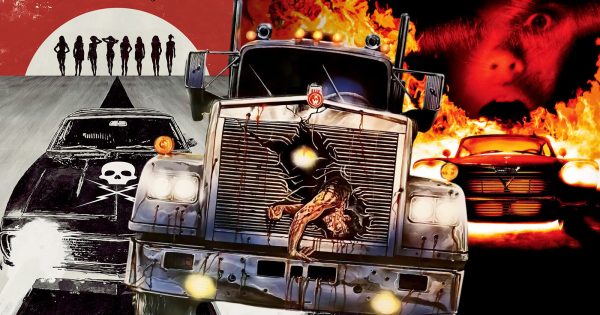
The killer car subgenre may lack the popularity of traditional slasher and supernatural horror. Besides, the fundamental nature of a car remains an inanimate object devoid of expression and psychology, unlike the one traditionally found in human or otherworldly antagonists. A killer car movie doesn’t come cheap since it requires practical stunts and real cars to make the automotive-related horror look palpable. And if a filmmaker happens to rely heavily on CGI, it would defeat the purpose since it strips away the real-world danger, weight, and speed. Still, killer car movies have their place in the world of cinema, and below is our pick of eight of the best…
Duel (1971)
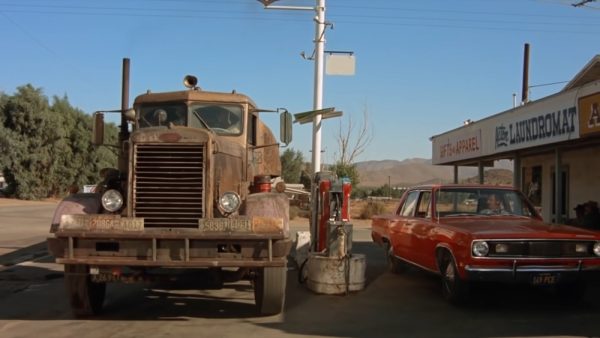
Duel may have been a made-for-television movie, but then-young Steven Spielberg sure knows how to deliver white-knuckle thrills worthy of a big screen experience. The movie proved to be hugely popular when it premiered in the US on ABC, resulting in Universal rolling out an international theatrical run a year later and a limited stateside release in 1983 with added 16-minute footage from its original 74-minute runtime.
Adapted from Richard Matheson’s 1971 short story of the same name by the author himself, Spielberg embraces the simplicity of the premise to his advantage: A travelling salesman (Dennis Weaver’s David Mann) on a long journey, who later finds himself being stalked by a derelict Peterbilt 281 tanker truck. Is the driver a road bully? Perhaps a psychotic killer who enjoys terrorizing an innocent driver like David just for the sake of it?
Spielberg isn’t interested in providing any motivation or a backstory other than portraying the driver, whose face is never shown, equivalent to a fear of the unknown. The stripped-down narrative allows Spielberg to maximize the tension as the movie progresses, even bringing out the best in Weaver’s everyman role, first as a passive and mild-mannered individual, before the unstoppable threat pushes him into survivalist mode.
The Car (1977)
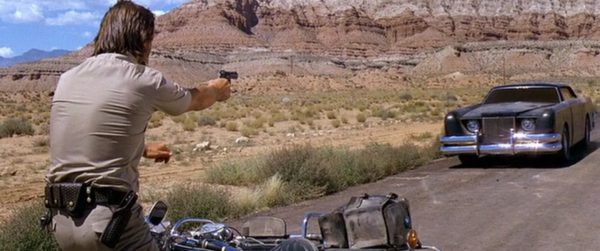
What if Jaws comes in the form of a deadly Lincoln Continental with heavily tinted windows? The result is The Car, a vehicular horror about a mysterious sedan terrorizing a small town. Elliot Silverstein, primarily a TV director who helmed several feature films such as Cat Ballou and Nightmare Honeymoon, takes a cue from the Spielbergian playbook seen in Duel and Jaws – a deliberately paper-thin plot that doesn’t push on the titular car’s motivations, an everyman protagonist who finds himself dealing with something that’s out of his league (James Brolin’s Chief Deputy Wade Parent), and thrilling vehicular mayhem.
Interestingly, The Car manages to distinguish its familiar premise with supernatural elements, suggesting the vehicle is a manifestation of evil. As silly as it may sound, Silverstein wisely structured The Car with knowing B-movie sensibilities while equally benefiting from a better-than-expected cast led by Brolin and Ronny Cox. The Car was largely forgotten at the time of its release, only to emerge as a cult classic, thanks to its subsequent revival on VHS rentals and late-night television.
Christine (1983)
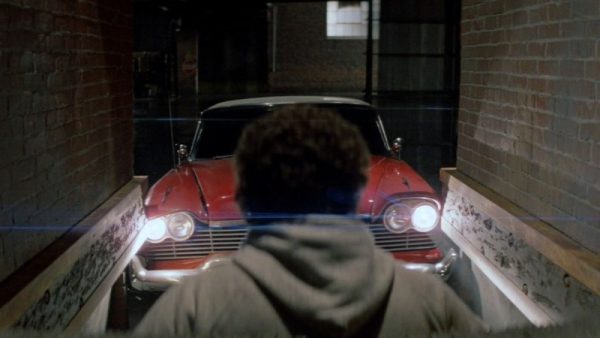
The title refers to the classic cherry-red 1958 Plymouth Fury, a hardtop coupe that has a life of its own. Based on Stephen King’s 1983 horror novel of the same name, the titular possessed car becomes attached to its new owner, a nerdy teen named Arnie (Keith Gordon). The car itself has a unique personality trait, exhibiting a sense of jealousy and murderous intent that may sound like an absurd B-movie premise.
But John Carpenter manages to direct Christine with the atmospheric restraint of a psychological horror, even going as far as stripping off the novel’s backstory surrounding the origin of the previous owner in favor of turning the car into a mysterious force of evil. He also delves into Arnie’s arc, first depicting him as a timid teenager constantly bullied by others. After falling in love with the car, he becomes someone else entirely – a cold and increasingly hostile person that mirrors the vehicle.
Christine is equally notable for its impressive regeneration scene, showcasing how the titular car repairs itself from a wreck to a pitch-perfect self like it’s brand-new. And keep in mind the special effects were done in a pre-CGI era using a nifty combination of internal hydraulics, hidden wirework, and reverse cinematography.
Maximum Overdrive (1986)

Maximum Overdrive marks the only time Stephen King himself directed a movie, a result stemming from multiple factors, including on-set frustrations and an unfortunate accident that caused his cinematographer Armando Nannuzzi, to lose his right eye after a remote-controlled lawnmower mishap. It didn’t help that his movie was panned and failed to recoup its $9 million budget. Maximum Overdrive has since become a cult classic, belonging in a guilty-pleasure entertainment territory that’s absurdly fun to watch.
The story follows a passing comet that somehow brings all vehicles to life. No, not Transformers, but rather killer vehicles, including a now-iconic Western Star 4800 truck with the huge Green Goblin face embedded on its front grill. The vehicles aren’t the only scary reanimated objects, as everyday electrical items from vending machines, and even a carving knife, become unlikely murderous weapons. The movie doesn’t shy away from its over-the-top violence, complete with extensive practical vehicular stunts. And let’s not forget about the movie’s energetic hard-rock soundtrack from the legendary AC/DC.
Wheels of Terror (1990)
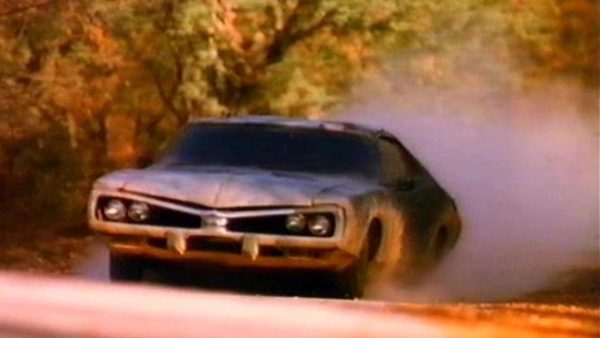
Best known for his work in Young Guns, Christopher Cain directed his first television movie — a forgotten, hidden B-movie gem that follows a souped-up 1974 Dodge Charger preying on children in the fictional small town of Copper Valley, Arizona. Like Duel and The Car, Wheels of Terror eschews the traditional backstory or explanation on why the car targets the children in the first place. Instead, Cain and Halloween 4: The Return of Michael Myers’ Alan B. McElroy keep the premise both structurally and narratively lean, highlighting more vehicular tension in a slasher-like mode.
The antagonist behind the wheel is depicted as an unseen driver, which adds an eerie mystique to the threat. Wheels of Terror also features an extended high-speed chase between the titular car and the school bus during the final 30 minutes, showcasing well-staged practical stunts and vehicular destruction. Cain also made good use of the vast Arizona desert landscape to evoke a palpable sense of dread throughout his movie’s bare-bones 85 minutes.
Highwaymen (2004)
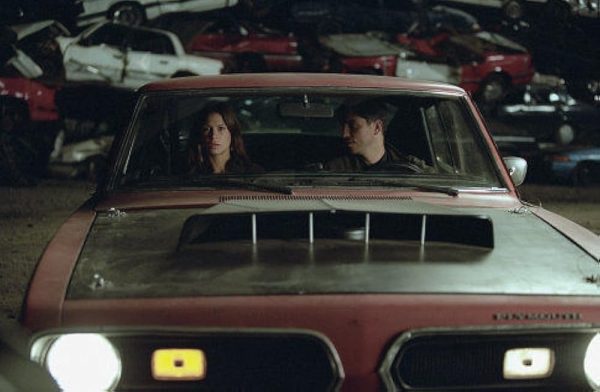
Robert Harmon is no stranger to exploring the psychological terror on the road, evidently in his seminal 1986 thriller The Hitcher. Eighteen years later, Harmon gives us an unlikely serial killer, played by the unhinged Colm Feore as Fargo, who drives a pepper green 1972 Cadillac Fleetwood Eldorado coupe. Unlike Rutger Hauer in The Hitcher, Feore’s appearance comes across as a mutilated middle-aged man, with a cyborg-like body that combines prosthetic limbs and bolted metal orthopedic braces. He is also obsessed with the raw thrills of vehicular crashes and accidents, echoing J.G. Ballard’s controversial 1973 novel Crash, which also inspired David Cronenberg’s 1996 movie of the same name. Except that Harmon isn’t interested in exploring similar auto fetishism, but rather going straight for the jugular, leaning more towards the cold, slasher-thriller territory.
Highwaymen is primarily a revenge movie, focusing on Jim Caviezel’s Rennie Cray on a singular mission to track down the killer who brutally ran over his wife. The story is pretty much stripped down to its bare essentials, originally a slow-burn psychological thriller that becomes a victim of heavy studio butchery after poor test screenings. Still, the shorter 80-minute runtime doesn’t deter Harmon from making his movie work, thanks to the engaging principal cast – Caviezel, Feore, and Rhona Mitra – while he knows well how to ratchet up enough dread-inducing tension with practical, yet visceral car stunts.
Joy Ride (2001)
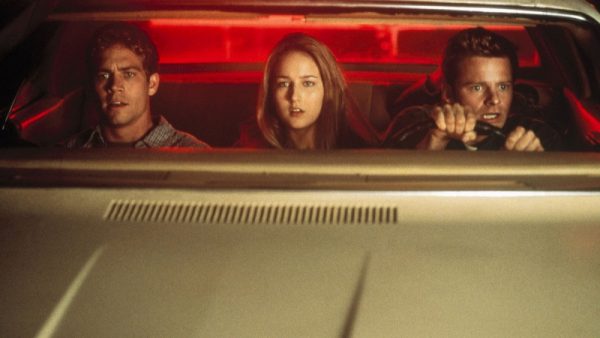
If only Lewis (Paul Walker) and his brother Fuller (Steve Zahn) hadn’t gone too far with their elaborate prank to fool Rusty Nail with Lewis pretending to sound like a woman named Candy Cane during their CB radio communication. Ted Levine, best known for his role as Buffalo Bill in The Silence of the Lambs, brings a sinister vibe to his gravelly-sounding Rusty Nail, whose appearance relies heavily on the actor’s vocal delivery.
Director John Dahl and co-writer J.J. Abrams deliberately maintain his identity as a mystery, making him more formidable than a traditional antagonist portrayal. Joy Ride also evokes a Duel-like vehicular dread, showcasing Rusty Nail in an intimidating 1985 Peterbilt 359 semi-truck, who weaponizes his vehicle to play a threatening cat-and-mouse game with Lewis and Fuller. Dahl’s experience in road movies (Kill Me Again, Red Rock West) is put to good use, establishing the ominous neo-noir atmosphere of desolate American West highways and backroads in Joy Ride. The movie proved to be a modest success, more than enough to spawn two sequels, Joy Ride 2: Dead Ahead and Joy Ride 3: Roadkill.
Death Proof (2007)
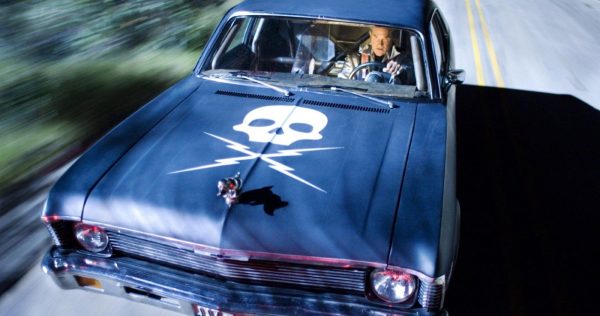
Leave it to Quentin Tarantino to go all visceral in Death Proof, a gritty killer-car horror that pays homage to 1970s grindhouse cinema. The driver behind the wheel – two modified cars, to be exact, including a 1970 Chevrolet Chevy II Nova and a 1969 Dodge Charger – is played with menacing perfection by Kurt Russell as the misogynistic Stuntman Mike. His motive? Stalking and terrorizing young women in his cars.
Likewise, Tarantino doesn’t play by the rules since Death Proof doesn’t structure like your usual killer-car movie, opting to subvert our expectations by getting off to a deliberate hangout-movie stretch. Tarantino’s usual dialogue-heavy moments may lack the panache of his earlier work. However, the slow-burn approach allows him to flesh out each of the female characters’ distinct personalities, notably Sydney Tamiia Poitier’s feisty Jungle Julia.
But it is Zöe Bell who excels the most in the propulsive second half, playing an eponymous stuntwoman who famously clung to the hood of a speeding car. That scene made its mark as one of the greatest practical stunts ever seen – all filmed for real on the Californian highway, and strictly old-school without CGI assistance.
What are your favourite killer car movies? Let us know on our socials @FlickeringMyth…
Casey Chong