For 70 years, Janus Films has specialised in arthouse, indie, and world cinema releases. Here are some of their essential recent gems you may have missed…
You probably know Warner, Disney, Amazon, Universal, and you sure as hell better know Cannon Films, but there’s another distributor that specialises in cultivating a more highbrow selection of movies. No, it’s not The Asylum; it’s Janus Films. For 70 years, they have shone a light on arthouse, indie, and world cinema releases, providing an essential platform for cinema that wasn’t always easily available to watch in the States.
Legendary directors such as Andrei Tarkovsky, Ingmar Bergman, Akira Kurosawa, Francois Truffaut, Robert Bresson, and many more have all been given the spotlight in the US thanks to Janus releasing their movies. Janus and the like are key in highlighting the world of cinema available to us and offering a variation to the mainstream movies that the English-speaking nations, and the US in particular, have been watching.
I hear this time and again from online critics, influencers, or movie buffs: “They don’t make good movies anymore.” I’ve probably said something similar myself over the years, with a caveat that, as far as mainstream Hollywood pictures go, it’s increasingly rare to get great films nowadays. The Hollywood studio system and the rise in streamers and streaming originals have turned normy cinema into a production line with a scarcity of exciting and fresh voices. We still get auteurs flying the flag in the mainstream, such as Christopher Nolan or Paul Thomas Anderson, but there’s so much interchangeable and soulless “content” now.
Yet, as many a clickbait video will suggest, “there’s nothing good being made.” Well, that’s certainly not true. The trick is to look outside of those big conglomerates churning out formulaic production-line material. We are still getting wonderful indie movies, challenging arthouse cinema (and sometimes interesting if nothing else), and a veritable gold mine of world cinema. Iranian cinema, for example, has had over a dozen high-profile and exceptional works of cinema over the past decade which have gathered buzz in big competitions like Cannes, Venice, Berlin, etc. A huge reason for this, and why they eventually gain traction with audiences in the US, UK, etc., is that distributors like Janus help to highlight them and work in unison with boutique streamers (and physical media companies) like Criterion or Mubi.
Best of all, whilst Janus’ most high-profile catalogue films are those long-time masterpieces such as The Seventh Seal, Stalker and Tokyo Story, they haven’t rested on their laurels, continuing to curate some of the best movies each year. Here are eight essential Janus films from the 2020s…
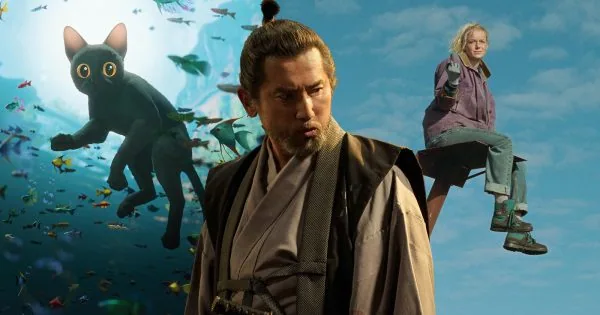
The Samurai and the Prisoner
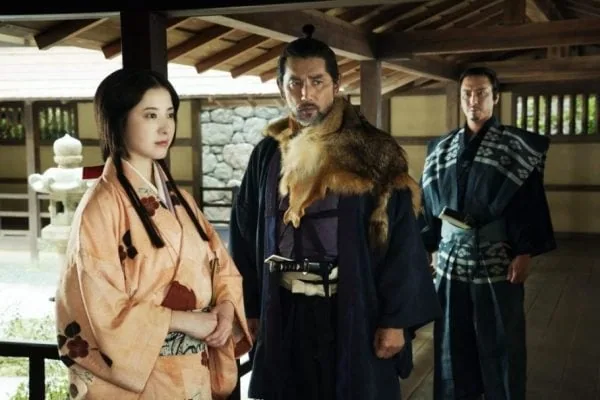
Kiyoshi Kurosawa has built up an impressive resume with some iconic Japanese horror films, such as Cure and Pulse, which travelled very well outside of Japan. It’s not always easy to maintain the same impressive spread across the world, but thankfully for Kurosawa, he’s seen a number of his recent works released by Janus. Chime (a short Janus put out) reaffirmed his skills as one of the most effectively unsettling horror voices from the East, whilst Cloud proved a timely and enjoyably tense thriller.
Kurosawa is back with The Samurai and the Prisoner, which sees him dive into a genre made famous by his namesake, Akira. Based on the Honobu Yonezawa novel, it’s an excellent entry into the Samurai sub-genre that harks back to those classic era pictures of the 50s and 60s. If it’s not quite in the upper echelons of all time, it’s certainly one of the best of the modern era. It also further proves that Kyoshi Kurosawa’s range is truly impressive.
Flow
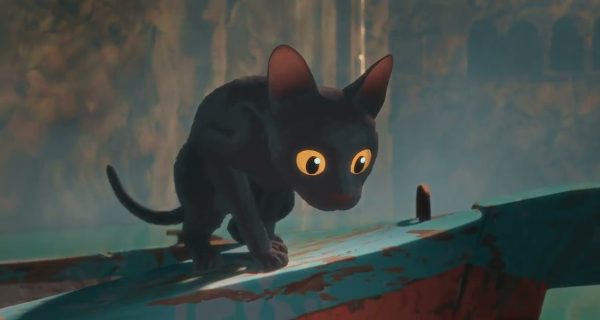
One of the more famous Janus releases of modern times managed to come from seemingly nowhere to become an Oscar-winning hit and one of the most successful indie animation films ever. Flow is a dazzling odyssey of lustrous visuals, an enveloping soundtrack, and beautifully simple visual storytelling as we follow a cat on his quest to find safety in the wake of a biblical flood in a future after human civilisation has ended. Presumably, we were killed by OpenAI or some shit (other human-destroying AI services are available).
Given that the vocal work extends purely to animal calls without any dialogue, this is a masterclass in show, don’t tell that feels fresh.
Evil Does Not Exist

Ryusuke Hamaguchi gained international acclaim for Drive My Car, which Janus released in the US. A couple of years later, they released his follow-up film, the quiet and cerebral eco-drama, Evil Does Not Exist. Though that film didn’t attract the same levels of attention, it further proved Hamaguchi is one of the most engagingly restrained and nuanced observational directors around.
It’s a slow-burning and ambiguous film that could frustrate some, but with stark and crisp wintry visuals and natural settings, the film is beautiful. It doesn’t immediately scream entertainment in a way that some world cinema movies need to do to get taken across the world, but Janus rightfully brought it to attention as a film that will challenge its viewers and leave them wanting to pick apart what they’ve just watched.
The Love That Remains
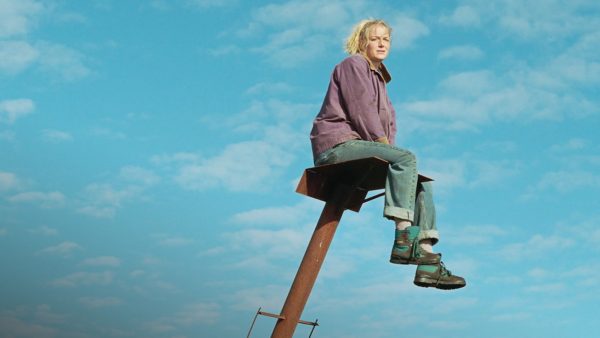
Hlynur Pálmason’s international breakout, A White, White Day was an enthralling Nordic noir with oodles of understated repression and pent-up rage. It’s the kind of thing Nordic cinema does as well as anyone. He followed it up with the opus, Godland (also released by Janus). This year saw the release of The Love That Remains, his latest film, another quiet, cerebral drama that is never as dark as some of his work but no less gut-wrenching.
Pálmason focuses on a couple in post-separation dealing with what the title suggests, and their own feelings of loss and regret. It’s vintage Nordic drama that flits deftly between bleak, hopeful, warm, and the occasional dip into magical realism. There are Bergman-esque flourishes here, that’s for sure, but with Palmason’s own unique vision. Saga Garðarsdóttir and Sverrir Guðnason are both exceptional.
Blue Heron
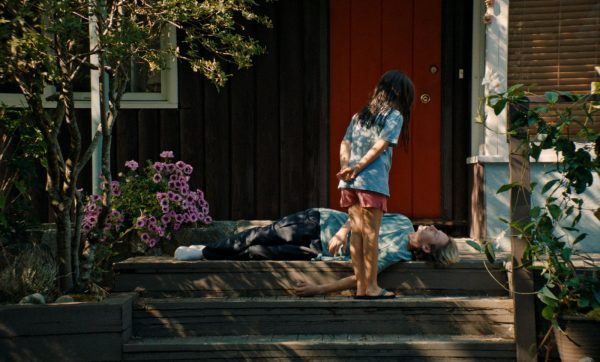
If you liked Aftersun, you’ll find plenty about Blue Heron to interest you. Much like Charlotte Wells’ modern classic, Sophy Romvari’s film is semi-autobiographical, focused on a protagonist looking retrospectively at a key period of her family life and specifically her troubled older (half) brother. It’s about the difficulty of reconciling memory with fact and trying to find closure about her brother’s destructive behaviours.
Romvari’s film has a couple of interesting narrative shifts in the film that keep it fresh and interesting, as we also jump to the present and then back to her past. It’s not quite Aftersun level, but it’s also different enough in its approach that it doesn’t bear too much comparison. Simple visual storytelling filled with nuance and moments that are heartbreaking thanks to fantastic performances from the whole cast (particularly the younger performers).
Resurrection
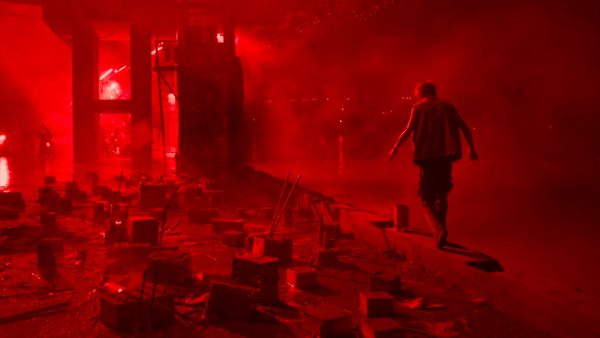
Bi Gan is one of the great visual storytellers of modern cinema, and yet his name may still fall unfairly below the radar. The visionary behind Kaili Blues and Long Day’s Journey into Night returned this year with another critically acclaimed and visually resplendent film, Resurrection.
The dreamy and dazzling existential sci-fi drama also works as an ode to cinema. The eternally dreamy Shu Qi is as mesmeric as ever, whilst the visual scope in Gan’s film is jaw-dropping, even though the narrative may run off with occasional wild abandon. Yet given its focus on dreams and the afterlife, it’s logically illogical. It’s difficult to be blown away by a film’s visual splendor these days, given we all feel like we’ve seen it all, but Gan, as he’s done with each feature, manages it.
The Shrouds
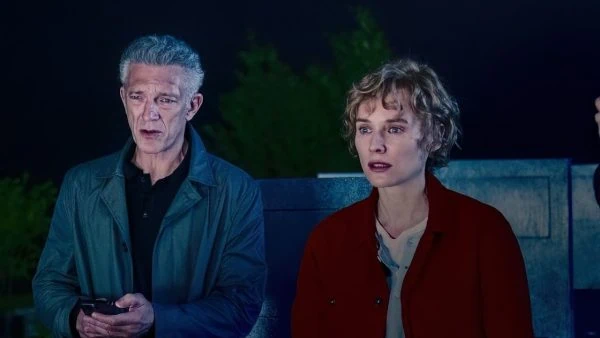
It feels like there’s been a shift in the Cronenberg picture of late. That shift is that Brandon has found a little more cult fandom and audience engagement for his works Possessor and Infinity Pool than his father (the legendary David Cronenberg) has for his last few, including The Shrouds.
The film is as you might expect from the Pops Cronenberg. It’s dark psychological horror that is also existential, dealing with the process of grief after the death of a loved one. This is more cerebral than overtly gruesome, as, say, Crimes of the Future, but there is still a dash here and there of body horror. Still, Janus is here to ensure that an icon like David Cronenberg doesn’t release a new movie unnoticed, even if his appeal isn’t as strong as it once was.
About Dry Grasses
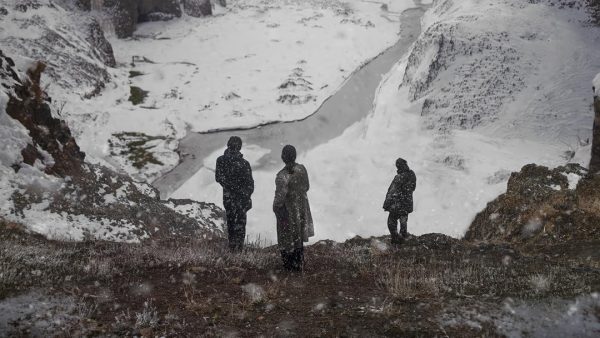
Nuri Bilge Ceylan’s compelling and lengthy epic, set in Anatolia, is an enthralling and patient character piece that slowly simmers through its runtime up to a gripping final act. It’s all brooding and mood, with some sensational scenery and photography. The setting is a place known for polar extremes in two distinct seasons of stark winter and idyllic summer. Much like The Hunt with Mads Mikkelsen, it’s a piece about dealing with an allegation that shatters the world of a teacher who becomes the subject of the allegation.
Though the runtime might put some viewers on their back foot before they’ve even taken the trip to Anatolia, it’s worth persevering, as it proves to be engaging throughout, with some bold creative choices that might divide some.
Honourable Mentions:
Eo, All We Imagine As Light, Gomorrah, The Innocent, Romeria.
What’s your favourite Janus Films release from the 2020s? Let us know on our social channels @FlickeringMyth…
Tom Jolliffe