From perilous productions to reckless disregard for health and safety, here are eight films that could NEVER be made today…

The modern-day movie has the benefit of current technology that allows a shoot to be made as simply, efficiently, and as safely as possible. These days, most modern blockbusters look like they’re carbon copies of each other, with minimal work required on real locations or sets because you can shoot on green screens and just shoot with a shallow depth of field.
Likewise, action movies back in the day had to choreograph, shoot, and lay the pyrotechnics for each action sequence. Stunt crews were batshit crazy, and everything you saw on screen in an action sequence was generally captured in camera. The safety benefits in modern action are understandable, of course, but the ease with which cameramen, directors, and editors can use technology to solve any visual issue imaginable has arguably chipped away at the ingenuity once required to produce a particular shot, or the sheer scale required were you to need (for example) a shot with 1000 battling soldiers running through the frame. Now you just need 20 extras in a greenscreen-lined studio, and CGI will fill in the backdrop and the extras. Does it look nearly as good? Abso-fuckin-lutely not.
The ability to do so much and solve so much after the fact has stripped away the creativity in many productions, with a select few auteurs defying the trends to retain creative might. Or, of course, you can actually look beyond the mainstream to watch indie films or world cinema, where great pictures are still being made. For better and worse, films aren’t made like they once were, and most certainly not like these eight films that would NEVER be made today (and not including films that would be cancelled for their content)…
Aguirre, the Wrath of God
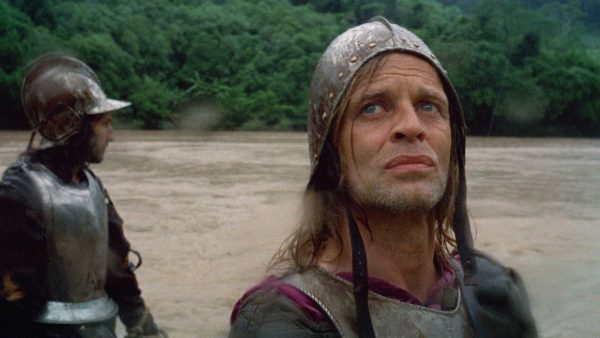
You wouldn’t store dynamite next to a fire. The same logic probably should have applied to putting Klaus Kinski and Warner Herzog on movie sets together. The fuse and the flame were a great combination, however, producing incredible cinematic works. The cause of on-set issues, or perhaps the blame, would lie more firmly at the feet of the unpredictable and highly volatile Kinski, but Herzog certainly pulled the pin a few times.
Kinski’s incredible screen presence was only matched by his legendary explosions of rage, but in particular on Herzog sets. Aguirre, the Wrath of God was no different, with infamous stories, including one with Kinski firing live rounds indiscriminately into the crew camps and miraculously avoiding killing anyone. It was just the tip of the iceberg on a film set and shot in the Amazon jungles with perilous conditions that left a lot of crew members aggressively ill with Malaria. Herzog also threatened to kill Kinski with a rifle (followed by himself) when Klaus threatened to abandon the project. Herzog was also bitten by monkeys, arrested five times, and the film’s odyssey for El Dorado was matched by the crew’s own harrowing quest to get from place to place and finish the film. The result, though? Is a spectacular-looking masterpiece with the kind of enveloping atmosphere that you’ll never fake with CGI.
Stalker
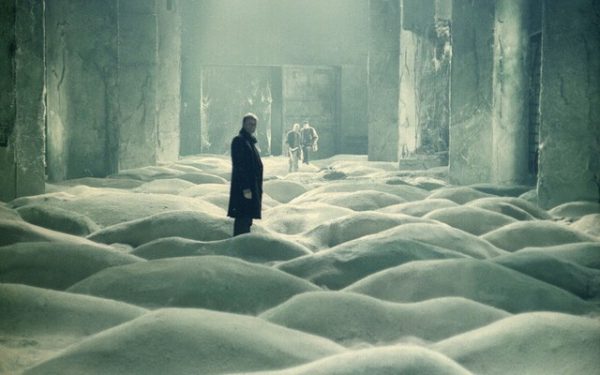
Three cinematographers, most of the movie’s original shoot lost after film canisters went up in flames (with some urban myths suggesting Andrei Tarkovsky set them on fire himself, having hated the footage), and shooting in the Estonian wastelands, which had dire lasting effects on the cast and crew. The story of Stalker’s production is now almost as legendary as the film’s own lasting legacy.
The result, much like many of Tarkovsky’s personal works, was born out of a constantly evolving script which was often eschewed in favour of Tarkovsky’s moments of inspirational whim. Much of the film’s final version was shot near a functioning hydroelectric plant and downstream of a chemical plant. It’s a wonder some crew members didn’t grow third ears. Sadly, many on the shoot ended up with an identical form of lung cancer. Despite all the setbacks, the budget cuts, reshooting most of the movie, and reshaping an almost entirely different film from the originally intended one, the result is widely considered an existential masterpiece the likes of which could never be made again.
Hard Boiled
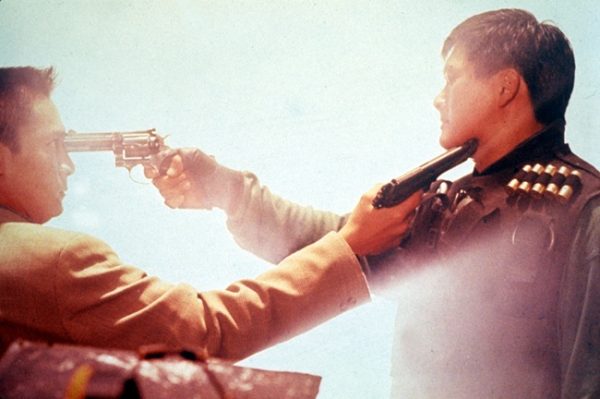
Modern action movies are largely diabolically bad. No one cares about the script in a ‘content’ movie. The films can be more controllably shot in studios, against green screens. Risk factor can be mitigated by using CGI rather than blanks, squibs, and explosions. The latter, given some notable on-set tragedies in modern history, feels understandable. Yet outside of Asia, or the madcap theatrics of Tom Cruise, many modern actioners lack a genuine sense of danger or even physicality. The leaning toward superhuman characters in comic book adaptations also often takes weight, gravity, and physics out of the equation too and leaves you with an abundance of weightless crap to watch.
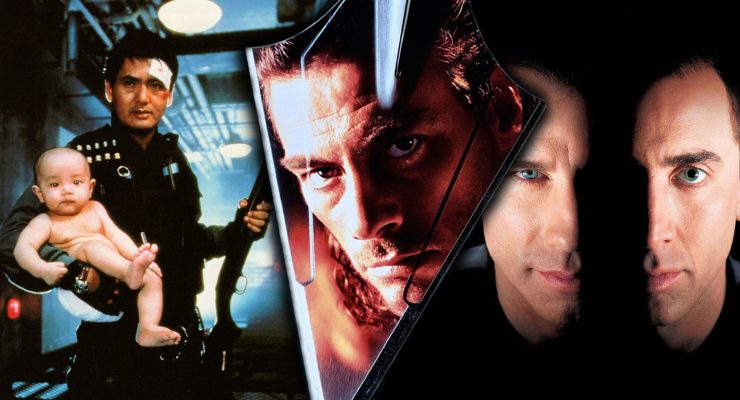
Likewise, the fact that CGI can produce anything breeds a tendency for both laziness and flagrant overuse. So sequences that look fake, weightless, and unrealistic go on, and on, and on. For the antithesis to modern action, see Hard Boiled, a film that has jaw-dropping action set pieces and stunts with insane pyrotechnics that are almost wilfully dangerous. Hong Kong stunt guys were a special breed of nuts too, as you’ll no doubt realise watching any Jackie Chan film. In Hard Boiled’s case, the balletic, non-stop, wildly destructive shootouts are unmatched and will never be. Yet it would only be half as effective without the charismatic performances, heart and stakes. All things that are all too often missing these days in Hollywood, at least.
Sorcerer

Although a director being given carte blanche to make their own idiosyncratic opus, largely untethered, is still a thing, few carry the same mythic quality as Sorcerer. The director’s passion project, which he had largely full autonomy to venture off into the jungles of the Dominican Republic and shoot, ended up being a gruelling quest that mirrored the death-defying journey of the film itself.
This one might not have had the same fearful presence of a Kinski, but it would still prove to be a trial by fire for the cast and crew, particularly in the jungle sequences. Many of the crew contracted a host of grim illnesses, including dysentery, malaria, and gangrene. Still, you gotta strive for authenticity, I suppose. The film’s most iconic rope bridge crossing scene is also an astonishing triumph of physical stunt work and design. All captured on location in horrible conditions, some real, some manufactured to make the stunt work just that bit more perilous. It all culminates, too, in an almighty explosion. Friedkin’s grim journey into the heart of darkness bleeds pessimism and sweats buckets. It’s a masterpiece which bombed (largely thanks to changing tastes and the appearance of Star Wars to blow its box office chances to smithereens) but has since found its place in the pantheon of great cinema. For very similar reasons, see also Apocalypse Now. An absolutely arduous shoot that almost killed Martin Sheen and nearly bankrupted Francis Ford Coppola.
Cleopatra

Depending on your source, the biggest budget film ever made (accounting for inflation) may well be Cleopatra, the magnum opus starring Elizabeth Taylor in the title role. It could well have been surpassed by now, but in today’s money, the film, which went insanely over budget in a way modern studios would never allow, cost around $450 million. It grossed a huge amount for the time but was still considered a bomb due to the fact it barely scraped even in its initial run.
The film was also greeted with largely negative reviews. Still, aside from its ridiculously snowballing budget, some other factors mark this as a film that would never be made today. When trying to capture films of gargantuan scale back in the peak of epic cinema, the likes of Cleo, Lawrence of Arabia and Ben Hur, had to build enormous sets, film at real locations and pull together huge swathes of extras. As magnificent as the more recent Lord of the Rings trilogy was, one element it broke ground on was Meta’s VFX work in creating hordes of soldiers. Before that, films had often used elaborate techniques that could have involved foreground extras and background mattes, or trick mirrors to give the illusion of a thousand people in shot. The organisation required to pull off a wide shot of nearly a thousand extras, particularly if they’re doing elaborate actions (such as a battle scene), was insane. As such, films just green-screen much of it and use CGI to conjure an army. It doesn’t look nearly as impressive as a typical epic shot in Cleopatra. Add in the incredible design work through costumes and sets, and the texture and elements you get from shooting in real locations for epics like Lawrence of Arabia. Many bigger-budget films also seem to look much cleaner and more sterile these days. Costumes barely get a streak of mud on them, and the cast look weirdly kempt throughout.
Roar

Studios still have terrible ideas. However, there’s a terrible idea that ends up being a film no one wants to see, or there’s an idea that is terrible because it’s just asking for trouble. Roar was a film just asking for trouble. The passion project conjured by Noel Howard and his wife Tippi Hedren (best known as Melanie Griffith’s parents), ended up as an overbudgeted disaster that remarkably didn’t result in anyone being killed. Still, it was far from plain sailing making a film about a family living with lions.
Pretty much everyone had a run-in with a lion during the shoddy production, including director of photography Jan De Bont being scalped and Melanie Griffith needing reconstructive surgery after being mauled in the face. Hedren was also bitten as well as being thrown off an elephant. Oh yeah, they had trouble with elephants too. The film was released to largely bafflement and poor box office returns, though its bizarre creation has since seen it spawn a cult following. Remember that film with Idris Elba fighting a lion? Yeah, no one does, but the point is he wasn’t left on set with a pride of lions and didn’t end up getting scalped. They would never make a film like this again.
Hell’s Angels

Howard Hughes didn’t have an entirely conventional journey into cinema. Lured by the glamour of Hollywood and a creative desire, Hughes took his enormous inheritance and bankrolled his career as a producer and director. He’d be a rare, convention-defying upstart later followed by the likes of Orson Welles. Hughes then broke a mould in aerial action cinema unsurpassed for decades (if ever) with Hell’s Angels.
He’d prove more adept at throwing money at the screen and capturing batshit crazy dogfights than he would at basic drama scenes, but there’s no denying the jaw-dropping quality of Hell’s Angels aerial sequences. Why did they look incredible? Well, there was just no faking just how incredibly dangerous they were, with Hughes testing the limits of every pilot in the fleet of 40 expensive WWI planes he bought for the production. Three people sadly lost their lives, whilst Hughes’ response to some of his stunt team refusing to perform particular sequences was to perform them himself, given his abilities in the cockpit. Even as dazzling as Top Gun: Maverick’s sequences were, and Tom Cruise’s fearlessness, they were still strictly and carefully designed with the safety of crew and performers paramount.
Star Wars

New Star Wars movies/content are a dime a dozen these days, but looking back at the original movie, which so shockingly bucked the trends of the industry, it’s impossible to ever see anything like this again. Now, George Lucas was hardly an unknown quantity when he was given the keys to tell his original space adventure inspired by old Samurai films and B pictures. Whilst Star Wars wasn’t an enormous budget (actually substantially less than Friedkin’s Sorcerer), it was still a sizeable amount for a young director with only a couple of small-scale features to his name.
What Lucas also did was defy conventions at every turn. The more seasoned star name of the piece, Alec Guinness, spent almost the entire shoot baffled and believing he was starring in a dud. Lucas challenged his VFX teams to test new techniques and reinvent the wheel to create space sequences beyond everything that had come before it, bar Kubrick’s 2001: A Space Odyssey. Then came the edit. During that rise of fresh young cinematic voices, looking to defy filmmaking textbooks wherever possible, Lucas was initially shocked to find the first cut by a veteran and classically minded editor, John Jympson. He wasn’t exactly long in the tooth, but he came from a different filmic upbringing, working on films like Zulu and Where Eagles Dare, that required a different approach and for much more seasoned voices than Lucas. Marcia Lucas, along with Paul Hirsch and Richard Chew were crucial in making the film work and zip. The result, as we all know, was a cinema-changing, pop-cultural phenomenon which birthed a huge, constantly evolving franchise. Yet one thing almost all of them lack is bringing the world to life in an earthy, textural way that seemed to breathe, as Lucas did in the original trilogy. In that first instance was given the time, money, and patience almost never afforded to a young director.
Still, it wasn’t easy, with Fox stepping in after other studios rejected it; the budget ballooned, there were challenging conditions in the Tunisian location shoots, union difficulties in the UK portion, and Lucas was hospitalised with anxiety. In the unlikely event something like that would be greenlit now, the plug would undoubtedly have been pulled before wrap, either entirely or with another director to come in and steady the ship.
What other films with a challenging or perilous production could never be made today? Let us know on our social channels @FlickeringMyth…
Tom Jolliffe