Casey Chong with eleven essential eccentric detective movie performances…

Eccentric detective roles may find their way to television, covering the likes of Peter Falk’s shabby Lieutenant Columbo in Columbo, to Kyle MacLachlan’s coffee-loving Agent Dale Cooper in Twin Peaks, and Tony Shalhoub’s OCD-stricken Adrian Monk in Monk. But movies have their fair share of offbeat detective performances worth mentioning here. From Elliott Gould’s Philip Marlowe to Margaret Qualley’s Honey O’Donahue, here are our pick of eleven of the best below…
Elliott Gould as Philip Marlowe in The Long Goodbye (1973)

Robert Altman gamely transports Raymond Chandler’s 1953 hardboiled detective novel of the same name and subverts it into a loose re-interpretation of the author’s famous character, Philip Marlowe. Unlike the tough and cynical Marlowe in the source material, Altman’s version in The Long Goodbye features Elliott Gould in a more laid-back style, looking all passive, shabby, and often mumbling to himself. His closest companion is an orange tabby who’s very particular when it comes to a certain brand of cat food.
When his cat disappears after Marlowe tries to trick the feline by pouring the different off-brand cat food from an old Coury Brand can into its bowl, it indirectly sets the tone underlining misplaced trust and loyalty. His missing cat soon leads to another bigger problem: Marlowe gets arrested and spends days in jail before he is released after the initial accusation for being an accessory to a murder.
Apparently, it has to do with his best friend, Terry (Jim Bouton), who ends up committing suicide after killing his wife. Marlowe’s subsequent deep dive into the investigation sees Gould’s character look as if he’s drifting through the case, despite asking questions, interviewing people, and coming across dangerous situations. Altman further flips the genre by culminating in an abrupt, yet shocking finale after Marlowe discovers the hard truth.
Kenneth Branagh as Hercule Poirot in the Hercule Poirot film series
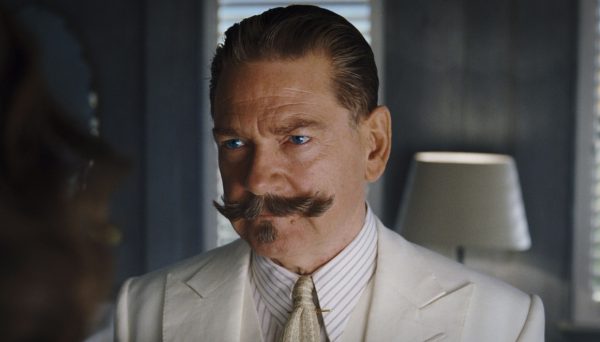
Agatha Christie’s most famous creation, Hercule Poirot, has been played by different film actors as early as the 1930s era, covering Austin Trevor to Albert Finney, Peter Ustinov, and, of course, Kenneth Branagh. The latter, who also stars and directs, famously brings the Murder on the Orient Express remake to the modern generation, raking in a huge success at more than $350 million at the worldwide box office.
Branagh’s Poirot’s distinct appearance, notably his scene-stealing twirling moustache, isn’t just a facial gimmick since it has its heartbreaking backstory subsequently revealed in Death on the Nile. His performance is equally showy, and he isn’t afraid to get into action if he has to. So far, Branagh has appeared and directed three Hercule Poirot movies, with the most recent one being A Haunting in Venice in 2023.
Robert Downey Jr. as Sherlock Holmes in Sherlock Holmes (2009) and Sherlock Holmes: A Game of Shadows (2011)
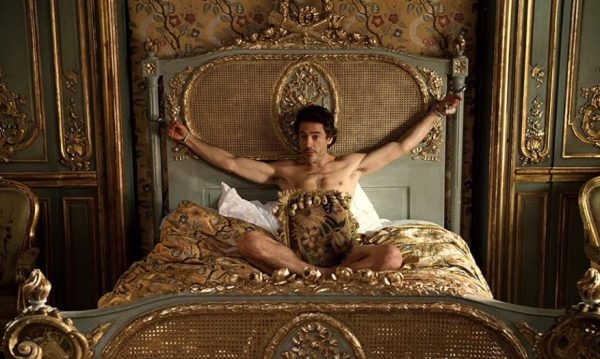
Leave it to Guy Ritchie to update an old-school Victorian-era Sherlock Holmes story with a street-level grit, as seen in Robert Downey Jr.’s lively performance playing the titular character. Unlike the more traditionally intellectual and well-mannered portrayal of the past, Downey Jr.’s version is significantly physical – yes, he doesn’t mind getting down and dirty upon engaging in brutal fistfights. But that doesn’t mean he’s all brawn since his character remains brainy, even to the point of mapping out how a fight would go in his mind before he makes the right, calculated move. For the latter, the scene is executed in a stylized slow motion, showcasing one of Ritchie’s colorful directions that makes the first Sherlock Holmes such an entertaining period-set mystery/action-movie hybrid.
Downey Jr. may have stolen the show, but let’s not forget about his buddy movie-style chemistry with Jude Law’s Dr. John Watson, whose world-weary stoicism is far from the usual bumbling sidekick typically seen in yesteryears. Ritchie’s Sherlock Holmes was a huge success, and two years later, he reunited with Downey Jr. and Law for the second time around in Sherlock Holmes: A Game of Shadows, bringing in another box-office glory.
Joseph Gordon-Levitt as Brendan Frye in Brick (2005)

Rian Johnson’s impressive debut feature imagines a 1940-50s detective fiction in a modern-day landscape, which in this case, is the high school setting. At the center of Brick is Brendan Frye (Joseph Gordon-Levitt, whose committed performance is one of the best things in this indie classic), the Raymond Chandler-esque protagonist, albeit younger and riddled with teen angst. He’s a cynical loner and social misfit who talks in stylized dialogue as if he comes from the past, trapped in the contemporary era.
The story follows Brendan’s relentless quest to find out the truth about his missing ex-girlfriend, Emily (Emilie de Ravin), before he subsequently discovers her dead body in a storm drain. Johnson embraces the storytelling pattern of hardboiled detective noir, putting Brendan through the gritty world filled with film noir antagonistic archetypes, complete with an enforcer (Noah Fleiss’s Tug) and a manipulative femme fatale (Nora Zehetner’s Laura Dannon). Brendan doesn’t own a gun, relying heavily on his wit and deductive skills to get what he wants. Even when things get rough, he would either fight back with his fists or use his street-smart situational awareness to outsmart his assailant.
Jim Carrey as Ace Ventura in Ace Ventura: Pet Detective (1994) and Ace Ventura: When Nature Calls (1995)
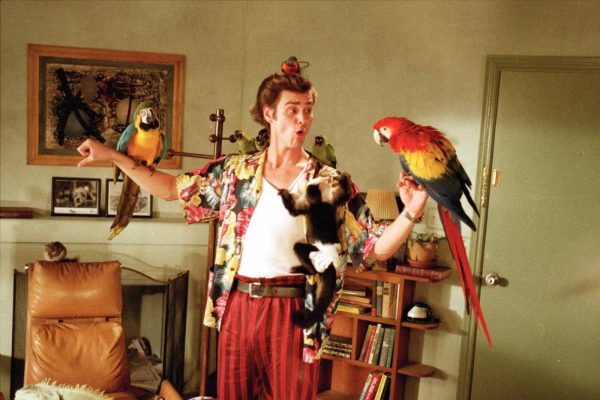
First came to prominence performing on the In Living Color sketch comedy series, Jim Carrey’s career skyrocketed into superstardom after appearing in Ace Ventura: Pet Detective. It was 1994, a banner year for the comedian known for his rubber-face antics, who also put to good use in his two other box-office hits: The Mask and Dumb and Dumber. For Ace Ventura: Pet Detective, his private detective role specializes in rescuing animals, sporting a distinctly flamboyant look: a prominent cockatoo-esque pompadour hairstyle, loud tropical Hawaiian shirt over a white tank top, and striped bum pants, appearing like he’s a loose cannon with a badge.
His madcap, cartoon-like eccentricity is part of Carrey’s goofy charm in this Tom Shadyac sleeper hit, exceeding box-office expectations to the point that an immediate sequel was released over a year later. Despite Steve Oedekerk taking over Shadyac in the 1995 follow-up, Carrey continues to push his unique brand of comedic lunacy from the opening Cliffhanger parody to the iconic mechanical rhino scene.
Ryan Gosling as Holland March in The Nice Guys (2016)

Shane Black, who is no stranger to the buddy-movie formula, pairs Ryan Gosling and Russell Crowe in The Nice Guys, a late ‘70s-set neo noir in the action-comedy tropes that follows the pair investigating the disappearance of a young girl and the death of an adult movie star. The labyrinthine murder mystery may have occasionally suffered from Black’s heavy-handed direction, but The Nice Guys still benefits from Gosling’s low-level private investigator role as Holland March, whose incompetence and clumsiness bring most of the laughs here. His bumbling personality contrasts well with Crowe’s burly enforcer character as Jackson Healy, where the latter is more of a classic, stoic tough-guy archetype. Their odd-couple dynamic echoes Black’s winning buddy-movie formula that he perfected since his Lethal Weapon days.
Bill Pullman as Daryl Zero in Zero Effect (1998)
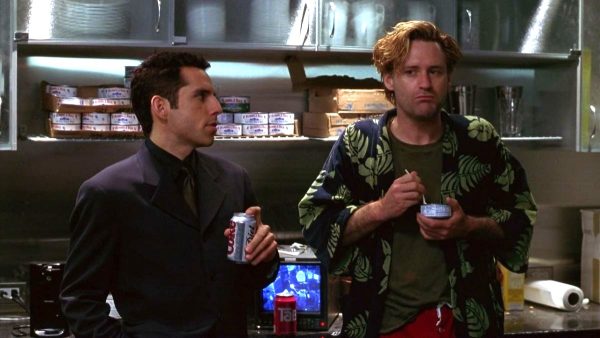
Jake Kasdan puts a modern spin on his loose adaptation of Arthur Conan Doyle’s short story “A Scandal in Bohemia”, while he isn’t kidding about “the world’s most private detective” as proudly described on the poster of Zero Effect. That part regarding the “private” refers to Bill Pullman’s character, Daryl Zero, whose sheer reclusiveness in solving cases is uniquely done through the help of his assistant, Steve Arlo (a deadpan Ben Stiller).
That means Zero doesn’t meet his clients face to face, leaving his assistant to act as his buffer. Even when he does break his own rules, he handles interactions by disguising himself as another person. Bill Pullman has a field day bringing the oddball quirks into his role, easily one of his best roles to date, despite the movie hardly finding an audience when it was released in 1998.
Daniel Craig as Benoit Blanc in the Knives Out trilogy (2019-2025)
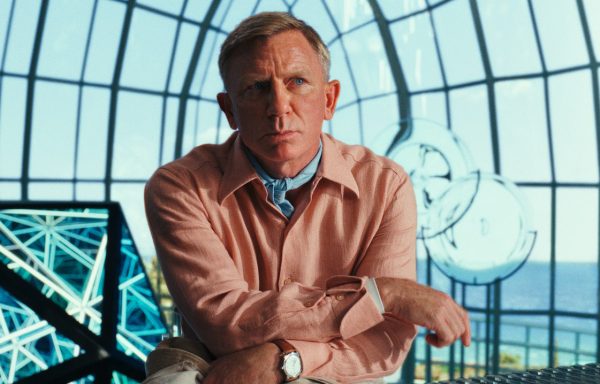
Daniel Craig proves his versatility beyond his iconic James Bond role, showcasing a modern Sherlock Holmes-like detective in Rian Johnson’s crafty murder mystery Knives Out. And he does so with his uniquely thick Southern drawl as Benoit Blanc. His character is highly observant and analytical, and Craig commits to his role with enough wit and charm. The first movie did incredibly well at the box office, grossing over $310 million on a moderate $40 million budget, and even scored an Oscar nomination for Best Original Screenplay.
After Netflix bought the rights, Johnson reunites with Craig two more times in Glass Onion: A Knives Out Mystery and Wake Up Dead Man: A Knives Out Mystery, continuing the actor’s scene-stealing eccentricity in his deductive skills for solving the cases. The third movie may have relegated Craig to playing second fiddle in his own movie, leaving Josh O’Connor’s Father Jud as an unlikely protagonist. But Johnson intentionally shifts the character dynamic to make Craig’s Blanc a passive character, and yet, he’s smart enough to keep his protagonist relevant to cracking the case.
Millie Bobby Brown as Enola Holmes in Enola Holmes (2020) and Enola Holmes 2 (2022)
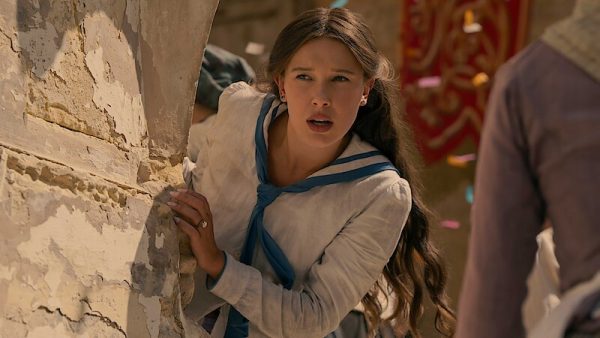
Netflix’s most prolific in-house screen darling, Millie Bobby Brown, whose breakout role in the Stranger Things series gets to lighten up for a change in Enola Holmes. First released in 2020, her character may have been the youngest one in the Holmes family, but she is just as smart and perceptive in handling her own case. What makes Enola unique is how fiercely independent she turns out to be, bringing a contemporary feminist touch to her otherwise 19th-century role.
Brown’s overall committed performance is undoubtedly the heart and soul, while she would occasionally break the fourth wall, which gives the movie a sprightly vibe beyond the usual period-era mystery film tropes. She reprises her role again in the 2022 sequel, which again remains one of the major reasons to watch for. Fans of the Enola Holmes franchise can look forward to Brown’s return in Enola Holmes 3, which is scheduled for a July 1, 2026 release on Netflix.
Margaret Qualley as Honey O’Donahue in Honey, Don’t! (2025)
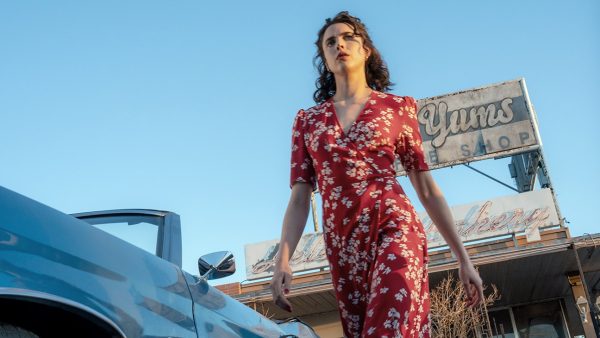
Ethan Coen, who also co-wrote the screenplay with Tricia Cooke, subverts the hard-boiled detective tropes by casting Margaret Qualley as Honey O’Donahue, a queer private investigator. Beyond her sexuality, she stands out in her femme fatale-style getup and Kathleen Turner’s Body Heat-like husky voice, blending with a steely, tough-girl grit. Interestingly, Coen’s neo-noir mystery takes place in the modern era of Bakersfield, California.
Still, he also deliberately turns the setting inside out by incorporating a retro aesthetic as if the movie belongs to a self-contained world. That explains why Qualley’s appearance looks curiously vintage, even driving a ‘60s turquoise Chevrolet Impala SS. Despite Qualley’s scene-stealing performance, Honey, Don’t! didn’t strike a chord with the audience, bringing in only a paltry $7.4 million on a reported $20 million budget.
Joaquin Phoenix as Larry “Doc” Sportello in Inherent Vice (2014)
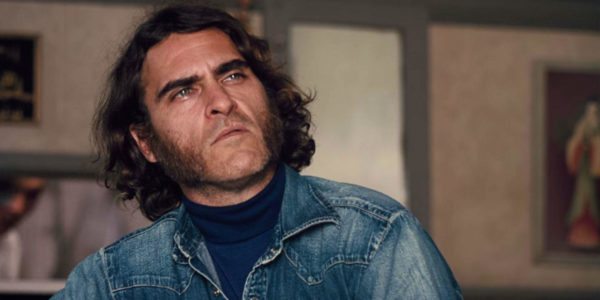
The chameleon-like Joaquin Phoenix sure knows how to inhabit the role of a pothead in Paul Thomas Anderson’s epic neo-noir comedy Inherent Vice. A pothead private investigator, to be exact, who appears out of place in the movie’s cynical 1970s setting with his large, bushy sideburns, messy hair, and a washed-up hippie look, as if he were still stuck in the ‘60s limbo.
His nonchalant acting style as Larry “Doc” Sportello brings a shaggy charm and offbeat humor to the way he works on his cases, often looking spaced-out and confused. The cases in question – from investigating the missing real estate mogul Mickey Wolfmann (Eric Roberts) and Doc’s ex-girlfriend Shasta (Katherine Waterston, in a breakout performance) to searching for the supposedly dead Coy Harlingen (Owen Wilson), and uncovering a mysterious Golden Fang conspiracy — are deliberately structured to appear convoluted and labyrinthine. Such an approach is made to mirror Doc’s fragmented stoner-like perspective while reflecting the 1970s paranoid reality stemming from the downfall of the idealistic hippie movement and counterculture era.
What are your favourite eccentric detective performances? Let us know on our social channels @FlickeringMyth…
Casey Chong