Matthew Shepherd on the 2017 Jo Nesbo adaptation The Snowman…
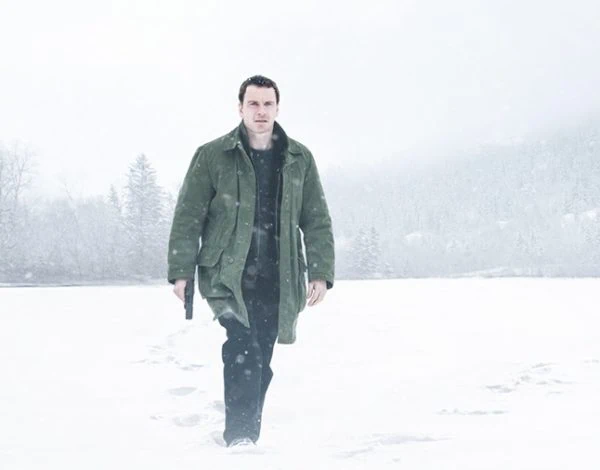
Most directors, when their film is failing with critics before it has even opened wide, say nothing. They give a carefully worded statement about artistic vision, defer to the audience, and wait for the conversation to move on. Tomas Alfredson did not do that. In an interview with Norwegian broadcaster NRK, published before The Snowman had reached American theatres, the director of Let the Right One In and Tinker Tailor Soldier Spy explained precisely why his new film wasn’t working: “Our shoot time in Norway was way too short. We didn’t get the whole story with us and when we started cutting we discovered that a lot was missing.
It’s like when you’re making a big jigsaw puzzle and a few pieces are missing so you don’t see the whole picture.” By his own estimate, around 10 to 15 percent of the screenplay was never filmed at all. That Alfredson said this publicly, before the film’s wide release, about a $35 million Universal production with Michael Fassbender in the lead, remains one of the most extraordinary admissions in recent studio filmmaking. It is also, once you have seen The Snowman, entirely believable.
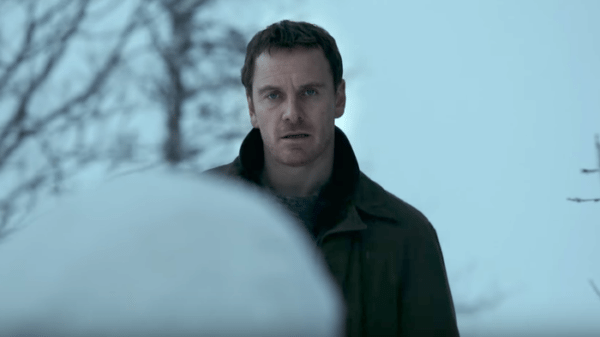
The premise had every reason to work. Harry Hole — a name the film commits to without apparent irony — is a burned-out, alcoholic Oslo detective, played by Fassbender, who begins investigating the disappearance of a woman whose scarf is found wrapped around a snowman outside her home. The killer constructs snowmen at each crime scene as a calling card, and the case connects to a series of older disappearances that Hole’s new partner, played by Rebecca Ferguson, has been quietly investigating for years.
It is a classic serial killer procedural framework, based on what many consider Jo Nesbø’s finest Harry Hole novel, with a cast that included Charlotte Gainsbourg, J.K. Simmons, and Val Kilmer alongside Fassbender and Ferguson. The Norwegian winter landscape provided a cinematographic backdrop that should have been used to devastating atmospheric effect. On paper, The Snowman was the kind of serious, prestige crime thriller that studios greenlight precisely because the ingredients are so reliable.
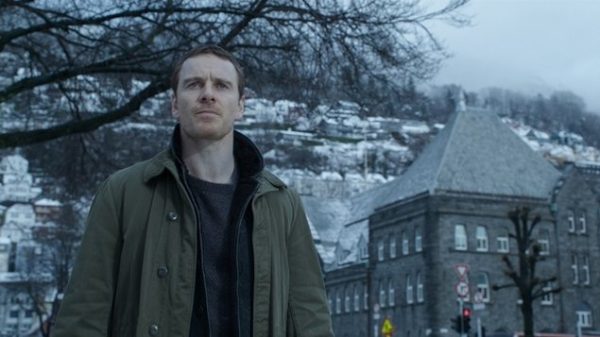
The production history tells a different story. The Snowman was originally set to be directed by Martin Scorsese, who had been attached to the project since around 2015 before stepping back into an executive producing role. When Alfredson came on board as his replacement, the project was already deep in development and carrying significant momentum. Production was rushed once Alfredson was confirmed as director, and the Norwegian shoot — dependent on specific winter conditions that cannot be replicated or rescheduled — ran critically short. Entire sequences from the screenplay were simply never captured. The editors who then attempted to construct a coherent film from the available footage included Thelma Schoonmaker, the three-time Academy Award winner responsible for cutting Goodfellas, Raging Bull, and The Departed. The fact Schoonmaker could not salvage the material is not a reflection on her ability. It is a reflection on how much was missing.
The resulting film is not merely bad in the conventional sense. It is incoherent in a specific and identifiable way — characters do villain things but are not the villain, and their behaviour is never explained because the scenes that would have explained it were never shot. Plot threads introduce themselves and then stop. The geography of the investigation makes no spatial sense. Entire plot threads freeze mid-development, which critics noticed immediately and audiences found baffling. The Rotten Tomatoes score settled at 8%. Universal, to their credit, released it anyway rather than shelving it entirely, which in retrospect may have been the wrong call. A film released at 8% with its own director publicly explaining why it doesn’t work is not a film that recovers.

What makes The Snowman the series’ most fascinating entry is that the failure is entirely process-based rather than conceptual. The Counselor failed because its vision was uncompromising. Serenity failed because timing destroyed it. Collateral Beauty failed because nobody questioned its script. The Snowman failed because a studio rushed a production that depended on unrepeatable conditions, a director tried to make it work anyway, and everyone involved knew before release that the film on screen was not the film they had intended to make. Alfredson had the most filmmaking resources at his disposal in his entire career and was given insufficient time to use them. The gap between those two facts is where The Snowman disappeared.
The postscript is the detail that lingers longest. Val Kilmer, who appeared in a supporting role as a detective from an earlier case, was at this point seriously ill and could barely speak on set. His dialogue was dubbed by another actor in post-production. The result is one of the stranger viewing experiences in the film — a recognisable face delivering lines in a voice that doesn’t quite match. It is an unintentional metaphor for the entire production: a film that looks like itself on the surface and doesn’t quite add up once you start listening.
What are your thoughts on The Snowman? Let us know on our social channels @FlickeringMyth…
Matthew Shepherd