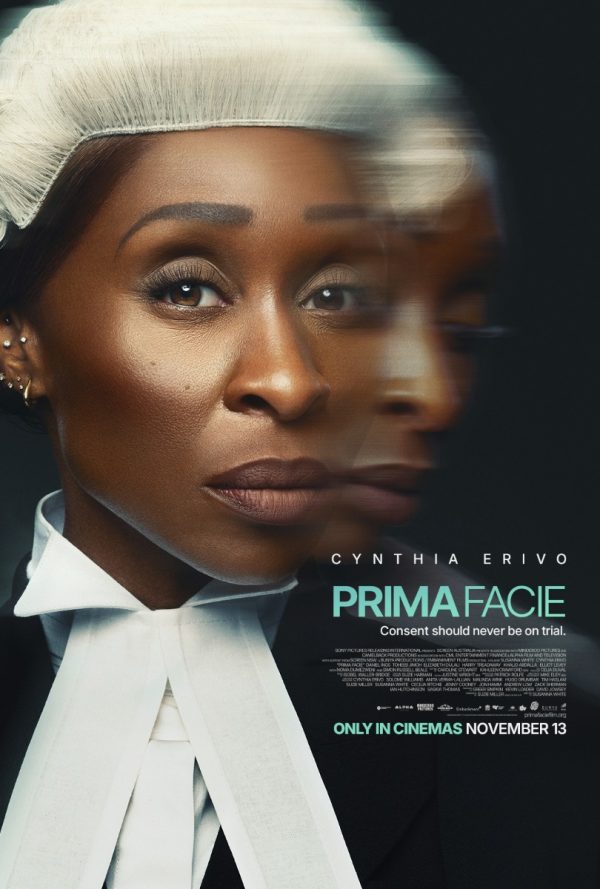
Prima Facie, 2026.
Directed by Susanna White
Starring Cynthia Erivo, Daniel Ings, Simon Russell Beale, Elizabeth Dulau, and Noma Dumezweni
SYNOPSIS:
Follows Tessa, an ambitious defence lawyer. She expertly represents her clients, including those who are accused of sexual assault. However, she finds out that the law does not provide justice after being raped by a co-worker.

Prima Facie finds Suzie Miller adapting her own critically acclaimed one-woman play for the big screen. An impassioned, incredibly important text about rape and sexual assault cases against women in the British justice system that could stand alongside Maria Schrader’s criminally underseen She Said (2022) as a cinematic account of injustice. Sadly, something is lost in translation, and so what we get instead is a flat procedural drama that comes across like a Sunday night television special.
Cynthia Erivo inherits the barrister’s wig for Susanna White’s film. She’s playing Tessa Ensler, a hot shot young lawyer who has been nominated for junior barrister of the year, is being courted by rival firms, and has the eye of her handsome privileged colleague Julian (Daniel Ings). The two begin dating, engaging in consensual sex in the chambers, and sharing late night iced cream and bottles of wine back at her flat. It’s following an incident with some dodgy food and a trip to the toilet that Julian picks Tessa up off the bathroom floor, takes her hack back to bed, and rapes her.
The trauma and the impact of that moment are undeniable, and executed in a way that’s worthy of this message and the audience’s anger. Everything around it is tonally muddled and dull. The set-up feels like The Devil Wears a Lawyer’s Gown, as lifeless voiceovers lifted directly from the play awkwardly accompany Tessa as she strides through the law courts. It’s all rather stiff and lacking in style or character, giving you the worrying impression that Erivo maybe feels a little miscast.

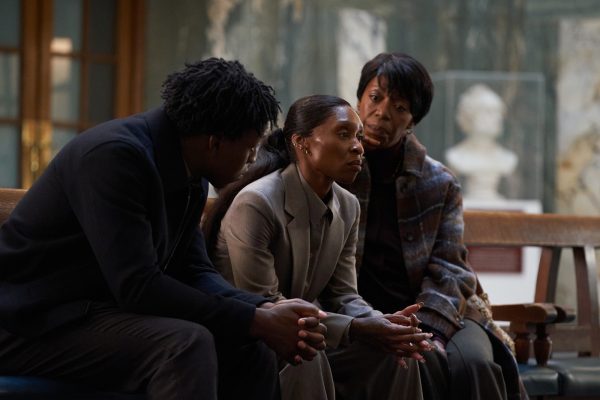
Things pick-up as Tessa catches a train over the class boundaries of London and we’re introduced to her mother (Noma Dumezwemi) and brother (Toheeb Jimoh), who are quiet and measured in comparison to the broad characters of the law courts, and are both fine, but largely reduced to representations of support and anger when the trial begins.
The tone shifts again immediately after the rape, and this is when both Erivo and the film are strongest. The muffled sounds, the shots of cracked glass, the blurred screen edges, and the way in which the camera claustrophobically suffocates Tessa as she attempts to process what has just happened to her. It’s requisitely uncomfortable, with Erivo shaking and growing smaller as the camera looks down on her in the same way that her attacker did. Her police report, and then the subsequent confession to her mother are both tough to watch, leaving the audience sat in a bit of a haze at what’s just happened.
But then the film jumps on a treadmill with Tessa and fast-forwards 1000+ days towards the trial, which is surely a missed opportunity to emphasise how long these cases take to get to the courtroom, if at all, and the additional trauma inflicted by that process. Rather than that, from here on in we get a stifled courtroom recreation that’s lacking in any tension, drama, or the kind of emotional speeches that you’d normally associate with actors taking the stand. The end is absent of any weight or palpable anger at the events or the outcome, until a final flourish of survivor solidarity does at least stir you in a way that the rest of the film fails to do.
The biggest crime Prima Facie commits is in wasting both Erivo and the opportunity to shout from the stage to the biggest screens possible. Instead it quietly shuffles off like a jury which has just been dismissed.
Flickering Myth Rating – Film ★ ★ / Movie ★ ★
Matt Rodgers – Follow me on Twitter