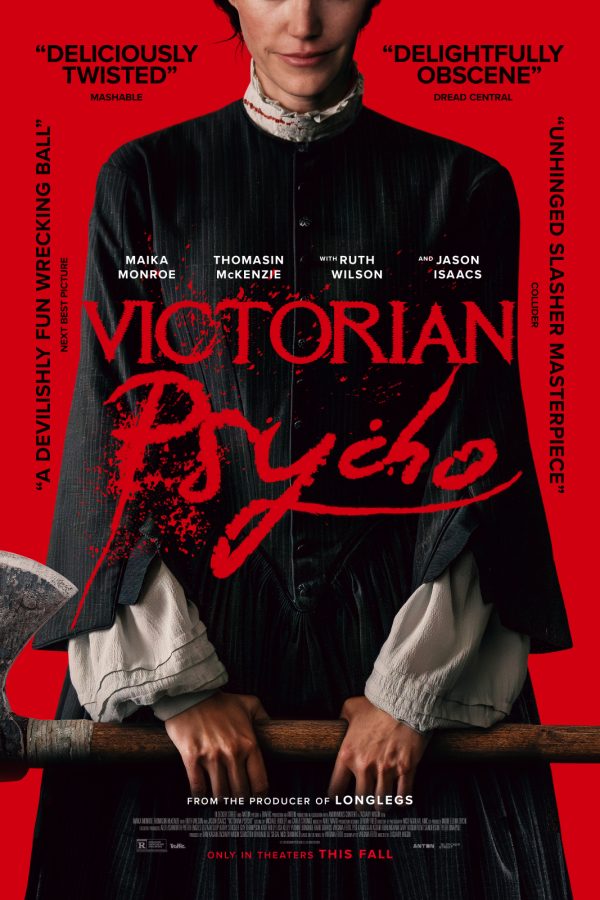
Victorian Psycho, 2026.
Directed by Zachary Wigon.
Starring Maika Monroe, Thomasin McKenzie, Ruth Wilson, Jason Isaacs, Evie Templeton, Jacobi Jupe, Amy De Bhrún, Katherine Moran, Dagmar Döring, Kate Brady, Elishka Lane, and Guillaume Doradoux.
SYNOPSIS:
In 1858, an eccentric young governess, Winifred Notty, arrives at the remote gothic manor Ensor House. As Winifred assimilates, staff begin to inexplicably disappear, and the owners wonder if something is amiss about this new governess.
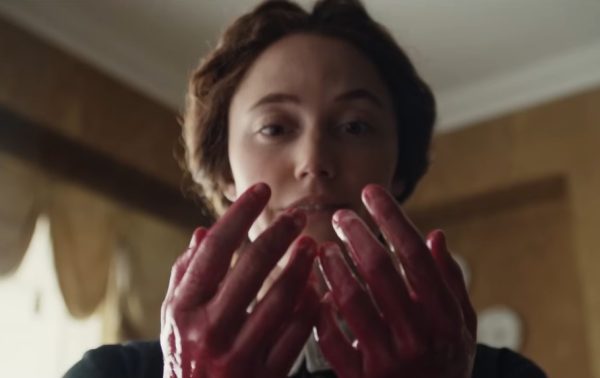
It’s hard to fathom that Victorian Psycho comes from director Zachary Wigon, as it has nowhere near the relentless suspense and thrills of his previous film, Sanctuary. To be fair, this time he is also working from a screenplay by Virginia Feito, adapting her own novel, so the source material may be lacking. Regardless, it’s easy to see why anyone, including Zachary Wigon, would be drawn to the tantalizing premise of a serial-killing governess exacting vengeance for all sorts of class-based wrongs. Casting modern-day scream queen Maika Monroe in the eponymous role only adds to that, although it is one of the only choices that pays off.
No matter how many tilted camera angles there are to suggest that something within Maika Monroe’s Winifred Notty (yes, the last name carries the cringe pronunciation “naughty “, playing into her diabolical disrupting) or bizarro behavior (whether it be savoring body parts for snacks or bludgeoning perfectly peaceful, sleeping animals under the impression that it’s in pain, while lecturing to the children that all living things are suffering), or swearing that, this time, her duties as governess will be handled differently and won’t result in another disgraced dismissal, it never changes that Victorian Psycho is largely aimless.
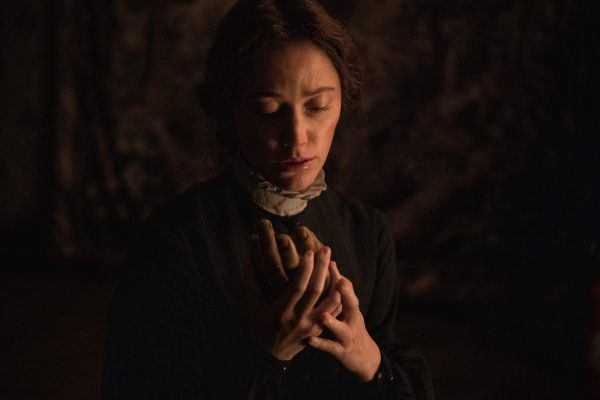
Some moments are amusingly cheeky, others are technically stylish (such as a sharp object fired toward someone from the perspective of a sketchbook in the target’s hands, with the camera seemingly attached to that book on impact), and then there are a variety of violent moments that range from rousing to lacking inspiration to bordering on tasteless. For a brief moment, the film appears as if it might enter full-blown slasher territory (although again, the kill certainly isn’t that imaginative), but that would have been too much of a fun time for whatever this narrative is going for. Meanwhile, an unexpected friendship develops between Winifred and nursemaid Lamb (Thomasin McKenzie), mostly based on the latter’s dumbfounding naivety in believing the former that a ghost patrols Ensor Manor. This too is another element that is either barely formed or flattened into nothing during the adaptation process.
As for the rest of the story, it follows Winifred in her latest attempt to hold down a governess job while keeping her psychopathic impulses in check, this time for the self-absorbed, elitist Pounds family. Per the instructions of the married couple (played by Jason Isaacs and Ruth Wilson, who are sort of having fun playing up the infuriating wealth of it all, to bring into focus whether or not they are just as or more psychotic as Winifred), she is to educate and look after siblings Andrew and Drusilla (played by Jakobi Jupe and Evie Templeton, respectively).
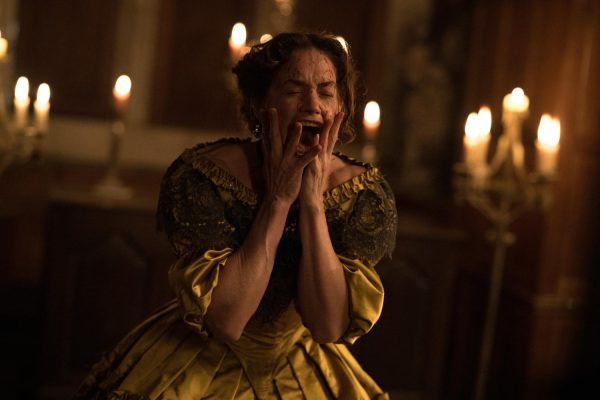
With that said, the closest the film comes to being remotely dramatically engaging is when it becomes clear the parents, particularly the father, aren’t just obscenely outrageous in their obscene wealth, but physically abusive to their daughter in a manner that isn’t necessarily surprising given the titular era. It leads one to wonder whether she will also seek revenge, as it’s one of the film’s few sequences with a true sense of upsetting danger and cruelty. The rest is weird for weird’s sake, punctuated by Winifred’s quirky first-person narration.
There is no question that Victorian Psycho, despite its episodic, sluggish pacing, is headed toward climactic violence. However, when the predictable reasoning arrives, it’s not so telegraphed, considering the previous hour has been so dull that one doesn’t bother trying to guess whether there are any further motives. Some more style emerges in that third act, forcing viewers to identify what’s in Winifred’s head and what isn’t, but it’s too little too late to care. It’s a real disappointment; the result of an eye-widening, exciting premise and genre spin on the era’s cinematic depiction; unfortunately, with so little momentum, it collapses under the weight of Maika Monroe fidgeting and twitching, torn between keeping up appearances and letting out the crazy.
Flickering Myth Rating – Film: ★ ★ / Movie: ★ ★ ★
Robert Kojder