Sylvester Stallone’s iconic underdog has endured for 50 years and is still punching in cinemas. Is Rocky the most rousing franchise around?
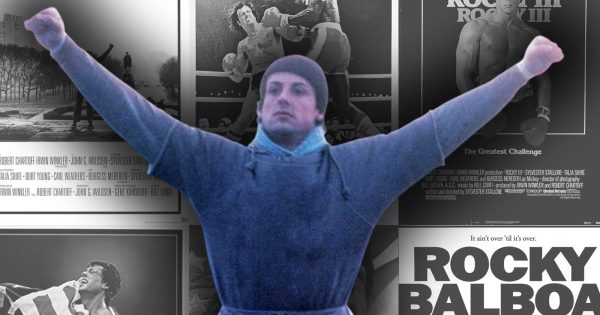
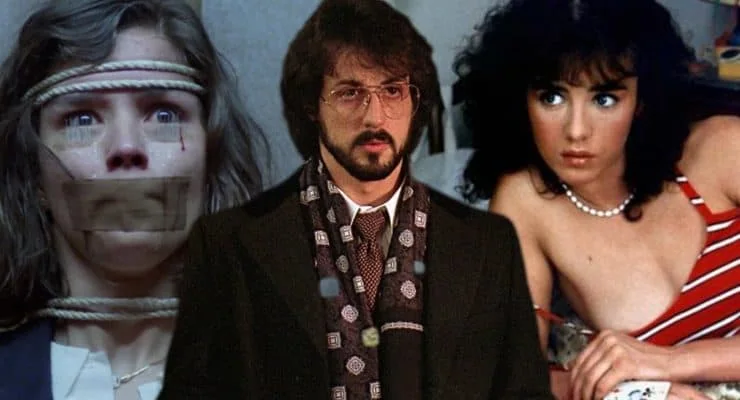
50 years ago, Sylvester Stallone announced himself to Hollywood by starring as Rocky Balboa, a local low level boxer who by chance, get’s a shot against the world champion, Apollo Creed. The story of Sly getting his script to screen and holding onto the leading role was worthy of being a movie in itself. Such was his rags to riches chance of a lifetime shot, it’s no surprise that Stallone’s battle to headline his own creation has become subject of the new release, I Play Rocky.
Peter Farrelly’s film casts Anthony Ippolito as Stallone in the inspiring movie about the movie which has been greeted with widespread acclaim. Stallone has told his story before and indeed in his most recent memoir, The Steps. Any passing Stallone aficionado will know the key points, where all hope looked lost, where he had to sell his beloved dog and the near destitute Sly was being offered life changing money to release his grip on the title part. Of course he didn’t, he stayed firm, got the role and the low budget film was a box office sensation that ended up making huge waves at the Oscars. It won Best Picture, Best Director and Best Editing at the 1977 ceremony. Stallone himself was given two nominations as Best Actor and Best Writer, whilst Talia Shire, Burgess Meredith and Burt Young were all nominated in their respective acting categories.

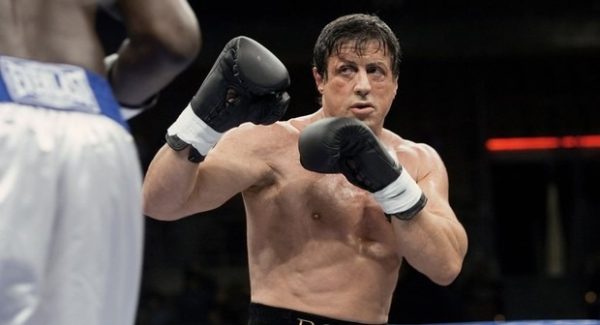
Rocky became a cultural icon and an inspirational figure who is one of cinemas greatest underdogs. Step forward another 30 years after the original release and Stallone was bringing out Rocky Balboa where his character, now pushing 60, was in a different stage in life and stepping back into the ring. It rounded off the Sly fronted franchise brilliantly, hitting all the right notes fans had long come to expect from the franchise. Then almost a decade after hanging up his gloves, Ryan Coogler conjured a spinoff story focused on the son of legacy character Apollo Creed, and Stallone returned as Rocky, delivered another incredible performance which saw him nominated for his second acting Oscar as the affable pugilist. It further proved that Rocky’s enduring appeal was still there, and that the franchise formula Stallone had been perfected could be evolved and remodelled by someone else effectively. Balboa then bowed out in Creed 2, with another effective send off. Still, Stallone has recently said he has another story to tell with Balboa, should the opportunity arise.
So why has Balboa’s legacy been so impactful on cinema? Stallone has retained creative control throughout his time on screen as the Stallion (he co-wrote Creed 2). The first film was critically acclaimed of course, if not occasionally treated as lesser than some more “elevated” films of that year and era (many feeling Taxi Driver and Network were more high brow and perhaps deserving of best picture). The film’s sequels then found themselves treated with varying degrees of critical scorn, offset by their box office success (up until the disastrous fifth film). Perhaps critics were harsher, maybe even a little snobbish on escapist fare like Rocky III and Rocky IV.
Few denied the original film was great, whilst many critics felt the sixth film was a nostalgic return to emotional resonance and form. However, there has been plenty of reappraisal over the years for the merits of the franchise as a whole. Even the much maligned fifth film has had some appreciation for its finer points, becuase the film does have high points despite its inconsistency and creative choices that fall wide of the mark (such as the clunky “Don King” character). A part of this recent reappraisal has been due to the spread of franchise clips, particularly the array of memorable scenes, speeches and philosophical moments Stallone has managed to write in every single movie.
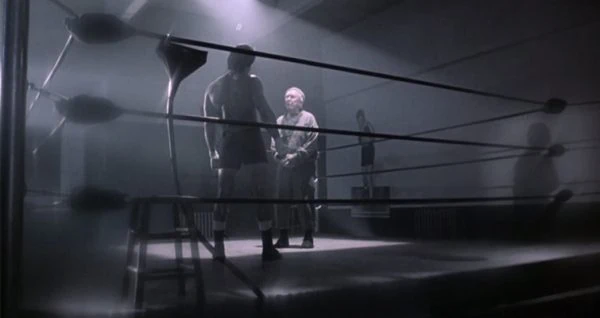
Burgess Meredith’s scene in Rocky V for example, a flashback of Mickey giving Rocky a pep talk, is legitimately one of the best scenes in the franchise. Stallone at his apex, is a great writer with a gift for dialogue. Does he veer into corniness sometimes? Cheese? Yes, but he’s had great moments throughout Rocky’s cinematic reign as underdog champion. He’s also, for the most part managed to perfectly cast characters we can appreciate as flawed and compelling, or villains who are suitably two dimensional with subtle hints at more layering. His expansion of Creed in the third film, and death in the fourth worked very well in adding depth to the previously show stopping but two dimensional antagonist.
Stallone himself, from his incredible performance in the first film, has remained a warming and engaging presence throughout. In the 80s instalments he may have had some preoccupation with posing and ensuring Balboa looked physically incredible, but still managed to punch us in the heart with the death of Mickey in the third movie, and the death of Creed in the fourth instalment. Likewise, in Rocky Balboa, Stallone gives one of his strongest performances as a melanocholic older Rocky, trying to manage life after losing his beloved Adrian. As well as being quietly heartbreaking, Rocky is so inherently good and positive, that he remained inspiring. Again some of the most memorable speeches in that sixth film have become almost iconic out of context on the internet. It’s great writing and it’s why you can pluck Rocky’s father/son speech out of Rocky Balboa and it still works.
Aside from being a writer and endearing star, one of the most important aspects of Rocky’s lasting appeal has been Stallone the filmmaker. Having taken the directors chair in the first sequel, Stallone showed a gift for ensuring Rocky was emotionally engaging. A vulnerable and sensitive hero with an edge and unbridled determination he could unleash in the ring. We all love an underdog but these tales need to pull us in and rouse and thrill us in the right moments, before tugging the heartstrings too. Adrian, having tried to persuade Rocky not to fight Creed a second time, about turns to give him her blessing to take on the fight. It triggers a new found belief in Balboa, and determination to hit the final furlong of training even harder, after she tells him to “win.” Then Bill Conti’s music kicks in and the audience is bouncing through to the final bout in Rocky 2.
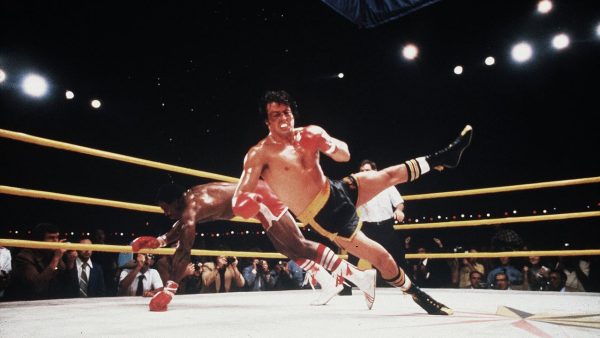
Stallone is a genius, with an innate ability to rouse his audience and manipulate them. He manages to do it so effectively too, rarely making the emotions feel cheap or unearned, particularly if you’ve taken a franchise-long journey through Balboa’s rise, fall and rise. Bill Conti’s original themes were a stroke of inspired genius too, perfectly elevating those training scenes and fights. He was able to evolve his score and add variations and flourish on the main themes too, to keep them interesting. Then Vince Di Cola jumped in to the fourth one with a score that has also remained hugely popular (and perfect workout music). Stallone had a gift of being able to shoot and oversee the cut of his scenes (particularly the montage and fights) that perfectly complimented the musical tracks. The result is edge of your seat, fist pumping excitement as Rocky takes on a fight where he’s clearly the underdog. Like Tom Cruise constantly chasing MacGuffin’s in the Mission: Impossible movies, the formula just works. Though Stallone’s films certainly have a stronger emotional core.
Furthermore, the stylish direction and efficiently lithe films never outstayed their welcome. Stallone’s physical dedication which extended to his in-ring co-stars he ensured were physically able to match him, was also a huge part of why the franchise has been so popular. By the time Stallone was in the third and fourth instalments, he was almost impossibly ripped (and oily). Though he was dipping away from realism in favour of theatricality, the fight scenes were fantastic. Having recently rewatched the fourth film, you can only marvel at what a feat of physical performance, direction, choreography, scoring and editing that final fight scene is. Realistic? Not at all, but this is a movie and by Jove it’s a work of genius.

There really is nothing quite like Rocky Balboa as a legendary character with his long standing battles. Stallone injects a different narrative theme into each film, that gives variance to the expected beats like the training scenes and final fight. Whether it’s going the distance, pride before the fall, loss, grief, man vs machine, father and son or whatever. Each film has themes at a different stage in Rocky’s life. Then by the time those montages kick in and the bell rings at the start of the fight scene, we’re fully invested. To pull it off once is impressive, but Stallone oversaw six films, of which five pulled it off (and the other still had its moments). Rocky has heart and ultimately that’s what gives him his greatest and most enduring appeal.
Be sure to check out the story behind the film’s genesis in I Play Rocky, and the Thanksgiving and Christmas period is always a perfect season to revisit Stallone’s legendary franchise. Are you a fan of Rocky? Let us know on our social channels @FlickeringMyth…
Tom Jolliffe