Tai Freligh chats with composer Stephanie Economou…
When it comes to superhero stories, audiences might expect soaring orchestral themes, triumphant brass and music that announces the arrival of a hero. But HBO Max’s Lanterns takes a different approach, grounding its cosmic mythology in the grit, atmosphere and emotional complexity of an Earth-based murder mystery. Helping establish that distinctive identity is composer Stephanie Economou, whose score draws on everything from grunge and blues to folk and ’90s rock.
A Grammy-winning composer whose previous work includes Assassin’s Creed Valhalla: Dawn of Ragnarök and Netflix’s Jupiter’s Legacy, Economou brings a wonderfully eclectic musical background to the DC series. Her journey to Lanterns began with a blind audition and an unexpected musical inspiration, ultimately leading to a sound that gives characters like Hal Jordan and John Stewart their own distinct identities while quietly planting musical clues for viewers along the way.
I recently caught up with Economou to discuss how she landed the project, the creative decisions behind the show’s unconventional superhero score, the musical personalities of its characters, and how her work across film, television and video games continues to shape her approach to storytelling.
You came to Lanterns without having previously worked with HBO, DC or Warner Bros. Television, and the blind scoring process meant your music had to make its case before your name did. When you first saw the pilot scenes, what did you hear in them that you suspected other composers might not? Looking back, was there something in your demo that you think ultimately defined the direction of the score?
When I first saw the pilot scenes, I was immediately gripped by the show’s tone and aesthetic. I heard grunge, blues, folk, and 90s rock in my head because I feel that music communicates raw emotion and expression. I wrote a Mark Lanegan-inspired vocal theme with guitars and Wurlitzer for one of the pilot scenes in an attempt to root us in Nebraska. Chris Mundy said he hadn’t heard anything quite like it in a score before and I think that choice was enough to make an impression in the blind demo stage. That melody ended up finding roots throughout the season, becoming the theme of Rushville itself. I eventually developed it into a song for the end credits of episode five called “Away From Home (Rushville’s Lament).”
One of the things I find compelling about Lanterns is that its music doesn’t always tell us to feel triumphant when a superhero moment arrives. Sometimes it feels uneasy, lonely or even a little broken. How do you decide when a moment deserves the traditional emotional payoff, and when the more honest musical choice is to withhold it?
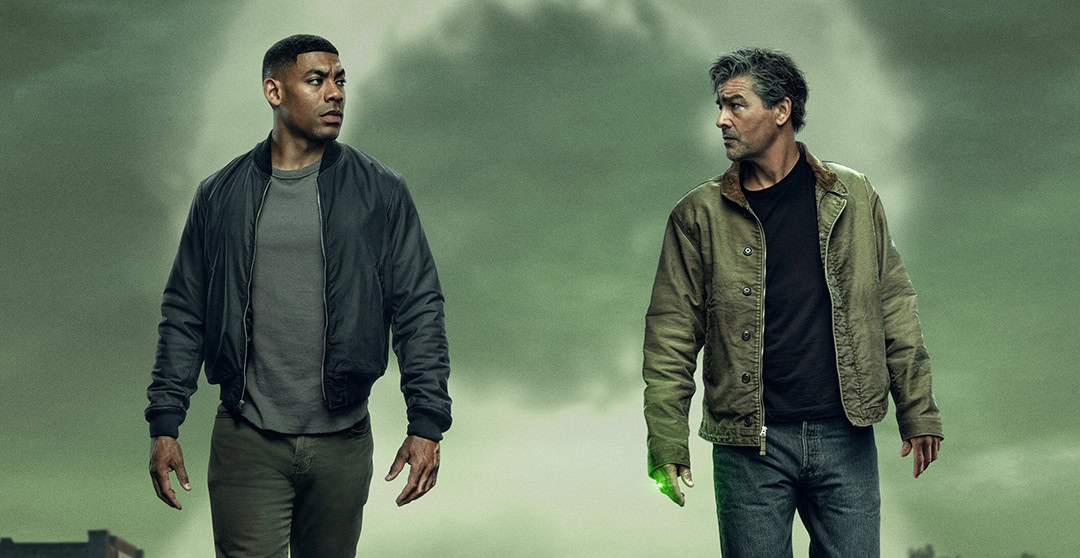
That was all in the storytelling. There are no cheap arrivals or traditional superhero fireworks in Lanterns. They’re colored with nuance and complexity; sometimes with humor. It reframes our Lanterns as imperfect, approachable, gritty, and human. There’s weight and intricacy to their motivations and I wanted to explore how music could dance with those dynamics. Both Kyle and Aaron’s performances were pitch perfect, and the last thing I want to do as a composer is step on emotional beats. It takes a deft hand when scoring those scenes. Sometimes playing poignant, impactful moments read perfectly without music and Chris knew where he wanted to let the honesty of what was happening on screen speak louder than anything else. I think that instinct is one of the many things that makes him a brilliant showrunner.
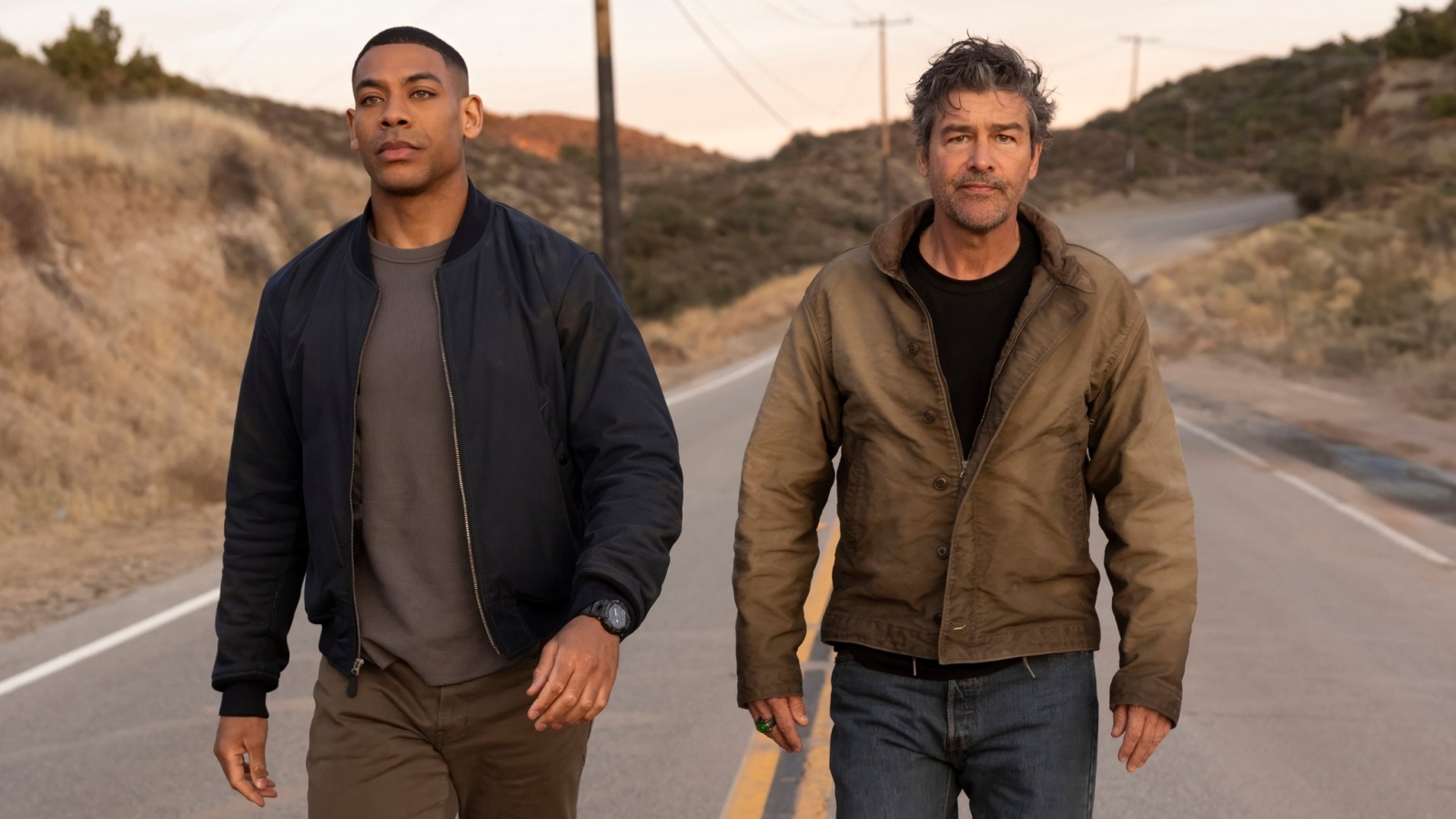
You’ve described John’s musical identity through loneliness, steadiness and an underlying sadness, while Hal’s has more swagger and rough-edged confidence. If you had to cast each character as a band, an album or even a particular era of rock music, what would you choose?
Hal Jordan: Rubber Factory by The Black Keys & Children of the World by Bee Gees
John Stewart: Nevermind by Nirvana & Jar of Flies by Alice in Chains
Guy Gardner: Americana by The Offspring
Will Macon: Murder Ballads by Nick Cave & the Bad Seeds
Kerry Kane: Blues Funeral by Mark Lanegan Band & Marcy Playground by Marcy Playground
Sinestro: The Downward Spiral by Nine Inch Nails
Zoe Macon: Dummy by Portishead
Noah Macon: Amnesiac by Radiohead
If I were to cast any characters into a dream band:
Hal: Drums
Guy: Lead vocals
John: Bass
Kerry: Keys
Sinestro & Noah: Guitars
Earl: Backing vocals
I think they’d be prog rock band.
When you’re experimenting with a sound as distinctive as the one you’ve created for Lanterns, I imagine there are ideas that are exciting in the studio but ultimately don’t belong in the finished series. Was there an instrument, musical technique or direction you explored for this score that you loved but had to abandon? What made you realize it wasn’t right for this particular world?
My first go at Hal’s theme wasn’t quite right. It was Black Keys-inspired (stacks of distorted guitars, basses, drum kit, etc.). While the instrumentation and attitude worked for him, ultimately Chris and I realized it felt too commercial for Hal Jordan. Hal is rough around the edges and scrappy and what I did felt too polished. The second time around, I still used blues/garage rock as a source of inspiration, but I leaned more into found percussion sounds (beer bottles, scrap metal, wood, chains) and wrote a riff on electric bass and baritone guitar that had more swagger, bends, and syncopation. The percussion made it more tactile, worn, and rugged, with the overall feel having levity to complement Hal’s cheekiness. While I do like that original take on Hal’s theme musically, I think I arrived at something so much more fitting for his character and I might not have gotten there without that first exploration.
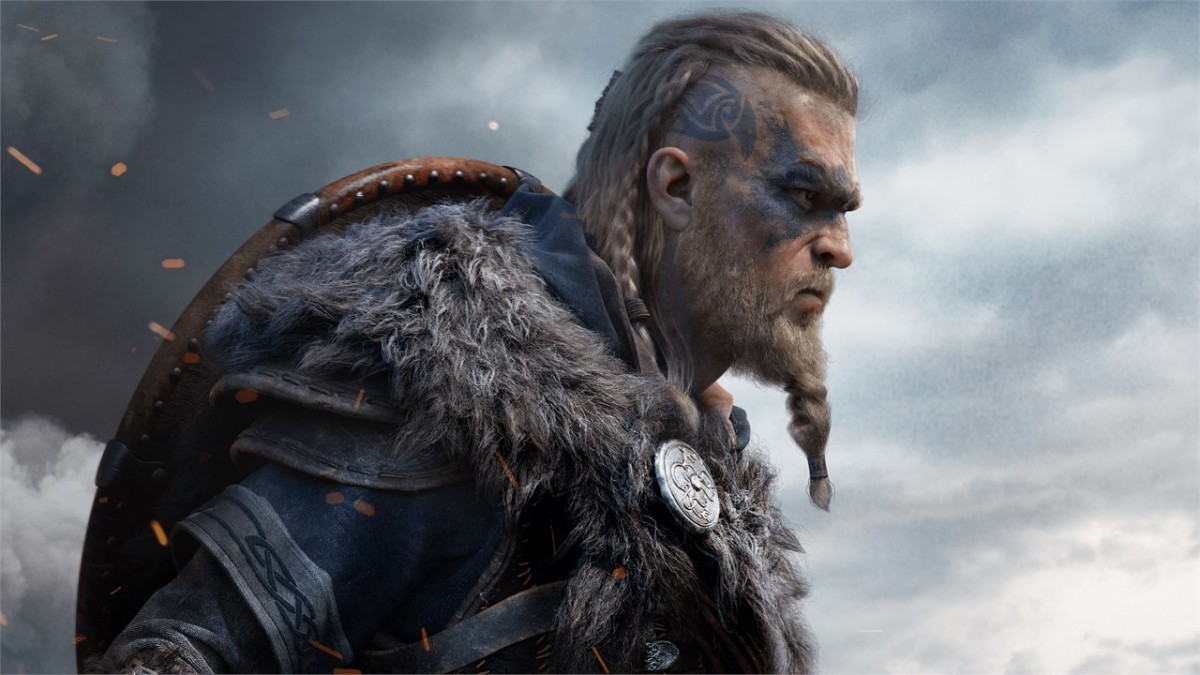
5. From classical composition to black metal to Green Lanterns Your work moves between classical composition, the rock-influenced world of Lanterns and the Nordic folk and black metal influences of Assassin’s Creed Valhalla: Dawn of Ragnarök. When you move between such different musical worlds, do you feel you’re learning a new musical language each time, or finding new ways to express the same instincts you already have? Has one project ever permanently changed the way you approach another?
I think it’s both. I love immersing myself in new styles and finding ways to express myself through different influences. Ultimately, when I take on a score and use a specific stylistic inspiration, I’m still using my voice through that language. I follow my creative instincts as I always do, but am wielding new tools and techniques. It’s my favorite part about writing music for media: every project demands a unique palette. As someone who loves studying, analyzing, and discovering new music, this massively excites my curiosity. I will say working on Assassin’s Creed games permanently and fundamentally changed how I make music. It gave me license to pick up and record all sorts of instruments without having any kind of real proficiency on them. Coming from a classical background, I always felt like I shouldn’t try to play an instrument without committing to studying it out of respect for those who devote their lives to it. But with Assassin’s Creed, everything needed to feel primitive and raw. Nothing says primitive and raw like someone who is playing an instrument in a pretty crude, unconventional way! Once I started doing this, it blew my process wide open. I stopped being so concerned with tradition and perfection. All of my scores in recent years have me recording on multiple instruments, even if it’s just providing an organic source to then do sonic manipulation and production. Improvising and getting my hands on instruments has become one of the most important parts of my process.
You spent about six years working with Harry Gregson-Williams before building your career as a lead composer, and you’ve since developed a style that seems particularly comfortable taking risks. How did you learn to recognize which parts of your musical voice were distinctly your own? Was there a point when you realized you no longer needed to measure an idea against what you’d learned from someone else?
When I was working with Harry as a writer, I made a conscious choice to first score a scene without taking into account his writing style. I would score it purely based on my musical instincts. Now, that makes me a really bad additional composer, but it was my way of trying to uphold a sense of wholeness and dedication to my creative sensibilities. I’m lucky in that I felt Harry and I shared a lot of similar sensibilities, so I never felt like I was a million miles away, but I think the purposeful effort to choose my voice first was helpful in keeping my own creative judgments healthy. Everything I learned from Harry has informed who I am today as a composer. I never had to “unlearn” anything because his guidance made me a better, well-rounded, and more prepared collaborator. His standards were always immensely high, which is a testament to his work ethic, and I use that same yardstick to measure my own success.
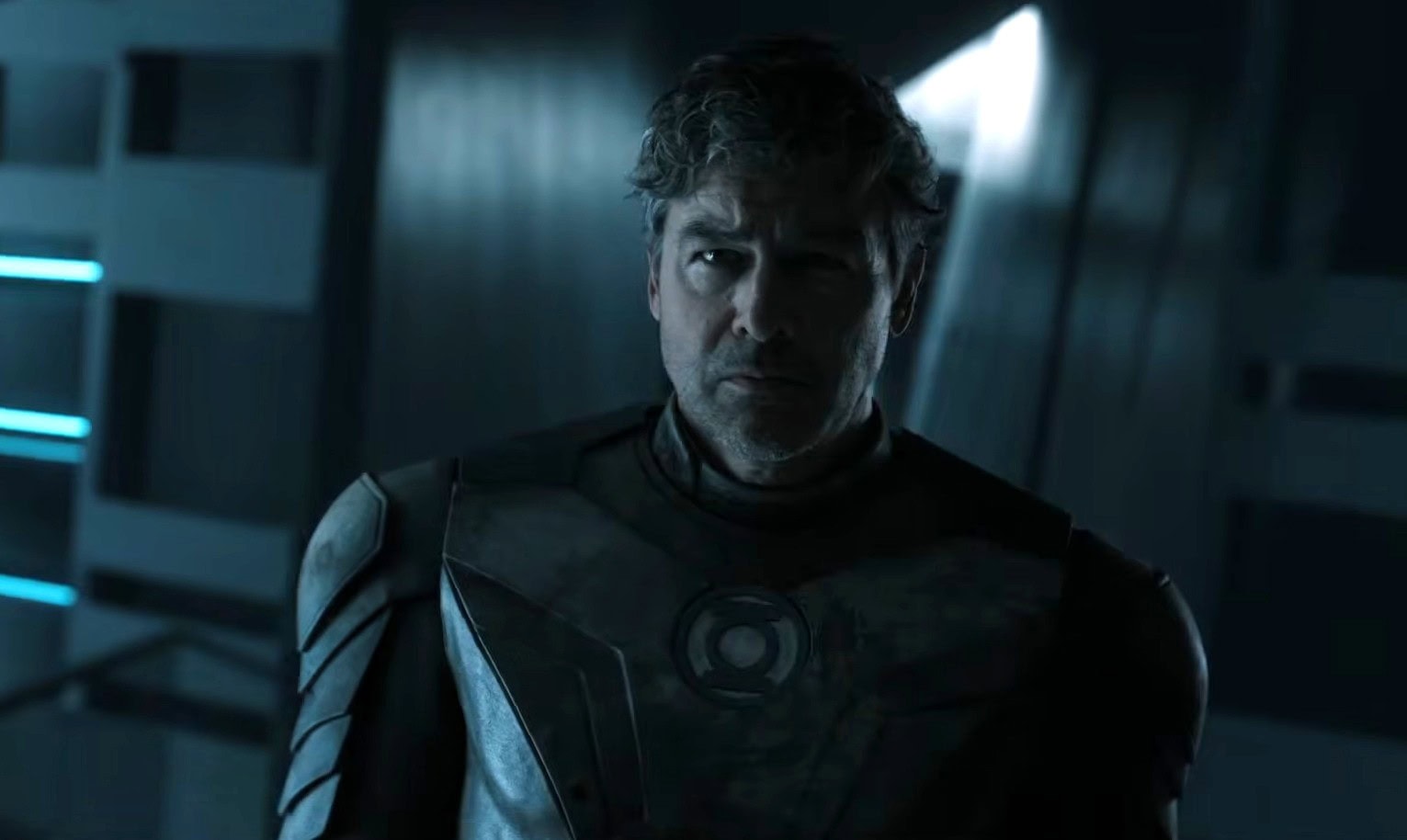
You’ve talked about using musical instability and unexpected harmonic movement to create unease, sometimes even beneath a moment that should feel exciting. How do you think about the relationship between what a character understands, what the audience understands and what the music knows? Can a piece of music tell the truth about a character before the story is ready to reveal it?
Absolutely. Music can be incredibly manipulative. It determines how we perceive a character or situation. It can set an expectation or subvert one. It’s one of the most powerful tools to play with an audience’s sense of equilibrium. I’m always very concerned with what my music is communicating. I’m often asking my collaborators how far we should push something. “Do we want to foreshadow danger?” “Should we destabilize the audience in this scene?” This came up in Lanterns. (SPOILER) One of the main characters, Noah, is revealed to be a Manhunter in the finale. Prior to that reveal, he gives a speech to his school and I was tasked with getting the right mood for the scene. At that point, I’d established a theme for the Manhunters, so I asked Chris if I could try creating a nebulous, neutral version of that theme under Noah. It can be a risky move, in case someone catches it and decodes it, but it’s fun to place those easter eggs and plant seeds that aren’t yet obvious. Music can be a character in its own right. It can be omniscient or it can be in-step with how a character sees the world. Getting to play in those spaces and push storytelling boundaries is extremely exciting.
You’ve explored unusual instruments and experimental sounds to make fictional worlds feel tangible. If you could invent an instrument that existed only in the Lanterns universe, what would it sound like, how would someone play it, and what would it communicate that a conventional instrument couldn’t? Would it belong to the Lanterns themselves, to the alien world, or to something we haven’t encountered yet?
What if there was an instrument that acted as call to assemble all Green Lanterns in every sector no matter where they are, like a signaling device akin to a shofar or a Viking war horn? It would have to transcend sound, time, and space. That would be a cool thing to curate. All I know is, it would have to be glowing green.
Many thanks to Stephanie Economou for taking the time for this interview. She can be found on Instagram and her website.
Tai Freligh writes about entertainment and pop culture for Flickering Myth from sunny Huntington Beach, California…just a hop and a skip from Los Angeles. He can be found on LinkedIn, Threads, TikTok and his website.