Forty years on from its release, Adam Page revisits The Texas Chainsaw Massacre 2…
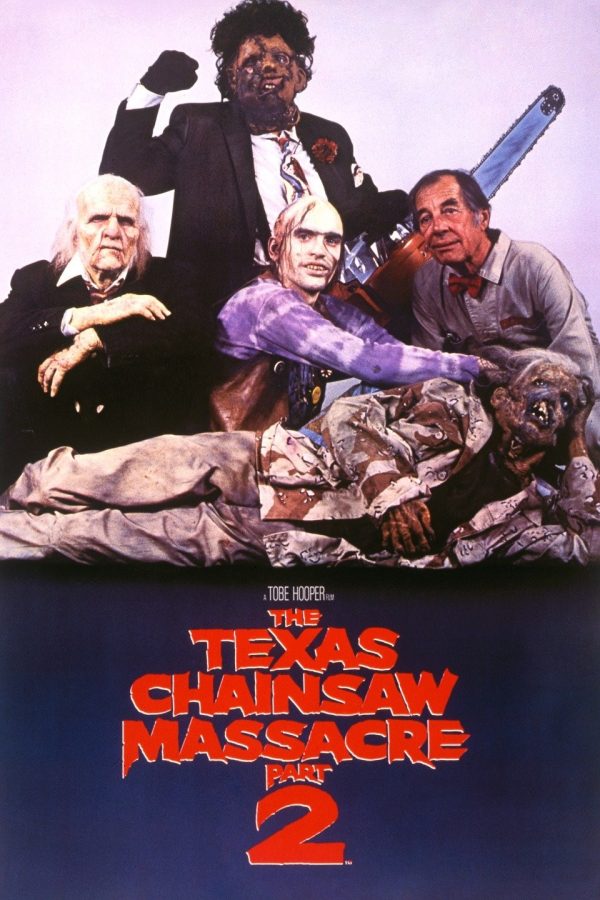
I’m going to start this by talking about disappointment. Real disappointment, the sort that lingers around like a broken transmission or a broken promise. It’s 1986. You’ve paid your money and settled down in the dark with nothing but your expectations, because 12 years earlier a Texas nobody named Tobe Hooper had reached inside your chest cavity with a documentary-grade 16mm camera and a chainsaw and then rearranged your understanding of what a movie could do to your nervous system. The Texas Chain Saw Massacre wasn’t really a movie that you watched, it was more a movie that happened to you, like a car accident, or the moment you realise the water’s gone bad and you’ve already been drinking it for a week.
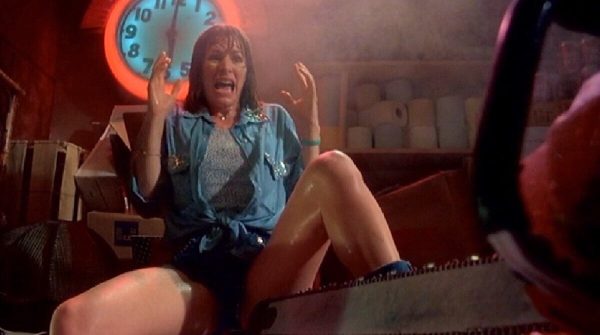
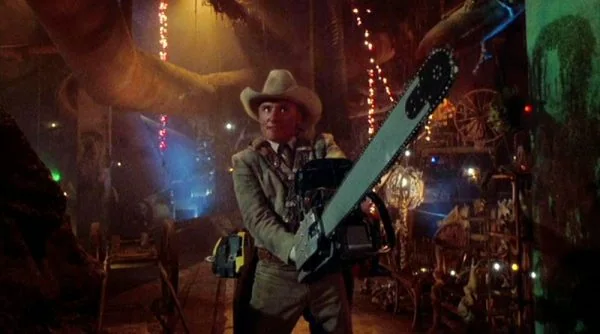
Then the sequel shows up, and you’ve got Dennis Hopper waving a chainsaw around like a cheerleader with a baton, Leatherface is dry-humping a chainsaw against a terrified woman’s leg in a scene that doesn’t play as violation and more like a bad Friday night at a Texas roadhouse, the whole thing is drenched in neon and viscera is piled up like a butchers offcuts, and audiences sat there in the dark thinking: what in the actual hell is this? This isn’t horror, this is a damn cartoon that somebody left out in the sun too long.
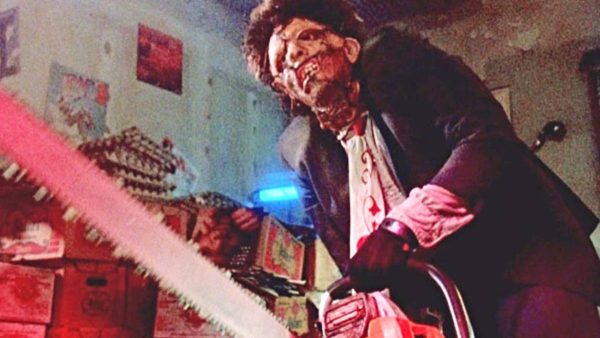
And the thing nobody wanted to hear in 1986, and the thing I want to sit you down and make you understand now, forty years on with the benefit of hindsight and maybe a stiff drink is: Hooper knew just what he was doing. He wasn’t failing to make Chain Saw Massacre again. He was refusing to, with that refusal becoming one of the great, misunderstood pivots in American genre cinema. It was a moviemaker taking a sledgehammer, or I suppose a Poulan 5400 chainsaw with the guide bar extended to novelty length, to his own legend because that legend had curdled and the world around it had gotten so hideous that straight horror felt like lying.
I’ve talked before about how you can’t get the old band back together. You can chase it, and God knows I’ve watched plenty of people chase that ghost, trying to recreate some perfect night they once had, some show or road trip, some fight that felt like the world cracking open. But the conditions that made it all so transcendent are gone. The original Chain Saw Massacre was filmed in a really specific hell: Hooper and his crew were shooting in 100-plus degree Texas heat, on a poverty budget, half-starved and losing their minds, with the hangover from Watergate and the gas crisis and the sense that the American dream had tuned to gangrene all bleeding into the grain of the movie. Even watching it now, the movie is basically dread as documentary. It doesn’t wink at you at all and there are no jokes. It has a dinner table scene that even on the rewatch makes me physically recoil, with Grandpa’s withered hand fumbling at the hammer, Sally’s scream going on so long it stops being a sound and becomes part of the furniture.
You can’t restage that night twice. And whoever tells you they can is selling you something, usually mediocrity with a garnish of nostalgia.
So Hooper, bless him, didn’t even try. Twelve years is a long time in a man’s head, and an even longer time in America’s. He’d watched, and here is where you have to listen to the man’s words and not what the fanboys retrofitted onto the movie after the fact, he’d watched the slasher genre he’d inadvertently midwifed change into an assembly line. Freddy, Jason, Michael Myers, an entire industrial complex of masked men doing the same kill-count maths in sequel after sequel, the absolute existential fear of that first movie reduced to a formula you could fill with interchangeable stuntmen and an effects house. Hooper’s own words, given in interviews around the release and afterwards, keep circling around the same disgust: the slasher movie had become a product, and product deserves to be mocked and not honoured with another straight-faced entry.
And layered on top of that, the part that really gets me and has a horrific feeling of deja vu to it, was Reagen’s America itself. By 1986 it had become its own kind of splatter comedy. Greed was no longer a vice and was now a lifestyle brand. There was a president who’d been a movie cowboy running the country like a studio backlot, trickle-down economics being sold with all the sincerity of a late-night infomercial, Gordon Gekko was about to tell a whole generation that greed is good and Wall Street guys doing lines off each other’s business cards. At the same time, family farms in Texas, the actual backbone of the state where this whole saga is set, were being foreclosed on by bank men in good suits. Hooper looked at that landscape and clearly thought: the real monsters aren’t wearing human-skin masks anymore. They’re wearing Brooks Brothers.
So he made a movie where the villains; the Sawyer family, Leatherface’s people and the original movie’s silent agrarian nightmare, have gone into business. Literally. They have a chilli franchise, serial killers with a small business plan, grinding up victims for prize-winning chilli at a cook-off. The whole rotten and brilliant joke is that nobody in the town filled with dumb, complicit Texans can tell the difference between a family business built on human meat and any other family business, because by 1986 cannibalising your fellow man for profit had basically become the national pastime.
Critics hated it. And I mean hated it, with the type of hatred reserved for things that feel like a betrayal rather than just a bad night out. You can forgive a guy one off night. What you can’t forgive is the feeling that he’s laughing at you while it happens.
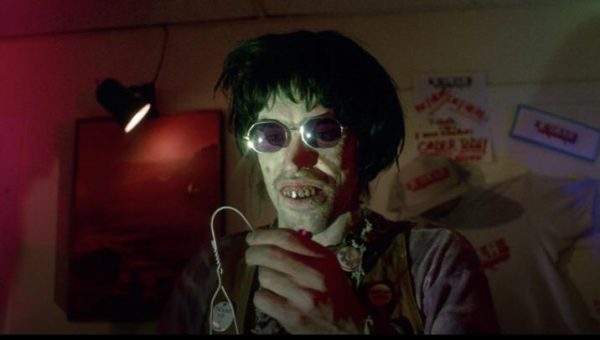
The reviews from ‘86 read like a coroner’s report on a disappointing corpse. Critics wanted the suffocating dread of the original, all that queasy sunbaked terror, and they got Dennis Hopper in a cowboy hat monologuing like a Shakespearean ham who’d wandered onto the wrong set, Bill Moseley as Chop Top doing a lobotomised Vietnam-vet routine with a heated coat hanger he presses into his metal skull plate for kicks, and a finale staged in an abandoned amusement park called Texas Battle Land all lit up in horrible carnival colours and reminding me of the inside of a migraine. Gene Siskel absolutely savaged it. The MPAA slapped it around so hard trying to wrangle an R rating that Cannon Films just said screw it and released it unrated, which in 1986 was basically an act of self-sabotage, a big sign on the marquee saying THIS MOVIE IS TOO MUCH FOR YOU. IT’S BAD BUSINESS.
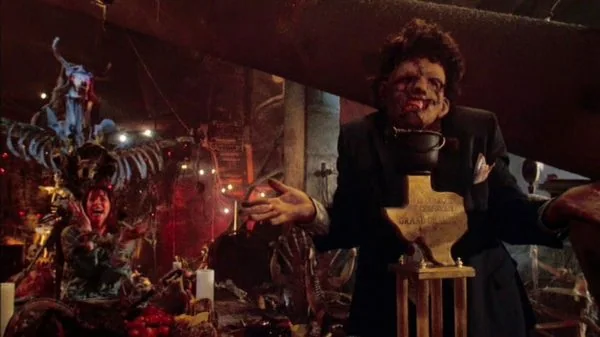
For their part, audiences mostly seemed just baffled and a little offended, the way you’d feel if you showed up to a funeral and the deceased was wearing a clown nose. They’d come for terror and got a demented vaudeville act soaked in enough Tom Savini gore, with the maestro working overtime to make all the ceiling-dripping, face peeling, chainsaw-to-the-skull horror show look as cheerfully, cartoonishly abundant as possible, that the violence stopped registering as violence and became almost slapstick. And again, that was the point and nobody in that particular moment wanted to hear it. Comedy needs distance and cultural self-awareness to land, and in 1986 the culture wasn’t ready to laugh at its own chainsaw yet. It was still bleeding from the first cut.
There’s a bitter little truth about satire, and you see it watching people who think their cruelty is just “high standards”: if you do the satire too well, if you really commit to the bit instead of winking at the camera every ten minutes to reassure the audience you’re in on the joke, people will mistake the satire for the disease it’s diagnosing. Nobody in 1986 was going to give Tobe Hooper credit for indicting American greed by making a movie that on its surface was exactly the kind of garish, over-the-top splatter excess that greed produces. The movie doesn’t hold your hand, or have a wry Greek chorus explaining “this is all metaphor, folks.” It just is the metaphor, dressed up with a chainsaw and chilli apron, and if you weren’t paying attention then you walked out thinking Hooper had lost his mind, lost his nerve, lost whatever it was that made the first movie such a masterpiece.
But something I really do love about the movie business is that nothing stays buried if it’s actually good, and bad reputations rot off eventually just like everything else, leaving just the bone structure of what was there all along. Texas Chainsaw Massacre 2 got its reclamation the way most of the misunderstood and ahead-of-its-time genre work does: slowly, through the underground and Fangoria faithful and the video store insomniacs who kept passing the movie around like contraband, insisting to anyone who’d listen that no, look again, look at what he’s doing.
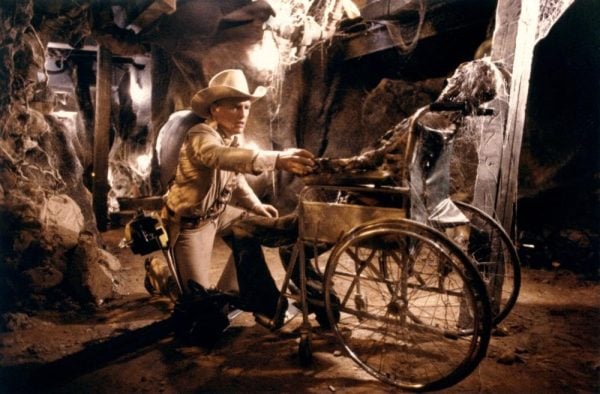
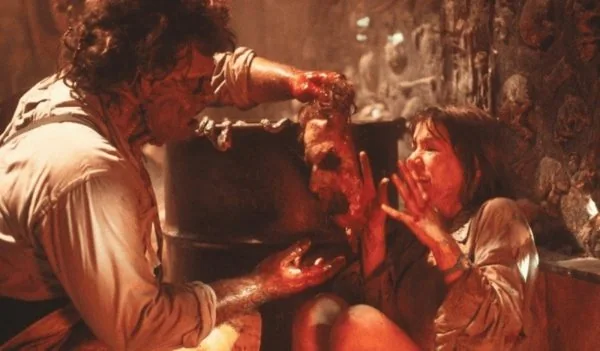
Because once you pull away the disappointment of expecting a straight sequel, it’s one of the sharpest satires the genre ever produced, and even though its tone is chaotic, the targets are exact. The chilli cook-off is more than a sick gag; it’s Hooper pointing straight at a culture that will consume anything, package any horror as commerce, slap a ribbon on any atrocity just as long as it’s profitable and the package is cheerful enough. Leatherface’s strange, almost tender fixation on Caroline Williams’s Stretch throughout the movie, with killing becoming secondary to a grotesque kind of courtship, reframes the character from pure slasher-movie boogeyman to something sadder and odder, a monster capable of a sort of need, and that’s its own dark joke about intimacy in that transactional decade. Then Dennis Hopper’s Lefty Enright, the vengeance-crazed ex-Texas Ranger swinging chainsaws like nunchucks in a scene of purely insane overkill, isn’t there to be a hero. He’s there to show us that the avenger is just as crazy, just as chainsaw-drunk on violence as the family he’s hunting, and that in this landscape revenge isn’t catharsis, it’s just the same disease wearing a badge.
Critics eventually caught up. There were retrospectives throughout the 90s and 2000s, the kind of reassessments that horror cinema specialises in as horror is the genre America is always ten years too embarrassed to take seriously in the moment, started reading Chainsaw Massacre 2 as a deliberate and coherent artistic statement instead of a director’s failure of nerve. Hooper’s own interviews, when revisited with fresh ears, sounded more like a thesis statement: this was always meant to be a satire of the Reagan era wearing a slasher’s skin, a movie about a country so wrecked with consumption and greed that cannibalism had become just another market inefficiency to be exploited. The gonzo tone was Hooper refusing to let audiences enjoy the horror comfortably, the way they’d learned to enjoy Jason and Freddy; turning the body count into something so excessive it curdles into commentary, in much the same way the goriest of the Roman satirists knew that excess itself could be the point and you could drown an audience in blood until they choked on recognition instead of fear.
Something I think about a lot is how the things that get you crucified in the moment are so often the things people will build shrines to later, once the discomfort has had a decade or two to age into wisdom and once enough time has passed that the audience finally has the distance to laugh at what they were supposed to be laughing at in the first place. Chainsaw Massacre 2 failed commercially and critically because it demanded something audiences in 1986 weren’t ready to give: the willingness to laugh at the horror that had traumatised them twelve years previously, and the recognition that the family who once represented some primal, wordless American dread had, by the Reagan years, gone corporate like everybody else. And it was this, the banality, the branding, the chilli, which was somehow more horrifying than the original’s silent, sun-roasted terror, because it was so much funnier and so much closer to home.
Hooper never made another move that landed with the same swaggering and misunderstood confidence, and maybe he didn’t need to. He’d already done the thing that matters most: he took the monster that made his name, the one thing the world would have happily let him repeat for the rest of his career, and he took a chainsaw to it instead. He laughed the whole time and dared everyone watching to admit they were laughing too. It took the culture twenty years to catch on to the joke, but I don’t think that’s a failure.
Sometimes that’s just what it costs to be early to the table.
What are your thoughts on The Texas Chainsaw Massacre 2? Let us know on our social channels @FlickeringMyth…
Adam Page