With Halloween upon us, Flickering Myth’s Casey Chong presents a selection of bizarre horror movies that embrace the absurdity of their premises…
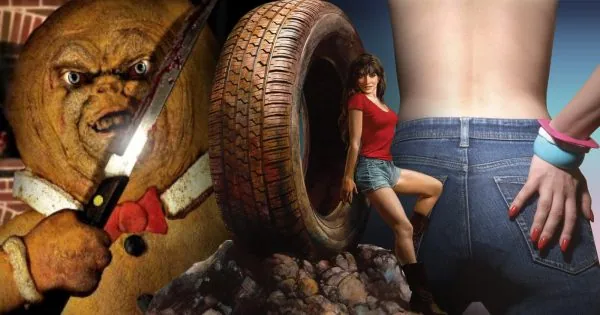
Bizarre horror movies thrive on their absurdity, often with logic thrown out the window in favor of turning unconventional ideas into a surreal cinematic experience. The concepts can be outright silly, shocking, or deeply philosophical. Whatever it is, one thing is for sure: these movies refuse to play safe with the conventional, mainstream-friendly formula. From the possessed pair of jeans on a murderous rampage to a vagina that bites off genitals, and fleshy VCR and virtual reality gaming, here are the ten of them worth checking out…
Slaxx (2020)
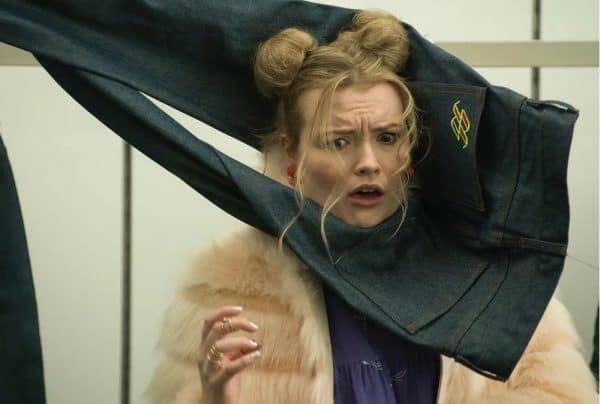
What if a pair of jeans can kill whoever puts them on? That’s the premise of Elza Kephart’s Slaxx, which combines a single-location horror set entirely in a clothing store and a pitch-black satirical jab at the so-called corporate social responsibility (Company founder Harold Landsgrove, played by Stephen Bogaert, boldly claims their revolutionary, gender-inclusive Super Shapers jeans are both ethically sourced and sustainable), and hyping a new product launch through a strategic FOMO-style rollout and influencer shout-out.
Kephart even keeps her movie short with none of the pretension, highlighting what matters the most: a possessed pair of jeans starts slaughtering everyone in a gruesome fashion as the store goes under a total overnight lockdown until the following opening day of “Monday Madness”. Like a ghost, these particular jeans can crawl, strangle their victim to death, and even dance to the tune of a catchy Bollywood song.
Beyond its horror-comedy tropes, Kephart manages to slip in a grounded backstory angle surrounding the true reason behind the inanimate jeans’ killing spree, making the violence feel justified before it culminates in an increasingly pessimistic finale.
In Fabric (2018)
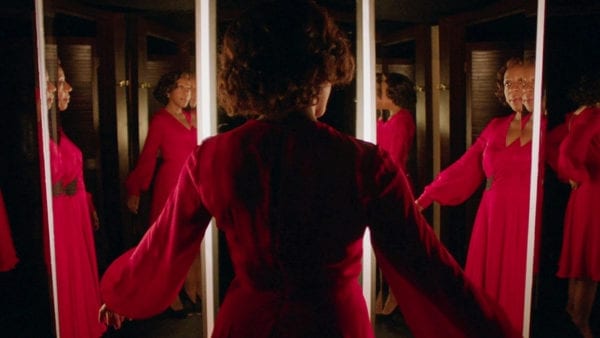
Writer-director Peter Strickland pays tribute to 1970s Euro-horror, specifically the classic giallo genre, but with a supernatural twist: the killer isn’t human, but a haunted red dress. It begins with Sheila (Marianne Jean-Baptiste), a newly single bank teller who buys a dress during a department store sale for a date. The dress fits her perfectly, but things get weird after she notices there’s a grotesque-looking rash on her chest, and at one point, her washing machine back home is acting up, even causing an injury to her hand.
Strickland deliberately eschews the red dress’s backstory, treating the seemingly possessed item through a surrealist lens and prioritizing the sensory allure of dream logic. The film suggests that the department store, including the mysterious store clerk (the perfectly cryptic Fatma Mohamed) who sells Sheila the dress, might be a witch in disguise. Then, midway through the movie, Strickland pulls a bait-and-switch tonal shift by focusing on different characters, with the dress remaining the story’s structural anchor.
The Gingerdead Man (2005)
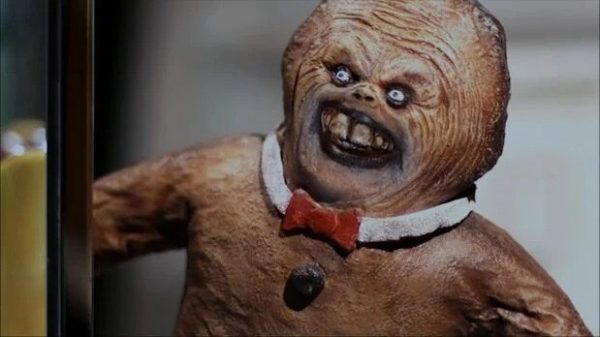
Clocking in at just 70 minutes, Charles Band goes straight for the jugular as psycho killer Millard Findlemeyer (an unhinged Gary Busey) murders the Leigh family at a diner in cold blood during a robbery. Despite Millard being sentenced to death in the electric chair, his spirit is far from dead. And here is where the story turns unapologetically haywire: a mysterious figure drops off a delivery of gingerbread spice blend at a bakery shop, managed by the surviving Leigh family members, including daughter Sarah (Robin Sydney) and her alcoholic mother, Betty (Margaret Blye). Apparently, the spice blend contains the cremated ashes of Millard Findlemeyer, and following a chain of events, including blood in the dough and an electrical power surge upon baking a giant gingerbread man in the oven, the executed killer is finally brought back from the dead in a… life-size form of the titular character.
From here, Busey has a field day voicing the foul-mouthed Gingerdead Man, throwing baking-themed puns (“It sure ain’t the Pillsbury f***ing doughboy”) and starts killing people in the bakery shop. Despite the limited budget, Band remains committed to old-school practical effects with a sprinkle of CGI in bringing the titular character to life. The whole movie belongs to a so-bad-it’s-good guilty pleasure, offering enough campy moments and over-the-top slasher chaos without overstaying its welcome. The Gingerdead Man went on to spawn a franchise, including two sequels (Gingerdead Man 2: Passion of the Crust and Gingerdead Man 3: Saturday Night Cleaver), a crossover event (Gingerdead Man vs. Evil Bong), and a spin-off (The Gingerweed Man).
Killer Condom (1996)

This German-Swiss co-production is exactly what the title says: a condom that actually kills. And interestingly, the creature design comes from the mind of H.R. Giger, the famous visual artist behind Alien, who served as a creative consultant in bringing the killer condom to life – a latex rubber that moves, even making high-pitched noises, and has a gaping mouth with lamprey-like sharp teeth capable of biting off one’s private parts. The special effects for Killer Condom are practically done the old-school way, combining extensive puppetry and stop-motion animation.
The story primarily follows a determined police detective, Luigi, played by the deadpan Udo Samel, on a mission to track down the killer condom after losing his testicle while having fun with a young gigolo (Marc Richter) in a dingy hotel room. Martin Walz, who also co-wrote the screenplay, pokes fun at the film noir while incorporating social commentary surrounding the real-world fear and panic of the HIV/AIDS epidemic at the time. Walz even includes a buddy-cop dynamic between the grizzled Luigi and the straight-laced Sam (Peter Lohmeyer), whose contrasting personalities equally elevate the movie.
Teeth (2007)

Here’s an indirect companion piece to Killer Condom, especially given the two movies share the same horror revolving around genital mutilation and the pitch-black horror-comedy tones. Whereas Killer Condom targets the queer perspective, writer-director Mitchell Lichtenstein’s Teeth explores the purity culture involving sexual abstinence, with the titular teeth referring to the vagina dentata that’s been part of Dawn’s body since she was a kid. The story focuses on the teenage Dawn (Jess Weixler), who is devoted to the abstinence movement, and how her subsequent experience with Tobey (Hale Appleman) ends with an attempted rape that goes horribly wrong.
Lichtenstein doesn’t shy away from the graphic violence and gore associated with the primal danger of vagina dentata. And beyond its unsettling horror trappings, he also uses shock value to delve into the themes of female autonomy and empowerment, with Jess Weixler’s breakout role front and center in her fearless lead performance, playing the character with a rare condition with grounded subtlety.
Dave Made a Maze (2017)

Director and co-writer Bill Watterson dives into the allegorical creative block and completion anxiety experienced by Dave (Nick Thune), a struggling artist who barely gets anything done until he decides to build a maze using cardboard boxes in the living room of his apartment.
When his girlfriend Annie (Meera Rohit Kumbhani) and their friends enter the fort, they are surprised to find out the interior is bigger than it looks. From here, Watterson approaches his movie in an odd, whimsical tone as Annie and others navigate the fort’s maze-like labyrinth through cardboard corridors that lead from one room to another.
The set design is amazingly lo-fi, even looking visually immersive for a low-budget production. This includes everything from a surreal hallway made of electronic musical keyboard cardboard boxes with black-and-white piano keys lined vertically against the walls, to a pit filled with discarded paper and origami cranes that come alive, and a giant sculpted human face with a mouth capable of spitting out shredded paper and other debris. Watterson also incorporates slasher-like horror into Dave Made a Maze, but instead of the expected gore and violence, it’s practically bloodless when a character gets decapitated; the “wounds” would jet out red yarn and confetti instead. At one point, they even face a papier-mâché minotaur that’s more than just an imposing beast.
Rubber (2010)

Quentin Dupieux embraces the sheer absurdity and avant-garde existentialism in Rubber, where a tire named Robert somehow comes to life. It can roll upright and even possesses telekinetic power straight out of David Cronenberg’s Scanners, where targeted human heads would blow up like exploding watermelons. Why is the tire alive? No reason, as Lieutenant Chad (Stephen Spinella) explicitly mentioned right from the start, breaking the fourth wall and also addressing a group of people gathering in the desert.
His opening “no reason” monologue covers famous movies, from why the alien has to be brown in E.T. the Extra-Terrestrial to why a complete stranger decides to assassinate the president in JFK, and why the characters in The Texas Chain Saw Massacre never stop to use the restroom. By establishing the movie’s philosophical law of storytelling, Dupieux seemingly wants us to sit back and watch the movie unfold without applying logical reason to everything that’s going on. Of course, if you look deeper, Rubber has an underlying metaphor reflecting how today’s audiences consume media and violence.
Attack of the Killer Tomatoes (1978)
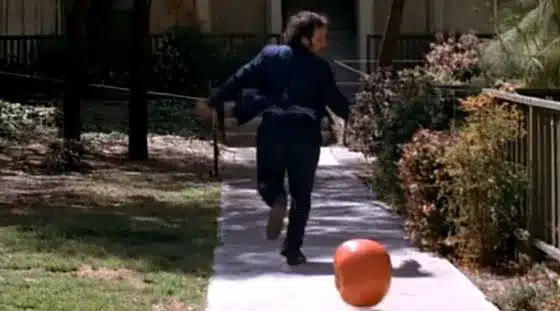
Made on a shoestring budget of just $100,000, John DeBello’s so-bad-it’s-good horror parody committed to spoofing B-movies, notably 1950s creature features, in a purely campy and tongue-in-cheek mode. The movie follows a bunch of tomatoes that come to life and begin terrorizing people, prompting the government to enlist Mason Dixon (David Miller) and his team of specialists to stop the attack. The specialists, among others, are disguise expert Sam Smith (Gary Smith) and Olympic swimmer Gretta Attenbaum (Benita Barton).
True to its low-cost filmmaking, DeBello crams everything from out-of-sync English dubbing of a Japanese scientist to a deadpan gag surrounding a tiny top-secret meeting room. Even the special effects of the titular killer tomatoes are nothing more than rounded red fruits made mostly from foam props. Attack of the Killer Tomatoes was a surprise success, earning more than enough to grow a franchise, including three sequels between 1988 and 1922, a 2026 reboot, and a two-season animated TV series.
Videodrome (1983)
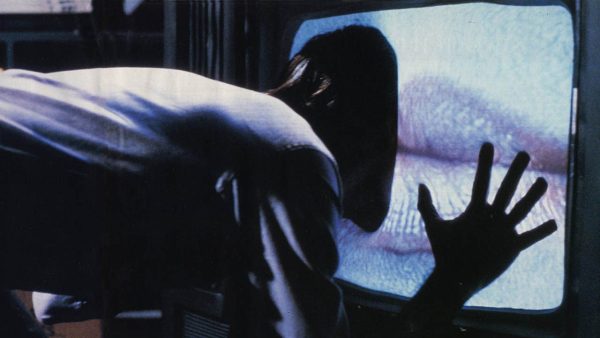
A flop at the time of its release, David Cronenberg’s Videodrome has since emerged as a cult classic and one of his most defining works in body horror. The title in question refers to the underground broadcast signal that sleazy CIVIC-TV president Max Renn (James Woods) receives from his operator and satellite technician, Harlan (Peter Dvorsky). The hazy footage has no plot whatsoever, other than just graphic depictions of victims being savagely tortured and murdered. Max becomes obsessed with the show, gradually finding himself in a series of hallucinations increasingly blurred between dream and reality.
The movie is notable for its grotesque practical effects from the legendary effects guru Rick Baker, including a scene where Max pushes his head into a pulsating television screen that breathes and heaves in front of him, and Max’s bare stomach turns into a living VCR, complete with the fleshy vertical opening that acts as a loading slot for a videotape. Cronenberg, who also wrote the screenplay, gamely explores the dark side of technology, media consumption, sex, and violence that corrupts one’s mind. Beyond its metaphorical and literal body horror, the movie equally functions as a high-stakes conspiracy thriller, notably in how the titular broadcast signal manipulates mind control, with Max being used as a pawn by a radical, cult-like rival faction.
eXistenZ (1999)
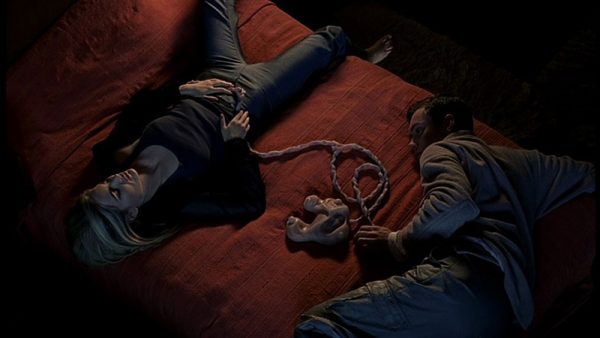
Often viewed as a successor to Videodrome, writer-director David Cronenberg updates the technological body-horror theme for a modern generation, transitioning from television broadcasting to virtual-reality gaming. The visual and practical-heavy aesthetic in eXistenZ is far more complex, consisting of fleshy gaming pods resembling living, mutated organs and an organic gun constructed from a mix of animal cartilage, bone fragments, and harvested human teeth.
The movie, which also fuses with cyber-thriller elements, centers on the renowned game designer, Allegra (Jennifer Jason Leigh), who teams up with security guard Ted (Jude Law) after escaping an assassination attempt by a group of anti-game extremists nicknamed Realists, to run a test if her prototype is ruined during the attack. eXistenZ famously marked Cronenberg’s return to his familiar visceral body horror after spending his 1990s work exploring all things cerebral in Naked Lunch, M. Butterfly, and Crash.
What are your favourite horror movies that embrace their absurdity? Let us know on our social channels @FlickeringMyth…
Casey Chong