Backrooms, 2026.
Directed by Kane Parsons.
Starring Renate Reinsve, Chiwetel Ejiofor, Mark Duplass, Finn Bennett, Lukita Maxwell, Avan Jogia, Robert Bobroczkyi, Ember Ambrose, Peter New, Katharine Isabelle, Philip Granger, Kelly Craig, and Krista Kosonen.

SYNOPSIS:
After a therapist’s patient disappears into a dimension beyond reality, she must venture into the unknown to save him.
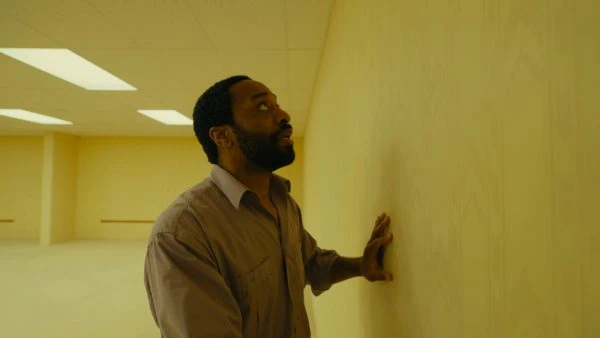
Backrooms creator and film director Kane Parsons is only 20 years old. This is impressive for several reasons, chief among them being that his alternate dimension liminal space of horrors exists in the real world 1990s, loaded with elaborate production design seemingly meant to mimic the frayed mind of its furniture store manager lead character in an existential crisis (more on that soon), but so meticulous it begs the question of how the filmmaker (working alongside production designer Danny Vermette) is certain what furniture he wants considering he wasn’t even born based on the dates here.
Yes, the yellow-coated walls of the Backrooms (sometimes referred to as the Complex in the web series and presumably the video games based on the premise) and the surreal terrors that await come from a vivid imagination, but it speaks volume about confidence levels that Kane Parsons set this in the 1990s while also conjuring up period piece accuracy not solely from the copious amounts of furniture but also using handheld footage throughout (whether it be to document the Backrooms or for making humiliating commercials for the store).
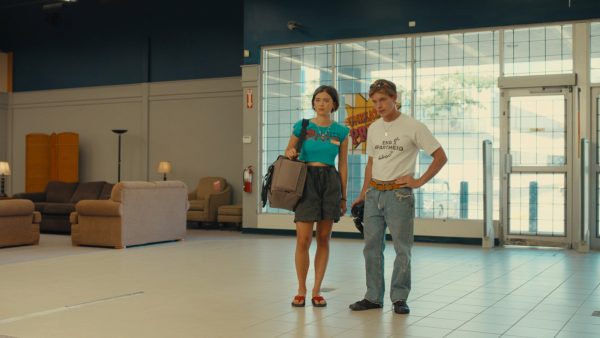
This also allows for first-person perspective horror that many have noted warrants comparison to The Blair Witch Project, which technically is true, but it’s more fitting to say that Kane Parsons has successfully applied multiple aspects of video game language and visuals to the film (it’s also worth mentioning that the rooms themselves were created using 3D software technology as a blueprint reference point before bringing them to life), ranging from exploration to boss fight environmental spacing and logic to maps that characters draw themselves to memorize their way around the maze (like it’s an underground facility from Resident Evil or a Legend of Zelda dungeon) to psychological torment and symbolism befitting of Silent Hill and to his own admission that the Async Research Institute gathering data and attempting to document what they find leftover from those sucked into the rooms is inspired byAperture Science from the Portal games. Without trying to take away that the YouTuber-turned-filmmaker has crafted something wholly original, it bears mentioning that for a whole bunch of moviegoers, many of the ideas and language here will contain freshness because they have never bothered to look the way of a modern video game and take their structure and horror seriously (even the manner in which certain beings in the rooms take damage is reminiscent of Bioshock‘s enemy types, to put it without spoiling).
Whether the same people who decry anything even remotely related to gaming give Backrooms credit where it’s due regarding those inspirations, or look the other way as a medium beneath them remains to be seen. This is a cog in the machine of a larger conversation that this film has already generated massive amounts of justified buzz for its unique approach to filmmaking. Simply put, audiences are getting something that has no equal in the current theatrical landscape (which is not to say that one YouTuber is making better films than another, but that each is entirely comprised of their own identity). Part of this is also what makes it preposterous that the film was “shadow-directed”, which is either a crackpot theory from someone in the industry jealous that the 20-year-old has already outdone what most will ever accomplish, or someone else within Hollywood delusionally out of touch and refusing to accept the reality that modern audiences are looking for something, well, different that speaks to younger generations.
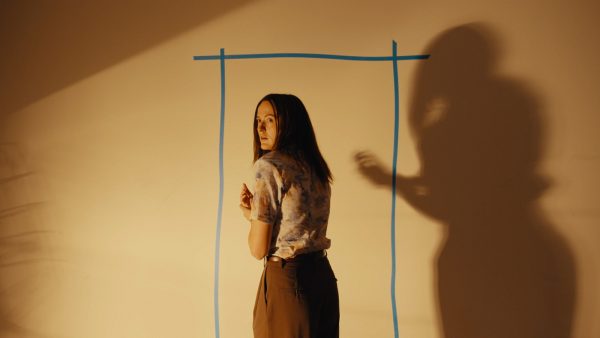
As for the story and characters themselves, (which, to be fair, come from screenwriter Will Soodik), it is filled with existential dread that is another element that should seemingly be beyond Kane Parsons’ grasp (then again, perhaps not considering the bleak world younger individuals have been maturing into), given that it centers on Chiwetel Ejiofor’s Clark, miserable that his days consist of running a failing furniture store while taking out his inability to live up to his own expectations on his therapist, Renate Reinsve’s Mary, during role-play sessions that turn into him berating his wife, placing all the blame for his failures on her. There is also the occasional hypnotic scene of Mary and glimpses of her unusual, likely traumatizing childhood that presumably led to her becoming a therapist.
Perhaps the lowest point of Clark’s professional life (he had ambitions of becoming an architect!) comes when his young employees, stoner Bobby (Finn Bennett) and the more sensible Kat (Lukita Maxwell) film him reciting an embarrassing TV advertisement (the entire store is on sale, which gives one an idea of how business is going or rather not going) while dressed up as a pirate that could be mistaken for a sultan, dubbed Captain Clark. The lights in the building are also flickering on and off in various areas for inexplicable reasons. This eventually leads Clark to discover an invisible door in the underground level of his store that opens to the Backrooms, a never-ending labyrinth of similar rooms, each containing a couple of anomalies, typically arranged in symmetrical patterns. Most notably, each of these rooms is littered with garbage furniture in the center, usually stacked on top of one another. There also appears to be something menacing and dangerous patrolling the area, which Kane Parsons is smart enough to keep in the shadows, building that dread. All of it raises the question of whether the rooms are meant to reflect Clark’s subconscious.
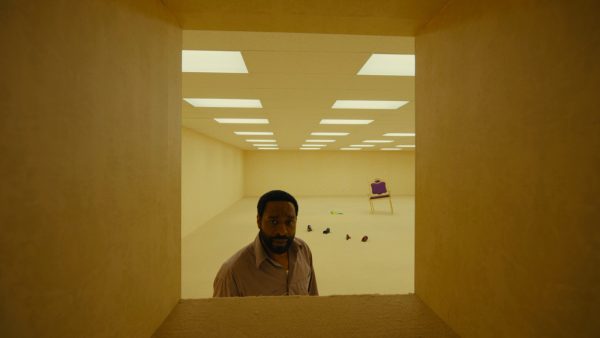
That’s one way of saying Kane Parsons is also clearly a student of film, aware of what to show and what not to show, and more importantly, when to finally make a reveal. His work behind the camera creates genuine suspense, all the more commendable given that the film often switches between first-person and third-person perspectives, or between modern filmmaking and grainy handheld footage, with the latter adding its own flavor of terror. And while there are sometimes jump scares, they are accompanied by nerve-shredding sound design meant to ensure viewers stay alert to what could be around any corner or in the next room.
However, where the prodigy filmmaker excels in craftsmanship, he struggles to take the story and characters in a direction that lives up to the initial promise from the setup. At a certain point, Clark’s actions cease to make sense, partly because the film prefers ambiguity and cutaways from mounting horror to leave the Backrooms and start over. This is almost as frustrating as the fact that almost nothing is done with the research company overseeing what’s happening here.
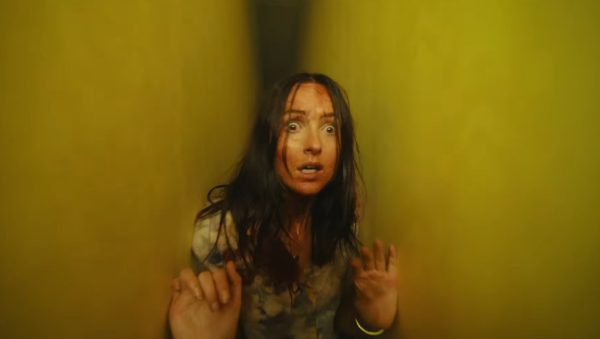
Even for how much nightmare fuel there is here in the third act, including a freakishly tall creature played by Robert Bobroczkyi that should haunt the mind as far back as those rooms extend for its appearance and what it represents to Clark, Backrooms has a rather flat finale that certainly raises some interesting thematic questions and debates, while its characters don’t entirely feel fleshed out. Nevertheless, Renate Reinsve and Chiwetel Ejiofor deliver intense performances that elevate what’s on the page while also convincingly conveying fear. Those narrative shortcomings also shouldn’t take too much away from what is a rather remarkable debut, steeped in existential dread and psychological terror. The production design is so intricate that one is tempted to get lost and go mad in the rooms themselves, despite the eeriness.
Flickering Myth Rating – Film: ★ ★ ★ / Movie: ★ ★ ★ ★
Robert Kojder