Signal One, 2026.
Written and Directed by Jonathan Sobol.
Starring Isabelle Fuhrman, Josh Hutcherson, David Thewlis, Dennis Quaid, Vanessa Smythe, Raoul Bhaneja, Ronnie James Hughes, Adam Moryto, Beatrice Schneider, Stephen Adekolu, and Jenny Brizard.
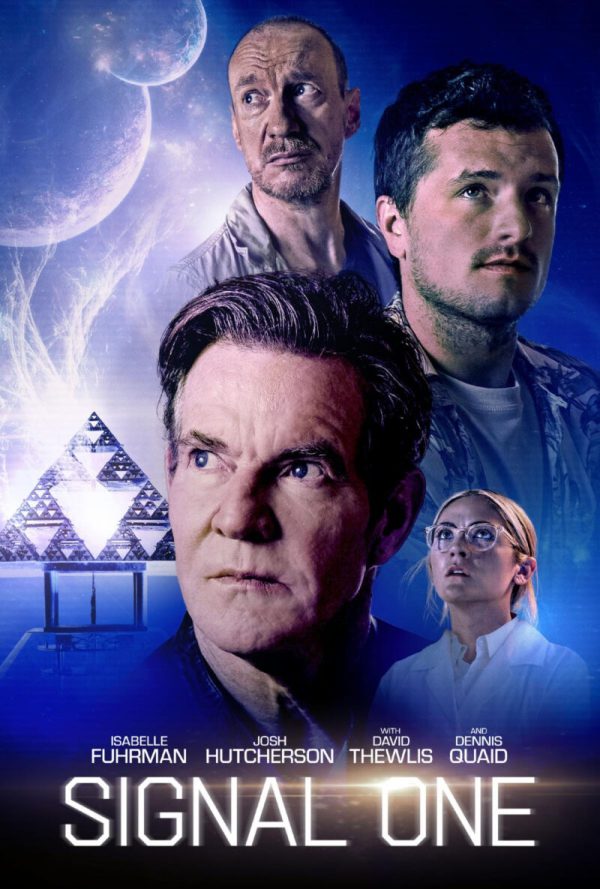
SYNOPSIS:
A computer scientist is invited by a tech billionaire to join his private facility on a Caribbean island to investigate extraterrestrial matter on Earth.

Written and directed by Jonathan Sobol, Signal One is a sci-fi flick of modest ambitions, aware of its scope and what it can and can’t pull off in hinting at the presence of and communication between humans and other life forms. Yes, there have been far more entertaining and bombastic takes on alien invasion, with a new one from arguably the greatest American film director and blockbuster filmmaker of all time on the way, which almost makes the release timing of this film intended to whet viewers’ appetite for what’s in store. Unquestionably, that one will have a much larger, epic-scale scope, but that shouldn’t diminish that this is also worth seeking out. Essentially, Jonathan Sobol tells a rather compelling tale about communicating with aliens that understands the confines of its scope while, for the most part, sticking to solid characterization.
The vagueness of that is intentional, as a major focal point of the premise is the understanding that alien life forms are here, with a team of scientists on a Caribbean island trying to crack the code of how they might be communicating with human beings. Isabelle Fuhrman’s computer scientist Annika is the story’s moral and emotional compass (a role played convincingly, giving us someone to like here), tasked by tech billionaire CEO Sam Houston (Dennis Quaid, checked into the material and upping his intensity when the role requires it) to travel to that island and oversee the work being done by another scientist (David Thewlis) playing around with a communications device built by the company to attempt communicating with other life forms. There is much technical jargon and junk science about how it’s meant to work, which doesn’t make a whole lot of sense, but is also effective and simplified enough to get the gist.

Annika doesn’t necessarily see eye to eye with Sam Houston’s reasoning for his research, which mostly comes down to arrogance and little regard for consequences, but is eventually convinced to join the research alongside Josh Hutcherson’s excitable tech bro Charlie. In their first conversation, it comes out that Sam gave them wildly different explanations for what they will be doing here to get them on the island, each tailored to their personalities; for Annika, it was more of a talk about risk prevention and watching over the other scientists, whereas Charlie was given a pep talk to make contact and talk to alien lifeforms.
Again, Signal One isn’t about whether these alien life forms exist, as their presence is confirmed early to be all around us, but rather their possible attempts to communicate with humans, already raising the question of what purpose. What that means is that the bulk of the film (which is already a breezy 87 minutes) comes down to some trial and error with possible methods of communication, which also includes the creative use of air. Annika is also given a clichéd backstory about the sudden, tragic loss of her sister when she was young, which informs her characterization and motivation throughout, while also inevitably tying them into a theme of moving on from grief. The film handles that transition gracefully, perhaps with a clichéd idea, though it lends the story a slight emotional resonance.

Also impressive are the visual effects, made even more so by the fact that they were accomplished on a fairly small budget, incorporating sights such as a sky anomaly growing in size, following one character’s rash decision that brings the aliens even closer to Earth. The film also features a quietly impressive ensemble of veteran names who sell the material and the weighty questions the narrative broaches, even if, by the end, some of those limitations come to light, revealing that there also isn’t a whole lot to this movie. On a character level, it is satisfying for Annika, whereas everything else feels open-ended, unresolved, and almost pointless. It’s a smaller take on what Denis Villeneuve achieved with Arrival, prioritizing communication barriers above all else, which puts Signal One in good company, worthy of a signal boost.
Flickering Myth Rating – Film: ★ ★ ★ / Movie: ★ ★ ★
Robert Kojder