The Dink, 2026.
Directed by Josh Greenbaum.
Starring Jake Johnson, Mary Steenburgen, Ed Harris, Andy Roddick, Aaron Chen, Ben Stiller, Chloe Fineman, Patton Oswalt, John McEnroe, Martin Kove, Chris Parnell, and Christine Taylor.

SYNOPSIS:
A washed-up tennis pro tries to save a club by reluctantly playing pickleball to earn his father’s respect.
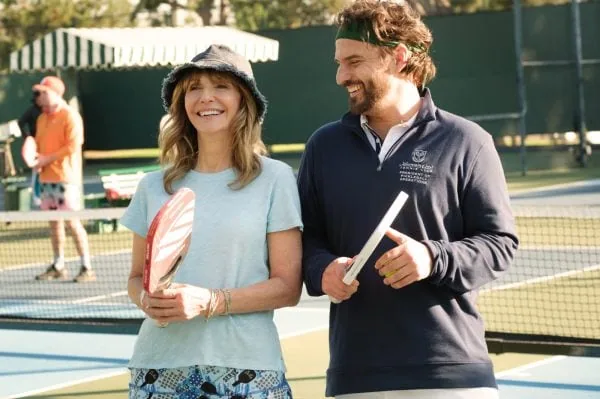
There is an old-school Adam Sandler feel to director Josh Greenbaum’s (courtesy of a screenplay by first-time writer Sean Clements) tennis/pickleball rivalry comedy The Dink, ensuring it’s just funny and charming enough to work. Similar to some of that comedic legend’s most successful vehicles, it centers on a character who has become a bit of a slacker joke while still desperately looking for his father’s approval.
Introduced attempting to mentor a bunch of children on tennis, Jake Johnson’s Dusty Boyd was once a prodigy of the sport, given the moniker The Hammer on account of how hard he thwacks the ball, only for that success to be cut short following a bathroom break injury and forfeit loss to Andy Roddick (a real professional tennis player and also present in the film playing himself). Given that the filmmaker has also made sports documentaries and shows real enthusiasm for them, it also makes sense that he was able to attract real superstar athletes to play significant roles. Nevertheless, the kids don’t care and plead with Dusty to shut up and let them hit the ball.
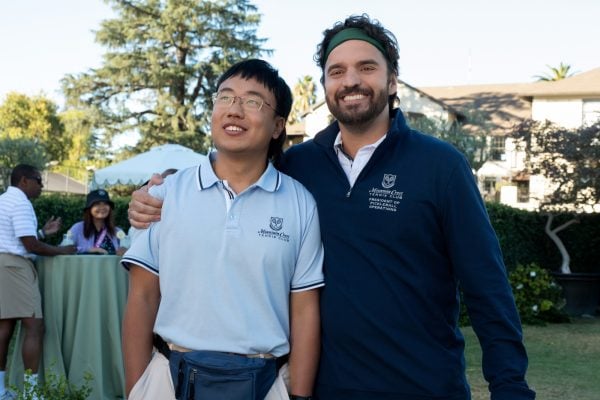
The only one taking interest in any of this is Dusty’s longtime friend and unbelievably dimwitted yes-man PJ (Aaron Chen), who not only still looks up to the has-been/never-quite-was, but naively believes anything he is told, such as the only reason he lost that game is that Aaron Roddick was scared and responsible for the wet floor he fell and injured his swinging hand on. That’s only the tip of the iceberg when it comes to his gullibility, which also tests the credibility of a story filled with otherwise grounded characters amidst the humor (one character being this stupid occasionally takes the viewer out of it).
Dusty’s father and former mentor, Chuck (a no-nonsense Ed Harris in perfect contrast to the carefree goofiness of Jake Johnson), owns the country club, which is facing some problems of its own in that the popularity of pickleball, predominantly played by older women, is increasing in popularity with a push from Patton Oswalt’s Skip to either renovate some of those playing courts (there are cracks in the grounds, objects in the corner too close to the area of play, and more safety hazards) or refit ones intended for tennis. Not only is Chuck insulted by this proposition, but he also perceives pickleball itself as comparable to the coronavirus and the decline of society, and seeks a metaphorical vaccine.
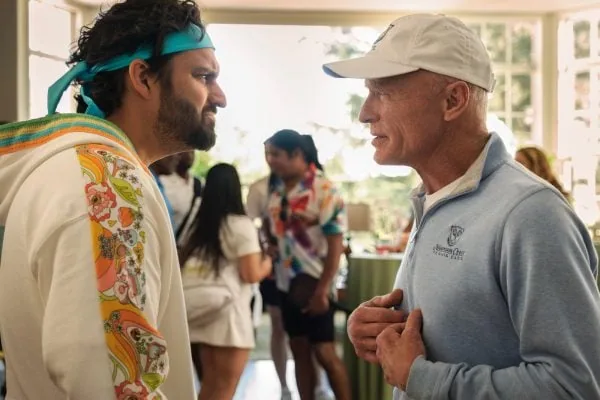
That comes in the form of a match-off between a tennis player and a pickleball player. Naturally, the latter is set to be represented by Skip, whereas Dusty wants to represent his father and have one last chance to make him proud, although he seems determined to give that spot to anyone but him.
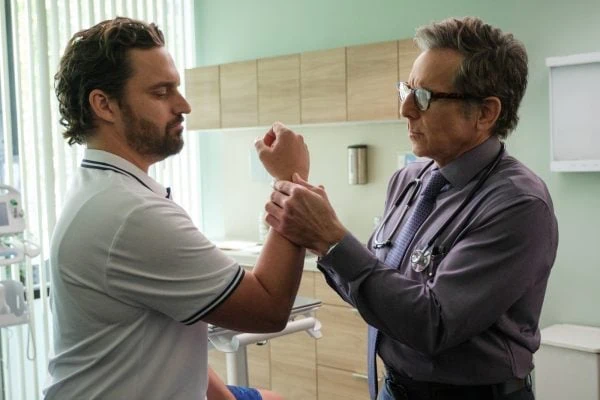
For slapstick comedy reasons earlier in the film, Dusty is once again dealing with an injured hand and given some advice by his doctor (an amusing Ben Stiller in a glorified cameo), the first being several juvenile innuendos that he shouldn’t masturbate with that hand, and the more useful solution that while he can’t play tennis, pickleball is less intensive and more laid back, capable of keeping him in a playing groove while he recovers and should his father change his mind about representing the country club.
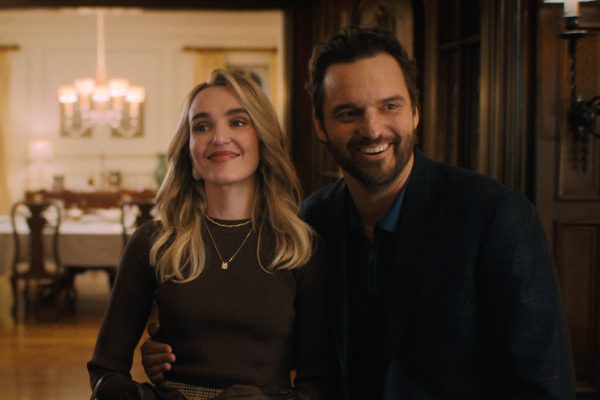
The other bulk of The Dink involves Dusty’s personal life, including a failed relationship with Marisa (Chloe Fineman, another worthwhile cameo) and his general aura of smugness, particularly when it comes to older women invading his tennis space to play pickleball. After a run-in with Mary Steenburgen’s Candace, fate has it that she also frequents the pickleball spot where he clandestinely hangs out away from friends and family to play during his rehab.
There is a real surprise here in that while this film contains plenty of broad comedy (even John McEnroe makes an appearance during the finale in what is like a running gag, again, ripped straight out of the Adam Sandler playbook), the story also turns into a will-they/won’t-they potential age gap romance, as Dusty not only learns how to have fun with pickleball, but becomes a presence in her personal life as she tries to move on from both a divorcé and that her partner is already dating again, inviting her to functions. It’s also about Dusty shredding away that off-putting superiority complex. For instance, he scoffs when she sends him a country music playlist, but eventually relents and listens, giving it a chance, just like pickleball. It’s a pleasantly mature subplot in an otherwise pleasantly silly movie.
Naturally, it all culminates in the all-important match to decide the future of the country club, with a couple of predictable plot developments, yet it remains fun. None of this is to say that all of The Dink works tonally, but it is a welcome surprise that it has more on its mind than dumb humor. The real dink maneuver is shooting some characterization and heart onto the other side of the court alongside those laughs.
Flickering Myth Rating – Film: ★ ★ ★ / Movie: ★ ★ ★
Robert Kojder