Joseph Jenkinson on Pixar’s “originality problem” and its shifting storytelling priorities…

Pixar earned its reputation through a seemingly endless run of original stories. Aside from the occasional revisit to the Toy Story world, the period between 1995 and 2010 (often regarded as the studio’s golden age) was defined by a string of beloved films that captured audiences of all ages. Yet in the years since, sequels and prequels have become an increasingly prominent part of Pixar’s output.
This has become a common criticism among moviegoers. Pixar, once viewed as the industry’s most reliable source of fresh ideas, is now frequently accused of relying too heavily on established franchises. But perhaps the problem isn’t that Pixar has run out of original ideas. Perhaps the issue lies in the kinds of stories the studio is telling.
In recent years, Pixar’s original films have struggled to replicate the commercial success of those before. The COVID-19 pandemic saw Onward cut short at the box office, while Soul, Luca and Turning Red were all diverted to Disney+. Lightyear lost Disney more than $100 million, Elemental endured a slow start before eventually finding an audience, and Elio recorded the lowest opening weekend in the studio’s history ($21 million).
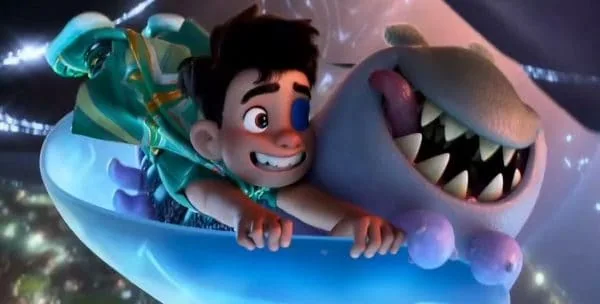
According to a BBC Culture article, the misfire of Elio suggests that “it’s much more challenging for films to succeed if they aren’t sequels or prequels […] or some unholy combination of the above.” Certainly, Pixar’s greatest recent successes have come from familiar names. Inside Out 2 became the biggest film of 2024 and one of the highest-grossing animated films ever, while Toy Story continues to demonstrate the enduring popularity of its characters with its fifth entry, released nearly three decades after the original film.
It’s easy to put this down to nostalgia; audiences naturally gravitate towards worlds and characters they already know and love. But familiarity alone does not explain why Pixar’s original films once enjoyed the same cultural dominance. After all, there was a time when audiences embraced entirely new ideas with the same enthusiasm they now reserve for sequels.
So, if Pixar is still producing original stories, why do they no longer seem to resonate in quite the same way?
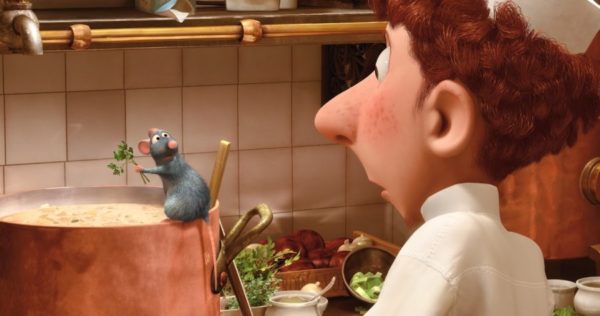
Pixar “Forgot the Assignment?” On X, one user shared their frustration with Elio and Pixar’s general original work post-COVID:
Pixar used to be “What if toys had feelings?” or “What if rats cooked?” Now it’s “what if a socially awkward 13-year-old had trauma?” It’s like they forgot the assignment.
The criticism may be simplistic, but it highlights an interesting shift in Pixar’s storytelling. Classic Pixar of the 1995-2010 era often began with high-concept premises that anyone could immediately understand.
Certainly, audiences were drawn to Pixar’s technical innovations, like the photo-realistic depictions of the sea in Finding Nemo or the detail of rust on Wall-E. But what truly made the studio stand out was its ability to reflect the human experience through ludicrous concepts.
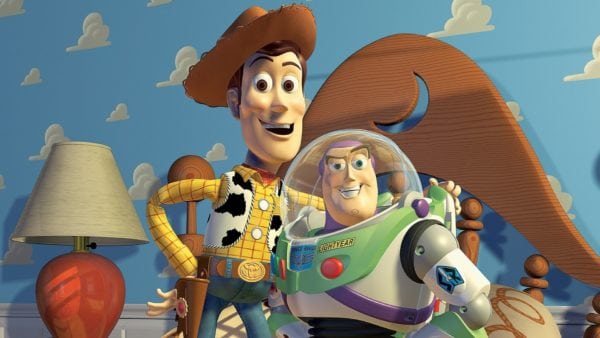
Toy Story wasn’t really about toys, but rather the fear of being replaced. Ratatouille wasn’t just about cooking, but the desire to pursue one’s passions, despite one’s origins and a lack of support from one’s family. While the fantastical concepts invited audiences in, the emotional depth made them stay with us.
However, there is a flipside. While these themes are extremely weighty, especially for movies largely aimed at children and families, the old movies never lost sight of how playful, colourful and madcap everything is. Up was a meditation on grief and letting go, but only after introducing audiences to a house floating through the sky attached to balloons.
From Universal to Personal
Pixar’s recent entries, such as Onward, Turning Red, Elemental and Elio, are built around deeply personal emotional experiences. Onward centres on grief and the loss of a parent; Turning Red explores puberty and generational trauma; Elemental examines immigration and cultural assimilation; Elio focuses on loneliness and the desire to belong.
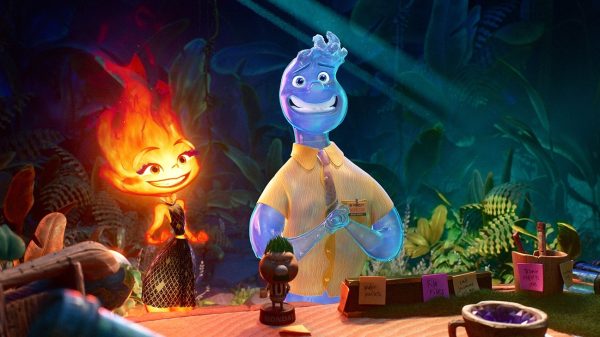
These are all worthwhile themes, and, therefore, the issue is not that modern Pixar has become too emotional. Pixar has always been emotional. The difference is that those emotions increasingly sit at the forefront of the narrative rather than emerging naturally from the premise.
One example is, admittedly, one of Pixar’s strongest entries of the 2020s: Soul. The film evokes themes akin to Toy Story’s existentialism. It follows Joe Gardner, a struggling musician, who abruptly dies before he has achieved his lifelong dream. Upon release, many critics considered it a return to form for the studio.
Ironically, Soul also demonstrates the challenge facing modern Pixar. Its themes of purpose and self-worth resonate deeply with adults who have questioned whether they are pursuing the right path in life. Unlike Toy Story, however, Soul places those themes front and centre.

When comparing Joe Gardner’s fear of never achieving his dream with Woody’s fear of being replaced by Buzz Lightyear, at their core, both stories wrestle with remarkably similar anxieties. The difference is that Toy Story disguises those ideas inside a light-hearted premise that anyone can immediately understand, whereas Soul asks audiences to engage directly with its philosophical questions.
Other examples include Turning Red. Director Domee Shi drew heavily from her own experiences and cultural background. It follows a teenage girl who transforms into a Red Panda whenever feeling pressure from her domineering mother. Likewise, Elemental director Peter Sohn drew on personal childhood experiences of his immigrant family through the often-discriminated-against fire people.
For many viewers, that specificity is exactly what makes the film so powerful. Yet it also represents a departure from the broader stories that once defined Pixar’s output. While Pixar’s willingness to explore different cultures and personal experiences is admirable, these stories are often more specific in their focus than the studio’s earlier work. A film centred on generational expectations within a Chinese-Canadian family or an immigrant household, or even an aspiring musician questioning his life’s purpose, may resonate profoundly with some viewers, but they are arguably less immediate than concepts built around living toys, talking monsters or a rat who dreams of becoming a chef.

The Docter Effect
This shift in storytelling coincides with a changing creative identity behind the scenes. While it would be unfair to attribute Pixar’s evolution to a single individual, the transition from John Lasseter to Pete Docter as the studio’s chief creative voice is difficult to ignore.
Lasseter’s films in the initial years of Pixar frequently explored a wide variety of themes through external conflicts and larger-than-life concepts. Whether it was Woody confronting replacement or Lightning McQueen learning humility, the emotional journeys were often built around universal experiences (talking toys and anthropomorphic cars) that made the movies visually distinct and their adventures fun and colourful.
By contrast, Docter’s own filmography has consistently shown a fascination with memory, grief, mental well-being, and emotional processing. Known for Up and Inside Out under Lasseter’s tenure, his work is deeply introspective and concerned with understanding our inner lives.

As Pixar’s creative leadership changed, so too did the stories that reached the screen. This is not necessarily a criticism. Some of Pixar’s finest modern films have emerged from this approach. Soul remains one of the studio’s most ambitious achievements. However, it does suggest that Pixar’s priorities have changed. The studio that once specialised in universal themes wrapped inside fantastical adventures increasingly seems interested in using fantastical worlds to explore personal emotional experiences.
Finding the Balance Again
It’s not all doom and gloom for Pixar. Hoppers, the studio’s latest original release, achieved the strongest opening weekend for a Pixar original in the post-pandemic era. While the film still contains emotional stakes and environmental themes, its premise feels instantly recognisable as the kind of high-concept storytelling that once defined the studio: a teenager transfers her consciousness into a beaver in an attempt to save a wildlife habitat from developers. Critics have noted a shift in Pixar’s recent output. Writing for The A.V. Club, Jesse Hassenger argued that some of the studio’s newer films can feel weighed down by a particular kind of emotional introspection. Whether one agrees with that assessment or not, Hoppers suggests that audiences still respond when Pixar places imagination at the forefront of its storytelling.
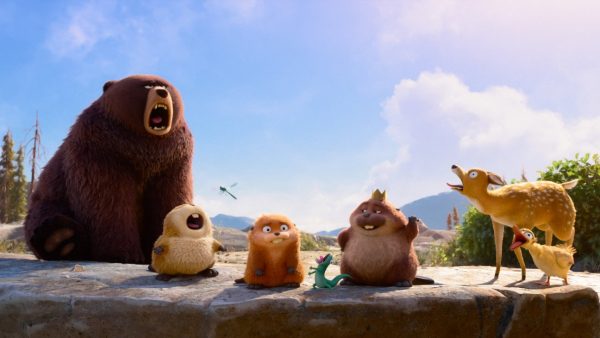
The film is unabashedly weird, playful and inventive. More importantly, its premise is immediately understandable. Much like the concepts behind Toy Story, Monsters, Inc. or Ratatouille, the idea itself is enough to spark curiosity before the deeper themes even enter the picture.
Whether Hoppers ultimately becomes a cultural phenomenon like those of the studio’s golden age remains to be seen. However, its positive reception suggests that Pixar may be rediscovering the balance that once made its films feel so universal.
Perhaps Pixar doesn’t have an originality problem at all. The studio continues to create original worlds, characters and ideas. What it may have lost, at least temporarily, is the balance between imaginative concepts and universal themes that once made its films timeless.
As previously stated, the issue is not that modern Pixar has become too emotional. Pixar has always been emotional. So maybe the challenge facing the studio may not be making another Toy Story, but rather rediscovering the balance between imagination and universality that made Toy Story resonate in the first place.
Joseph Jenkinson