Casey Chong presents ten essential horror and thriller movies set in the Australian Outback…
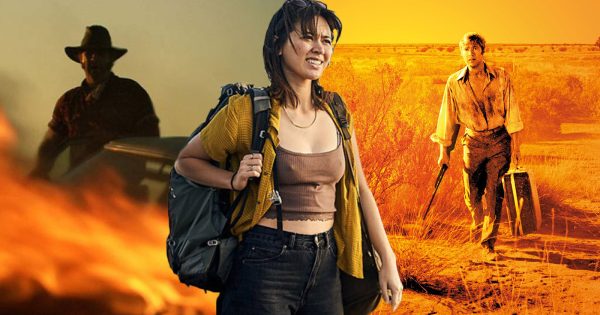
The Australian Outback has been a recurring visual and thematic playground for filmmakers to mirror its geographical settings of huge deserts, empty highways, isolated towns, and crocodile-infested rivers with the likes of primal danger, guilt, and loneliness. Such locations make it ideal for the horror and thriller genres. Whether it’s Ozploitation classics like Wake in Fright and Razorback, or contemporary entries such as the Julia Garner and Jessica Henwick-starring The Royal Hotel, we round up ten of the best horror and thriller movies that take place in the Australian Outback…
Wake in Fright (1971)
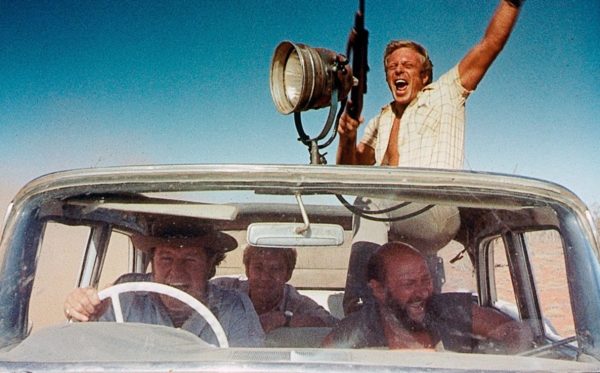
Ted Kotcheff may have been globally known for drawing First Blood, but it is also worth knowing that he was part of the 1970s Australian New Wave cinema, directing the pioneering Wake in Fright. The story zeroes in on middle-class schoolteacher John Grant (Gary Bond), who teaches at a small, outback school at Tiboonda. With the school closed for the Christmas holidays, he desperately wanted to escape the isolation and fly back to Sydney. But things do not go well as planned after he made a one-night stop in the mining town of Bundanyabba a.k.a “The Yabba”.
What follows is a slow, nightmarish descent to moral and psychological decay as John begins to lose his sanity. This includes a huge gambling loss over an illegal game of Two-up, a binge drinking that leaves him severely intoxicated, and at one point in Wake in Fright’s most controversial scene, he participates in a senseless nighttime kangaroo hunting spree. Kotcheff doesn’t back down when it comes to putting John through the wringer, reflecting the protagonist’s self-destructive reality with the harsh environment and claustrophobic dread that seemingly trapped him with no way out.
Long Weekend (1978)
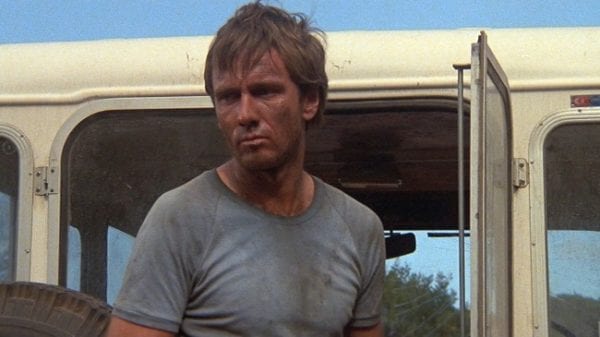
Nature runs amok in Colin Eggleston’s Long Weekend, which mixes psychological dread with ecological horror tropes. Despite garnering accolades at multiple film festivals, the movie barely made an impact at the time when it hit Australian theaters before it fell into obscurity. But this is the kind of underrated masterpiece worth rediscovering. The story follows a married couple (John Hargreaves and Briony Behets) on a weekend camping vacation to a deserted beach, while they try to mend their martial issue.
Throughout the journey, they show little respect for nature, from littering all over the place to running over a kangaroo, and even killing a dugong for sport. The couple comes across as unlikable characters, and Eggleston isn’t interested in giving them a typical redemption arc that allows us to sympathize with their problem. Instead, the subsequent nature-getting-back-at-them angle, which may sound silly if it falls into the hands of a lesser director, mirrors the couple’s progressively erratic and toxic behavior. Eggleston doesn’t rely on violence or gore, opting for a foreboding atmosphere that grows increasingly tense as the movie escalates into a point of no return, complete with a hopelessly cynical third act.
Razorback (1984)
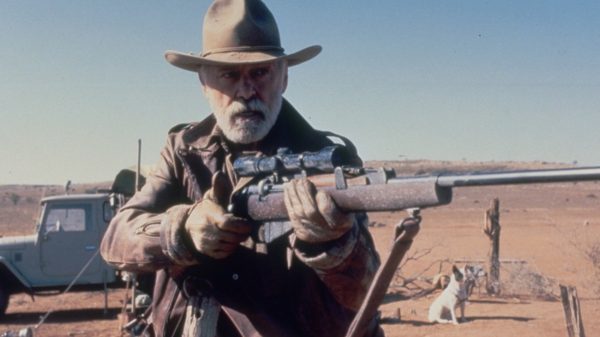
Two years before Russell Mulcahy immortalized Highlander, he brought his music video sensibility to this 1984 creature feature cult classic. The story is simple: Kangaroo hunter Jake Cullen (Bill Kerr) has dedicated his life to hunting the elusive giant wild boar that took away his grandson years ago. He subsequently teams up with an American named Carl (Gregory Harrison), whose wildlife reporter wife Beth (Judy Morris) has been missing.
The highlight of Razorback lies in Mulcahy’s hyper-stylized direction, going as far as depicting the Australian outback like a desolate, dread-inducing apocalyptic landscape. His visuals are distinct: surreal lighting, particularly his penchant for the steel blue color, hazy smoke effects, and deep-contrast shadows as if we are watching a gritty sci-fi horror in a present-day setting (at the time).
The budget may have been limited in this movie, and yet, Mulcahy manages to make the creature effect of the enormous wild boar look genuinely menacing, thanks to his strategic use of tight close-ups, fast cuts, and silhouette, echoing Steven Spielberg’s less-is-more visual approach seen in Jaws. Shame that Razorback didn’t resonate well with the audience back in the day, but the movie has since gained a cult following.
Dark Age (1987)
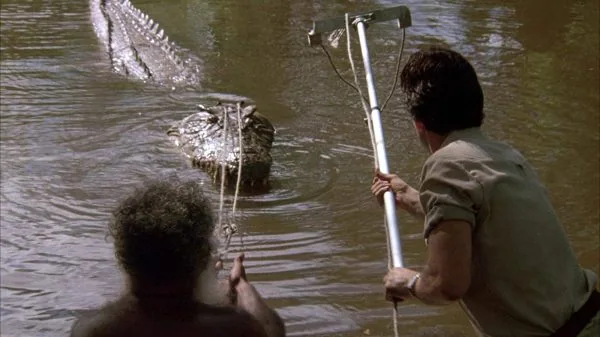
Then-young, pre-Wolf Creek actor John Jarratt plays the good guy here in the otherwise curiously titled Dark Age. But the title isn’t leaning to a post-apocalyptic sci-fi or a medieval fantasy, but rather a gritty creature feature about an enormous man-eating saltwater crocodile. Jarratt plays Steve Harris, a park ranger who is assigned to track down the aforementioned killer crocodile with the help of Aboriginal leader Oondabund (Burnum Burnum) and his second-in-command, Adjaral (David Gulpilil).
The story may sound like your average man vs. beast narrative, but what makes it more than a crocodile thriller is the movie’s both cultural and spiritual connection between the saltwater crocodile a.k.a. the Numunwari and the local indigenous community. The movie is also notable for its relatable themes of environmentalism and conservation, while portraying the crocodile not as a straightforward movie villain, but more of a sacred animal defending its territory. Instead, the true villains lie in the human antagonists, specifically the poachers led by John Besser (Max Phipps).
Wolf Creek (2005)
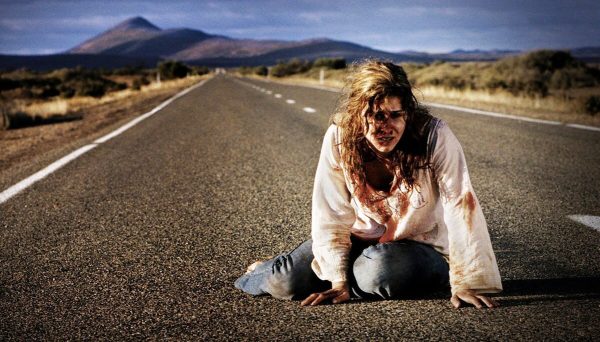
Writer-director Greg McLean’s debut feature goes for the jugular in Wolf Creek, which follows three backpackers (Cassandra Magrath, Kestie Morassi, and Nathan Phillips) stranded near the Wolf Creek crater after their car breaks down. A seemingly kind bushman named Mick Taylor (John Jarratt) shows up to offer them help. What follows is an unforgettable nightmare that Mick soon makes their lives a living hell. Loosely inspired by the real-life Australian backpacker murders that occurred in the 1990s and 2001, McLean keeps his story lean, focusing on Mick’s uncompromisingly sadistic nature towards his victims.
The movie doesn’t shy away from graphic violence while maintaining the ominous dread right until the pessimistic end. What makes Jarratt’s Mick intimidating is McLean’s insistence on depicting him as a figure of fear without a sense of empathy whatsoever. He even strips off his backstory, one of the typical horror clichés often seen in this type of genre. Wolf Creek is shot on high-definition video due to the budgetary constraints, which in turn becomes a creative blessing in disguise that gives the movie a raw, documentary feel.
Wolf Creek 2 (2013)
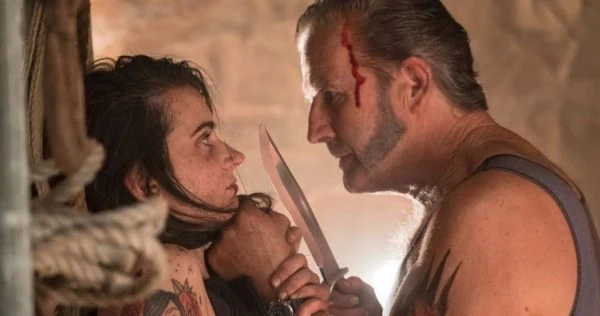
Greg McLean’s return to Wolf Creek for the second time could have been easily a cash grab to capitalize on the success of the first movie. This is especially true if he chooses the easy way out, but thankfully, McLean justifies the sequel’s existence with more stakes and significantly brutal killings than the first time around. Right from the start, he wastes little time getting down the violent path as bushman Mick Taylor (John Jarratt, looking formidable as ever) kills two highway patrol officers after getting a speeding ticket.
The rest of the story soon focuses on Mick hunting foreign tourists again – this time a German couple, played by Philippe Klaus and Shannon Ashlyn. This may look like a been-there, done-that vibe, but it’s worth noting that McLean ramps up the tension by going for the high-octane approach in his sequel, shifting away from the deliberate slow-burn of the first movie. The sequel is equally notable for keeping the audience off-balance by not sticking to the standard main protagonist rule, preferring instead of moving from one character to another. A long-awaited third movie titled Wolf Creek: Legacy is currently in development, which is set for a March 2027 release.
Gone (2007)
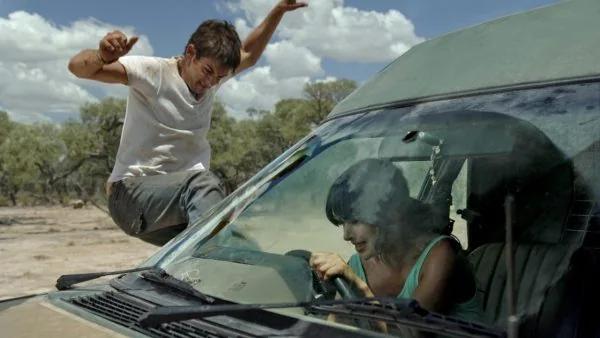
Ringan Ledwidge, previously a music video and commercial director, goes for the slow-burn dread in Gone. The story introduces Taylor (Scott Mechlowicz), who puts his nice-guy charm to good use after befriending an English couple (Shaun Evans’s Alex and Amelia Warner’s Sophie). From here, he slowly weaponizes his psychological manipulation against them while appearing unpredictable at first. Ledwidge doesn’t rush to expose his endgame, keeping us wondering whether he’s a lonely sociopath, a serial killer, or simply obsessed with either of the couple.
For the latter, there’s a hint of homoerotic tension between Taylor and Alex, complete with a suggestive male gaze and a twisted act of jealousy. No doubt that Mechlowicz steals the show in Gone, while extra kudos to Ledwidge for his visceral payoff in the open desert. Unfortunately, this was the only time Ledwidge directed a feature film. He spent the rest of his career focusing on music videos and shorts before his life was tragically cut short at the age of 50.
Rogue (2007)
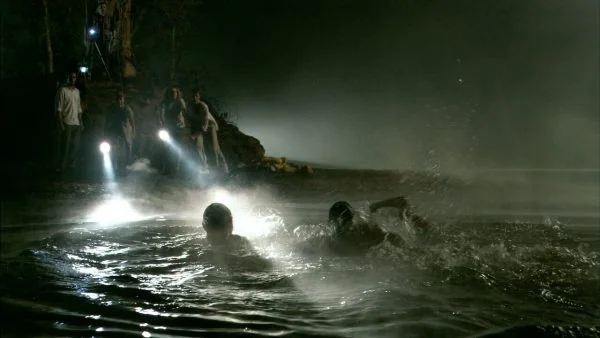
Greg McLean moves from the remote grounds of Wolf Creek to the deadly swamps of the Northern Territory in Rogue, using the 1970s true story of Sweetheart, the saltwater crocodile responsible for attacking boats, as a jumping-off point. Like Wolf Creek, he keeps his story straightforward with less fat and more on primal fear: American travel writer Pete McKell (Michael Vartan) joins the tourists on a river cruise to watch crocodiles, with Kate Ryan (Radha Mitchell) serving as their guide and navigating the boat. Things subsequently go wrong when they stumble upon flares shot into the sky, prompting Kate to radio in before investigating the distress signal. The decision soon turns into a nightmare after they find themselves trapped on a tiny mud island, and what’s worse is the impending threat of a giant man-eating saltwater crocodile.
Taking a cue from the seminal Jaws, McLean strategically shows the predatory animal through visual teases and build-up tension rather than a straight-out, full-body reveal. He also avoids the B-movie creature feature vibe, with none of the over-the-top visual aesthetic, but favors a grounded approach in his man vs. beast horror. This makes the crocodile threat more palpable, while the overall performances in Rogue are devoid of the stereotypical expectations usually seen in this kind of genre.
Killing Ground (2016)

Damien Power, who cut his teeth directing shorts, looks as if his feature-length debut treads familiar Killing Ground. The story goes like this: A couple (Harriet Dyer’s Sam and Ian Meadows’s Ian) is on a romantic vacation, where they end up setting up a camp near an unoccupied tent. Here is where it gets interesting, as Power eschews the typically straightforward something-is-about-to-go-wrong storytelling in favor of a non-linear narrative.
He uses parallel time-shift to tell both the present (Sam and Ian) and the past (the family from the previously occupied campsite). Such a creative decision may come across as a gimmick, but Power manages to keep his story intriguing with enough dread and tension through the movie’s lean 88-minute runtime. His direction is equally worth praising for subverting the hero/survivor archetype, specifically how he chooses to handle Ian, the lead protagonist.
The Royal Hotel (2023)
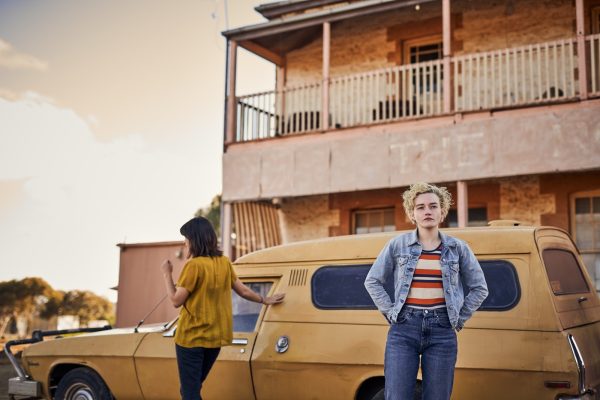
Director and co-writer Kitty Green reunites with The Assistant’s Julia Garner in The Royal Hotel, marking the former’s sophomore feature, which follows two backpackers (Garner’s Hanna and Jessica Henwick’s Liv) journeying through Australia. It’s fun and all, until they run out of money, forcing them to take up a job as barmaids at the titular remote hotel in a mining town. What begins as a seemingly minor setback to earn some money to fund the rest of their trip soon escalates into a nightmare.
Green’s Wake in Fright-style direction favors heavily on the atmospheric dread of everyday horror that the girls are forced to put up with the recurring misogyny from the hyper-masculine locals patronizing the pub in the hotel, particularly the temperamental Dolly (Daniel Henshall). Green also draws great performances from Garner and Henwick, whose on-screen dynamic navigating through the toxic environment brings both dramatic and emotional stakes to The Royal Hotel.
SEE ALSO: Great Australian Crime Movies of the 1980s
What are your favourite Australian Outback movies? What’s missing from this list? Let us know your own recommendations on our social channels @FlickeringMyth…
Casey Chong