As the film celebrates its 30th anniversary, Hasitha Fernando revisits Space Jam…
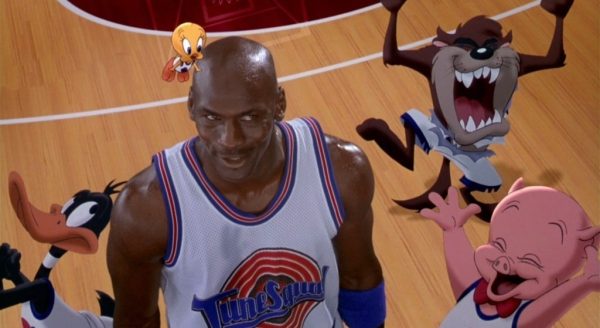
Three decades ago, a rather unlikely team up brought together the world of professional basketball and classic cartoon comedy, creating one of the most unique films to debut in the 1990s. What started out as an ambitious experiment evolved into a pop culture phenomenon, fueled by memorable characters, infectious humor and an iconic soundtrack. As the film celebrates its 30th we look back what went on behind-the-scenes during the making of this nostalgic cult classic.
The concept for this film originated from a series of Nike commercials
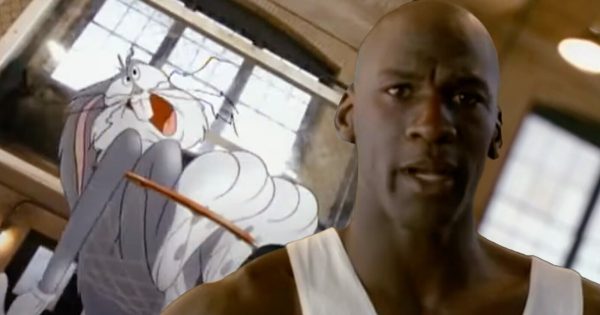
The origin of Space Jam can be traced back to two highly popular Superbowl Nike commercials promoting Air Jordan shoes which debuted in 1992 and 1993. Their popularity stemmed from the fact that they were a unique live-action/animation hybrid and because they showcased Bugs Bunny and basketball legend Michael Jordan facing off against Marvin the Martian and his henchmen in a competitive game of basketball. This pair of adverts, titled “Hare Jordan” and “Aerospace Jordan” respectively, were the brainchild of Weiden + Kennedy creative director Jim Riswold who was in turn inspired by the advertisements featuring Jordan playing basketball with Spike Lee’s character Mars Blackmon from the 1986 rom-com drama She’s Gotta Have It. Riswold chose Bugs Bunny for his next campaign because the cartoon character was his “childhood hero”. Joe Pytka, who hailed from the world of commercials and music videos, was hired to direct the “Hare Jordan” segment and it took the guy six month and a budget of $1 million to get it done. Warner Bros. was dubious about letting Pytka modernize their valuable IP but after the resounding success of both adverts the studio certainly saw a window of opportunity.
The project was green-lit during an in-flight discussion
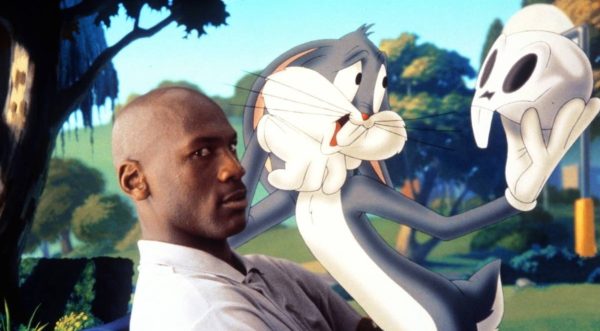
The success of the two adverts led to a project being green-lit midair between a Nike executive and producer Ivan Reitman. Now Reitman isn’t a stranger to the industry having helmed some of the most popular comedies in the 80s and 90s like Ghostbusters, Twins and Kindergarten Cop. But being part of an ambitious project like this was also new to the guy. Reitman reached out to Michael Jordan regarding the project but by 1993 the basketball player had taken a hiatus from the sport and it was only after Jordan made a comeback to basketball that the project officially started. Jordan’s manager David Falk has previously turned down film projects on behalf of his client because he felt that Jordan can only ever act as himself. And since Jordan plays himself in Space Jam there was absolutely no reason differences of opinion about his involvement.
There was great difficulty in convincing actors to join Space Jam
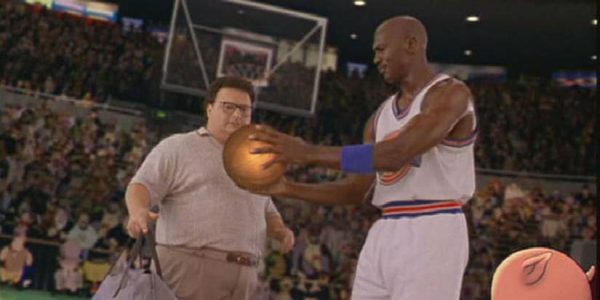
Joe Pytka was a well-respected talent in the world of commercials and music videos when he was selected by Warner Bros. to direct the then-untitled film. In his lengthy career Pytka had worked with athletes such as Michael Jordan, Tiger Woods directing their commercials as well as helming music videos of celebrities such as Michael Jackson. When it came to Space Jam, Pytka found it difficult to convince actors to come on board because many felt the premise was “silly”. Prior to Wayne Knight’s casting as Jordan’s personal assistant Stan, Pytka’s initial choices for the role was Michael J. Fox and Chevy Chase, with whom he had worked with on a few Doritos commercials. But both actors refused the gig and so did Jason Alexander of Seinfeld fame. Bill Murray was featured in the original script heavily from the very outset, but the actor waited until Jordan personally asked him to join the project, which happened eventually and thank god for that!
To keep Michael Jordan happy Warner Bros. built him a basketball court on set
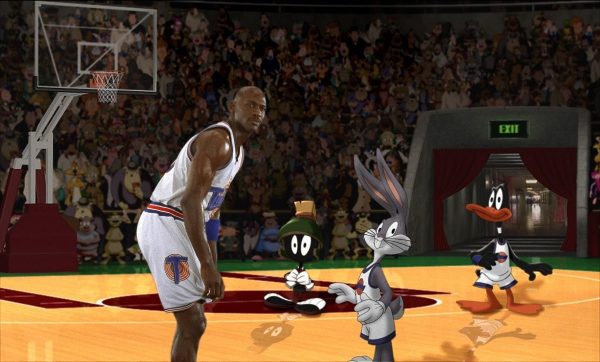
Yep, you read that correctly. Warner Bros. did indeed build a custom, basketball court on the set of their film, dubbed the “Jordan Dome” to keep Michael Jordan happy and in shape for when he wrapped production. Back in the early 1990s Jordan was at the peak of his popularity and he was pretty much unstoppable, leading his team the Chicago Bulls to six consecutive NBA championships and garnering the Final MVP award in every single one of those series. Combined with his lethal skill set on the court and his unrelenting competitive drive Jordan has been aptly called “the greatest of all time”. So, naturally they wanted to keep their lead star content throughout the shoot. Because the studio knew, without Jordan there wouldn’t be any movie.
Bill Murray’s appearance in the film is an indirect reference to his NBA commercials
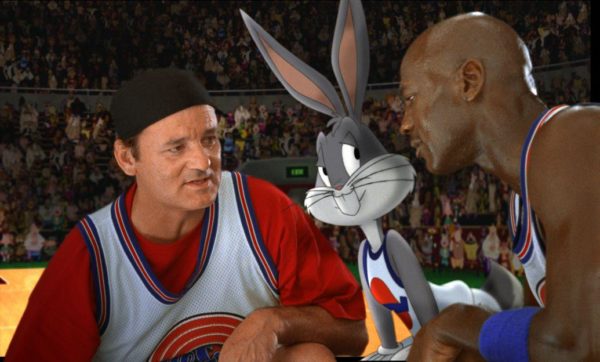
One of the most iconic actors and comedians in all of Hollywood, Bill Murray, earned national fame with his work on Saturday Night Live in the late 1970s. The actor then achieved greater recognition with a string of successful films in the next two decades which included the likes of Caddyshack, Stripes, Groundhog Day and The Royal Tenenbaums. The reason Murray accepted the roles was because he didn’t want to live in regret passing up the opportunity to star in another animated live-action film like 1988’s Who Framed Roger Rabbit, which he wasn’t a part of. Murray’s appearance in the movie is sort of an indirect reference to the series of commercials he did for the NBA where which featured him trying and hilariously failing to become an NBA player. Although Murray himself stands at 6 ‘2 he used to jokingly lament about how puny he felt around Jordan who stood at 6 ‘6 and Larry Bird who was 6 ‘9.
Wayne Knight didn’t get to interact much with actual actors during production
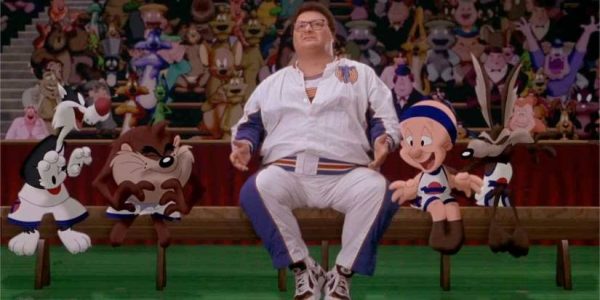
After playing supporting roles in several box-office hits such as Basic Instinct and Dirty Dancing, Wayne Knight got his big break with Jurassic Park playing computer programmer Dennis Nedry, which even earned him a Saturn Award nomination for Best Supporting Actor. His other two prominent roles from that era came from the small screen: one was Newman in Seinfeld and other was Officer Don Orville in 3rd Rock from the Sun. In Space Jam, Knight played Michael Jordan’s hard-working assistant who gets pulled into the wacky world of the Loony Tunes along with his superstar Basketball client. Since most of the film was blended with animation and CGI, during the production of Space Jam, most of Knight’s interactions were with improvisational actors in green suits in front of a whole lot of green screen instead of actual costumed actors.
Space Jam was one of the first films to be filmed in a virtual studio
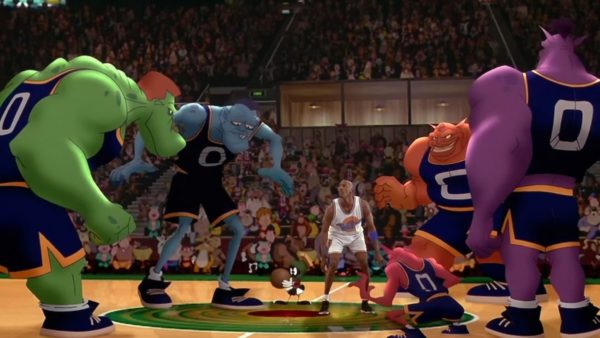
The production of Space Jam was an ambitious undertaking, even by Warner Bros. standards, as it combined live-action filmmaking with traditional forms of animation and the computer-generated visual effects. Initially, the project was assigned to Warner Bros. Classic Animation division, but the studio quickly realized that the sheer scope of their project would require the involvement of other departments as well. Under the supervision of producer Ivan Reitman, the animation directors Tony Cervone and Bruce W. Smith and art director Bill Perkins came up with a unique visual style that was reminiscent of the manic energy of Bob Clampett’s surreal cartoon style. The film was produced under a considerable time crunch as well, with the involvement of more than 700 artists and technicians working across 18 studios in several countries over a period of 19 months. The movie’s runtime of roughly 90-minutes featured around 1043 composite shots and 1100 visual effects shots making it a landmark achievement in the integration of live-action performances and animation at that point in time.
There were a great many creative differences taking place behind-the-scenes
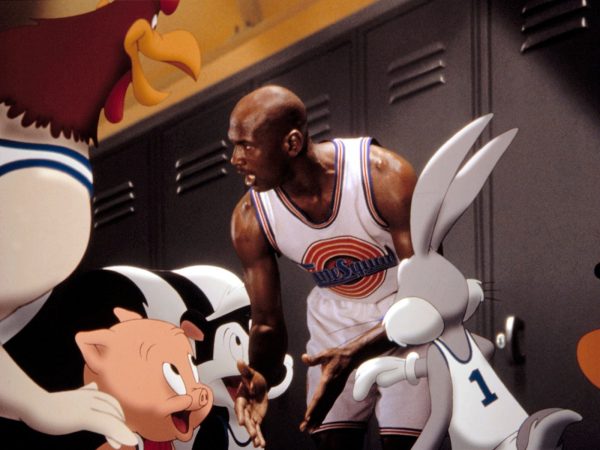
To say Joe Pytka had something of a rough time during the production of Space Jam, would be an understatement. To start, Pytka joined the production as its director when shooting was just about to begin and Pytka had to guide Michael Jordan – a sports star with no prior acting experience – to work in a virtual studio filled with green screen and other invisible characters who’d be brought to life in post-production. There were plenty of clashes throughout the shoot between Pytka and the Warner Bros. execs, over script revisions and modernizing of the Looney Tunes characters. Although Pytka ended up being credited as the film’s director, many who worked on the production elaborated that Ivan Reitman mostly ran the show and that Pytka only headed the animation aspect of the production. For whatever reason, however, Pytka ultimately received credit as the film’s director while Reitman was credited only as its producer.
Bugs Bunny received an all new love interest in Space Jam
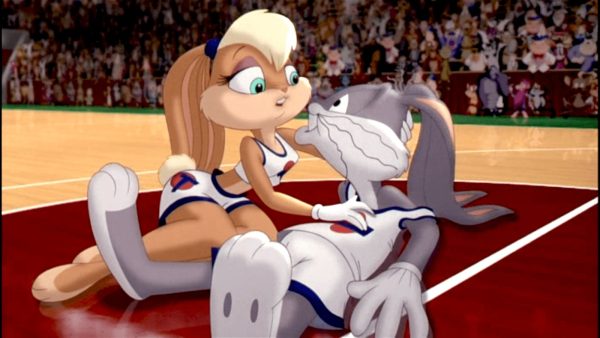
During the making of Space Jam the producers wanted a new love interest for Bugs Bunny that was more sporty and athletic as well as be part of the Tune Squad. The new cartoon character also needed to appeal to contemporary audiences, especially young girls. Enter Lola Bunny. Lola’s role originally belonged to Honey Bunny, but producers and animators felt that she resembled Bugs Bunny in drags, a little too much. And thus, this new character was introduced as Bugs Bunny’s love interest for Space Jam. Before settling on Lola Bunny, the filmmakers played around with names like “Bunni Bunny”, “Lola Buni”, “Lola Rabbit” and “Daisy Lou” until they decided on the above name.
Box-office success, mixed reviews and an enduring legacy

Made on a production budget of $80 million, Space Jam went on to make over $250 million globally by the conclusion of its theatrical run making it the 18th highest-grossing film domestically and the 7th highest-grossing film internationally in 1996. Despite the commercial success of the effort and its audience appeal, the film received a mixed reception by film critics who criticized the blatant product placement it employed comparing it to a feature-length commercial. Some prominent film critics such as Roger Ebert and Gene Siskel gave the effort two thumbs up with Ebert describing the film as follows, “Space Jam is a happy marriage of good ideas—three films for the price of one, giving us a comic treatment of the career adventures of Michael Jordan, crossed with a Looney Tunes cartoon and some showbiz warfare. … the result is delightful, a family movie in the best sense (which means the adults will enjoy it, too).” On review aggregator website Rotten Tomatoes, the movie holds 46% based on 90 reviews and the consensus reads as follows: “While it’s no slam dunk, Space Jam’s silly, Looney Tunes-laden slapstick and vivid animation will leave younger viewers satisfied – though accompanying adults may be more annoyed than entertained.”
Apart from its worldwide grosses, the effort generated a staggering $1.2 billion in retail merchandising sales with some estimating its long-term licensing footprint close to a jaw dropping $4 – 6 billion. This was because the movie capitalized on the Air Jordan legacy and Warner Bros. partnered with over 200 major global brands like McDonalds, Gatorade and Wheaties which in turn integrated the movie into their marketing campaigns. The iconic Tune Squad jerseys, which were staples of 90s fashion, remain popular vintage items even today. The original soundtrack, which featured major talents such as R. Kelly, Seal, LL Cool J, Coolio, too became a major success appearing Number 2 on the US Billboard 200 and achieving 6× Platinum certification.
The enduring popularity of the IP led to its inevitable sequel titled Space Jam: A New Legacy which was released in 2021. However, the 2nd installment proved to be a critical and commercial disappointment and was even lambasted by the creatives involved with the original film. Whatever your opinion maybe about Space Jam, through the passage of time Space Jam has gone on to become a beloved 90s nostalgic classic that uniquely blended live-action sports with classic 2D animation and modern computer generated visual effects.
What are your thoughts on Space Jam? Let us know on our socials @FlickeringMyth…
Hasitha Fernando is a part-time medical practitioner and full-time cinephile. Follow him on Twitter via @DoctorCinephile for regular updates on the world of entertainment.