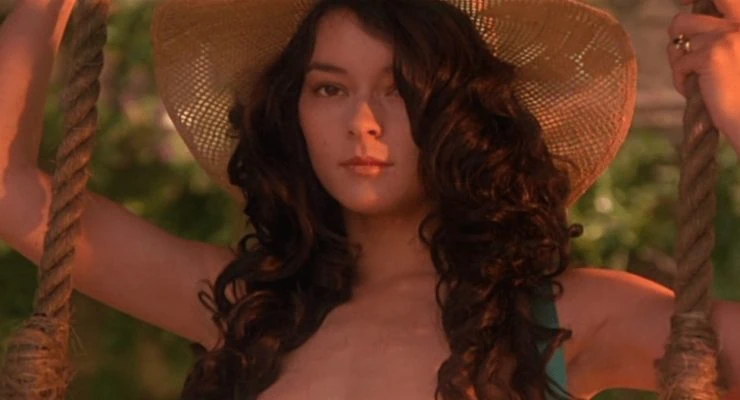
Ebenezer, 2026.
Directed by Ti West.
Starring Johnny Depp, Rupert Grint, Daisy Ridley, Sam Claflin, Tramell Tillman, Ian McKellen, Andrea Riseborough, Arthur Conti, Charlie Murphy, Alfie Buck, Robert Strange, Ian Midlane, Ellie Bamber, Matt Brewer, Nicholas Day, Zac Wishart, Eva Wishart, Michael Culkin, Ian Midlane, and Freddie Lee-Grey.
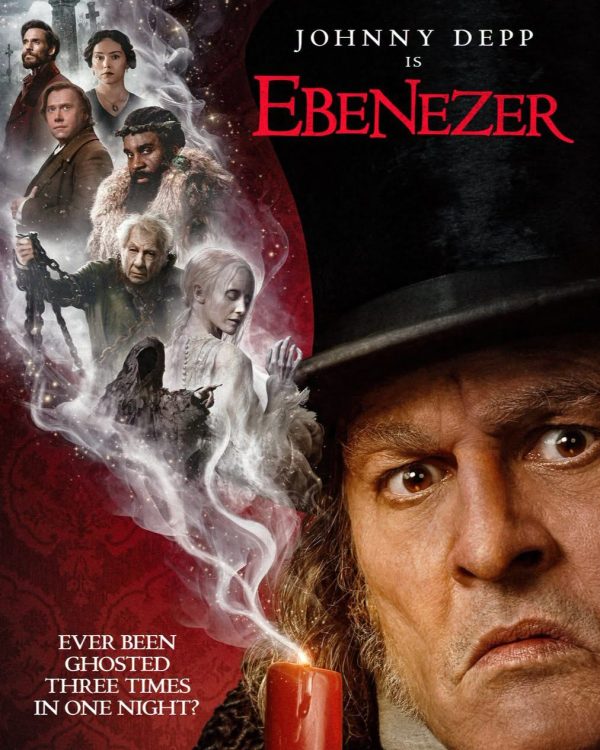
SYNOPSIS:
An elderly miser embarks on a supernatural journey after visits from the ghost of his former business partner and the Spirits of Christmas Past, Present, and Yet to Come force him to confront his past and fight for a second chance at happiness.
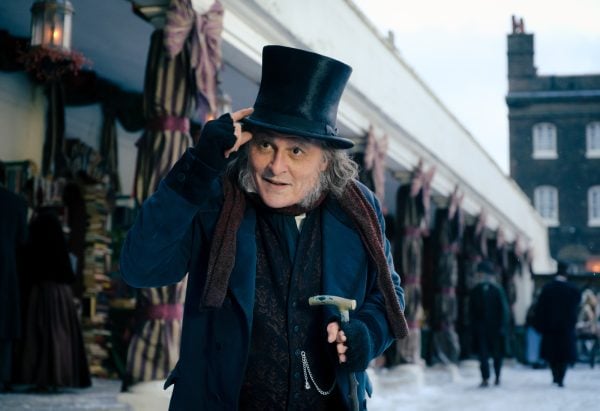
More isn’t necessarily better (a lesson Hollywood never fails to learn), and that’s exactly the issue Ti West’s Ebenezer (a take on the Charles Dickens classic A Christmas Carol, adapted by screenwriter Nathaniel Halpern) falls into. It is less a fresh take on the iconic and timeless story and more of the same, but this time with some non-Christmas-related backstory into Ebenezer Scrooge’s (Johnny Depp, back from Hollywood cancellation) upbringing (observing his younger self in those flashbacks played by Arthur Conti), which includes a fraught relationship with his father, a sister he misses, and a romantic interest before greed and an unhealthy work-life balance took over.
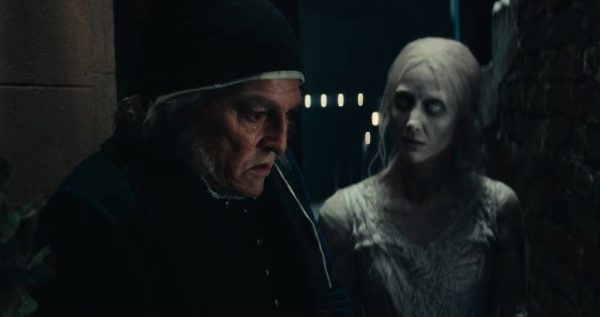
In what doesn’t necessarily mesh well with this take on the story, but on paper should with the style of a horror maestro such as Ti West and a leading man who was inseparable from Tim Burton for decades, there are also spooky flourishes within the presentation of the Christmas Spirits and even the occasional jump scare. Presumably, this is a byproduct of what one gets when hiring him to put a spin on such classic material, so it’s also disappointing that despite some impressive visual and makeup effects aided by similarly captivating performances from Andrea Riseborough, Tramell Tillman, and Robert Strange as the Spirits of Christmas Present, Past, and Future (who once again aren’t only visiting him about that holiday), the rest of this approach mostly comes across as an uninspired riff on Silent Hill by way of 19th-century London. Ebenezer stumbles through an empty town shrouded in fog, taken from spirit to spirit and location to location, with much of the visual language eventually resembling a prison the infamous crotchety miser has made for himself.

Perhaps the reason A Christmas Carol has stood the test of time and inspired countless spinoffs, whether in genre or something like The Muppets, is that it’s a simple but effective tale. In following another Hollywood trend that should die, there isn’t a need to dive deeper into the origins of the villain or, in this case, an iconic stingy grouch with a heart as cold as the biting weather outside. What matters is that he sees the holiday’s true meaning and undergoes a convincing transformation after realizing his cruel behavior.
Sure, the additions are interesting on some level, but they also crush the pacing with bloat and make you wish you were watching your preferred version. The terrific 1938-starring Reginald Owen adaptation clocks in at 69 minutes, compared to two hours here, which weighs as heavy as whenever Disney does an overly long live-action version of one of their beloved animated features. If anything, it just makes me nostalgic for childhood memories of watching that every holiday season with my family. In every scene, everything feels elongated; even the ending seems to go on forever because there is more to tie up and resolve with all those story and character additions.

There is also a chance that some of this would have worked if Johnny Depp weren’t giving such a sleepy performance. In a movie that sets itself up to be taken as a parallel for his own life, with a reference to his own acting career – sucked into a bed as he once was as a teenager in A Nightmare on Elm Street – before encountering one of the Spirits, the redemption doesn’t feel sincere or earned on behalf of the character or the actor. Admittedly, he isn’t giving an embarrassing performance, and the film certainly has far fewer comedic bits than TV spots seem to be playing up, but for lack of a better word, this is a whole lot of nothing.
For those who somehow have no familiarity with A Christmas Carol, it follows the titular Ebenezer, visited by the previously mentioned three Christmas Spirits following the death of his longtime business partner Jacob Marley (a brief welcome appearance from Ian McKellen) and decades upon decades of mistreating everyone from family to homeless beggars to his own employees. He has no idea that his newest hire, Bob Cratchit (Rupert Grint), is foolishly hoping for some kind of raise in wages to prolong the life of his disabled son. Meanwhile, this version insists through flashbacks that there once was an affinity for literature and mutual attraction with a woman before succumbing to obsessive ambitions with work and pay. As for his nephew Fred (Sam Claflin), the door to celebrate Christmas is always open, even if he and his wife (played by Daisy Ridley) have no expectations.
Despite that, Ebenezer remains watchable with mild interest in what it’s doing and how it’s trying to be different. Even with a narrative more overstuffed than a bloated stomach after Christmas dinner, it’s still hard to completely ruin such a beloved story; the familiar beats still work for the most part. As for adaptations, though, this one elicits a humbug. Fortunately, you don’t need a spirit to visit you to revisit your preferred, truly great take on the classic material.
Flickering Myth Rating – Film: ★ ★ / Movie: ★ ★ ★
Robert Kojder