Matthew Shepherd on where it went wrong for Suburbicon…
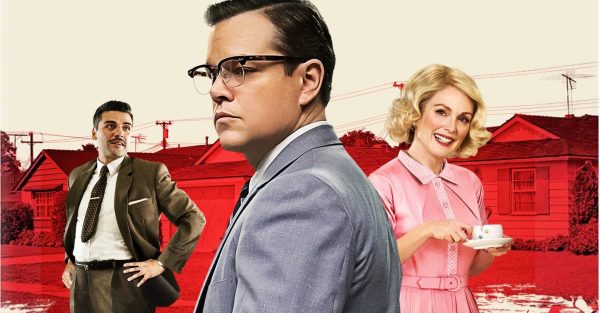
Hollywood disasters feel almost common these days. A production that loses its director, a star who drops out, a release date colliding with an unmovable franchise behemoth. These are all normal. Suburbicon though, the George Clooney 2017 dark comedy, is not normal. It is much stranger and more baffling than any of the others — a film that was left to marinade over the course of three decades, arrived with critical festival positioning, a full Paramount marketing campaign, and a cast that had no business appearing in something this poorly received. Yet somehow, this film only managed to earn a D- CinemaScore from the small audiences who bothered to show up. The story of how it happened is more compelling than the film itself, which is starting to feel like a trend in this series.
The premise is incredibly strong on paper. Gardner Lodge, a seemingly ordinary man living in the immaculate 1950s suburban community of Suburbicon, suffers a home invasion that kills his wife and leaves his son traumatised. As Gardner attempts to rebuild his family’s life, the veneer of his perfect neighbourhood begins to crack. Running parallel to this is the story of the Mayers family, a Black family who have just moved into the previously all-white community, and the racially motivated harassment and violence directed at them by their neighbours. It sounds like a pointed, intelligent dual narrative — a Coen Brothers-style crime comedy grafted onto an examination of historic American racism. The kind of film that premieres at Venice and generates heavy awards conversations.
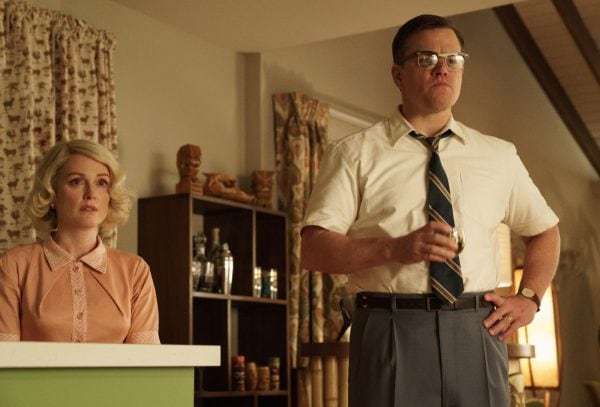
What makes Suburbicon’s collapse genuinely staggering though is the pedigree attached to it. The original script was written by Joel and Ethan Coen in 1986, shortly after Blood Simple, and sat dormant for nearly two decades before Clooney became attached. This should have been a sure winner on its own. A Coen Brothers script from the period that produced Raising Arizona and Fargo was considered worth its weight in gold and valuable enough to excavate. Around Clooney, the production assembled Matt Damon, Julianne Moore, and Oscar Isaac — three of the most consistently credible actors of their generation. Interestingly, Josh Brolin was cast and filmed scenes before being cut entirely from the final edit. Woody Harrelson signed on but mysteriously departed.
The film premiered in Venice’s main competition, screened at Toronto, and Paramount dated it squarely in awards season territory with a $10 million distribution rights acquisition. Every decision made before the film opened suggested a slam-dunk film that people would be desperate to watch.
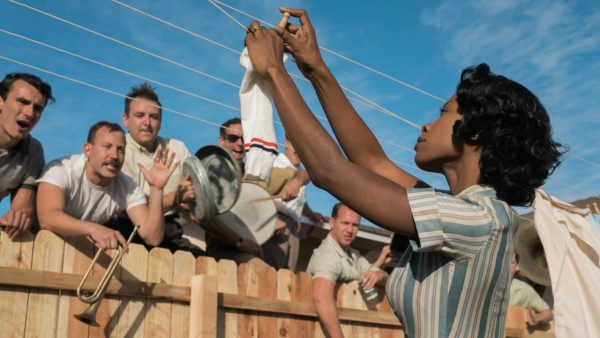
The production’s central problem was one that nobody apparently addressed before cameras rolled. Clooney and his producing partner Grant Heslov had taken the Coen Brothers’ original crime script and stitched it together with an entirely separate script of their own — a historical drama based on the real-life story of the Myers family in Levittown, Pennsylvania, who faced violent racist harassment after integrating an all-white community in 1957. The two stories run in parallel throughout the film but never seamlessly intersect or weave together.
The racism subplot, which is the film’s most serious and legitimate concern, is treated as backdrop to a Fargo-adjacent insurance fraud plot. The tonal collision is not a stylistic choice that pays off. Instead, it is a structural failure that leaves both stories worse off for sharing a screen. Critics picked up on this immediately. The Rotten Tomatoes consensus described it as making a mess of all three elements it attempted to juggle simultaneously.
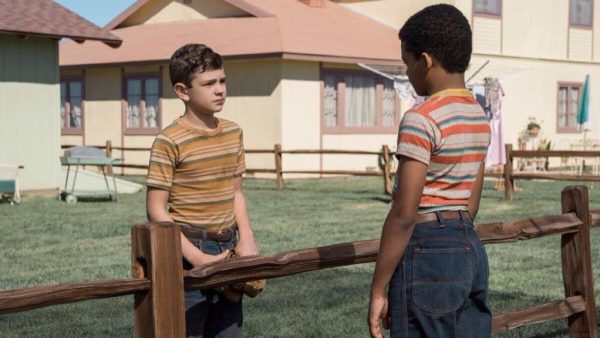
The trailer, like Collateral Beauty’s the year before, was deceptive but in a different direction. Paramount removed almost all traces of the racism storyline from the marketing entirely, presenting the film as a wacky Coen-inflected suburban thriller with Damon in a darkly comic role. Audiences who came expecting something in the Fargo region found a film with a serious and largely unresolved racial subplot that the marketing had given them no preparation for. The reaction spoke for itself.
The film opened to $2.8 million from over two thousand theatres, finishing ninth at the domestic box office behind Jigsaw. It marked the worst wide-release opening of Matt Damon’s career and the 32nd worst opening ever for a film playing in more than two thousand locations. Paramount pulled it from seventeen hundred theatres after three weeks—a remarkably short period for a studio film in this era..Total worldwide gross: roughly $12 million against a $25 million budget.
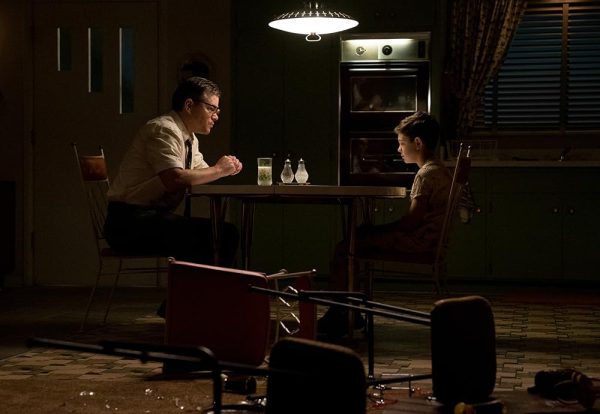
However, what the numbers don’t capture is the specific quality of the film’s failure. A D- CinemaScore is an extraordinary result — not merely a bad film, but a film that alienated the audience who paid to see it. Collateral Beauty’s problem was deceptive marketing. Suburbicon’s problem was more fundamental: it was genuinely two films that did not belong together, made by a director who had been handed a script written by better filmmakers and decided to improve it by adding an entirely different script. Whether Clooney believed the combination worked, or whether the project simply accumulated too much momentum over thirty years to stop, is still unclear.
Suburbicon is not forgotten in the same way the other films in this series are forgotten. It is remembered, but only as a punchline about the gap between a logline and a finished film. Joel and Ethan Coen, who co-wrote the original script and watched Clooney make it, have said nothing publicly about the result. That silence, given the Coens’ usual willingness to discuss their work, probably tells you everything the box office numbers already did.
Matthew Shepherd