Adam Page revisits Showgirls and its journey from catastrophe to camp classic…

Over the years, I’ve realised something about failure, especially with bad movies, that I think we can all agree on: it has a shelf life, and if you’re patient enough, lucky enough, and if enough strangers laugh at the wreckage in the same room at the same time for long enough, failure matures into something else entirely. I don’t mean success, nothing as clean as that. It matures into meaning. And nowhere has that formula been performed so spectacularly and perversely, than with a $45 million fever dream about a stripper by the name of Nomi Malone, clawing her way to the top of a Vegas revue, directed by a Dutchman who had survived Nazi occupation and seemed to decide that the Las Vegas Strip was a fitting second act.
Of course, I’m talking about Showgirls. Paul Verhoeven’s 1995 NC-17 catastrophe. The movie that arrived like a car crash nobody had insured, a movie the critics didn’t pan but autopsied, and swept the Razzies like an occupying army. Seven of them in 1995, plus Worst Picture of the Decade in 1999, an honour bestowed with the kind of gleeful cruelty usually reserved for war criminals and telemarketers. It made just over $30 million against that $45 million budget, and ended careers. It changed Elizabeth Berkley, a promising young actress fresh off the sitcom circuit, into a punchline that followed her down every red carpet for a decade.
But then, somewhere deep in the wreckage, something started to hum.

I’ve spent enough time in my life in rooms full of people watching things go catastrophically wrong to know that disaster has a certain texture. There’s a disaster which is just sad; the sort that makes everyone shift in their seats and want to leave early. And then we have the disaster which is so committed and total, so cheerfully unaware of its own ruin that it flicks a switch in the collective nervous system, and the room starts to laugh instead of wince. That second kind of disaster is rare, and it can’t be manufactured. God knows studios have tried to, spending fortunes trying to create camp on purpose, and it always arrives flat, a pale waxwork of the thing it’s imitating.
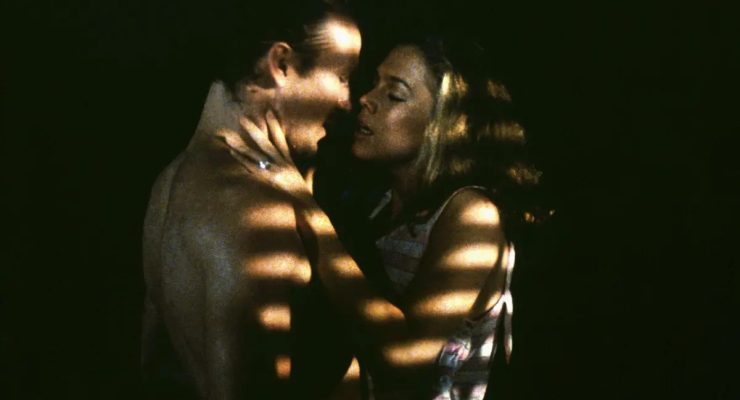
Camp has to be sincere to work, believing in itself totally while being wrong about absolutely everything. Showgirls believed in itself the same way a drowning man believes in the surface. Every single decision in that production; the dialogue, the lighting, the poolside seizure passed off as lovemaking, Kyle MacLachlan’s utterly doomed attempt to look like a normal human while spouting lines no normal human has ever said, all of those decisions were made with total and unblinking conviction. Nobody blinked, and that’s the ingredient you can’t fake, and it’s the same ingredient which made the whole thing combustible later.
But conviction by itself doesn’t build a cult; somebody has to light the match. And the story of who lit it and when, is a lot more specific and a lot more human than the usual mythology of “it was so bad that people started loving it.” That’s a lazy origin story people tell about cult objects, as though these things assembled themselves out of bad vibes and thin air.
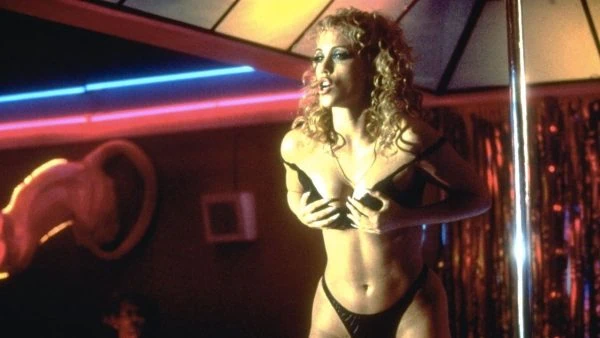
It didn’t happen by accident, it happened because rental and bootleg copies of the movie started circulating in the mid-90s among audiences who weren’t watching it the way Verhoeven intended. And according to writer Naomi Klein’s account, a very specific demographic of ironic twenty-somethings had started throwing what were basically Showgirls parties, hate-watching sessions before hate-watching had a name, shrieking at the poolside sex with that horror/delight of people who know they’re seeing something that will pleasantly scar them. MGM noticed those video numbers. And this is the part that always gets me, because the studio didn’t create the irony, it detected it, like a shark sniffing blood three miles out, and swam towards it with deadly commercial intent. By 1996, drag performers were being recruited to host midnight screenings in New York, which formalised what had been happening spontaneously in living rooms into something bookable and monetizable. The New York Times ran a piece that year with a headline telling us all we needed to know; the movie was crawling back from the dead as high camp, resurrected at midnight, apparently the only time resurrections are allowed to happen.
That’s the first hinge point. Not a scholar or critic, a marketing department watching the corpse twitch and smelling money in the twitching.
The second hinge point is more interesting, as it’s where the mockery starts to curdle, slowly almost without being noticed, into something with a bit more architecture to it. Peaches Christ, in San Francisco, was staging drag recreations of the movie’s more demented set pieces, and that’s its own special kind of tribute, as you don’t recreate what you simply hate, you recreate what’s gotten under your skin and set up home there. A few years later in Seattle, a critic and writer named David Schmader began hosting what he called annotated screenings. Starting in Northwest Film Forum in 1999, he’d stand in the dark with a torch and microphone explaining to the audience, scene by scene, just why what they were watching was failing and cataloguing what he’d later describe as a complex pattern of badness running through every choice in the movie, every department, frame, and every actor. And the thing about cataloguing failure with that level of obsessive precision is that it stops being contempt and becomes scholarship. You just can’t build a taxonomy of something you don’t respect on some hideously twisted level. The details start to become their own form of intimacy, whether you want them to or not.

By 2003, MGM came calling on Schmader, not with the cease-and-desist letter he’d been expecting, but an invitation to record the commentary for the 10th anniversary DVD, a release that became an honest-to-goodness top-seller, and is still one of the studios best-selling catalogue titles decades on. Sit with that for a moment. The apparatus that made the movie, the studio and rights-holder, had now fully absorbed the joke into the product. The mocking wasn’t happening to the movie from the outside anymore, it had been stitched straight into the object itself and sold, shrink-wrapped, in the same package. That isn’t reclamation, or even irony, really, anymore. That’s a huge corporation running successful hospice care on its own failure while getting paid twice for the privilege; once for the funeral, and again for the wake.
Somewhere in that strange decade, though, something else was happening on a totally different track. It was quieter and less commercial, and also the part of the story that gets flattened when people tell the “so bad it’s good” version. Serious critics writing for serious journals started circling back to it. J. Hoberman, Jonathan Rosenbaum, critics who had been in the trenches in 1995 watching their colleagues line up to tear the thing apart, started suggesting, with that caution people have when they’re about to say something unpopular, that maybe Showgirls wasn’t simply bad; maybe it was a vicious and deliberate satire of the exact American appetite it seemed to be servicing. A movie which fed you the exploitation it claimed to be indicting and dared you to enjoy it, then made you sit with your own discomfort about having enjoyed it.
That was Paul Verhoeven’s whole method, going right back to his Dutch work before Hollywood got its hands on him: he specialises in giving his audiences exactly what they want, then implicating them for wanting it. By 1999, French moviemaker Jacques Rivette, not exactly anyone’s idea of a populist and a man who made movies running up to 13 hours long, was calling it one of the great American movies of the last several years. Even Quentin Tarantino, never shy about championing the disreputable, included it on his own list of movies that deserved to be entirely reconsidered.
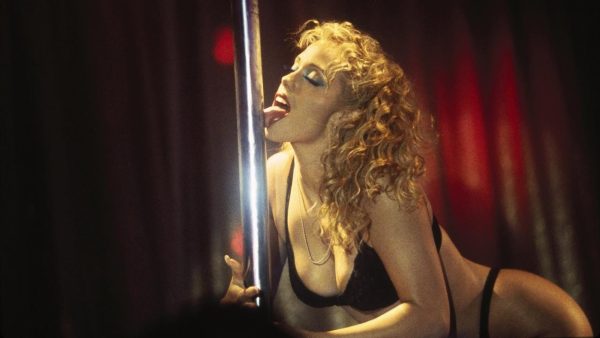
Even John Waters, and let’s face it, if there’s an authority on camp’s real mechanics, on the difference between something that’s in on the joke versus something that’s just providing one, it’s John Waters, even he weighed in with honest ambivalence. He genuinely loved the movie, but doubted that Verhoeven, and screenwriter Joe Esztrehas, were actually in on the whole thing, and that the self-awareness critics were now ascribing the movie was mainly an invention of the audience and not the moviemakers intention. It’s that which is the fault-line running under the whole reclamation, and the one nobody’s ever sealed shut: was this always a text with hidden gems waiting to be discovered, or did the audience build a cathedral of meaning on top of a huge accident, then insist the accident had been the architecture all along?
I don’t think that question has an answer, and if I’m honest, I don’t think it needs one. What I think is more interesting is what that question really does; because arguing whether Verhoeven meant it or not becomes its own agonising ritual, its own reason to keep talking about the movie, and that’s exactly how canonisation works in every area I’ve seen it happen in. There is nobody that canonises something everyone agrees about. It’s the argument that gets canonised.

There is a human cost sitting under all this critical restructuring that the discourse tends to gloss over, and we should sit with it for a moment, because the easy genre I’m supposed to be writing about here loves itself a clean redemption arc, and this one only kind of has that. Elizabeth Berkley took the brunt of that initial slaughter, and became the face of the disaster in ways her male co-stars just didn’t. She was saddled with the sort of career damage that may not show up on a Razzie ballot, but damn sure showed up in every casting meeting for the next fifteen years. And so for two decades, she stayed away from anything Showgirls related, until in 2015 at the twentieth-anniversary screening at the Hollywood Forever Cemetery, with 4000 people on the grass the night after the Supreme Court legalised same-sex marriage across the country and vibrating with a collective relief, Berkeley showed up. She walked out from behind a wall of flowers into the projector light, and the crowd lost its mind. There was a real ovation, as she stood in front of an audience connected to that movie for the first time since it ruined her career the first time around.
Berkley called that a full-circle moment, and by all accounts it really was one, not the sort of thing a publicist dreams up for you. That seems to be the part of the camp-canonisation story which never makes it into the academic papers about irony and reappraisal: that somewhere in the middle of the joke was a real person who had to live in that punchline for 20 years before the room finally and mercifully let her back in on it.
And that brings me, finally, to the part where the mockery gets a diploma. Jeffrey McHale’s 2019 You Don’t Nomi is the moment where the entire apparatus; irony parties, drag screenings, Rivette’s quote, and Berkley’s homecoming all get assembled into a real argument instead of a scattered folklore. McHale builds the documentary in three movements, with the titles telling us the whole trajectory: Piece of Shit, which covers the original slaughter, Masterpiece, which covers the midnight-movie rehab, and Masterpiece of Shit, which is where McHale plants a flag and refuses to resolve the tension. He argues that the movie gets to be all three things simultaneously; a real disaster, a camp object, and a seriously savage commentary on the mechanics of American ambition, with none of those readings cancelling out the others.
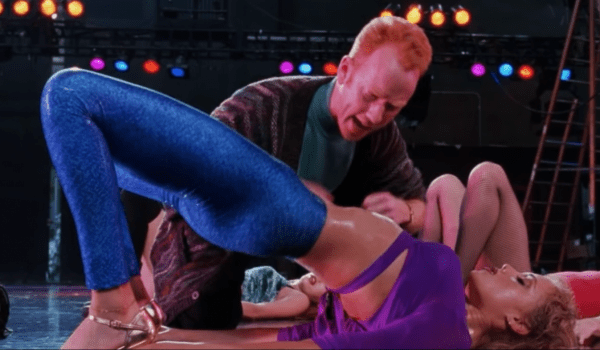
The critic and author Adam Nayman, whose book-length defence of the movie gives most of the documentary its backbone, puts it inside a trilogy of camp which runs through Valley of the Dolls and Mommie Dearest, also movies that were destroyed on arrival and rehabilitated over the following decades by audiences who kept on finding new rooms in a house the critics had already condemned. And it’s that which is the giveaway that this isn’t some sort of Showgirls–specific fluke. There’s an entire genre of movie that does once, in public, and then has to die properly. It has to be resurrected by just the right unofficial curators, over just the right amount of years, before the official culture is allowed to realise it’s still standing.
That, I think, is the real mechanism here, the thing under the thing. “So bad it’s good” isn’t some spontaneous verdict the culture arrives at collectively; it’s deliberately built, in stages, by people working way outside any institution that could confer legitimacy in the first place. Video-store irony parties, drag queens in San Francisco basements, or one guy with a torch in a Seattle art-house cinema. It’s those people who do the real labour of finding the shape of the thing, and of proving through repetition that there’s something durable enough there to keep coming back to. It’s only after that unpaid and unglamorous work builds up for the better part of two decades does the official machinery; the studio’s DVD department, the documentary crews, critics with mastheads, arrive to certify what the fringe already knew. The Razzies happen in a night, but canonisation takes twenty years and needs the participation of people the industry never would have thought to ask.

Every disreputable object that eventually gets a retrospective, or Criterion-adjacent respectability, all went through some version of this laundering process. First it’s mocked, and adopted by a specific unglamorous subculture second. Third, it’s formalised by institutions before being defended by serious critics and only then, possibly, forgiven. What’s rare with Showgirls is just how visible those seams are and how well-documented each stage of the process turned out to be, right down to naming the guy with the torch. The majority of cult objects get to keep their myth of spontaneous generation. This one was caught, on the record, in each stage of its own rehab. And that’s either the least dignified way to become canonical, or the most honest one. I go back and forth on that one. Some nights I think it’s both.
Come to think of it, that’s exactly the argument the movie’s been making about itself the whole time.
Adam Page