In 2019, superhero movies reached a height that once seemed impossible. Avengers: Endgame was not simply another blockbuster release; it was a genuine cultural event. Earning nearly $3 billion worldwide, it represented the peak of a decade-long experiment that transformed superhero films from occasional crowd-pleasers into the centre of Hollywood’s blockbuster strategy.
For years, superhero movies were the closest thing cinema had to a guaranteed success story. But six years after Endgame, the landscape looks very different.
The superhero movie is no longer an automatic box office event. The genre that once dominated Hollywood now finds itself facing a new reality: expensive productions struggling to meet expectations, audiences becoming more selective, and growing criticism that many releases feel increasingly familiar.
This has led to one of the most common narratives surrounding modern cinema: superhero fatigue.
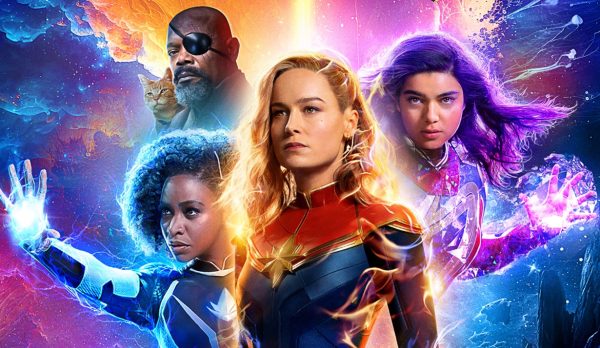
After more than a decade of capes, cinematic universes and interconnected storytelling, audiences have supposedly reached their limit. The recent struggles of Marvel Studios have only intensified that conversation. The studio that once seemed untouchable has experienced a string of disappointments, with films such as Ant-Man and the Wasp: Quantumania and The Marvels failing to reach the box office heights audiences had come to expect. Even established characters and decades-old comic book brands are no longer guaranteed to become cultural phenomena.
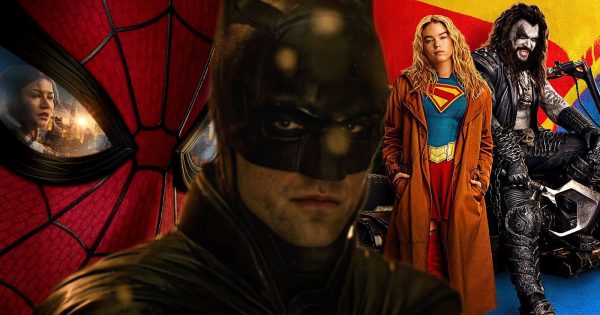
The same uncertainty has followed the wider superhero landscape. The underperformance of Supergirl, the latest attempt to expand the new DC Universe, has raised further questions about whether audiences are still willing to embrace every superhero project simply because it carries a familiar name.
So, has the superhero era finally come to an end? Perhaps that conclusion is too simple.
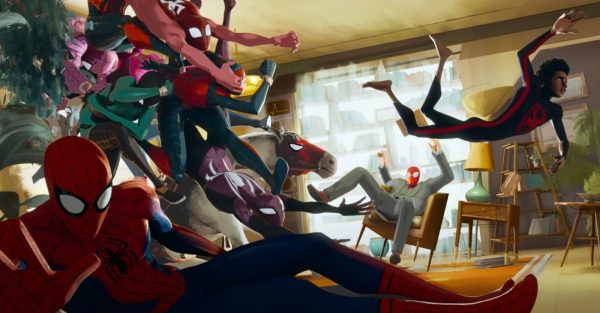
While the days of every superhero release becoming a billion-dollar event may be over, audiences have not abandoned these stories entirely. Films such as The Batman and Spider-Man: Across the Spider-Verse have shown that superhero storytelling can still thrive when it offers something distinctive, while projects like X-Men ’97 have demonstrated that audiences remain invested in these characters when there is a clear creative reason to revisit them.
The superhero genre is not dead, as we shall see later. What has ended is its time as Hollywood’s default genre.
The Superhero Movie Was Never Meant to Be Everything
Before Marvel Studios changed the industry, superhero movies existed in a very different form. They were occasional event releases rather than an entire cinematic ecosystem. Films such as Spider-Man, the X-Men franchise and The Dark Knight succeeded because audiences were invested in specific characters and the filmmakers bringing them to life, not because they were required pieces in a much larger puzzle.

A superhero movie did not need to set up the next ten projects; it simply needed to tell a satisfying story.
Sam Raimi’s second Spider-Man film remains one of the clearest examples of this approach. Despite featuring a hero capable of extraordinary feats, the film was ultimately focused on Peter Parker’s personal struggles: his relationships, his responsibilities and the difficulty of balancing an ordinary life with the expectations placed upon him as a superhero. The story did not exist to expand a universe. It existed to explore a character.
Christopher Nolan’s The Dark Knight trilogy took this approach even further, grounding Batman in a world that felt closer to a crime thriller than a traditional comic book adventure. Nolan’s films treated Batman’s villains as part of Bruce Wayne’s individual journey rather than potential franchise extensions. The Joker, Two-Face and Bane existed to serve the story being told, not to establish spin-offs or future instalments.
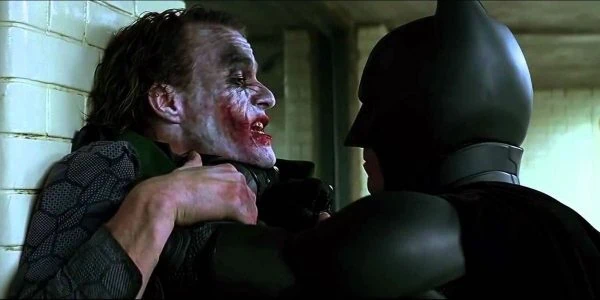
Its blurring of genre boundaries helped elevate The Dark Knight beyond the expectations usually placed on comic book movies, earning widespread acclaim and more than $1 billion worldwide.
Then everything changed in 2008 with the arrival of Iron Man.
Marvel Studios’ first film proved that superhero movies could operate as chapters within a shared universe. Individual stories could build towards larger events, and audiences were encouraged to follow an entire universe rather than a single character.
When The Avengers arrived in 2012 and became a global phenomenon, Hollywood took notice. Marvel had created a blueprint that every major studio wanted to replicate.
The result was a superhero gold rush. Suddenly, studios were chasing cinematic universes, interconnected franchises and endless spin-offs, hoping to capture the same level of audience loyalty that Marvel had built over several years. The superhero genre had become Hollywood’s preferred business model, and that was always going to be difficult to sustain.
When Every Superhero Movie Had to Save the World
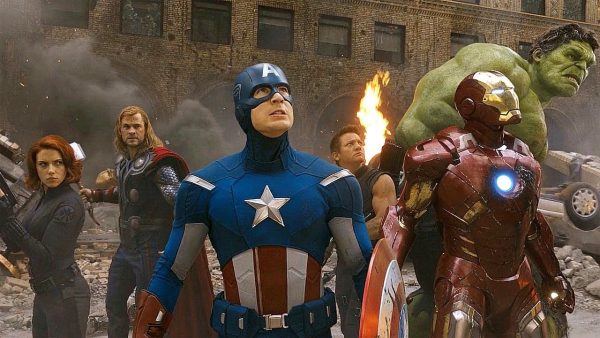
Several aspects contribute to this decline in interest in the genre. First is that, once superhero movies became some of the biggest films in the world, each new release was expected to be larger, louder and more spectacular than the one before it.
The Avengers ended with a small group of heroes defending New York from an alien invasion. The sequel, Avengers: Age of Ultron, responded by introducing an even larger team of heroes, a city lifted into the sky and a threat capable of global destruction. Likewise, the first five entries of DC’s shared universe, the DCEU, similarly relied heavily on world-ending stakes and apocalyptic finales. Eventually, the spectacle began to lose its impact.
Audiences increasingly complained that superhero films felt interchangeable. This can be seen in their excessive dependence on CGI spectacle.
Even films promoted as different from the traditional superhero formula often returned to familiar territory. Suicide Squad, a film centred around Batman’s street-level villains, ended with the team battling a city-destroying threat surrounded by a CGI portal. Black Widow, which was marketed as a more grounded spy thriller, concluded with a massive airborne action sequence involving a collapsing ship and a fight among falling debris. Shang-Chi, praised for its martial arts choreography and stunt work, eventually moved towards a CGI-heavy finale involving dragons and fantasy spectacle.

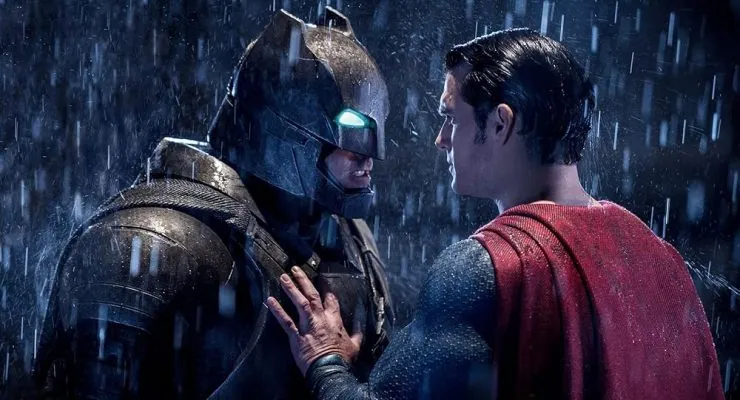
While superheroes have always relied on spectacle, the issue is that the same type of climax began appearing regardless of the character, studio or creative promise attached to the project. Even Batman, once defined by Nolan’s grounded approach, eventually became part of the same escalation cycle when the character was placed alongside Superman and larger-than-life threats within the DCEU.
What studios seemed to forget was what made each superhero unique in the first place. Batman, Spider-Man, Black Widow and Shang-Chi each offered different worlds, tones and conflicts, yet over time those differences began to blur.
The formula began spreading beyond individual films and into entire franchises. As mentioned above, Sam Raimi’s Spider-Man was previously self-contained and character-driven. In the 2010s, Sony attempted to build a shared universe around the hero’s world under Andrew Garfield’s iteration. Those films became infamous for feeling more focused on establishing future spin-offs than telling a complete story.
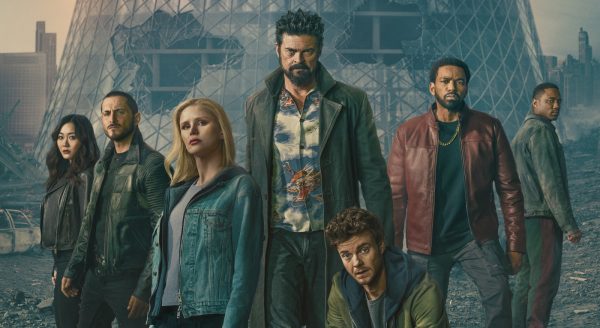
Even The Boys, which gained popularity from challenging traditional superhero conventions, drew criticism for falling into the same trap. Audiences were generally unsatisfied by the final season placing greater emphasis on expanding the wider universe. This sidelined its central story of normal people against corrupt superheroes that initially made it stand out.
The irony was that Hollywood attempted to recreate the success of the superhero formula so aggressively that the formula itself became the problem. With just the Marvel Universe currently housing 37 films and 17 television series, context can be discouraging as well as essential. Even Marvel Studios president Kevin Feige acknowledged that the expansion of Marvel content started to feel more like homework than entertainment.
The End of the First Superhero Era
Arguably, the superhero genre reached its defining moment with one specific film: Logan.
Directed by James Mangold, Logan stripped away much of the traditional superhero spectacle and embraced the tone of a western. Its world was smaller, and its stakes were personal. Its central conflict was whether Wolverine could save the world, but if he could find redemption before the end.
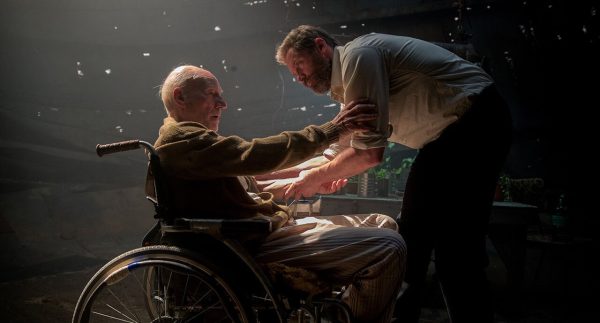
At a time when superhero films were increasingly focused on expanding universes and setting up future instalments, Logan was powerful because it understood the value of closure. Rather than building towards another world-ending threat, it focused on a handful of damaged people searching for something better. It proved superhero stories could explore ageing, loss and purpose.
This story, in itself, was unique to someone like Wolverine, a forlorn anti-hero whose specific powers tackle the curse of immortality and the weight of time due to his ability to heal.
If Logan represented the end of one hero’s journey, Avengers: Endgame represented the conclusion of an entire cinematic experiment. After eleven years of storytelling, Marvel Studios brought the original Avengers era to a close, with Tony Stark sacrificing himself and Steve Rogers retiring.
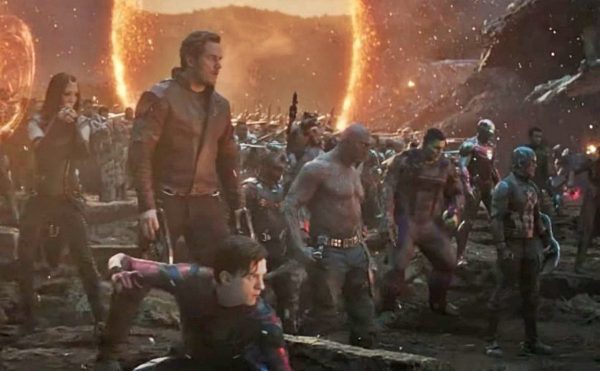
The significance of Endgame was that it proved even the largest cinematic universe could eventually reach a satisfying conclusion. Audiences were watching the payoff of years of investment in a variety of characters.
However, that achievement also created an impossible challenge. Hollywood had witnessed the success of a decade-long storytelling model and attempted to continue it; as evidenced by Marvel’s continuous expansion streak, DC’s renewed expansion and other platforms like The Boys. The problem was never that superhero stories had reached their limit. It was that the industry expected every future project to recreate the feeling of an expanding franchise that would culminate in the same Endgame finale.
What Audiences Actually Want Now
The current superhero landscape suggests that audiences have not abandoned these stories. Instead, they appear to be more selective about the types of superhero films they are willing to embrace.

Matt Reeves’ The Batman is one of the clearest examples of this shift. Released in 2022, the film returned Batman to the world of street-level crime, detective work and psychological drama, offering a darker interpretation that felt distinct from the wider superhero landscape.
Perhaps most importantly, it succeeded without requiring audiences to follow a larger cinematic universe. Viewers did not need to understand years of previous films or watch multiple spin-offs to appreciate Bruce Wayne’s journey.
The patience surrounding Reeves’ Batman universe is also significant. Rather than rushing multiple films and television projects into production, the franchise has taken time to establish its identity. Despite delays surrounding the upcoming sequel, audiences remain highly invested because there is confidence that the next chapter will offer something carefully crafted rather than simply another piece of a larger machine.
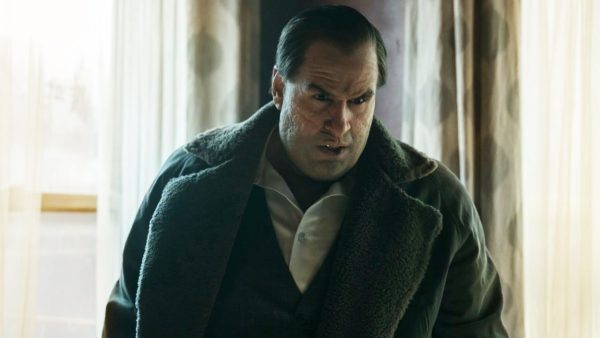
This approach extended into The Penguin, which demonstrated that a superhero universe does not need to rely entirely on its central hero. Instead of forcing a Batman appearance or using the series solely as setup for another film, the story explored Gotham from the perspective of its criminal underworld. Colin Farrell’s Oz Cobb was allowed to exist as his own character, giving audiences a different perspective on the world created by Reeves.
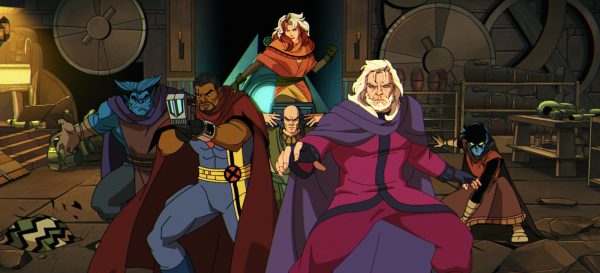
The same principle applies to X-Men ’97. Although it continues the legacy of X-Men: The Animated Series, it succeeds because it does not rely solely on nostalgia. The series introduces its world and characters clearly enough for new audiences while rewarding longtime fans who understand the history behind them.
After establishing its foundation, the series uses that history as a launching point for more ambitious storytelling, digging deeper into developing these characters. The latest episode of the currently airing second season witnessed the origins of one of the X-Men’s most powerful villains, Apocalypse. The shocking twist was largely brought on by the team and anti-hero, Magneto, trying in vain to sway him from his destiny.
Even the anticipation surrounding Spider-Man: Brand New Day reflects a similar desire. Much of the excitement comes from the possibility that Tom Holland’s Peter Parker will return to a more personal scale following the multiversal events of Spider-Man: No Way Home. The promise of street-level threats, loneliness and maturity appears to have generated interest because audiences are drawn towards seeing what makes these characters human, rather than simply watching another hero fight an increasingly larger threat.
Superhero movies have spent years being treated as Hollywood’s answer to every blockbuster challenge. That period is coming to an end. The success of the Marvel Cinematic Universe created a formula that transformed the industry, but formulas eventually lose their impact when they are repeated too often.
However, that does not represent the death of the genre. In today’s climate, The Batman succeeded because it approached a familiar character from a fresh perspective; X-Men ’97 succeeded because it pushed the boundaries of what a superhero story could look and feel like. These films succeeded because they went beyond what audiences were used to.
The future of superhero storytelling may not belong to the biggest universe. It may belong to the stories that remember superheroes are characters first and franchises second.
Joseph Jenkinson