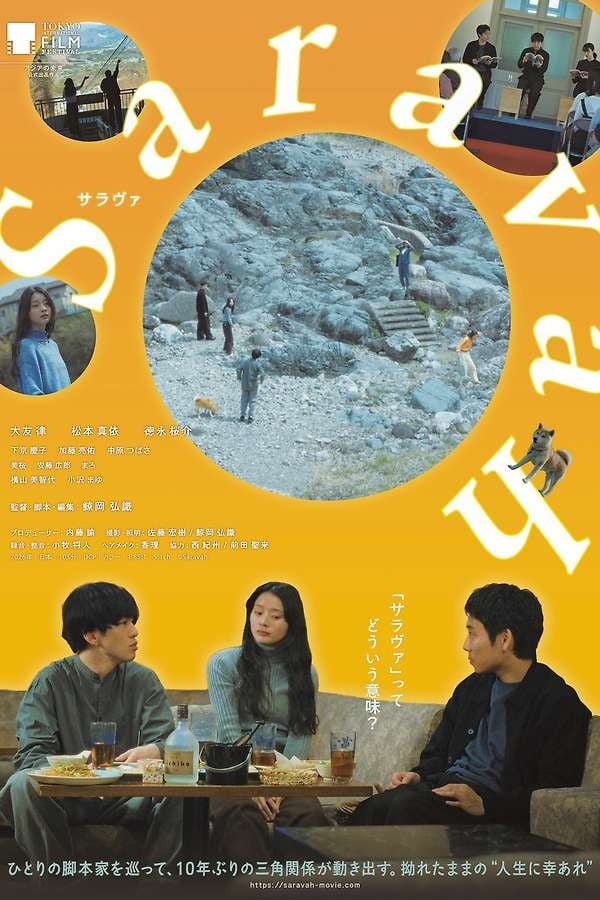
Saravah, 2026.
Directed by Hironori Kujiraoka.
Starring Ritsu Otomo, Mai Matsumoto, Ōsuke Tokunaga, Keiko Shimokyo, Ryosuke Kato, Tsubasa Nakahara, Hiroro Ando, Michiyo Yokoyama, Mayu Ozawa.
SYNOPSIS:
A man takes on a ghostwriting job, bringing three former classmates together after ten years to untangle their hilariously complicated lives.
It only takes one achievement to reshape your entire career as a creative. There are many talented creatives out there who will never make it because they have never been given the spotlight. Saravah, the sophomore feature by Hironori Kujiraoka, explores this idea of art, as well as love and friendship. It is a quippy and fun movie, but I wish it had more bite to it. While I had a great time watching it, I found myself wondering what the deeper meaning was.
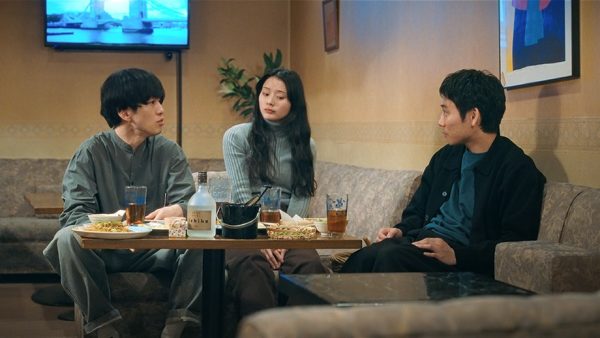
As mentioned, it only takes one achievement. For Hato (Mai Matsumoto), winning a prize at university skyrocketed her career as a screenwriter under the alias Kei Ooto. However, for Riku (Ritsu Otomo), as he never achieved the same level of success, he continues to write scripts and produce plays that, while successful in their own right, do not align with his ideal vision of success. As for their third friend, Sakura (Ōsuke Tokunaga), his declining health has greatly impacted his work, leading him to constantly check his temperature and run 10km a day.
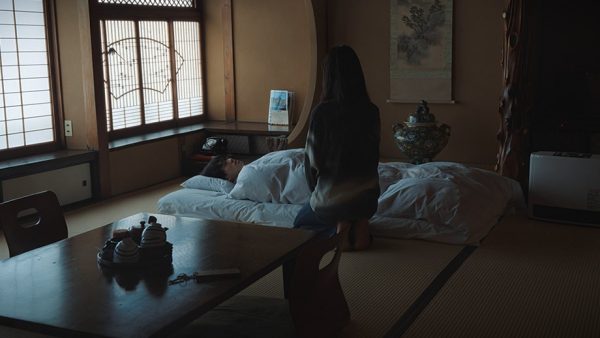
Over the course of the easy-going 1-hour and 43-minute runtime, you see these three characters overcome the hurdles life brings them. Whether it be deciding if they should disclose a friend’s affair, dealing with the burden of taking over someone else’s work as a ghostwriter, or navigating the struggles of a love triangle. It all combines to create engaging drama and compelling moment-to-moment conflict. Beyond that, I struggled to connect with the film on a thematic level and found myself unsure of what it was trying to say beneath the surface. That is not always a negative, but when so many scenes revolve around deep and meaningful conversations, I wish I could have gravitated towards a stronger central message.
The performances in this film are truly wonderful, thanks to the strength of the cast. Matsumoto delivers an understated performance as a writer who is disillusioned with the profession. This contrasts with Riku, a writer who is given the opportunity of a lifetime to achieve his dream but if his name is not attached to the work will it matter? Tokunaga also gives a subdued performance, and while his character remains the most mysterious of the three, he demonstrates through his delivery that having a friend who will always have your back is something deeply meaningful.
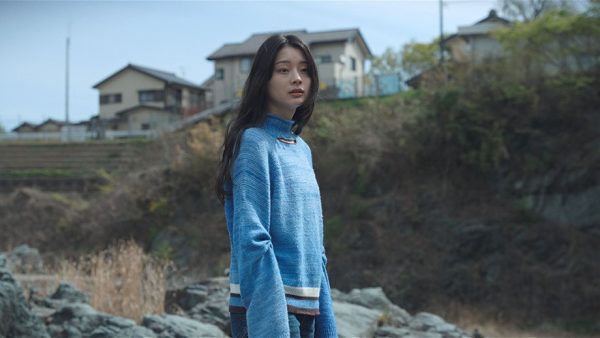
Kujiraoka not only serves as the film’s director but also its screenwriter, editor, and cinematographer. The film looks gorgeous throughout, perfectly capturing the beauty of the city in contrast to the natural splendour of the surrounding countryside. One standout scene on a cable car showcases the town in the distance, surrounded by lush greenery. It is a striking image that looks fantastic. As mentioned, the film’s breezy runtime flies by and never overstays its welcome. There is a confidence behind the camera that is particularly impressive, especially for a second feature.
It is just a shame that I never found anything to gravitate toward beyond the surface. While that surface is a great time, it ultimately holds the film back from being truly incredible. Saravah has a lot to appreciate and a lot to offer; I just wish it packed more of a punch.
Flickering Myth Rating – Film: ★ ★ ★ / Movie: ★ ★ ★
Robert Ewing