Casey Chong presents a selection of hospital horror movies worth checking in for this Halloween…
Hospitals have been one of the mainstays in the horror genre, often used as both visual and thematic ground for all things sinister, regardless of a serial killer, a supernatural entity, or a horde of flesh-eating zombies. Instead of highlighting the likes of The Exorcist III’s famous jump scare during its elaborate hospital-corridor sequence or Jacob’s Ladder’s surrealistic hospital imagery, we’re looking a selection of essential horror movies taking place primarily in a hospital…
The Dead Pit (1989)
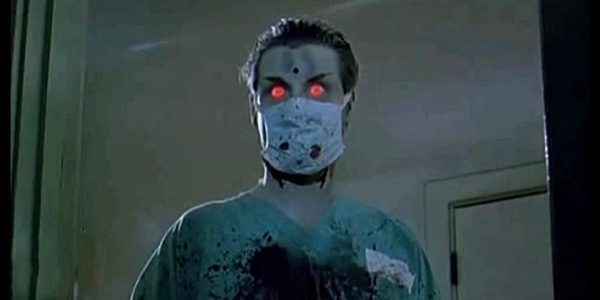
Brett Leonard is best known for his virtual reality-themed movies, including The Lawnmower Man and Virtuosity. But it’s easy to forget he got his start directing this little-seen late-80s low-budget horror, The Dead Pit, blending creepy asylum-set horror and mad-doctor tropes with a dream-logic atmosphere straight out of A Nightmare on Elm Street. The mad doctor in question is Dr. Ramzi (a deliriously scenery-chewing Danny Gochnauer), who is responsible for unorthodox lobotomies on the psychiatric patients in the basement, forcing his colleague, Dr. Gerald Swan (Jeremy Slate), to kill him with his gun.
But decades later, the supposedly deceased Dr. Ramzi somehow returns from the dead, looking all morbid with glowing red eyes. The movie also introduces an amnesiac protagonist in the form of Jane Doe (Cheryl Lawson), who has no recollection of her past. Leonard’s horror mash-up makes The Dead Pit an underrated standout: first a deliberately paced psychological horror-thriller centered on Jane Doe’s recurring nightmares, then culminating in an over-the-top, zombie-centered splatterfest.
The Autopsy of Jane Doe (2016)

André Øvredal’s English-language film debut, best known for his acclaimed Norwegian found-footage fantasy horror Trollhunter, combines the best of both worlds: a deliberately paced procedural takes place in a morgue, where a father-and-son coroner team, Tommy (Brian Cox) and Austin (Emile Hirsch), discover something is off about the unidentified titular corpse (Olwen Kelly). From her strangely unblemished exterior yet severely charred lungs internally, and carved symbols on the inside of her skin, the movie details every stage of the autopsy during the first half of the movie. Then comes the tonal shift in the second half, moving away from its initially grounded mystery into an atmospheric supernatural chiller. Øvredal uses the basement morgue setting to his advantage, turning the single location into a forbidding sense of dread and claustrophobia.
Halloween II (1981)
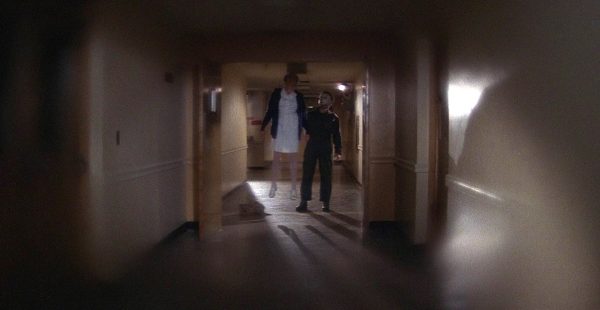
As one of the better entries in the Halloween franchise, Rick Rosenthal’s directorial debut effectively transitions John Carpenter’s groundbreaking 1978 original, taking place in the suburban Haddonfield neighborhood, to the claustrophobic confines of a hospital setting. Although Halloween II lacks the masterful dread and intensity of the first movie, Rosenthal manages to compensate for his sequel with a few notable kills, notably a scene revolving around a scalding-hot hydrotherapy tub. He also successfully turns the hospital – in this case, the Haddonfield Memorial Hospital – into a maze of dread heightened by the ominous Michael Myers.
The sequel equally raises the stakes by highlighting the heavily traumatized Laurie Strode (Jamie Lee Curtis) from the events of the first movie, whose vulnerability doesn’t hinder her from improvising her survival skills to outsmart Michael Myers. The biggest turning point of Halloween II lies in its shocking twist, revealing Michael’s targeted killing of Laurie isn’t random, as the two turn out to be siblings.
A Nightmare on Elm Street 3: Dream Warriors (1987)
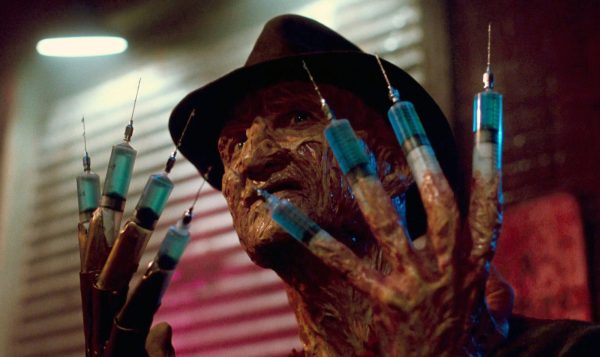
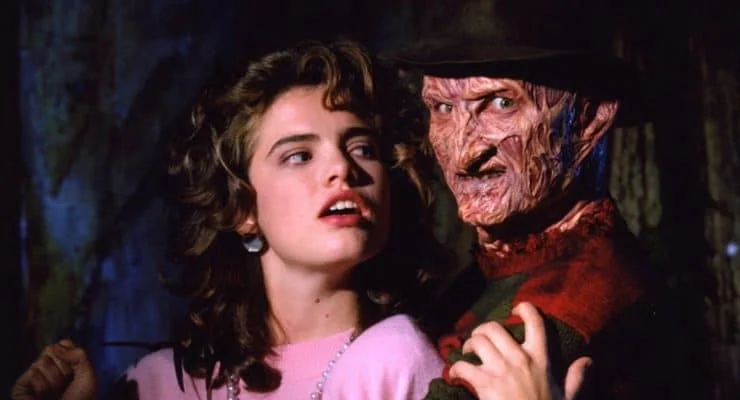
After the misguided A Nightmare on Elm Street 2: Freddy’s Revenge, it took Chuck Russell – in his directorial debut – to course-correct the franchise, mixing the hospital-set horror (Westin Hills Psychiatric Hospital, to be exact) with gruesome yet inventive kills. The latter is especially true with the return-to-form Freddy Krueger (Robert Englund), going all out in his murder spree from the mutated “Welcome to prime time, bitch!” television set-piece to the visceral “human puppet” horror moment.
Credit also goes to the engrossing screenplay, focusing on the trapped patients led by the first movie’s survivor, Nancy Thompson (Heather Langenkamp), as they form a group to retaliate against Freddy using their unique dream powers. For instance, Kristen Parker (Patricia Arquette, in her memorable feature film debut) is capable of pulling people into her dreams, while Taryn White (Jennifer Rubin) possesses agile knife-fighting skills, and the otherwise wheelchair-bound Will Stanton (Ira Heiden) can walk in his dream and shoot a magical energy beam.
Session 9 (2001)

What elevates Brad Anderson’s slow-burn psychological horror the most is his decision to shoot his movie on location inside the real, abandoned Danvers State Mental Hospital in Massachusetts. The hospital itself had a disturbing history, from its infamous shock treatment to the mystery of missing teenage patients in the ‘80s. With its decrepit interior, the hospital serves as a deeply ominous character, evoking uncomfortable dread throughout the movie.
Anderson, who also co-wrote the screenplay, grounds his movie with the introduction of a blue-collar asbestos abatement crew led by cash-strapped Gordon Fleming (Peter Mullan), who makes an unrealistic promise to finish the job in just a week. Each character in Session 9 has their own plights, namely Phil (David Caruso), who is still bitter over the breakup with his girlfriend. Their real-world vulnerabilities drive the psychological undertones, allowing Anderson to deliberately mess with our heads with his narrative ambiguity about whether the crew is experiencing a stressed-out mental breakdown or a supernatural occurrence stemming from the discovery of audio-taped therapy sessions.
The Void (2016)
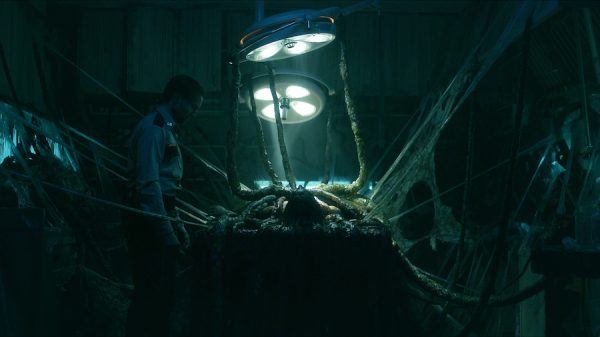
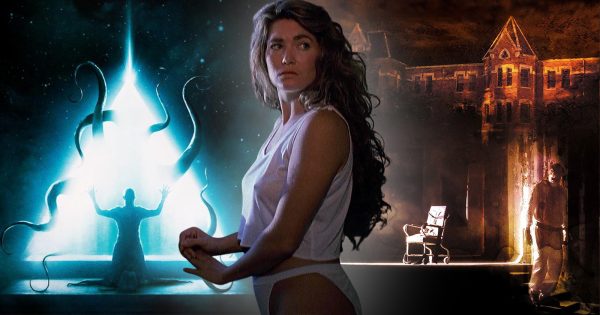
Co-directors Steven Kostanski and Jeremy Gillespie explore the fear of the unknown through a Lovecraftian horror vibe in The Void, making good use of the remote hospital facility as an unsettling visual sandbox. Even before the movie takes place predominantly in the hospital, Kostanski and Gillespie, who also co-wrote the screenplay, throw us directly in medias res with a shockingly violent opening scene, establishing the high-stakes threat right from the get-go. The movie keeps escalating from here, introducing Deputy Sheriff Daniel Carter (Aaron Poole), who rushes a bloodied man into the nearest hospital despite the place already being understaffed and lacking resources.
The rest of the movie unfolds over the course of a frantic single night, complete with the ominous appearance of the white hooded figures covered from head to toe. The Void may have been made on a minuscule budget, but that doesn’t stop the co-directors from turning this indie horror into a deeply atmospheric cinematic experience, thanks to their smart use of moody lighting and crowdfunded practical effects. Their obvious nods to early John Carpenter classics, notably Assault on Precinct 13 and The Thing, are a nice touch, blending claustrophobic, siege-like thriller and otherworldly cosmic horror to mostly successful results.
Gothika (2003)
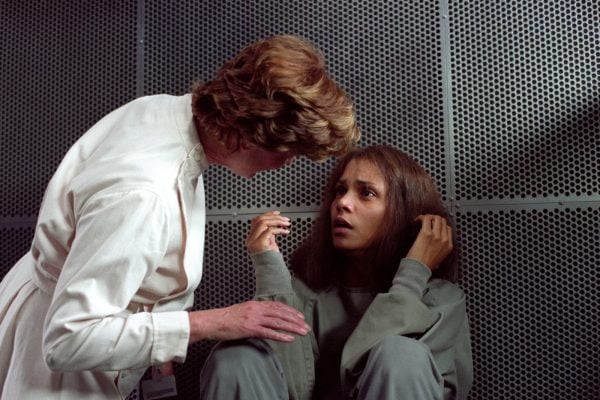
Gothika boasts an intriguing storytelling hook: What if you, as a highly respectable psychiatrist, were accused of a brutal murder and ended up as a patient in the same psychiatric facility you work at? Directed by The Crimson Rivers’ Mathieu Kassovitz, the movie begins with a promising stretch detailing Dr. Miranda Grey’s (Halle Berry) therapy session with Chloe (Penelope Cruz), suspecting her of having paranoid delusions despite the latter claiming she was assaulted in her cell by a so-called “devil”. Then comes the turning point when Miranda, on her way home one night, is forced to take a detour onto a deserted road and nearly hits a mysterious girl who appears out of nowhere.
From here, Kassovitz ramps up the surrealistic and psychological dread, from Miranda and the girl combusting into flames to waking up in a cell at the facility and learning that her husband (Charles S. Dutton) was killed with an axe. And according to Miranda’s colleague, Dr. Pete Graham (Robert Downey Jr.), she becomes the prime suspect, leading her to wonder how this is even possible. What follows is a convoluted but visually atmospheric supernatural whodunit bathed in an oppressively blue-tinged palette, while Halle Berry’s committed performance as a psychiatrist-turned-suspected murderer on the verge of losing her sanity helps enliven the movie.
Yummy (2019)
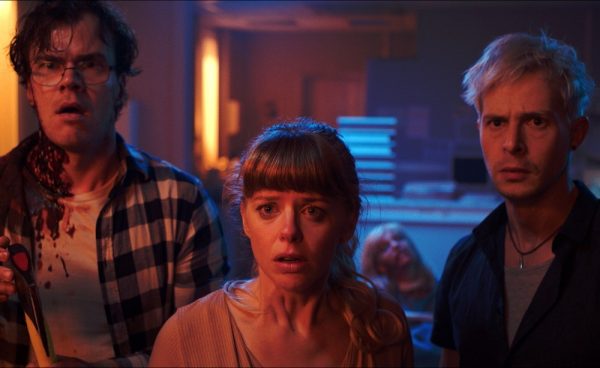
Straight out of Belgium, Lars Damoiseaux’s Yummy made its mark as the first Belgian zombie movie, combining the hospital-horror subgenre with grisly undead elements. Damoiseaux, who also co-wrote the screenplay, follows a young couple (Maaike Neuville’s Alison and Bart Hollanders’s Michael) and the girlfriend’s mother, Sylvia (Annick Christiaens), to an Eastern European hospital as Alison plans to undergo breast reduction.
At just 88 minutes, Damoiseaux’s assured direction soon escalates into an all-out zombie horror as the body count begins to pile up in the hospital, leaving only a few survivors trying to find their way out. Horror fans can look forward to old-school gore effects, as Damoiseaux prioritizes a practical-heavy approach over CGI. He equally deserves praise for poking fun at the objectification of women’s anatomy, while not shying away from brutally transitioning the initial horror-comedy tone into a progressively cynical yet nihilistic tonal shift, particularly during the mean-spirited third act.
Visiting Hours (1982)
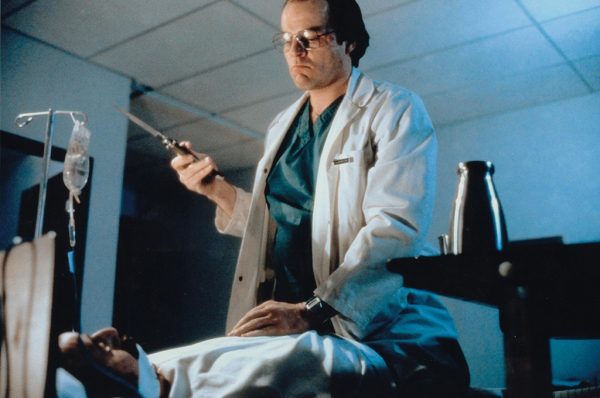
Fresh off his breakthrough performance in David Cronenberg’s Scanners the year before, Michael Ironside continues to prove his range playing a deeply disturbed antagonist, whose cold and laconic portrayal in Visiting Hours marks one of his best antagonist roles in his career. He plays Colt Hawker, a misogynistic serial killer whose primary goal is to get rid of Deborah Ballin (a no-nonsense Lee Grant), an outspoken TV journalist supporting feminism.
This leads Colt to attack her earlier in the movie, which ends with Deborah recuperating in the hospital. After finding out she’s still alive, Colt refuses to give up and determines to finish his job at all costs. Canadian director Jean-Claude Lord structures the movie akin to a psychological cat-and-mouse slasher, highlighting dread-inducing tension without relying heavily on gore. At one point, Visiting Hours was briefly labelled as a “video nasty” due to its violent and nihilistic content involving women.
Wrong Turn 4: Bloody Beginnings (2011)
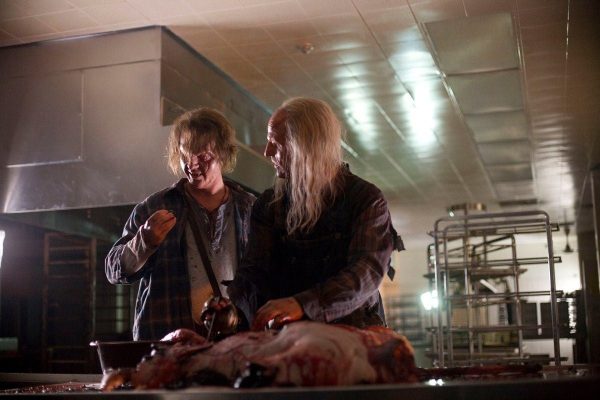
Just how many times can a Wrong Turn movie milk its overly familiar backwoods setting? Thankfully, for the fourth installment, writer-director Declan O’Brien from Wrong Turn 3: Left for Dead shifts the horror to the isolated sanatorium. The story centers on a group of university students on winter break for a snowmobile trip, only to end up stranded in a snowstorm. They have no choice but to seek shelter in the aforementioned sanatorium, unaware it’s a home for the cannibalistic mutant brothers.
True to its title, Wrong Turn 4: Bloody Beginnings highlights the uncompromisingly stark origin story of the brothers before staging a no-holds-barred hospital massacre during the opening prologue. The movie also benefits from a lean pace, complete with one grisly scene after another that emphasizes practical gore effects over CGI. O’Brien returns for one last time in Wrong Turn 5: Bloodlines the following year.
What are your favourite hospital-set horrors? Let us know on our socials @FlickeringMyth…
Casey Chong