Gentle Monster, 2026.
Written and Directed by Marie Kreutzer.
Starring Léa Seydoux, Catherine Deneuve, Jella Haase, Laurence Rupp, Sylvester Groth, Katharina Lorenz, Regina Fritsch, Raphael Nicholas, Anton Rubtsov, Nils Strunk, Malo Blanchet, Patrycja Ziółkowska, Rainer Doppler, Baran Sönmez, Filipe Repak, Sara Sukarie, and Sami Loris.

SYNOPSIS:
Renowned pianist relocates with her family to the countryside, where she uncovers a life-shattering truth that forces her to confront the complexities of love, trust, and deception.
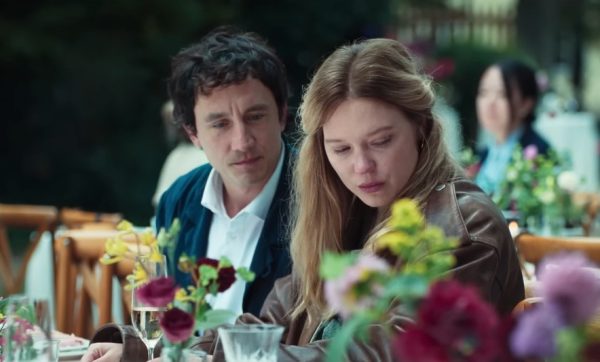
It’s hard to imagine discovering something about someone, let alone the husband and father of your child, that is unexpectedly and upendingly dropped on Lucy Weiss (Léa Seydoux). Writer/director Marie Kreutzer’s (who has shaped this narrative from a personal place, based on an ending-credits “special thanks” unlike anything seen in a movie in recent memory, which shows gratitude to everyone who participated or encouraged her to go through with this while shunning those who may have suggested otherwise) Gentle Monster succeeds in demonstrating the quiet shock and unthinkable pain from that revelation, in part to an outstanding Léa Seydoux.
This is also less a film about whether or not the accused individual, Philip Weiss (Laurence Rupp, uncomfortably good in a role that likely demands him to occupy a dark mental space), is guilty of possessing and uploading sexually explicit files centered on children, or any possibility of a misunderstanding or reason holding any justification whatsoever, and more about a wife and mother battling delusions that someone she trusted and loved could behave so unthinkably grotesquely. Naturally, his story repeatedly changes, beginning from a place of research for his next documentary despite having shown no interest whatsoever in the subject of child exploitation (and that’s including the film’s midpoint flashback to two years ago) to other horrific rationales attempting to make his actions not as disgusting or as flat-out malicious as they sound. At one point, he claims it was due to their financial strains and that selling this material is akin to drug-dealing from home.

That’s not a spoiler; there is no question that Philip is guilty and trying to cover his ass for two hours. The real sickening question is whether Philip ever abused or exploited his own young son, Johnny (Malo Blanchet, an impressive newcomer in a film that smartly goes out of its way in the editing and photography to ensure viewers that he was protected and never placed in a situation that could make the very essence of this narrative come across as hypocritical), as he is subjected to numerous psychological tests.
Meanwhile, Lucy and Johnny live with her mother (reliable veteran presence Catherine Deneuve), who can’t bring herself to explain what’s wrong in the relationship. She is simply too traumatized to talk about it, veering from being disgusted by Philip to, at times, not wanting to believe what the police have uncovered and are telling her, while also contemplating his excuses. It’s a devastating performance from Léa Seydoux, as she inches closer to a truth that might shatter her further.
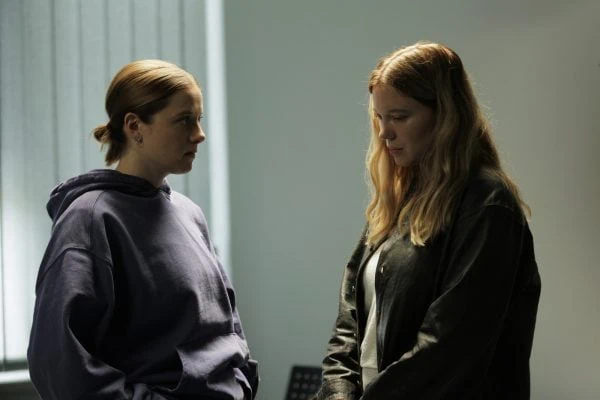
Speaking of those police officers, there is a B-plot involving Elsa (Jella Haase), a dedicated investigator for such crimes, who is also guarded and somewhat rattled by living with a remorseless father who can’t help groping whichever caretaker is hired. Considering her steadfast and restless pursuit of justice with no room for anything else in her life, there’s room to wonder if her father typically engaged in sexual misconduct, which is what brought her into such a depressing field. Either way, her own ethics are tested, and she is unsure what to do with her father. However, this is a slim subplot that mostly distracts from the fact that the rest of the movie has nowhere to go but trudge along aimlessly, with Lucy occasionally speaking to Philip and waiting for more details and evidence.
There is also something deeply uneasy and mildly exploitative in a trashy true crime manner, even though this is far more nuanced, about watching a film that, at times, is hinging its mystery on whether or not a child was abused or exploited. The film delicately handles the questioning of Johnny and Lucy’s shock, but it ultimately ends with a concrete answer to that question, leaving more on the table.

In some respects, it could be argued that Gentle Monster, while depressing to watch, is all surface-level terrific performances with little interest in fully exploring these characters and this disturbing situation. You’re either going to throw up your hands in annoyed disbelief that Lucy doesn’t immediately demand to see proof of payments if her husband indeed was selling this material for money and not a pedophile, or be caught up in Léa Seydoux’s tremendously pained and confused performance, empathizing with her current delusions. That performance and the sensitivity toward her predicament make the film a worthwhile, unsettling watch.
Flickering Myth Rating – Film: ★ ★ ★ / Movie: ★ ★ ★
Robert Kojder