Casey Chong with ten essential dinner party gone wrong movies…
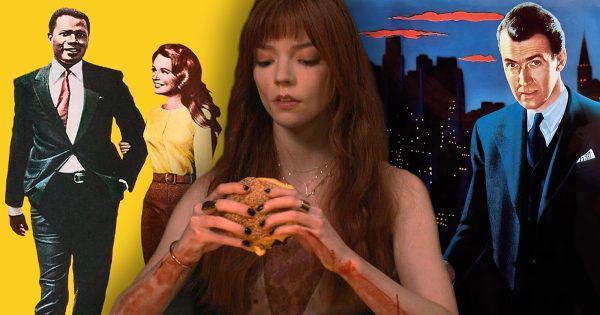
A gathering at a dinner party, typically seen in the movies, no matter whether it’s with close family, friends, acquaintances, or even strangers, can be either harmless or hostile. Casual conversations become increasingly awkward, or perhaps the host has an ulterior motive behind the seemingly ordinary façade. With Olivia Wilde’s The Invite currently playing in cinemas, we take a look back at ten of the best dinner parties gone wrong…
The Invitation (2015)
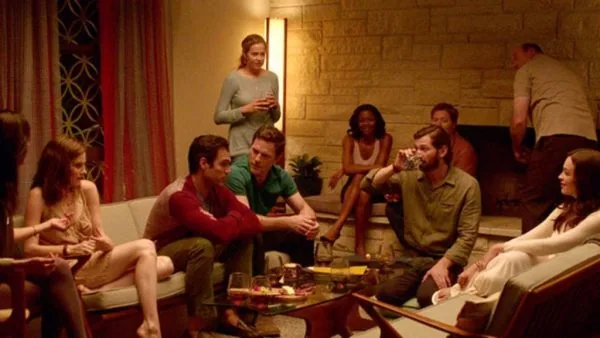
Karyn Kusama navigates Phil Hay and Matt Manfredi’s screenplay in a deliberate slow-burn approach, taking her time to establish the real motive behind the titular invitation. The story follows Will (Logan Marshall-Green) and his girlfriend Kira (Emayatzy Corinealdi) as they attend a dinner party hosted by Eden (Tammy Blanchard) and David (Michiel Huisman). Eden happens to be Will’s ex-wife, and they have divorced after the tragic death of their young son.
Eden has since disappeared to Mexico, and now, she returns two years later with a dinner-party invitation sent not only to Will but also to their circle of friends. Kusama expertly builds a gradual sense of unease as the evening of the get-together is filled with awkward verbal exchanges and playing a confession game called “I Want”. Paranoia and dread equally creep in as the reinforced security bars on every window in the house, zero cell reception, a missing friend, and a strange cult video presentation trigger Will’s suspicion to a breaking point. Then comes the blood-soaked payoff, culminating in a sudden burst of violence and a haunting coda.
The Feast (2021)

Lee Haven Joness Welsh-language The Feast is the kind of horror movie that favors minimalist storytelling over exposition-heavy structure. All you need to know is that Cadi (Annes Elwy) is a hired young woman to assist with the private catering for a dinner party at a wealthy family’s remote estate in the Welsh mountains. Cadi doesn’t speak a word, or so it seems. She often exhibits weird behavior, even going as far as self-mutilating herself at one point in one of the most shocking scenes in The Feast.
The movie doesn’t provide easy answers, other than deliberately wanting us to wonder about Cadi’s odd nature. Jones mixes slow-burn tension with atmospheric and, at times, stark visuals to reflect the movie’s allegorical themes of environment, greed, and punishment. Once the movie gradually reaches its turning point, Jones transitions from the uncomfortably cold and clinical first two acts to a visceral payoff. The latter sees the director go for the jugular, underlining the matter-of-fact graphic violence and gore.
Rope (1948)
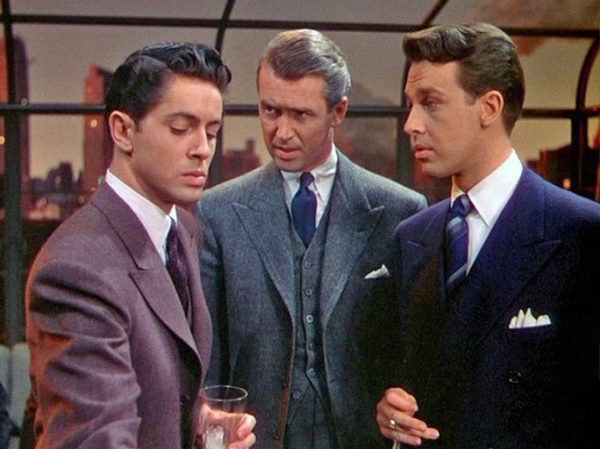
Alfred Hitchcock’s titular third cord refers to a murder weapon that the victim dies by strangulation. Adapted from Patrick Hamilton’s 1929 play, the legendary master of suspense goes straight for the high-stakes cold open: Two best friends, arrogant Brandon (John Dall) and nervy Phillip (Farley Granger), murder their prep-school classmate David (Dick Hogan) in their Manhattan penthouse apartment. They end up hiding the body in a large wooden chest before the dinner party takes place on the same day.
Interestingly, Hitchcock shot the tautly paced Rope, which clocks in at just 80 minutes, in a series of seemingly unbroken takes, mimicking the palpable look and feel of the real-time murder and its aftermath within the confines of the penthouse apartment. The single location allows Hitchcock to ratchet up the gradual tension as the movie progresses, where we see Brandon and Phillip thinking they have committed a perfect murder, only for one of their guests, Rupert (James Stewart), to sense something is wrong during the dinner party.
What follows is a dramatic yet thrilling battle of wits between the suspicious Rupert and the two young hosts, relying heavily on dynamic dialogue as a verbal weaponization against each other. Rope is also famously marked as Hitchcock’s first film shot in Technicolor — a creative decision that proved to be a logistical challenge to filming continuous shots with a then-bulky camera weighing a whopping 700 pounds.
Clue (1985)

Before Jonathan Lynn went on to direct My Cousin Vinny and The Whole Nine Yards, his 1985 debut feature already established his directorial flair in Clue. The title in question is based on the popular Cluedo board game, in which players act as detectives to solve a crime. Lynn, who also wrote the screenplay with a story credit from John Landis, retains the game’s core mechanics, from presenting the color-coded six suspects (e.g., Eileen Brennan’s Mrs. Peacock, Christopher Lloyd’s Professor Plum) to the six weapons (among them, a revolver and a knife).
He also successfully blends the classic whodunit elements with rapid-fire wit and comedic energy throughout its lean runtime, while giving each actor a chance to shine; the notable standout goes to Tim Curry’s scene-stealing turn as the butler Wadsworth. His finest moments come from the movie’s famous multiple endings during the final third act, showcasing his manic comedic dominance as we see Curry’s Wadsworth giving an extended monologue, even literally reconstructing every murder that took place throughout the night in the mansion.
Would You Rather (2012)
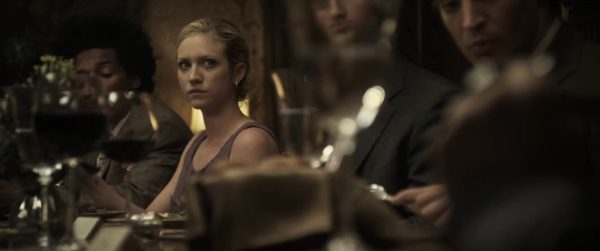
What if the titular party game rewards something that you desperately wanted the most? In the case of David Guy Levy’s psychological horror, which takes place primarily in the confines of a locked-in dining room in the mansion, the wealthy philanthropist Shepard Lambrick (a scenery-chewing Jeffrey Combs) would offer financial aid and a definite solution for the sole winner who can outlast the rest of the seven selected participants.
For Iris (Brittany Snow), it’s an opportunity of a lifetime that enables her to pay for her terminally ill brother’s (Logan Miller) expensive leukemia treatment. Levy doesn’t shy away from the sadistic nature of the game, namely, a scene in which the participant chooses to whip the next person with a sjambok or stab with an ice pick.
The game even extends to performing self-sacrificing tasks at one point, including a deeply unsettling part where one of the participants must slit their own eye with a straight razor blade within the time frame. Would You Rather also highlights the class exploitation between the rich elite like Lambrick and the financially desperate participants, where they are willing to sacrifice their morality and even dignity. But nothing is crueller than the devastating gut-punch of an ending, as Levy coldly subverts the expectations surrounding the aftermath of the game.
Who’s Afraid of Virginia Woolf? (1966)
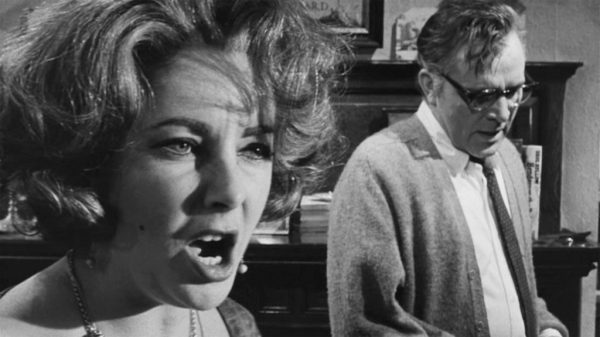
Mike Nichols’ stunning feature-length directorial debut is one for the ages – a stark black-and-white chamber drama about how a single late-night drinking and get-together turns into a whirlwind of psychological turmoil. It all started with the middle-aged academic couple, Martha and George (Elizabeth Taylor and Richard Burton deliver one of the greatest performances of their illustrious careers), already drunk from a party and spending time bickering at each other, deciding to invite a young couple (George Segal’s Nick and Sandy Dennis’s Honey) for a drink at their home.
Nichols, who directed Ernest Lehman’s razor-sharp screenplay adapted from Edward Albee’s 1962 play of the same name, reflects Martha and George’s booze-fueled toxic relationship and social interactions through Haskell Wexler’s high-contrast monochrome cinematography. He even keeps the camerawork constantly dynamic with lots of close-ups, eschewing the stage-play-like static framing typically seen in a chamber drama. Who’s Afraid of Virginia Woolf? went on to score 13 Oscar nominations, winning five in total, including Best Actress for Elizabeth Taylor and Best Supporting Actress for Sandy Dennis.
Guess Who’s Coming to Dinner (1967)

A year after the progressive Who’s Afraid of Virginia Woolf?, here comes Stanley Kramer with a bold story surrounding the then-controversial interracial relationship between the twentysomething liberal-minded Joanna (Katherine Houghton) and her recently engaged lover, a Black doctor and widower named John Prentice (Sidney Poitier). The couple returns home to meet Joanna’s parents (Spencer Tracy and Katharine Hepburn) for their marriage blessing, only to end up with skepticism due to the deep-seated racial tensions and prejudices.
Kramer brilliantly weaponizes the movie’s confined home setting as a pressure-cooker social and verbal battleground, addressing hypocrisy and conservatism from Joanna and John’s respective parental perspectives, and facing the ultimatum of whether the couple’s marriage proposal will see the light of day. Guess Who’s Coming to Dinner benefits from a great cast all around, notably the legendary Spencer Tracy’s final role, whose severe illness didn’t deter him from giving his all. He sadly passed away from a heart attack just 17 days after completing filming, and his memorable performance was awarded a posthumous Oscar nomination for Best Actor.
The Exterminating Angel (1962)
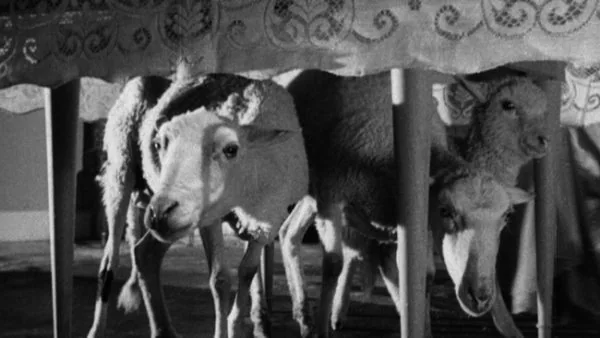
Avant-garde surrealism maestro Luis Buñuel incorporates his unique directorial touches into The Exterminating Angel, featuring a deceptively simple premise from his own screenplay. And that is a story about Edmundo (Enrique Rambal) and his wife, Lucia (Lucy Gallardo), who host an opulent dinner party for their wealthy guests at the mansion, where it ends in bizarre circumstances. But none of them seem to be able to leave the place, as if there’s an invisible wall blocking their paths. It’s the kind of absurd premise that Buñuel can subtly pull off without coming across as unintentionally silly.
The metaphorical entrapment allows him to strip the privileges and elitism this upper-class group has been enjoying lavishly so far, even reducing them to a state of desperation and survival as they must improvise on their own. Buñuel isn’t interested in providing the logical reasoning behind the unusual trapping that prevents this wealthy group from leaving the mansion whatsoever, which in turn makes the narrative ambiguity all the more fascinating to look at.
The Last Supper (1995)
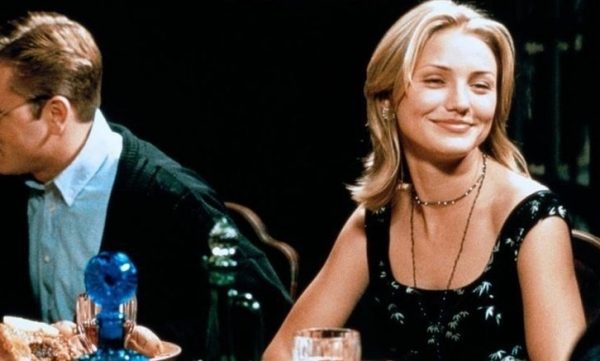
Fresh off her breakthrough success as the sultry Tina Carlyle in Jim Carrey-led The Mask, Cameron Diaz effortlessly slips from mainstream to indie in this low-budget pitch-black comedy as one of the left-wing grad-student groups organizes a Sunday dinner party at their shared home. Not a casual get-together, but rather a deliberate trap to bait the guests with conservative mindsets by poisoning them with homemade white wine laced with arsenic.
Save for the accidental kill during the earlier scene revolving around the xenophobic Zack (Bill Paxton, in a memorable cameo), The Last Supper features colorful guests from an arrogant anti-environmentalist (Jason Alexander) to a homophobic reverend (Charles Dunning) and a male-dominating misogynist (Mark Harmon) becoming the victims of arsenic poisoning before burying their bodies in their backyard garden. It’s a pity that Stacy Title’s directorial debut flies under the radar upon its theatrical debut. But the movie has since gained a cult following, thanks to the story’s ahead-of-its-time “us vs. them” mentality in its political tribalism.
The Menu (2022)
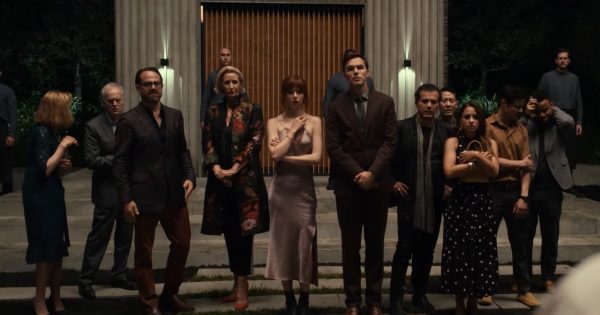
Director Mark Mylod satirizes the pretension of fine dining in The Menu, mixing a subtle blend of dark comedy with horror-thriller tropes about a foodie’s (Nicholas Hoult’s Tyler Ledford) trip to celebrity chef Julian Slowik’s (Ralph Fiennes) posh restaurant on a private island with Margot (Anya Taylor-Joy, whose scene-stealing moment during her character’s unusual request for a good old cheeseburger serves as the movie’s turning point), which turns into a deadly nightmare.
The icy, cult-like precision of Fiennes’s acting as the chef with a hidden agenda is one of the entrées here, and so is the movie’s snarky social commentaries on class warfare, consumer culture, and obsession. Mylod also shows a firm grip on building deliberately paced suspense and tension, even incorporating shocking bursts of violence. Peter Deming equally deserves mention for his exquisite cinematography in capturing every visual of its tasting-menu presentation. The Menu did well for a mid-budget movie after taking in nearly $80 million at the worldwide box office, and earned Fiennes and Taylor-Joy respective Golden Globe acting nominations.
What are your favourite movies where dinner parties descend into chaos? Let us know on our social channels @FlickeringMyth…
Casey Chong