Casey Chong presents a selection of great direct-to-video action movies of the 1990s…
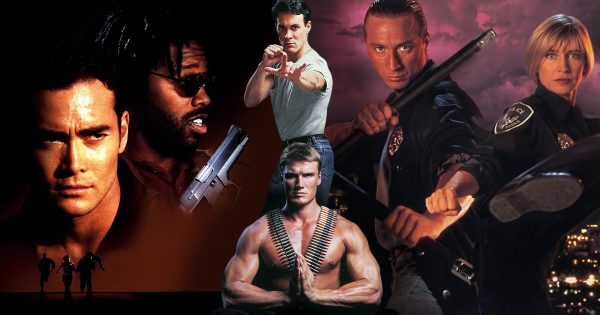
Long before the PVOD/VOD and streaming era became the norm, the 1990s were the lucrative decade when direct-to-video movies used to dominate the VHS and home video rental markets, covering diverse genres from horror to sci-fi, softcore erotic thrillers, and, of course, the action genre. Familiar faces such as Don “The Dragon” Wilson, Gary Daniels, Cynthia Rothrock, and Jeff Wincott made their mark in some of the most entertaining action movies, even when their movies didn’t have the luxury of a big studio budget. Below is our curated pick of ten of the best direct-to-video action movies of the 1990s…
Showdown in Little Tokyo (1991)

Although Showdown in Little Tokyo was originally a theatrical release, the movie only had a brief limited run before Warner Bros. quickly shifted it to the home video market. What began as a disastrous box-office result became a blessing in disguise when the movie found a second life on VHS rental. Showdown in Little Tokyo may have been unusually short for an action movie, clocking in at just 79 minutes, but it helps keep the pace lean and straightforward, trading a story-driven narrative for high body counts, martial arts action set pieces, and plenty of witty banter.
The latter is especially true with Dolph Lundgren and Brandon Lee’s entertaining buddy-cop dynamic, and what makes them surprisingly interesting is how the movie subverts expectations through role reversals. Lundgren’s Chris Kenner turns out to be an American-born police officer raised in Japan, and he’s familiar with the language and strict code of honor. Lee’s Johnny Murata may have been a Japanese-American, but his character is more Westernized and barely knows his own heritage. The movie also features a memorable antagonist, played by Cary-Hiroyuki Tagawa as the violent Yakuza boss, Yoshida.
Martial Law 2: Undercover (1992)
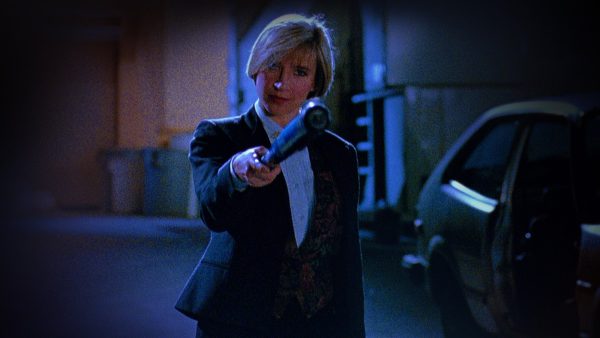
A significant improvement over 1990’s Martial Law, as Kurt Anderson made the right move replacing Chad McQueen from the first movie with Jeff Wincott. Both actors may have martial arts backgrounds, but Wincott’s high-kinetic athleticism and agility, along with his black-belt Taekwondo level, make him more adaptable at performing acrobatic moves as opposed to McQueen’s more rigid approach. And instead of sidelining Cynthia Rothrock to play second fiddle, the sequel made her co-lead presence more prominent, while her on-screen pairing with Wincott elevates the action scenes.
Speaking of the latter, Anderson does a good job as a first-time director, delivering one visceral martial arts mayhem after another with crisply choreographed hand-to-hand combat. The fights even get a boost from Wincott’s impressive use of weaponry, specifically a pair of batons against the assailants in the dojo. Anderson and Wincott went on to work together for three more action movies, including Mission of Justice, Martial Outlaw, and Open Fire.
Mission of Justice (1992)
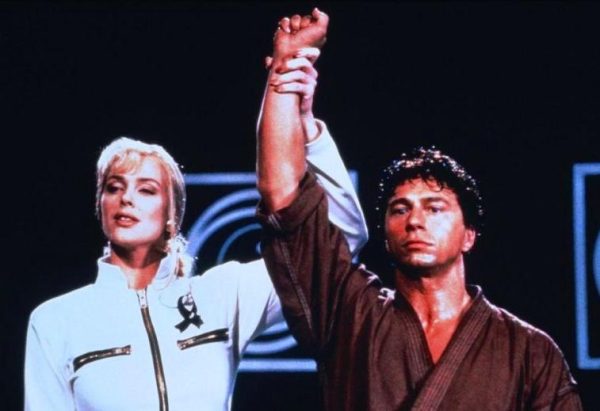
Mission of Justice, a.k.a Martial Law 3, has no direct connection to the previous two movies, other than being a sequel in name only. Even Jeff Wincott, the star of Martial Law 2: Undercover, plays a different character: A cop named Kurt Harris, instead of reprising his role as Sean Thompson, who quits the force and goes undercover to join the “Peacemakers” initiated by shady mayoral candidate Rachel Larkin (Brigitte Nielsen, whose icy demeanor and statuesque figure add an imposing menace to her power-hungry antagonist role).
Steve Barnett and stunt coordinator/double Jeff Pruitt feature a few top-notch action sequences at a pacey 91-minute runtime, highlighting both Wincott’s martial arts skill and engaging screen presence. Notable set pieces include Harris’s gruelling obstacle challenge against a line-up of armed martial artists, the chop shop fight, and the climactic showdown against the formidable Titus, played by Matthias Hues. Like Martial Law 2: Undercover, Mission of Justice also showcases Wincott taking down his opponents with batons.
Out for Blood (1992)
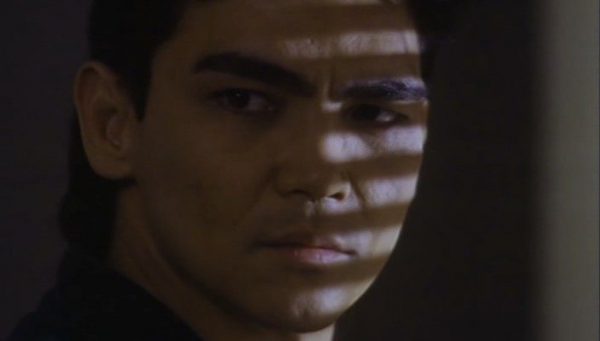
What if Death Wish is repurposed as a martial arts action thriller? Directed with relentless B-movie energy by Richard W. Munchkin (Ring of Fire and Deadly Bet), Out for Blood stars Don “The Dragon” Wilson as John Decker, a criminal defense lawyer who moonlights as a vigilante taking matters into his own hands. At his peak, Wilson’s martial arts prowess demonstrates his visceral flair for hand-to-hand combat and high-kicking action.
The movie may have been produced under the PM Entertainment Group banner, but the usual vehicular chase-heavy set pieces that have been their hallmark in many direct-to-video action films are significantly toned down in favor of gritty fights. Still, the movie doesn’t completely abandon its high-octane stunts in Out for Blood, culminating in a brutal one-on-one showdown on the airstrip and later a scene where John clings to the wing of a runaway propeller plane before it ends with an obligatory, spectacular PM-style explosion.
Viper, a.k.a Bad Blood (1994)
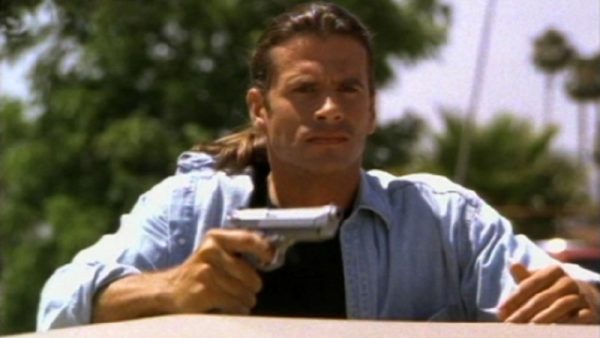
Director Tibor Takács embraces dynamic Hong Kong-style choreography in Viper, elevating both martial arts and action set pieces with enough style that it’s hard to believe it cost a lower-than-expected $2 million budget. At the heart of the movie is Lorenzo Lamas, looking effortlessly cool as the tough-guy Travis Blackstone, who’s an expert in self-defense and weaponry. He may have starred in plenty of action movies during the ‘80s and ‘90s, but this is easily one of his best roles. His fight scenes are more diverse and cinematic, even featuring him in a memorable scene where he flips over the roof of the speeding car in front of him while firing a shot at the same time.
Takács also stages gunfights like they are straight out of a John Woo movie, complete with the iconic use of two guns. It’s worth noting that unlike the trimmed-down U.S. cut of Bad Blood, the international version of Viper retains the scenes from the opening child murder to the graphic blood squibs and the climactic showdown that includes the brutal ear-clap strike.
Last Man Standing (1995)
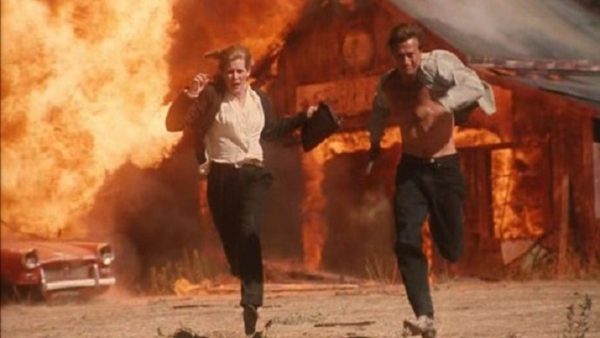
One of the quintessential direct-to-video action movies from PM Entertainment Group, Last Man Standing doesn’t waste time from the get-go with a daring bank robbery and a police pursuit. Directed by Joseph Merhi, who also wrote and co-produced the movie, features Jeff Wincott in one of his best action roles as the no-nonsense Kurt Bellmore, except in an earlier scene where he shows up in a… bright yellow jacket (?!) for a role that is supposed to be a police detective.
Merhi goes all out here in the action department that rivals the big-budget Hollywood blockbuster – an elaborate vehicular chase between Travis riding a motorcycle and a gang of robbers getting away on an armored truck, which even ends with the former dragging his body along the road while clinging to a chain of money bags. Last Man Standing equally benefits from a solid supporting cast, notably Jonathan Fuller’s manic antagonist turn as “Snake” Underwood and Robert LaSardo as the tattooed right-hand man, whose scene-stealing moment involves his character trying to get passersby to help him with the handcuffs.
Deadly Outbreak (1996)
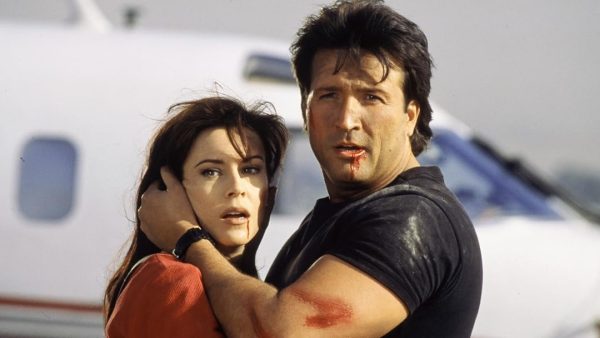
Stuntman-turned-director Rick Avery reunites with The Expert’s Jeff Speakman, this time in a movie best described as a B-movie version of Die Hard set in the confines of a research facility. The movie, clocking in at a lean 88 minutes, sticks to the tried-and-true formula: Speakman’s lone-hero protagonist as Sergeant Dutton Hatfield, a group of ruthless terrorists led by the sinister Colonel Baron (Ron Silver, no stranger to playing menacing villains, brings a valuable addition that elevates this DTV feature), and plenty of wisecracking one-liners. And of course, the action sequences that prioritize practical effects, blending Speakman’s close-quarters martial arts prowess in American Kenpo with visceral gunfights, explosions, and a high-speed vehicular pursuit.
The Sweeper (1996)
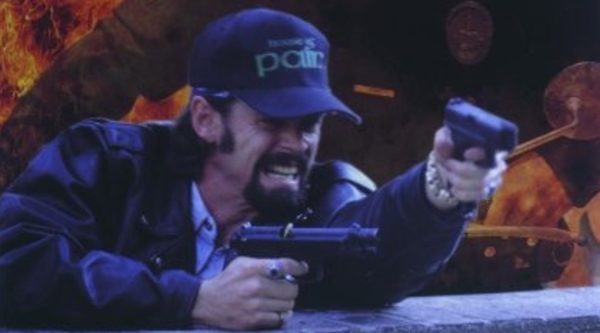
At just 90 minutes, Joseph Merhi delivers some of the most spectacular action set pieces ever put in The Sweeper under his co-founded PM Entertainment Group production banner. With Spiro Razatos, the legendary stuntman and stunt coordinator behind the Maniac Cop trilogy and Money Train, serving as the second-unit director, the movie ramps up its utmost practical filmmaking prowess – a thrillingly staged prologue featuring Jeff Fahey’s uniformed police officer Trevor Goddard on a motorcycle pursuit along the crowded pier, a scene where C. Thomas Howell’s Mark Goddard plunging from the rooftop with a rope in his hand, and a nighttime freeway chase that includes exploding gas cylinders, a vehicular pile-up, and a mid-air car jump.
Finally, Merhi saves the best for last, culminating in another car chase before it ends with Mark dangling from the landing gear of a getaway biplane. C. Thomas Howell, best known for his roles in The Outsiders and The Hitcher during the ‘80s, sports a radically different appearance from his usual clean-cut look to play a loose-cannon titular character, proving he can carry a gritty role for a change.
Drive (1997)
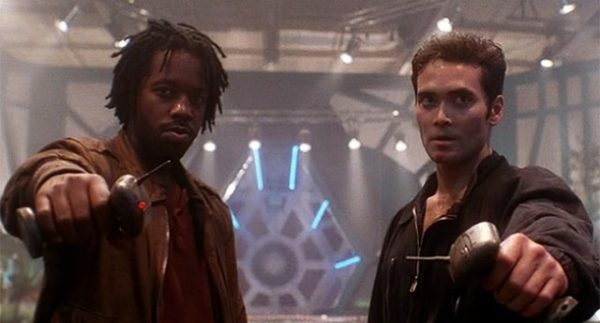
Steve Wang brings a gonzo, Hong Kong-style filmmaking that feels like something Tsui Hark would have done in Drive – hyperkinetic editing and Koichi Sakamoto’s (Martial Law II: Undercover, Savate and TV’s Mighty Morphin Power Rangers) acrobatic martial arts choreography, complete with an over-the-top sci-fi action genre hybrid. This is especially true with Mark Dacascos as an ex-government agent turned fugitive with superhuman strength.
And casting a legitimate martial arts star stretches Dacascos to the physical limit, showcasing his immense agility from hand-to-hand combat to wirework-assisted stunt work. Not limited to just action, Drive also incorporates witty buddy-comedy elements by pairing Dacascos’s stoic Toby Wong with Kadeem Hardison’s wide-eyed everyman Malik Brody. At the same time, a very young Brittany Murphy nearly steals the show as the overactive daughter of a motel owner.
Recoil (1998)
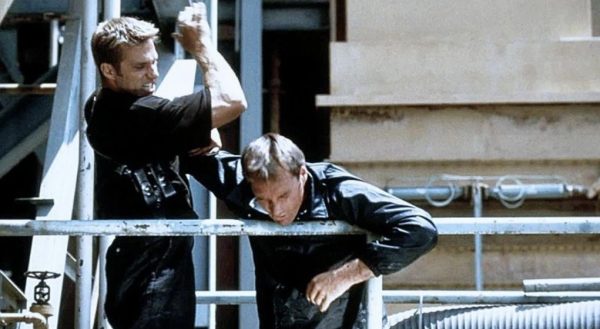
Art Camacho’s stunt background is put to good use in Recoil, showcasing his directorial flair in the action department. The opening 20 minutes alone ratchets up the tension with a tense daylight shootout between the police and bank robbers wearing body armor, and later, a high-stakes vehicular pursuit in the warehouse dock. Martial arts sensation Gary Daniels (City Hunter, Fist of the North Star) leads the cast, combining his tough-guy onscreen persona with agile martial arts precision.
Camacho, who also co-wrote the screenplay, keeps the story efficient – a tight 96-minute DTV action thriller highlighting Daniels’s Detective Ray Morgan’s quest for vengeance against the mob responsible for his family’s death. Operating as a one-man army, the movie is jam-packed with hand-to-hand combat, gunfights, and car chases. The latter even features a fight above the sunroof of a speeding limo before a truck rams through the vehicle in half – a classic, house-style destruction that stays true to the PM Entertainment Group’s explosive action mayhem.
What are your favourite DTV action movies of the 1990s? Let us know on our social channels @FlickeringMyth…
Casey Chong