Clarissa, 2026.
Written and Directed by Arie and Chuko Esiri.
Starring Sophie Okonedo, David Oyelowo, India Ria Amarteifio, Toheeb Jimoh, Jude Akuwudike, Danny Sapani, Modesinuola Ogundiwin, Chuks Joseph, Fortune Nwafor, Nikki Amuka-Bird, Joke Silva, and Ayo Edebiri.

SYNOPSIS:
Based on Mrs Dalloway. Follows a Lagos society wife preparing for a party while reflecting on her youth and the choices that led her to marry a respected man instead of her poet boyfriend.
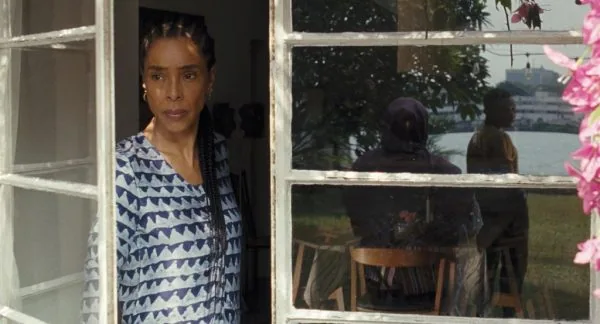
As revered and celebrated as Virginia Woolf’s work is, while lending itself to direct adaptations, it’s typically much more engaging to watch a take such as Arie and Chuko Esiri’s Clarissa (which is based on Mrs. Dalloway), taking the story and setting it within Nigeria, while tweaking the sociopolitical aspects to fit these characters, that location, and this narrative. That makes for a fresh spin on well-trodden ground (which is not to say that I have read the book, but can acknowledge an ambitious interpretation), but it also helps that the related filmmaking duo is capable of utilizing a nonlinear approach with a hypnotic pull that not only hops back and forth between past and present, but also includes a side story mostly detached from the center of the eponymous character (an internally and externally rich performance from Sophie Okonedo) so as to expand on observations related to colonialism, Nigeria, its class divide, and its military. It’s not without drawbacks, but its scope deserves applause.
This also isn’t a film that necessarily announces its transitions from present to past and vice versa, edited together by Blair McClendon to have a daydream, wandering-mind vibe as the upper-class and married Clarissa prepares for a luxurious function while faced with the reality of former writer flame Peter (David Oyelowo) back in the town of Lagos to sort out a divorce. As such, the flashbacks come running back, involving her younger self (played by India Amarteifio), her future husband Richard (Jude Akuwudike in the present day and Jable Osai in the past), a younger Peter (Toheeb Jimoh), and Sally (Ayo Edebiri in the past, Nikki Amuka-Bird in the present day), with whom she had friction over coming from an elitist family and lifestyle.
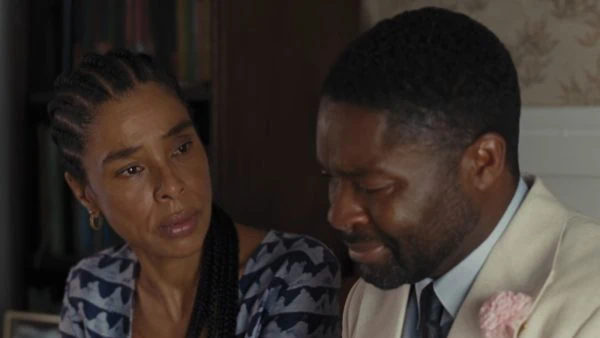
Essentially, they show how Clarissa ended up in a present that, while idyllic on the surface, has left her unfulfilled and back in her mind, reliving her choices. Her family and marriage to Richard are wonderful, but there isn’t much of a spark between them. The facial and body language from Sophie Okonedo are excellent throughout, suggesting all the introspective aspects without words, and offering up a layered, evocative, and highly expressive portrait of inner conflict.
Then there is the B-plot centered on traumatized Nigerian soldier Septimus (Fortune Nwafor), which is unsettling and tragic at times, but often leaves one unfamiliar with the source material scratching their heads at what it has to do with the other characters, whether the stories will ever intersect, and sometimes frustrated at how the scenes are dropped in there as if they are meant to be a part of Clarissa’s memories. It feels structurally off and clogs up Clarissa’s past and present, which admittedly has a tedious moment or two.
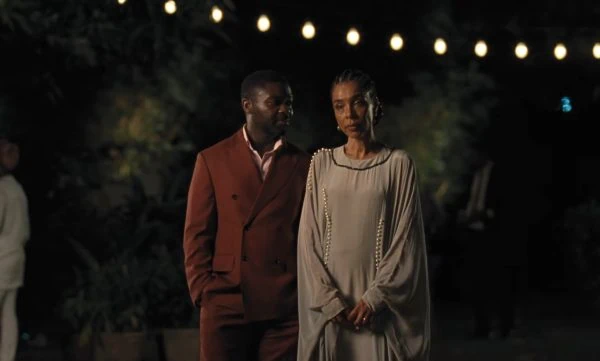
As a whole, Clarissa is emotionally rewarding but remains a jagged jigsaw puzzle that doesn’t always fully come together, though it might for those familiar with the Virginia Woolf source material or with a vested interest in Nigeria.
Flickering Myth Rating – Film: ★ ★ ★ / Movie: ★ ★ ★
Robert Kojder