On its 25th anniversary, Hasitha Fernando looks at the story behind Zoolander…
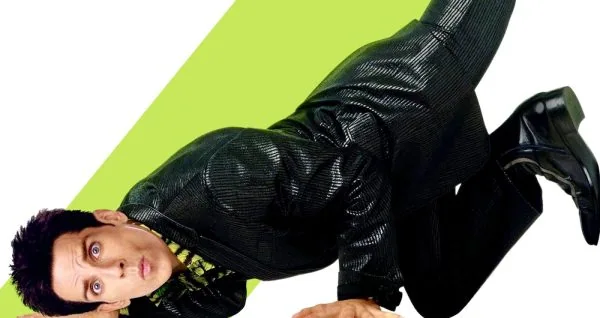
Although mostly remembered for its quotable lines and Derek Zoolander’s “Blue Steel” look, Zoolander is actually a pretty smart, albeit absurdist, satirization of the lavish lives of the rich and famous, and a deconstruction of the cliches of the fashion industry in its own unique way. As the film celebrates its 25th anniversary, we look back at its behind-the-scenes story and what happened during the making of the film.
The character was created for a pair of short films for the 1996 VH1 Fashion Awards
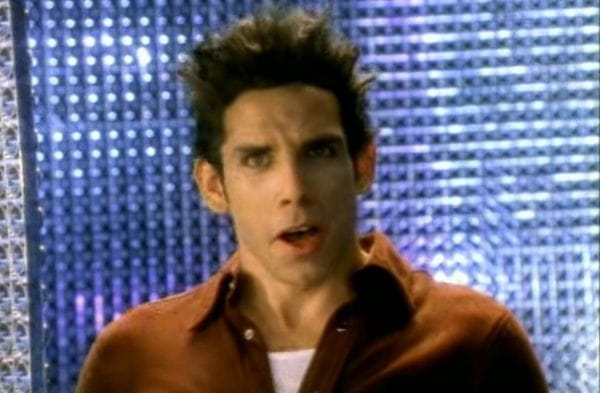
Back in the late 90s and early 2000s the world’s obsession with the fashion industry was such that Supermodels like Naomi Campbell, Claudia Schiffer and Cindy Crawford were pretty much household names and even children wanted to take up professional modelling as they grow older. It was in this context that Emmy Award winning small-screen writer Drake Sather came up with the brilliant idea of creating a pair of short film for the 1996 VH1 Fashion Awards television specials featuring Ben Stiller, which would function as a satire on the fashion industry. Russell Bates who helmed the series of skits, came up with the name “Derek Zoolander” having been inspired by the names of two Calvin Klein male models named Johnny Zander and Mike Vanderloo.
Derek Zoolander’s iconic “Blue Steel” look was inspired by something Ben Stiller did in real-life
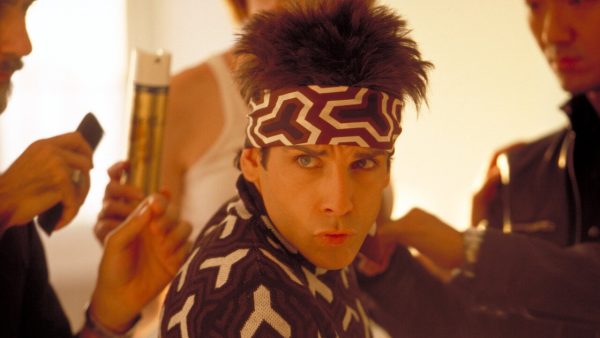
Ben Stiller is an actor, comedian and filmmaker who requires little introduction. As an actor he has been part of such efforts as There’s Something About Mary, Along Came Polly, The Royal Tenenbaums and the Meet the Parents, Night at the Museum and Madagascar franchises and as a filmmaker Stiller has produced The Cable Guy, Tropic Thunder, The Secret Life of Walter Mitty and even received a DGA Award for Outstanding directing for the Showtime limited-series Escape at Dannemora. The now-iconic squinting face of Derek Zoolander, which is seen frequently in the movie, was inspired by a real-life expression Stiller used to make while combing his hair in front of the mirror. This was something Stiller’s wife, Christine Taylor, used to poke fun at but by a curious quirk of fate became an action that became synonymous with the film.
The part of Hansel McDonald was written specifically for Owen Wilson
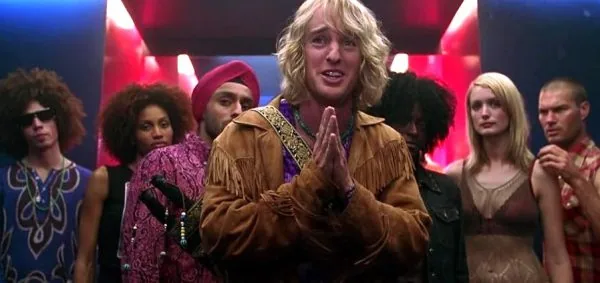
American actor and screenwriter Owen Wilson truly has one of the most diverse careers ever. Being a central figure of the “Frat Pak”, which consisted of other performers such as Ben Stiller, Jack Black, Will Ferrell, Steve Carrell and his brothers Luke and Owen Wilson, the actor starred in several successful comedy flicks whilst appearing in more serious affairs like Behind Enemy Lines, Marley & Me, Midnight in Paris and several of Wes Andersons efforts. Owen even nabbed an Academy Award nomination alongside Wes Anderson for his script for The Royal Tenenbaums. The part of Hansel McDonald was written by Slater and Stiller, specifically for Wilson. However, unsure of the actor’s availability Stiller held auditions for the part but in the end Wilson ended up getting the role. The actor wore a blonde wig for the entirety of the shoot since he was filming Behind Enemy Lines, at the same time, where he sported a shorter hairstyle.
Will Ferrell’s Mugatu was named after a character from the Star Trek series
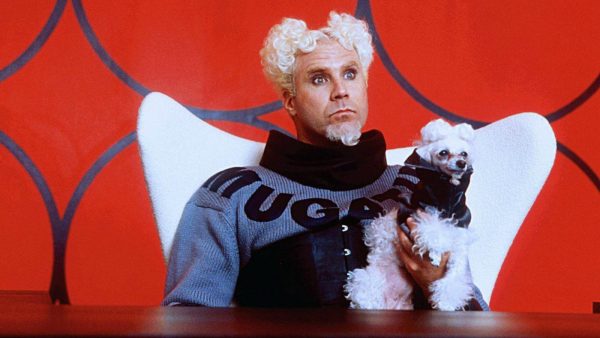
Getting his start in the mid-90s with the sketch comedy series Saturday Night Live, Ferrell quickly became a much-sought after talent for comedic roles as evidenced by films like Elf, Anchorman, Talladega Nights, Blades of Glory and Step Brothers. Ferrell’s more dramatic work on efforts such as Stranger Than Fiction, Everything Must Go and Downhill further cemented his reputation as multi-talented lead actor. The part of Jacobin Mugatu, which was played with malicious glee by Ferrell, was originally written for comedian Andy Dick, but due to his prior commitments to the NBC sitcom series Go Fish, he passed on and was cast in the smaller role of Olga the masseuse. The role then went to Will Ferrell who certainly made it his own with his memorable OTT performance. Stiller named Ferrell’s character Mugatu after the white-haired horned gorilla Mugato, from the planet Neural in the Star Trek series.
Many of Ben Stiller’s real-life family played roles in the movie
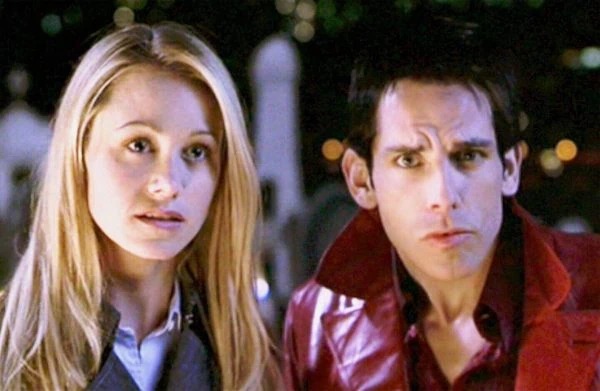
Ben Stiller cast some of his real-life family members to embody the many characters seen in Zoolander. His wife, Christine Taylor played Matilda Jeffries, the journalist responsible for Derek Zoolander’s downfall. Stiller’s father, Jerry Stiller, was Maury Ballstein, owner of the modeling agency Balls Models. His mother, Anne Meara, had a brief cameo as the protestor who hit Mugatu with an egg and sister, Amy Stiller, had a small role playing one of Hansel’s friends. Stiller even found a way to involve his brother-in-law, Mitch Wilson, in the effort as a director of an informercial.
The author of “American Psycho” sued Ben Stiller for copyright infringement
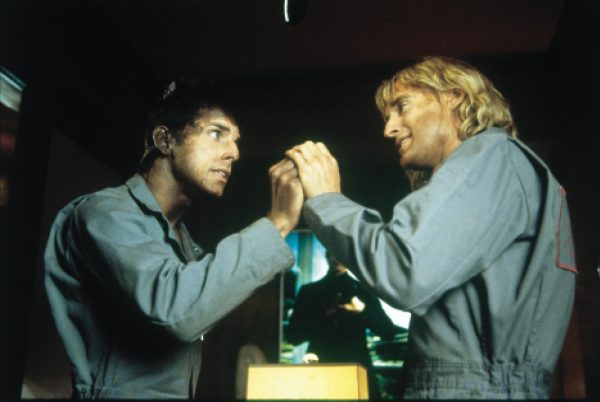
Bret Easton Ellis is an author whose works can primarily be confined into satire but his most popular effort American Psycho, which was successfully adapted to a feature film in 2000 starring Christian Bale, proved to be a controversial one due to the extreme violence and misogynistic themes explored in the book. The year 1998 saw Ellis publish a satirical novel titled Glamorama which followed the story of a dim-witted male model who becomes embroiled in a plot hatched by a group of international terrorists to recruit operatives from the fashion industry. Following the release of Zoolander in 2001, Ellis saw some startling similarities between the plot of Glamorama and the storyline of Zoolander and sued Ben Stiller for copyright infringement. The case was amicably settled out-of-court.
The movie was banned in several countries due to some of its “controversial elements”
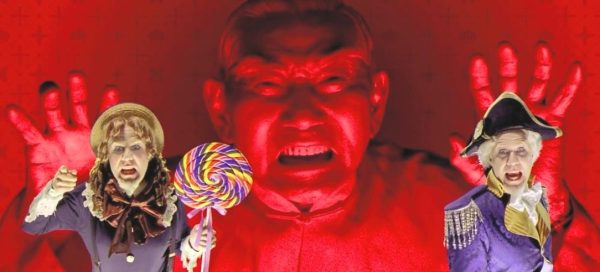
The whole plot of Zoolander centered around Mugatu recruiting and brainwashing Derek Zoolander into assassinating the newly elected, progressive-leaning Prime Minister of Malaysia. Naturally, this detail didn’t sit well with the government and the censorship board of Malaysia who deemed it “definitely unsuitable” for viewers and promptly banned the film. The movie was also banned in neighboring Singapore due to the “controversial elements” seen in the flick. It was, however, made available for audiences in Singapore five years later, slapped with an NC-16 rating. The original rating of the US release for Zoolander was R owing to its sexual content, profanity and drug references. Subsequently, however, the film was re-rated PG-13 to appeal to a broader audience. In the Asia release of the movie, Malaysia was changed to the nation of Micronesia, the region Hansel mistook for Malaysia in the original theatrical release.
The Twin Towers were digitally removed from the original theatrical release
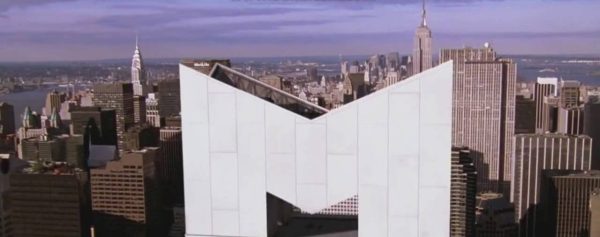
In the film there were several background shots which featured the iconic World Trade Center Towers of New York which together were popular known as the “Twin Towers”. However, after the tragic disaster of 9/11, Stiller decided to digitally remove the presence of those buildings from all background shots of the flick that originally had them, as he felt it was the respectful thing to do at the time. These images, however, were later restored in their original form with the 2016 Blu-ray release of the movie.
The number of cameos by well-known actors and celebrities was just nuts
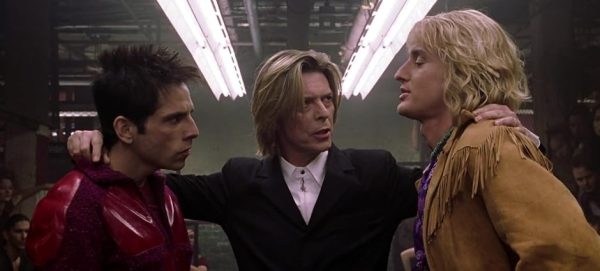
Zoolander was chock full of cameos from well-known actors and celebrities either playing fictional versions of themselves or original characters written for the movie. The most prominent duet of cameos featured David Bowie and Billy Zane, who played themselves, with Bowie appearing as the judge for a “walk-off” and Zane acting as a close friend of Derek Zoolander. Other prominent actors who made cameos as themselves were Stephen Dorff, Cuba Gooding Jr., Natalie Portman, Christian Slater, Winona Ryder and Natalie Portman. Well-known figures from the fashion industry who appeared in the movie include Donatella Versace, Tom Ford, Tommy Hilfiger, Karl Largerfeld, Heide Klum, Tyson Beckford and Fabio Lanzoni.
Box office success, positive reviews & a legacy
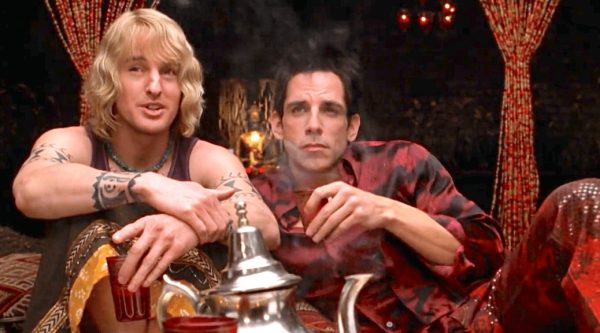
Made on a budget of $28 million, Zoolander went on to make a respectable $60.8 million at the worldwide box-office. On review aggregator website Rotten Tomatoes, the film boasts an approval rating of 64% based on 135 reviews, as of writing. The site’s critical consensus sums up the movie in this manner, “A wacky satire on the fashion industry, Zoolander is one of those deliberately dumb comedies that can deliver genuine laughs.” BBC film critic Nev Pierce called it “sharply observed”, specially with regards to how it satirizes the fashion industry as a whole. Kirk Honeycutt of The Hollywood Reporter also felt that the effort deftly balanced the “silly and smart” aspects at the same time. Fashion Journalist Hadley Freeman categorized Zoolander as a unique take on the universally accepted cliches of the fashion industry, in that it put a more surreal spin on them instead of the conventional route that the likes of The Devil Wears Prada took.
Due to the film’s lingering popularity years later, Stiller felt a sequel was warranted and although it took over a decade to get there, Zoolander 2 was finally released in 2016. Sadly, the sequel wasn’t the critical and financial success its predecessor was, which naturally killed any chance of completing a trilogy of movies centered around Derek Zoolander. The Netflix adult-animated film Zoolander: SuperModel, also released that same year also failed to impress critics or audiences. Despite the tepid performance of its sequels, Zoolander has still been able to retain its appeal and remain surprisingly relevant for how ahead-of-the-curve it was with its surreal, high-concept satirization and deconstruction of celebrity fame, fortune and ego.
What are your thoughts on Zoolander? Let us know on our socials @FlickeringMyth…
Hasitha Fernando is a part-time medical practitioner and full-time cinephile. Follow him on Twitter via @DoctorCinephile for regular updates on the world of entertainment.