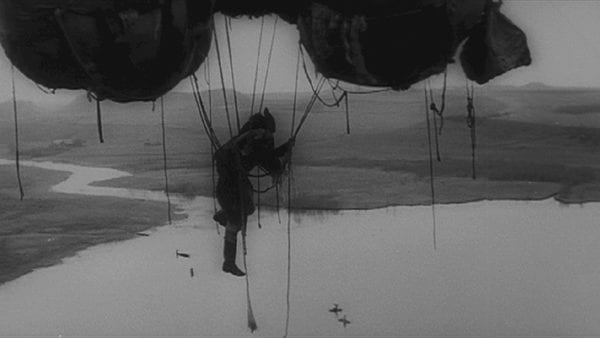
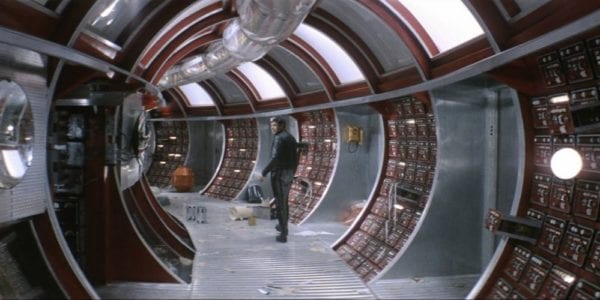
Andrei Rublev was Tarkovsky’s next. It’s an exceptional film again, but as a starting point to his work I’d recommend skipping over this one and coming back (should you find yourself enamoured with his work). Rublev is epically long. His longest film. His next film has had the Hollywood remake treatment. Solaris, which Steven Soderbergh re-imagined with George Clooney (to be fair, quite effectively) is another contemplative delve into dreams, fantasy and memories. It explores the complex nature of human needs and desires. It would make the first of two (maybe three) ‘Science Fiction’ films that Tarkovsky made, but I put them in that category very loosely. Solaris features space exploration, so it’s his most overtly genre film, but there’s never any lengthy focus on the ‘sci-fi’ elements. It’s almost predominately focused on exploring the psyche of the protagonist. It’s a good companion piece to Kubrick’s 2001: A Space Odyssey. Not only does it have that very visually focused approached and very deliberate pacing, it’s one of those films that is totally engrossing and almost hallucinatory. You’ll be entranced. Whilst it may not have the same elaborate visual effects it still has that same hypnotic quality. Solaris is essential cinema.
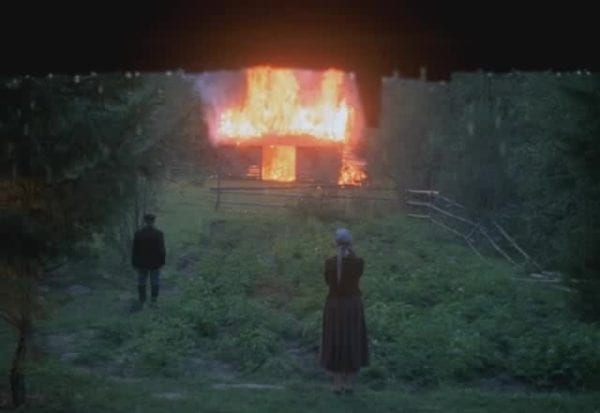
The Mirror is next, and even by Tarkovsky standards, could well be his most visually glorious film. Youtube has a number of compilation tributes to his work. He’d make a hell of a showreel that’s for sure, but merely watching condensed visual sizzle reels that show snippets of his talent (out of context) would be a disservice. The Mirror would see Tarkovsky exploring youth again. A dying man recounts his life growing up during war-time, key stages of his life. These, as per his signature, blend the reality with dreams and fantasy. Some of the imagery in this (the burning barn, a ceiling crumbling under heavy water flow) is mesmerising, and they’re all captured on camera. This is long before the days of CGI and I don’t exaggerate when I say that The Mirror has visuals that will take your breath away. Even to those who just cannot tune into Tarkovsky’s work, or just don’t get the appeal (which I fully understand), the visuals are never less than hypnotic. Whilst the narrative structure (due to the way Tarkovsky would almost intuitively and organically shoot and then cut his films) is difficult to follow, the film is haunting, challenging, reflective and utterly beautiful.
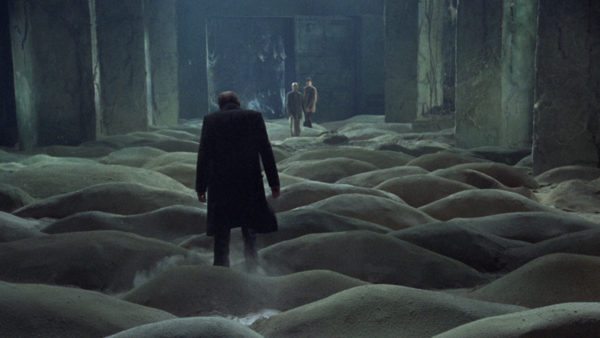
One of Tarkovsky’s most iconic works is Stalker. A parable, that like Solaris, takes a languid and metaphysical approach to science fiction. In a way very few could do (Kubrick being another) this relatively simple parable makes no bones about its pace. Tarkovsky handed in a cut to producers who told him that the beginning was intolerably slow. He went back, and slowed things even more. To paraphrase, ‘I want to allow the audience time to walk out.’ He set his tone, and you’re either in, or you’re out. Tarkovsky’s innate ability to adapt and manipulate his films down different paths than originally mapped was well in play here too. Just like The Mirror, which had a reputed 32 previous cuts before he finally settled on the final version, Stalker underwent significant changes, not least losing a huge amount of footage which was destroyed. The re-shoots (which happened to predominately involve the last half of the film) took things down a markedly different path, creating an almost entirely different film to originally envisioned (and developing further away from the source Novel, Roadside Picnic). A fear of unconnecting pieces, plot-holes and cohesion issues never struck Tarkovsky, he always felt he could craft his footage into an emotionally involving sensory experience. I’ve often spoke about Stalker, which is a personal favourite. This probably has the most cult appeal of his films, and if starting from the beginning isn’t your bag, Stalker (which was my first Tarkovsky) is also a good starting point. The basic premise is simple but as repeat viewings will show, it invites you to look inwardly as you view the film. The three central characters (led by the titular ‘Stalker’) enter a dangerous forbidden zone (rumoured to have been put there by Aliens) to find a room which grants wishes. The journey might be slow but it’s atmospheric and contemplative. When the film isn’t serenely quiet, the dialogue is philosophical, and there’s some atmospheric synth music from Eduard Artemev. Stalker would mark Tarkovsky’s final film in Russia.
The two Tarkovsky swan songs would see him first shoot in Italy with Nostalgia, which sees a Poet travel to Italy to research a famous 18th century composer. He would then finish with The Sacrifice, a Swedish film with Bergman regular Erland Josephson appearing in each. Both are essential cinema…okay, so basically to cut a long story short, because his career was so short, you need to watch every Tarkovsky film.
Anyway, The Sacrifice does, like Stalker and Solaris, border on science fiction (with questions of religion and faith too). Less so than those, but it’s a parable again, crossing elements of Stalker and perhaps The Mirror. Regardless, the tale of a world suddenly on the brink of WW3 and mere hours before Armageddon is evocative and engrossing. Josephsen, a ponderous, philosophical grandfather who dotes on his grandchild is offered a way to save the world, but at a terrible price. Moments of crushing reality, sacrifice. amid striking visual cues are a Tarkovsky staple, and it’s safe to say, by the end of his final film, which leaves the viewer indelibly marked, his entire career leaves the cineaste permanently affected by his works of art.
Tom Jolliffe is an award winning screenwriter and passionate cinephile. He has three features due out on DVD/VOD in 2019 and a number of shorts hitting festivals. Find more info at the best personal site you’ll ever see here.
Originally published December 11, 2018. Updated July 19, 2024.