Coinciding with the release of Animals, Casey Chong ranks Ben Affleck’s directorial output from best to worst…
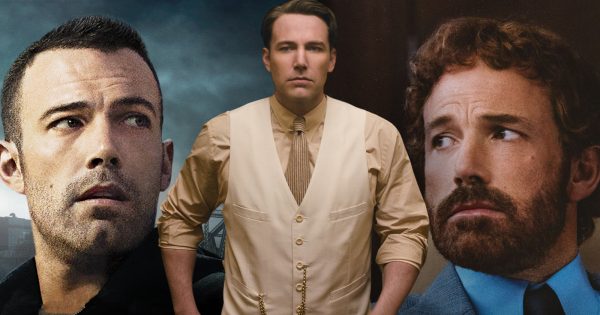
Ben Affleck first came to prominence in the late ‘90s, most notably when he and Matt Damon took home the Oscar for Best Original Screenplay for Good Will Hunting, before making his mark in his leading role in the big-budget summer blockbuster Armageddon. It wasn’t until 2007 that he finally stepped behind the camera as a director, beginning with his critically acclaimed crime thriller Gone Baby Gone, which earned critical acclaim. He has since gone on to direct four more movies beyond his regular acting work, including the multiple Oscar-winning Argo and the biographical sports drama Air. Coinciding with his return to the director’s chair for the Netflix crime thriller Animals [read our review here], we’re taking a look at his previous directorial efforts, ranked from worst to best…
Live by Night (2017)

Ben Affleck’s post-Oscar win in Argo should have been a sprawling, old-school gangster drama, focusing on the rise of former World War I veteran, Joe Couglin (Affleck), descending into the life of a criminal. We see him committing robberies despite the warning of his stern police captain father (Brendan Gleeson), his ill-advised affair with notorious Irish mob boss Albert White’s (Robert Glenister) mistress Emma Gould (Sienna Miller), and his subsequent three-year sentence. His post-imprisonment soon changes his fate after working for the Italian mobster Maso Pescatore (Remo Girone) to run a rum trade in Tampa with his trusted friend and partner, Dion (Chris Messina), even falling in love with the well-connected Graciela (Zoe Saldana).
Adapted from Dennis Lehane’s 2012 novel of the same name, Live by Night marks a rare misfire for Affleck, whose direction has been consistent over his last three-movie run. But his movie comes across as clunky, with multiple story threads (the segment revolving around Joe’s ordeal against the threatening Ku Klux Klan is particularly shortsighted) suffering from rushed storytelling. His voiceover-heavy narration, meant to bridge the gap between the movie’s all-encompassing plot, feels overly dependable rather than letting the scenes unfold organically.
It doesn’t help that Affleck’s delivery sounds monotonous, but what deflates the movie the most is his own miscasting as a disillusioned and weary criminal, who looks disappointingly stiff. Still, Affleck manages to bring out the best in his ensemble cast, from Brendan Gleeson’s stoic cop character to Chris Messina’s funny but volatile partner-in-crime. He also has an eye for period details set in the 1920s and 30s, along with his visceral action set pieces, notably the earlier getaway scene and the climactic hotel shootout.
Air (2023)
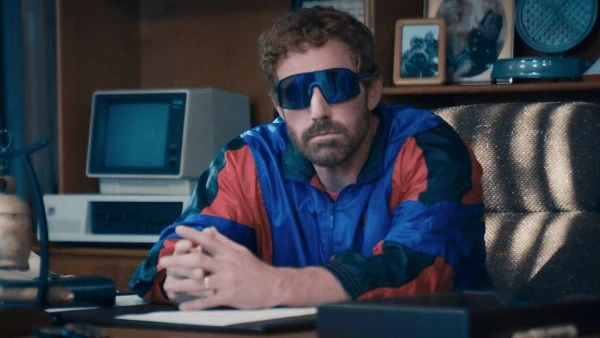
Air marks a radical departure for Affleck, moving away from the violence and gritty realism that defined his first four works from Gone Baby Gone to Live by Night. Instead, the title in question sees the actor-director working on Alex Convery’s screenplay about the true story of the legendary Air Jordan basketball shoes. The movie is heavy on dialogue since it focuses on boardroom meetings and corporate deals through phone conversations, which would be narratively tedious on paper.
But at the hands of Affleck, he does a good job of transforming these scenes equivalent to an experience of watching a high-stakes thriller, complete with an energetic pace that keeps driving the momentum forward instead of stalling the movie. The dialogue may have been dense, but they are sharply written with enough wit, and Affleck also deserves praise for capturing the vibrant look and feel of the 1980s period while packing the movie with essential era-defining needle drops from Dire Straits’ “Money for Nothing” to Bruce Springsteen’s “Born in the U.S.A.”, and REO Speedwagon’s “Can’t Fight This Feeling”.
And interestingly, for a movie about Air Jordan, Affleck made a deliberate choice to keep Damian Young’s portrayal of Michael Jordan from an unobtrusive angle in favor of prioritizing the behind-the-scenes drama of how the eventual partnership between Nike and then-rookie Michael Jordan and the making of the iconic basketball shoe line came together.
The Town (2010)
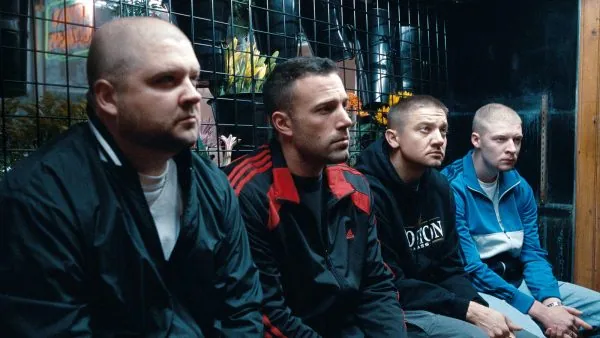
Ben Affleck’s much-anticipated sophomore effort after the acclaimed Gone Baby Gone proved that the actor’s directorial journey was not a fluke. The Town, referring to the Boston neighborhood historically famous for bank and armored car robberies, charts the rise and fall of Doug MacRay (Affleck) along with his trusted friends, Jem (Jeremy Renner), Gloansy (Slaine), and Dez (Owen Burke). Affleck balances the high-stakes heist with the procedural story surrounding FBI Agent Adam Frawley’s (a no-nonsense Jon Hamm) persistent quest to catch the elusive bank robbers. The movie also effectively builds multiple subplots, one of which involves Doug’s romance with the bank manager, Claire (Rebecca Hall), without turning them into protracted filler.
Affleck showcases his flair for palpable action set pieces, favoring practical over CGI, notably the claustrophobic chase scene through the back alleys of Charlestown, reminiscent of a gritty 1970s crime thriller, and the climactic showdown in Fenway Park. The acting is equally top-notch, beginning with Affleck himself in his subtly low-key lead role while Jeremy Renner steals the show in his frighteningly volatile, loose-cannon portrayal as Jem, even earning him an Oscar nomination for Best Supporting Actor.
Argo (2012)
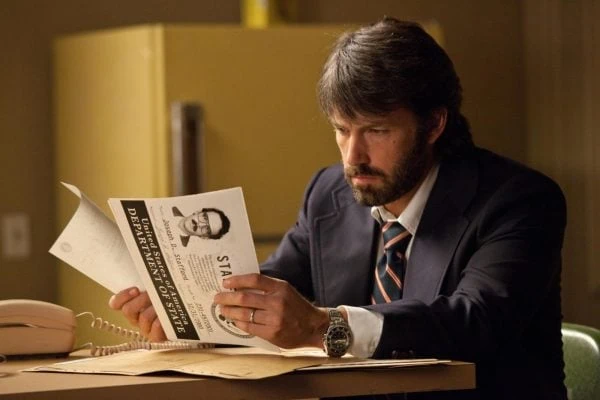
It’s still hard to believe that the Oscar-winning Argo, which took home the Best Picture award, is based on a stranger-than-fiction true story: A CIA operative, Tony Mendez (Ben Affleck), is in charge of extracting six American diplomats (among them played by Scoot McNairy, Rory Cochrane, and Clea DuVall), who are trapped in Tehran after escaping the US embassy during the 1979 Iranian hostage crisis. The extraction mission isn’t what you normally expect, as Mendez’s unconventional method involved faking a titular sci-fi movie production, with the six diplomats posing as a Canadian film crew with fake identities and passports to scout the location, where he would disguise himself as a producer.
Affleck expertly navigates the first half, which leans heavily on the satirical and comedic tones in embracing the absurdity of the operation as Mendez recruits a makeup artist and film producer (John Goodman and Alan Arkin, both deliver strong support in their hilariously deadpan performances) to set up everything, including a bogus film company. The movie then shifts gears into a tense, high-stakes thriller once Mendez lands in Tehran, before culminating in the movie’s most suspenseful sequence: a riveting third act in the airport where Mendez and the diplomats must go through rigorous security checks, structured like a ticking-bomb countdown.
The contrasting tones between the two halves work remarkably well without resorting to an awkwardly misplaced collision, further solidifying Affleck as a versatile director. Pity that the Academy snubbed him for a much-deserved Best Director nomination at the time, which remains one of the biggest upsets in Oscar history.
Gone Baby Gone (2007)

Based on Dennis Lehane’s 1998 novel of the same name, Gone Baby Gone saw Ben Affleck transitioning into a director, marking the actor’s first time calling the shots behind the camera. Although his subsequent directorial efforts featured the actor himself in the lead role, he chose to cast his younger brother Casey to play a Boston private detective, Patrick Kenzie, to investigate the missing little girl, Amanda (Madeline O’Brien), with the help of his girlfriend, Angie (Michelle Monaghan).
At nearly two hours long, Affleck keeps the pace tight while detailing the procedural-style approach that he co-adapted with Aaron Stockard. What begins as finding the abducted child gradually turns into a larger conspiracy, even leading to morally gray territory that becomes debatable during the third act. Affleck knows well how to direct his actors, particularly Amy Ryan’s scene-stealing supporting turn as Amanda’s drug-addicted and foul-mouthed mother, and his decision to shoot his movie on location in Boston, specifically Dorchester, brings the working-class, lived-in realism that strips away the usual Hollywood gloss.
How would you rank Ben Affleck’s directorial efforts? Let us know on our social channels @FlickeringMyth…
Casey Chong