Joseph Jenkinson ranks Robert Pattinson’s ten best performances…
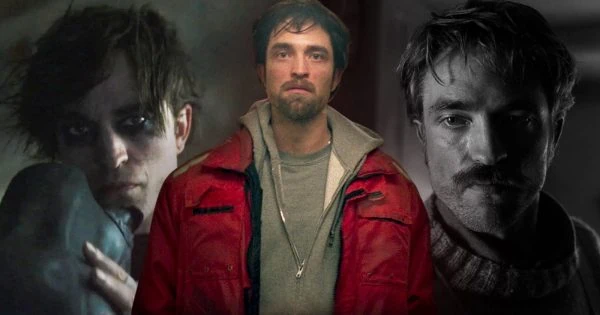
It is easy to forget just how different Robert Pattinson’s career looks now from the one that began with Harry Potter and the Goblet of Fire and exploded with The Twilight Saga. Once Hollywood’s archetypal pretty-boy leading man, Pattinson spent years being defined by his looks and the global phenomenon of Edward Cullen. Rather than simply capitalise on that stardom, however, he took the road less travelled, disappearing into strange, abrasive and frequently unconventional films from filmmakers such as David Cronenberg, Claire Denis and the Safdie Brothers.
That gamble has paid off spectacularly. Pattinson has evolved into one of Hollywood’s most chameleonic actors, equally convincing in intimate independent dramas and enormous studio blockbusters. Good Time, The Lighthouse, The Batman and Mickey 17 demonstrate an actor seemingly incapable of standing still.
This extraordinary run shows no sign of slowing. In 2026 alone, he has The Drama, Christopher Nolan’s The Odyssey, and two more wildly different challenges on the horizon: portraying television journalist Chris Hansen in A24’s Primetime and joining Denis Villeneuve’s Dune: Part Three. This is the Robert Pattinson who deserves to be celebrated…
The Lost City of Z

Beginning this list is James Gray’s stimulating adventure, which marked a significant step in Pattinson’s abandonment of the handsome leading-man image that had defined his early career. As Corporal Henry Costin, an aide to Charlie Hunnam’s Colonel Percy Fawcett during an expedition into the Bolivian jungle, Pattinson is almost unrecognisable beneath an immense, scraggly beard and spectacles.
It is a relatively small role, but Pattinson makes Costin impossible to forget. His prickly temperament and booze-swilling curtness give the character an earthy humour, while his performance balances the roughness of an English working-class roustabout with the discipline expected of a military man. There is no trace of conventional movie-star vanity.
Long before becoming a leading man again, Pattinson was proving that he was, at heart, a character actor.
Maps to the Stars
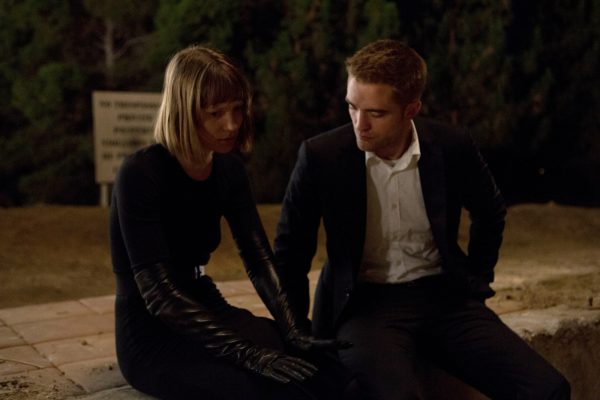
Maps to the Stars comes from the imagination of David Cronenberg, a director perfectly suited to Pattinson’s increasingly adventurous career. Pattinson plays Jerome Fontana, a limousine driver and aspiring screenwriter ferrying Hollywood’s rich and damaged inhabitants around Los Angeles. Surrounded by Julianne Moore, Mia Wasikowska and John Cusack, Pattinson initially appears to be the closest thing the film has to a recognisably human presence. This makes his gradual corruption all the more effective.
Jerome is an outsider desperate to enter the Hollywood machine, and Pattinson gives him a believable mixture of ambition, insecurity and moral unease. He watches the grotesque behaviour around him with the bemusement of somebody who still believes there must be a boundary between the real world and Hollywood.
As Jerome is dragged deeper into the industry’s ecosystem of narcissism, abuse and generational dysfunction, Pattinson subtly charts the erosion of his compassion. It is a relatively restrained performance compared with some of his more extreme work, but that restraint makes Jerome’s transformation more disturbing. Pattinson captures an uncomfortable truth: sometimes the Hollywood machine doesn’t destroy your ambition; it simply teaches you what you are willing to become to satisfy it.
Mickey 17

Bong Joon Ho’s futuristic cautionary tale is already packed with madcap surrealism and political satire in the vein of Stanley Kubrick’s Dr. Strangelove; deciding to cast Pattinson in dual roles feels almost unnecessary. The familiar cinematic device of one actor playing twins or clones can easily become a technical exercise, relying more on effects and editing than performance. Yet Pattinson turns Mickey 17 into an opportunity to showcase just how versatile he can be.
His vocal range is particularly impressive. He breathes entirely different shades of life into Mickey 17 and Mickey 18 without ever allowing the distinction to become a gimmick. The nasal, dorky sweetness of 17 makes him absurdly lovable, while 18’s rougher physicality and aggression are genuinely intimidating. Neither performance feels like a variation on the other.
Pattinson also understands the film’s peculiar comic rhythm, particularly during its wonderfully uncomfortable dining sequence, where physical performance becomes as important as dialogue. In a film overflowing with eccentricity, Pattinson somehow manages to be its strangest and most entertaining ingredient.
The Rover

David Michôd’s relentlessly bleak The Rover was an early indication of just how fearlessly Pattinson intended to pursue his potential. Opposite Guy Pearce’s stoic, sparsely spoken Eric, Pattinson plays Rey, a nervous American Southerner whose incessant chatter, physical awkwardness and debilitating guilt make him seem almost entirely unsuited to the brutal post-apocalyptic world around him.
Rey is not an easy character to love. He is a simple man trying to survive in a landscape where weakness is fatal and emotional baggage is an unaffordable luxury. Yet Pattinson finds something deeply tragic in him, presenting Rey as simultaneously innocent and guilty, pathetic and sympathetic. He is a fool whose faint hope of redemption feels doomed from the beginning.
Then comes the extraordinary moment when the film seemingly stops dead so Rey can sing Keri Hilson’s “Pretty Girl Rock”. It is hilarious, uncomfortable and oddly moving, the kind of strange creative choice Pattinson throws himself into without hesitation. That fearlessness extends physically, from his gaunt appearance to the prosthetic teeth and deliberately mangled Southern accent.
The Drama

Hailed as one of the best of this year, The Drama is especially effective in the way it approaches its heavier themes without surrendering to easy moral judgement. Kristoffer Borgli’s provocative dark comedy places an engaged couple under extraordinary pressure after Emma (Zendaya) reveals a disturbing secret from her past, forcing Charlie to reconsider the woman he thought he knew. Rather than spoon-feeding the audience a definitive moral position, the film leaves us trapped alongside its characters in a fog of discomfort, judgement and uncertainty.
Driving the film is another exceptional performance by Pattinson. As Charlie, he initially appears almost disarmingly ordinary: an awkward, slightly rumpled Englishman whose tentative romanticism makes him easy to root for. But as his certainty begins to collapse, Pattinson gradually exposes the anxiety and insecurity lurking beneath that façade. His performance is constantly shifting. He’s likeable one moment, frustrating the next, then suddenly pitiable or even sympathetic when we least expect it.
That instability is precisely what makes Charlie so compelling and mirrors the film’s deliberate refusal to offer comfortable answers. It is another reminder that Pattinson’s greatest strength may be his ability to make complicated, deeply flawed men impossible to look away from.
The Batman

Returning to blockbuster cinema after a purposeful post-Twilight pivot towards independent filmmaking, Pattinson followed a long line of major stars to don the cape and cowl of cinema’s most beloved superhero. Yet alongside director Matt Reeves, he crafted a version of Bruce Wayne/Batman that feels strikingly different from those who came before. This is not a billionaire playboy discovering that tragedy can be transformed into heroism; this Bruce Wayne has already been consumed by it.
Pattinson plays Batman less as a superhero than as a man serving an endless sentence. His Gotham is a personal purgatory (hence its never-ending rain cycle), and the cowl is almost an extension of his self-loathing. There is an intensity to the performance that makes him unusually unpredictable and unforgiving, whether storming through the Penguin’s nightclub or losing composure during the Riddler’s interrogation scene.
Beneath the armour is a man who has spent years mistaking vengeance for purpose, and his rigid, withdrawn performance gradually reveals just how little of a life exists beyond Batman. Thus, the film’s conclusion is all the more important. When Pattinson’s Bruce finally understands that Gotham needs more than fear, the performance subtly changes; a transformation Pattinson earns rather than simply announces.
Cosmopolis
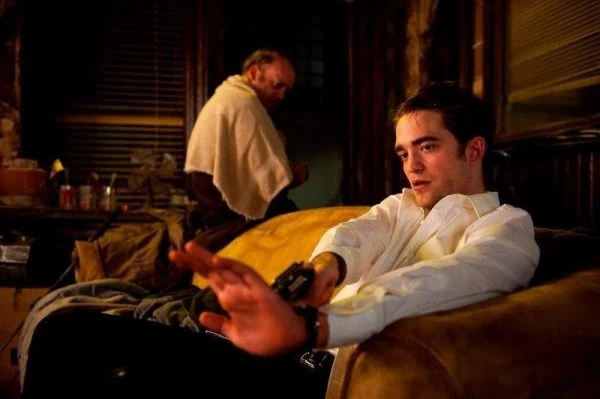
Pattinson’s initial collaboration with Cronenberg proved the actor to be an ideal vessel for the filmmaker’s cyberpunk-tinged, detachedly misanthropic waking nightmare.
As billionaire asset manager Eric Packer, Pattinson spends almost the entire film riding through New York in the back of a limousine, encountering a procession of bizarre characters while the world outside gradually descends into chaos. Cronenberg’s adaptation of Don DeLillo’s novella is a savage, absurdist examination of capitalism, celebrity and American affluence, but its strange power depends heavily on Pattinson’s commitment to its peculiar rhythms.
The performance is deliberately difficult to penetrate. Pattinson adopts a gruff New York accent and delivers DeLillo’s verbose philosophical dialogue with an almost supernatural prestige, yet there is an undercurrent of dread running through every scene. Eric seems simultaneously detached from everything and obsessively interested in himself.
The great trick is that Pattinson makes thoughtlessness feel meticulously constructed. You never quite know what Eric is thinking, but you can sense exactly how much thought Pattinson has invested in making him appear as though he is thinking nothing at all.
The Lighthouse

The Lighthouse is a sizzling pan of conflicting genres: principally a psychological horror, it also possesses the aesthetic of some lost relic from 1950s monochrome cinema, while Robert Eggers’s nightmarish two-hander is frequently uproarious thanks to the combustible chemistry between Robert Pattinson and Willem Dafoe. Their performances turn the film into something resembling a deranged stage play, with both actors seemingly competing to see who can unravel first.
While Dafoe relishes the opportunity to be cranky, loud and bombastically theatrical as veteran lighthouse keeper Thomas Wake, Pattinson initially occupies the quieter role of Ephraim Winslow, his suspicious and increasingly resentful apprentice. Yet this apparent imbalance is part of the trick. Pattinson plays Ephraim as a man whose silence invites our trust, allowing the audience to instinctively side with him as Wake’s eccentricities become increasingly unbearable.
Then the cracks begin to appear.
Almost imperceptibly, Pattinson shifts the audience’s sympathies. The meekness becomes hostility, the suspicion becomes paranoia, and the repression gives way to something altogether more primal, screaming and wailing in violent, drunken frenzy. Pattinson understands that the less he reveals, the more unnerving Ephraim becomes. By the time his true nature emerges, the audience realises that the magic trick has been happening all along.
High Life

Claire Denis’ mind-bending, soul-draining science-fiction drama High Life sees Pattinson as Monte, one of a group of death-row prisoners sent into deep space on a near-suicidal mission. Co-starring Juliette Binoche, Mia Goth and André 3000, Denis’ time-hopping odyssey is provocative, bizarre and frequently impenetrable, yet soul-piercing and reflective. Much of that is down to Pattinson’s remarkable ability to make the unfathomable feel human.
Over the course of an adventure that traverses time, space and the very limits of human experience, Pattinson is required to navigate seemingly impossible emotional states. Monte is simultaneously a prisoner, a father, a survivor and, eventually, something approaching a hermit at the edge of existence. Yet Pattinson never plays these transformations as grandiose revelations. Instead, they register through minute shifts in posture, expression and physicality.
Indeed, High Life can venture into such extreme and abstract territory precisely because Pattinson provides it with such a sturdy emotional anchor. It is a wonderfully restrained performance, proving that Pattinson can command a film without ever needing to dominate it.
Good Time
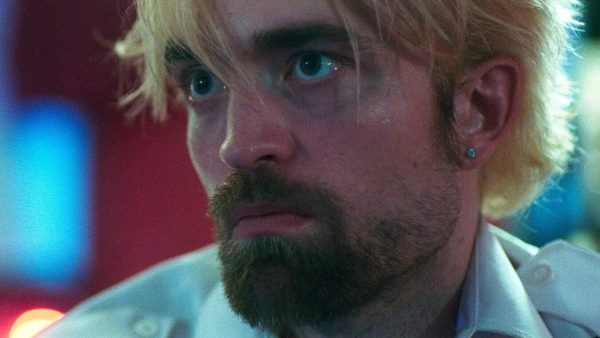
Before hitting mainstream, Pattinson’s performance in the Safdie Brothers’ gritty, nerve-shredding crime thriller Good Time was the first great indication that the actor had far more to offer than the teen-idol image that had followed him out of Twilight. Here, there is no romantic mystique, no carefully curated leading-man charm and barely even a trace of vanity. Pattinson simply throws himself into the ugliness of the character and proves himself an extraordinary actor in the process.
Good Time established the template for the Safdie Brothers’ particular brand of cinematic mayhem and protagonists whose own desperation continually makes their situations worse. Yet Pattinson as Connie Nikas is a far more remarkable balancing act than Adam Sandler in Uncut Gems or Timothee Chalamet as Marty Supreme. Whereas those characters were essentially morally compromised, Connie is, by almost any conventional measure, a deeply reprehensible person. He manipulates, lies, exploits and endangers virtually everyone unfortunate enough to cross his path. The film therefore makes it a test for audiences to align with a protagonist who gives us so little reason to like him. And yet, under Pattinson’s commitment as an actor, you inevitably are invested.
Good Time was therefore a declaration of intent from Pattinson to demonstrate that he could disappear into ugly, unpredictable characters and make himself almost unrecognisable without sacrificing the screen presence that made him a star in the first place. Long before The Lighthouse and The Batman further elevated him to mainstream, Good Time provided the clearest evidence that Robert Pattinson was not just escaping the cleanliness of blockbusters, but also becoming one of his generation’s most fearless and fascinating performers.
What are your favourite Robert Pattinson performances? Let us know on our social channels @FlickeringMyth…
Joseph Jenkinson