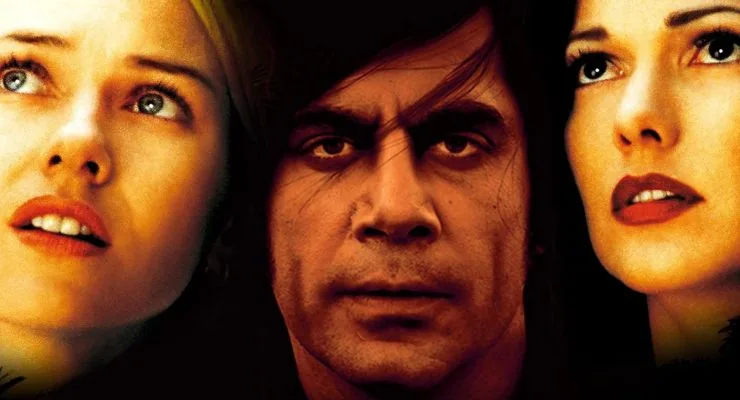
A half-century on from its release, Hasitha Fernando looks at the story behind Brian de Palma’s Stephen King adaptation Carrie…
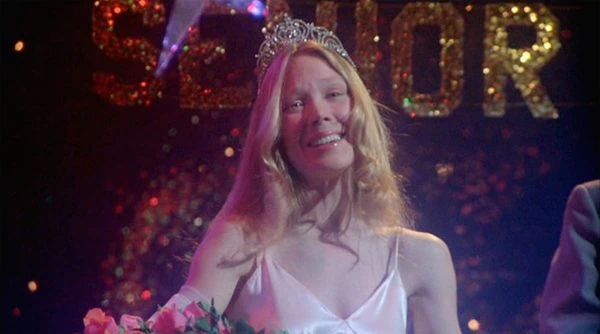
Who would have ever thought that a seemingly innocuous high school prom would be the setting of one of the horror genre’s most unforgettable scenes? But that’s what Brian De Palma’s Carrie gave audiences all those years ago and as the horror classic celebrates its 50th anniversary we look back its behind-the-scenes journey from the book to the big screen…
The publication of Stephen King’s novel nearly didn’t happen
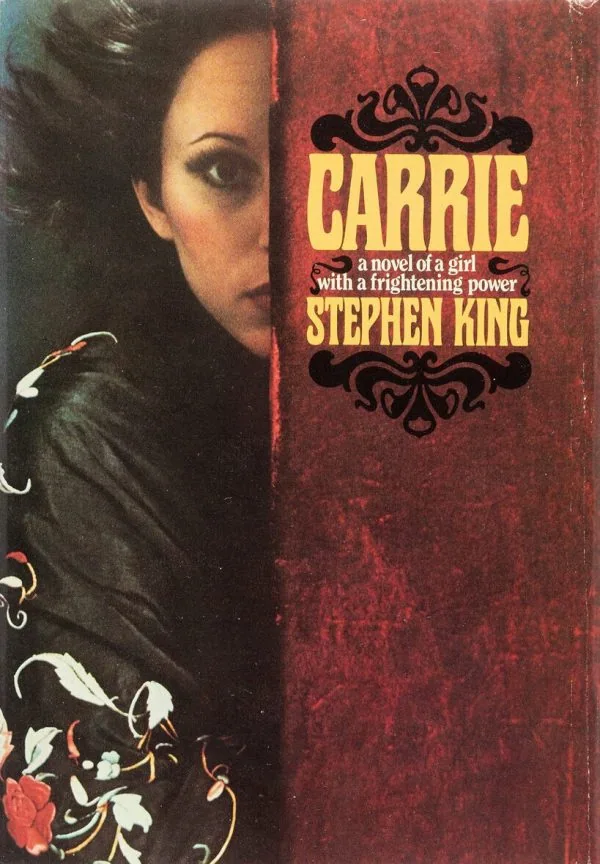
Quite famously dubbed “The King of Horror” Stephen King has gained worldwide acclaim for his literary efforts in the horror genre and in a career spanning six decades he had written a whopping 200 short stories to satiate the hunger of his voracious fans. Some of his most popular works like The Shining, The Dead Zone, Misery, The Shawshank Redemption and The Mist have even been adapted to critically acclaimed feature films. Published in 1974, Carrie was the author’s debut novel but the publication of the book nearly didn’t happen because King hated what he had written and threw the unfinished manuscript into the trash. It was his wife, Tabitha, having read what he’d written, who ultimately convinced him to rethink his actions after finding the discarded manuscript in the garbage bin. Accommodating his wife’s request King finished the story and submitted the finished manuscript to the publishers. When he received a call from Doubleday, saying his submission was accepted by them, King was so stunned that he collapsed on the floor from the sheer shock of the unexpected news.
Carrie White was based on a composite of girls from the author’s childhood
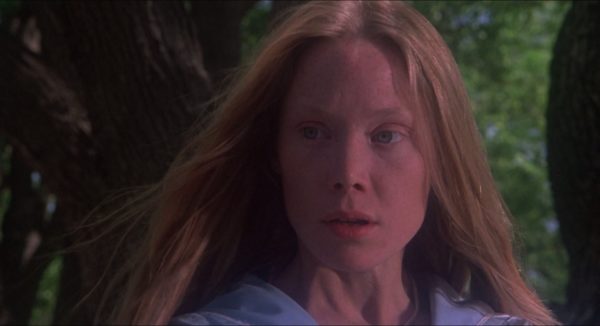
In an introduction Stephen King penned for a new edition of Carrie, the author detailed that Carrie White was based on an amalgamation of two girls who used to attend grade school and high school with him. So as not to tarnish their names posthumously, King named the two girls Tina White and Sandra Irwing in said introduction. King describes Tina as a “very peculiar girl who came from a very peculiar family. Her mother wasn’t a religious nut like the mother in Carrie; she was a game nut, a sweepstakes nut who subscribed to magazines for people who entered contests…the girl had one change of clothes for the entire school year, and all the other kids made fun of her.” In school, Tina kept to herself mostly, taking her seat in the back row of the class and was perpetually bulled because she mostly wore only one set of clothes. The other girl, Sandra, lived down the street from the house that King grew up in, and was raised by a single mother. Sandra was also avoided by her peers because of her seizures and her unusual dressing sensibilities. Sadly, neither of these girls made it to the age of 30, with Tina taking her own life and Sandra dying from a seizure alone in her apartment.
Carrie was the first of Stephen King’s books to be adapted into a feature film
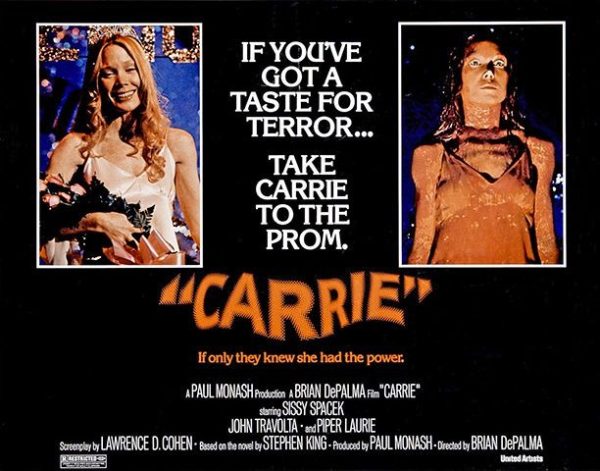
Stephen King was a down-on-his-luck writer who was working at an industrial laundry for a $1.60 hour when the manuscript he submitted was accepted for publication by Doubleday. King was rather reluctant to send the manuscript in the first place because he was under the impression that it was the least marketable of all the manuscripts he’d written up to that point. However, the horror genre was gaining a lot of traction at that time thanks to the success of movies like The Exorcist and Rosemary’s Baby, and as a result King’s debut novel became a sleeper hit. The popularity of the novel meant that studios became interested in adapting the property to a feature film and so, King sold the adaptation rights for $2,500 which may seem like a pitiful sum at the time but the author harbored no regrets saying, “I was fortunate to have that happen to my first book.” Later on, the success of feature film adaptation at the box-office cemented Stephen King’s name as a leading horror author.
Brian De Palma saw immense potential in the source material
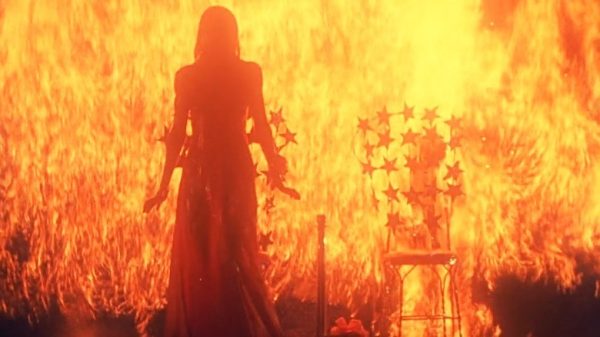
A key figure of the “New Hollywood” generation, Brian De Palma achieved fame producing psychological thrillers heavily inspired by Alfred Hitchcocks’ efforts such as Obsession, Body Double and Blow Out. The auteur has also been responsible for commercial successes like The Untouchables and Mission: Impossible and cult-classic such as Scarface and Carlito’s Way. After being introduced to Stephen King’s novel by a friend, De Palma saw potential in the property and was dead set in trying to make a feature film adaptation of it. A few months down the line, his dream was realized and Lawrence D. Cohen was hired to adapt King’s novel into a feature length film. A budget of $1.6 million was allocated by United Artists, which was a paltry sum considering the popularity of horror movies at the time but the production cost rose to $1.8 million by the conclusion of shooting.
SEE ALSO: Brian De Palma: A Career In Pushing Boundaries
Sissy Spacek deliberately distanced herself from cast members during the shoot
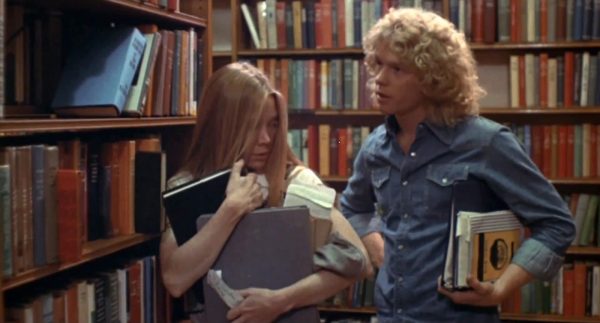
Starting out her career in singing Sissy Spacek recorded a single named “John, You Went Too Far This Time” under the name “Rainbo” in 1968 before joining the Lee Strasberg Theater and Film Institute to take up acting. After making her feature film debut alongside Lee Marvin and Gene Hackman in the 1972 action thriller Prime Cut, Spacek got her breakout role in Terence Malik’s crime drama Badlands, starring opposite Martin Sheen the following year. However, it was with Brian De Palma’s Carrie that the young actress scored her first Academy Award nomination with her awe-inspiring performance. Spacek went to extraordinary lengths to embody the troubled and socially awkward Carrie White in the movie. Initially, De Palma favored Amy Irving for the title role, but Spacek secured an audition after her husband, art director Jack Fisk, persuaded the director to consider her. Although Spacek’s tall, slender appearance and clear skin was different from the novel’s description of Carrie, the script was slightly revised to accommodate the actress’s natural beauty. To immerse herself in Carrie’s vulnerable and broken emotional state, Spacek deliberately distanced herself from the rest of the cast, informing her co-stars that her isolation was intentional and should not be taken personally. She spent much of her time alone in her trailer or hiding behind the sets, allowing the other actors to treat her harshly in character. She also decorated her dressing room with religious imagery, studied Gustave Doré’s illustrated Bible, and observed the body language of people being stoned for their sins, incorporating these physical postures into her performance.
About that infamous Prom Night sequence featured in the movie
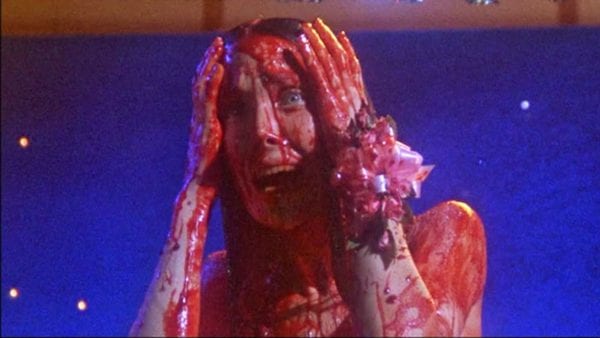
To this day, the prom sequence featured in Brian De Palma’s Carrie remains one of the most memorable climaxes in all of horror cinema. Its success was a combination of inventive camera techniques, creative editing choices and the employment of innovative practical effects which transformed the setting of a seemingly innocuous backdrop of a high school celebration into a scene of pure unadulterated terror. An elaborate crane shot and a circular dolly track was used to capture Carrie and Tommy on stage, creating a dreamlike aesthetic and as the prom descended into unbridled chaos De Palma used a mix of filmmaking methods such as rapid cross-edits, slow motion playback and split-screen imagery to augment the disorientation and intensify the unfolding violence. The gymnasium and the stage of the Prom Night were constructed on a soundstage in Culver City Studio, which gave the crew of the production the freedom to control the stunts, lighting and other complex elemental effects that were needed to bring Carrie White’s telekinetic nightmare to life.
John Travolta and Nancy Allen didn’t think that they would be this evil
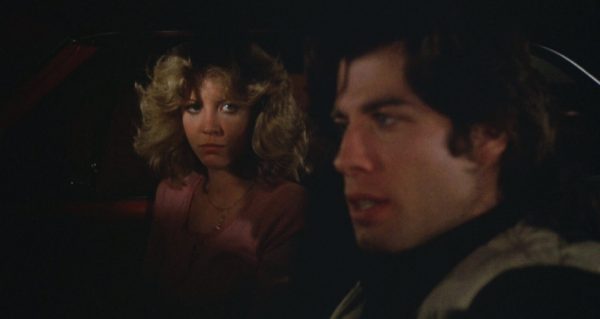
Carrie was John Travolta’s breakout film prior to making waves with 1977’s Saturday Night Fever and 1978’s Grease. Travolta’s star was on the rise due to him playing the lead in television sitcom Welcome Back, Kotter, when he was cast as the rebellious Billy Nolan in Carrie. In the movie, Travolta’s character played a crucial role in the cruel prom night prank targeting Carrie White, by helping his girlfriend Chris Hargensen slaughter a pig to obtain the blood needed for the above dastardly deed. Nancy Allen played the title character’s chief nemesis Chris Hargensen in the film, and the actress was cast in a rather lengthy casting process where she nearly even got re-cast in the role, until officially landing the part. Both Travolta and Allen never in a million years thought that the characters they played would be this evil during the shoot, until they saw the actual film.
Piper Laurie thought that Carrie was a dark comedy and maintained the notion till her death
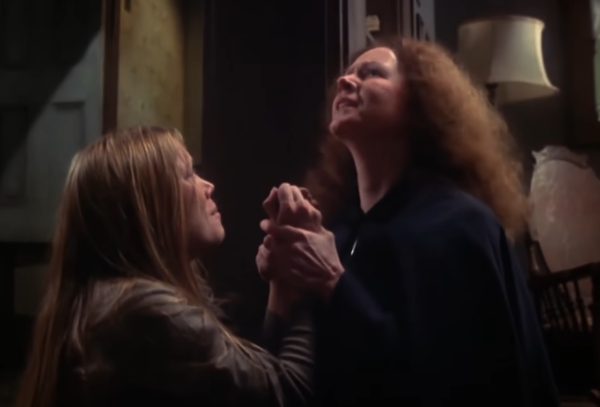
In the film Piper Laurie played the overbearing, fanatically religious mother of Carrie White. The actress started her career signed by Universal at age 17 and had her feature film debut opposite future American president Ronald Reagan in the 1950 film Louisa. But frustrated by the superficial roles that she was assigned by the studio, Laurie ditched the lucrative contract she had, in favor of serious stage and live television acting. Her return to feature film and breakthrough performance came starring alongside Paul Newman in 1961’s The Hustler for which she earned her first Academy Award nomination. Laurie prematurely retired from showbiz after The Hustler but when the script for Carrie came her way she was convinced by her husband to take on the role of the Margaret White. Because her character was too OTT, the actress always thought the film was a “black comedy” and not a serious horror drama. And until the end of her life, she maintained that Carrie was indeed a black comedy.
Sissy Spacek was buried underground to shoot the final scene of the film
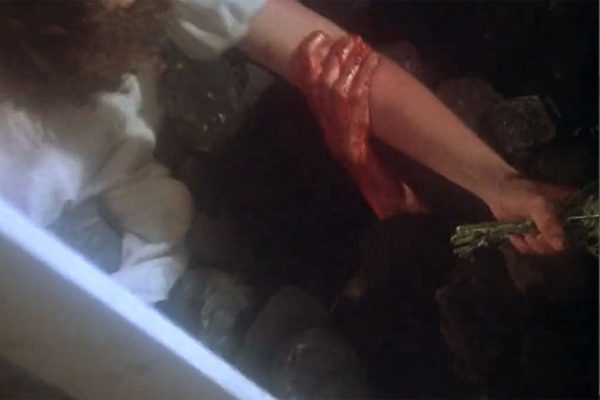
The film’s haunting final scene, which pays homage to John Boorman’s Deliverance, sees Amy Irving’s character Sue Snell reach towards Carrie’s grave, which lies in the charred remains of her house, to lay a bouquet of flowers and is suddenly grabbed by Carrie White’s bloody arm from beneath the rubble. This brilliantly crafted jump scare was shot in reverse to create that eerie, otherworldly effect. Rather than use a stunt double for the scene, Sissy Spacek herself insisted that she be buried in a box beneath the ground so that it would be her hand that rise through the gravel to grab Sue Snell’s arm. Since De Palma and the crew were reluctant to bury Spacek, the director had the actress’s husband Jack Fisk to do the task.
Box-office success, critical acclaim, awards success and a lasting legacy
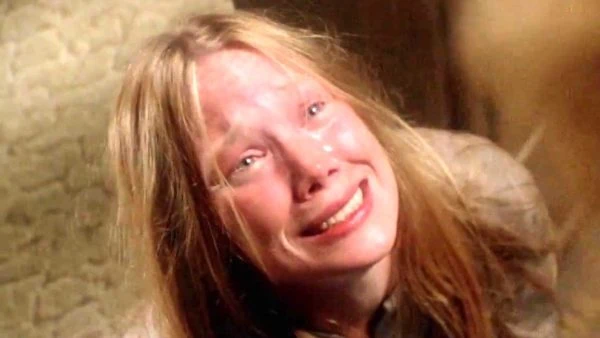
Made on budget of $1.8 million Carrie went on to scare up an astounding $33 million by the end of its theatrical run. On review aggregator site Rotten Tomatoes the film still boasts 94% out of 78 critic reviews with an average rating of 8.3/10. The website’s critic consensus is as follows: “Carrie is a horrifying look at supernatural powers, high school cruelty, and teen angst—and it brings us one of the most memorable and disturbing prom scenes in history.” Roger Ebert of the Chicago Sun Times gushed about the effort awarding it 3 and a half out of 4 stars and calling it an “absolutely spellbinding horror movie” while Variety showered praise by adding that the film had a “strong production, unusual plot twists and a fine cast.” Carrie also stands among the relatively few horror films in Hollywood history to receive multiple Academy Award nominations. At the 49th Academy Awards, Sissy Spacek was nominated for Best Actress, while Piper Laurie earned a nomination for Best Supporting Actress for their duet of mesmerizing performances. The movie also received significant recognition beyond the Oscars with Spacek taking home the Best Actress award from the National Society of Film Critics and the effort winning the grand prize at the Avoriaz Fantastic Film Festival.
Over the years, Carrie certainly has proved itself to possess one of the most enduring horror film legacies, considering the amount of remakes it has spawned; with the recent most being the critically acclaimed television mini-series developed by horror maestro Mike Flanagan for Amazon Prime Video, which debuted in October 2026. 50 years after its release, Carrie still remains a genre-defining classic that continues to resonate with audiences for its striking visual style, iconic imagery, haunting performances and its no-holds-barred examination of teenage cruelty and its dire consequences.
SEE ALSO: Top 10 Stephen King Adaptations
What are your thoughts on Carrie? Let us know on our socials @FlickeringMyth…
Hasitha Fernando is a part-time medical practitioner and full-time cinephile. Follow him on Twitter via @DoctorCinephile for regular updates on the world of entertainment.