Dracula, 1958.
Directed by Terence Fisher.
Starring Peter Cushing, Christopher Lee, Michael Gough, Melissa Stribling, John Van Eyssen, Olga Dickie, Valerie Gaunt, Miles Malleson, George Woodbridge, Carol Marsh, Charles Lloyd Pack, Geoffrey Bayldon.
SYNOPSIS:
When Jonathan Harker rouses the ire of Count Dracula for accepting a job at the vampire’s castle under false pretences, his friend Dr. Van Helsing pursues the predatory villain.
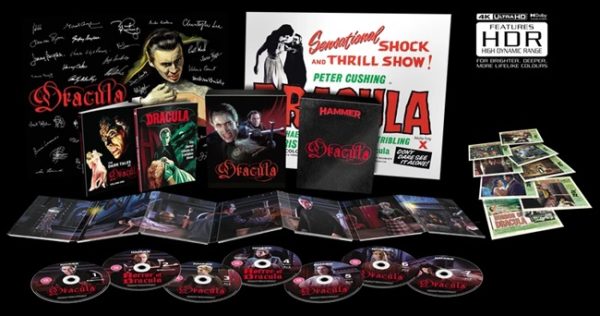
And so here we are one year on from Hammer’s excellent 4K UHD package of their 1957 breakthrough horror smash The Curse of Frankenstein and the resurrected studio have only gone and upped their game by giving similar treatment to the first movie in their other notable horror franchise – that being 1958s Dracula (or Horror of Dracula in the US) – and if you thought that The Curse of Frankenstein was a lovingly curated and exhaustive set then hang on to your crucifix, as Hammer have just dropped what could possibly be the physical media release of the year.
A bold statement to be sure, but Dracula is not just any old horror movie. With The Curse of Frankenstein Hammer had shown they could adapt classic literature without treading on the toes of Universal Studios, whose own versions of Dracula and Frankenstein were over 20 years old by that point and were looking a bit creaky and old-fashioned, and in Peter Cushing they had a new leading man who was dynamic, charismatic and, more importantly, could carry a movie. The secret weapon, however, was Christopher Lee, whose intimidating screen presence and sympathetic interpretation of the Creature under all that makeup had proved that he was more than just a lumbering giant and could actually act, so imagine what he could do with proper dialogue.
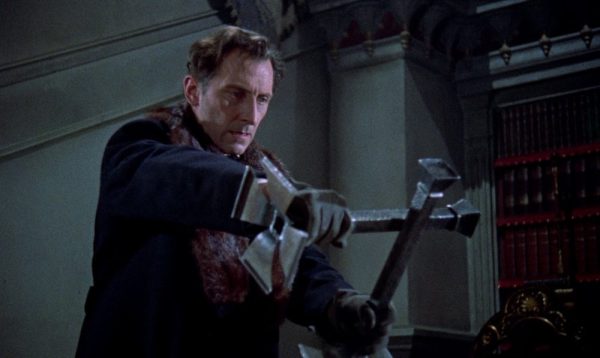
After The Curse of Frankenstein, Cushing had appeared in The Abominable Snowman for Hammer, but was second-billed under their American star Forrest Tucker – which was the norm for the time as Hammer had American lead actors to appease their US financial backers – but for Dracula he was top-billed above Lee, who was still not much of a known quantity, but that was about to change as this new Technicolor version of the Count was about do the one thing that Bela Lugosi’s iconic interpretation of the character didn’t – be sexy.
As every studio who has attempted to do their own version of Dracula over the years has discovered, if you want to do it properly and be faithful to Bram Stoker’s original novel then you have to plough lots of money into recreating the Transylvanian castle setting, the chases across Europe, the sea-crossing to Whitby, the effects of Count Dracula changing from an old man to a bat, a wolf and then to a younger man on the streets of London, and as well as money it all takes a lot of time and would probably mean making a movie several hours long.
This being Hammer in the 1950s, none of that was on the table and screenwriter Jimmy Sangster was on a mission to have the movie come in at under 90 minutes and only use what was at their disposal at Bray Studios and the surrounding area as budgets were tight. These self-imposed limitations helped Sangster shape a story that shared the bare bones of the original text and gave nods to Stoker, but also enabled him and director Terence Fisher to be creative when it came to characters, plot deviation and bringing out the sexual element of the story and character of the Count, something that allowed Christopher Lee to stamp his authority over as here was this tall, handsome, slightly foreign-looking man who could seduce women with his hypnotic stare and a suggestive lick of his lips.
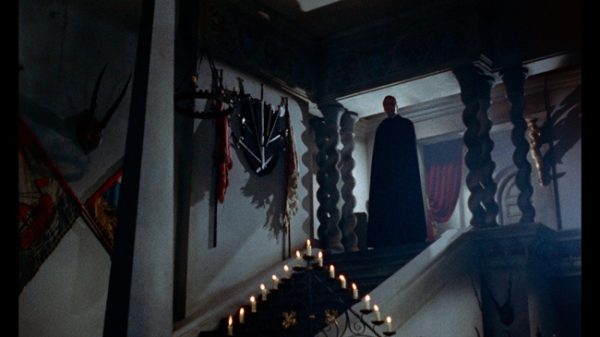
And right from the off this is Lee’s movie, as the opening scenes show librarian Jonathan Harker (John Van Eyssen) going to Castle Dracula to allegedly get the Count’s library in order, but when Lee appears as Dracula at the top of the staircase, blacked out by shadow and seemingly floating down the stairs, we quickly realise that Jimmy Sangster’s script is going to veer way off from the original story. In the book, Harker is an innocent lawyer who goes to the castle to sign a property deal, but here it is revealed he is a vampire hunter who is well aware of who Dracula is, and once his fate is sealed that allows Professor Van Helsing (Peter Cushing) to enter the frame and take over the narrative.
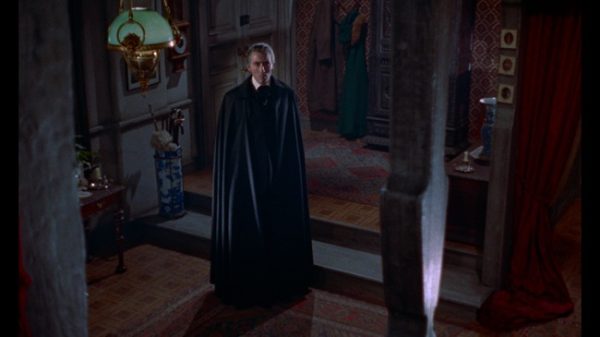
From then on in Stoker’s numerous characters are either mashed together to slim the cast down or are totally neglected altogether, allowing Cushing to be the dashing hero over Lee’s embodiment of evil. Of the supporting characters, Michael Gough plays Arthur Holmwood, whose sister Lucy (Carol Marsh) was engaged to Harker, and whose wife Mina (Melissa Stribling) gets seduced by the Count in a scene that would have played havoc with the BBFC at the time as the filmmakers weren’t just suggesting the overt sexuality of Count Dracula but were blatantly showing it; legend has it that director Terence Fisher told Melissa Stribling to act like she had just had the best sex of her life in the scenes after Mina is bitten, and she does exactly that to great effect.
Gough himself was apparently dismissive of starring in horror movies – although that didn’t seem to stop him doing it several times – and is probably the weak link when it comes to performances as he is either underplaying it in certain scenes or going too far in others, but he does bring certain nuances every so often that endear him – like when Holmwood and Van Helsing are attempting to bribe someone for information and he subtly starts spearing bank notes on said person’s paper spike – and by the end he redeems himself, which is needed as Holmwood is essentially the eyes of the audience.
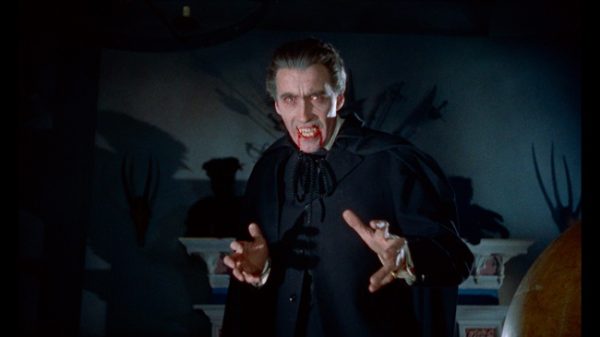
But in the minds of many Dracula is still the Peter Cushing and Christopher Lee show, and whatever the merits of the movie Hammer have dug deeper than possibly anyone has ever dug before to fill up seven discs of material. The movie itself is presented in five different versions, those being the UK Theatrical and Director’s Cuts, US Theatrical and Director’s Cuts plus an editor’s workprint, which is the only known surviving workprint, and it is the Director’s Cut versions that are of the most interest here as they feature recently unearthed effects shots of Dracula disintegrating at the end of the movie. Obviously, having previously unseen footage in a movie of this stature is a must for hardcore fans, and the reality is that these effects shots are only a few seconds long, but they add so much to a movie that was already excellent without them, and when put into the context of 1958 it shows you how forward-thinking Hammer were when it came to gore and horrific imagery.
All the Theatrical and Director’s Cuts come on 4K UHD and standard Blu-ray, and the 4K versions are nothing short of stunning when it comes to giving new life to a movie that is nearly 70 years old. Yes, you can tell this is an old movie but the colours are rich and the level of detail is superb, so much so you can almost see the individual fibres on Jonathan Harker’s velvet jacket, and when those famous close-up shots of Christopher Lee with blood dripping from his fangs and his eyes bloodshot with rage fill the screen it looks incredible, the movie living up to its US title in every sense.
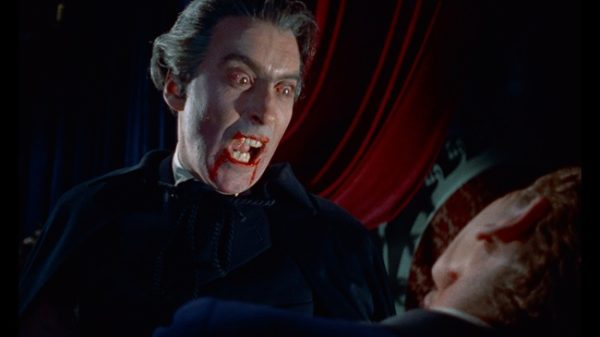
The rest of the discs are standard Blu-ray and cover the movie from all angles, the notable ones being Proving Them Wrong, a conversation between Christopher Lee’s niece Dame Harriet Walter and Lee’s biographer Jonathan Rigby about the iconic actor and how his public persona was not necessarily the same as what he was like in private, and Lords of Darkness, a two-hour discussion between Jonathan Rigby and actor James Swanton about the various 20th-century movie adaptations of Dracula and how they vary.
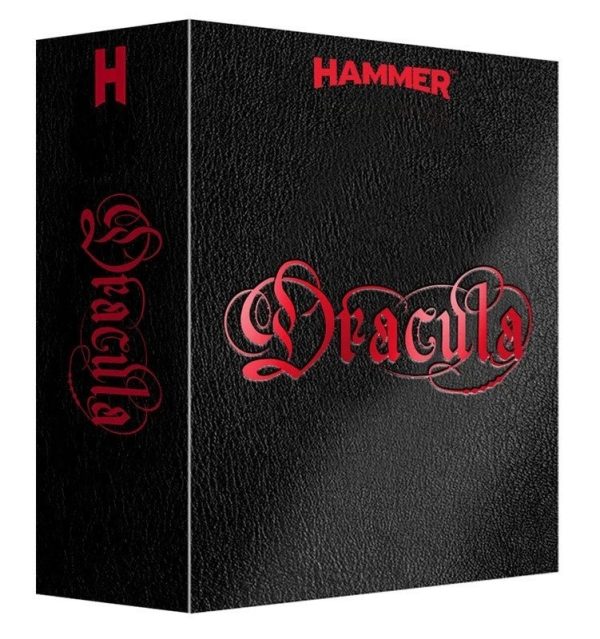
Elsewhere, there are featurettes that cover the score, the special effects, the relationship between Hammer and the BBFC, director Terence Fisher’s pre-1957 career and a video essay narrated by Hellraiser’s Doug Bradley about how Terence Fisher’s personal beliefs influenced his Gothic works, as well as new audio commentaries for the different versions of the film by Jonathan Rigby, screenwriter Lauren Barnett, writers Lizbeth Myles and Paul Cornell, writer/producer Dr. Steve Haberman and filmmaker/film historian Constantine Nasr, filmmaker/film programmer Heidi Honeycutt and cult movie expert Toby Roan, plus interviews with surviving cast members Janina Faye and Paul Cole, and archive extras from previous releases. These are all on the discs, but for physical goodies there is a fantastic graphic novel adaptation of the movie, 60-page comic featuring reprints from The House of Hammer magazine, art cards, double-sided poster and a book featuring all manner of essays, interviews, reviews and musings on Dracula, its cast, crew and influence, all housed in Hammer’s trademark leather-look rigid slipcase featuring the iconic Dracula logo.
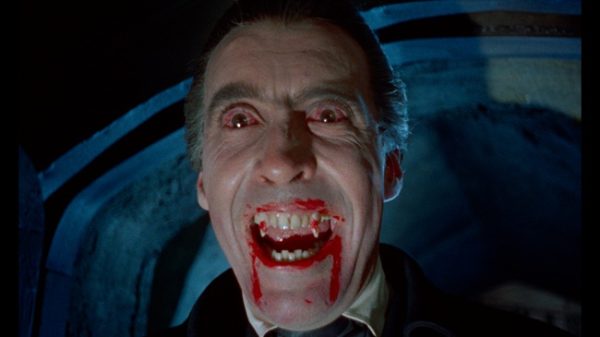
With 15 hours of bonus material on top of five versions of the movie, it is safe to say that this is the definitive edition of a classic movie. As a film, Dracula set the template for Hammer going forward and as a piece of cinematic history it still holds up, from Christopher Lee’s horrific vampire visage to Peter Cushing’s iconic leap across the castle’s dining room table (as a side note, see if you can spot the ‘Cushing Finger’ – the actor’s trademark gesture that made an appearance in the majority of his movies) it manages to excite and scare in equal measure, and with the inclusion of the ‘lost’ footage it now feels complete. As for Hammer’s presentation of their flagship movie, flawless does not begin to describe it and, short of a personal visit to your house from anyone involved in it, this comprehensive package is a collector’s fantasy made real.
The first paragraph of this review said that this could possibly be the physical media release of the year; scrap that – this is hands down the physical media release of this or any other year in recent memory.
SUPPORT FLICKERING MYTH: If you’d like to support FM, you can order Dracula on 4K Ultra HD via Amazon. We may earn a small affiliate commission on purchases, at no extra cost to yourself.
Flickering Myth Rating – Film: ★ ★ ★ ★ ★ / Movie: ★ ★ ★ ★ ★
Chris Ward