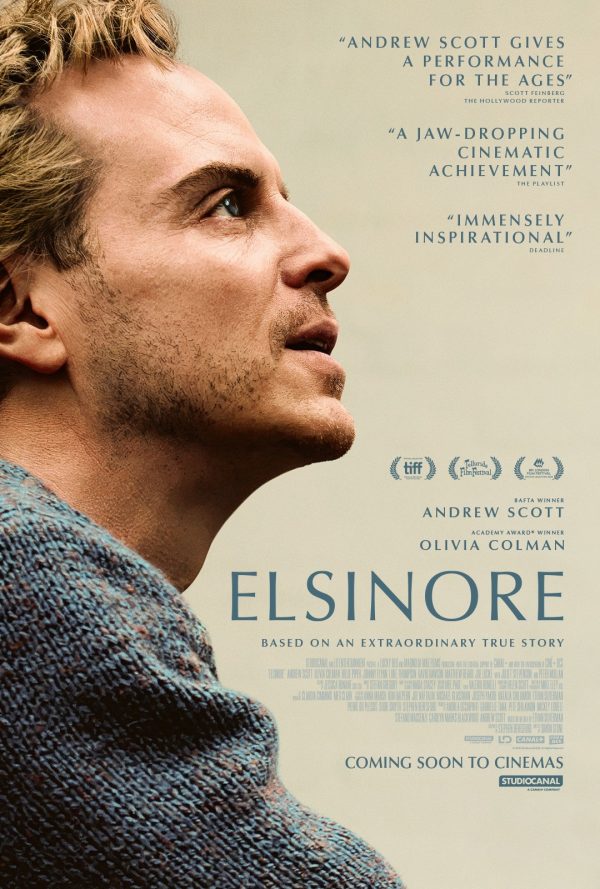
Elsinore, 2026.
Directed by Simon Stone.
Starring Andrew Scott, Olivia Colman, Billie Piper, Johnny Flynn, Luke Thompson, David Dawson, Matthew Beard, Joe Locke, Juliet Stevenson and Peter Mullan.
SYNOPSIS:
A powerful, deeply moving and inspiring story of the actor Ian Charleson who faced incredible odds while preparing to give the performance of his life in Hamlet at the National Theatre in London.
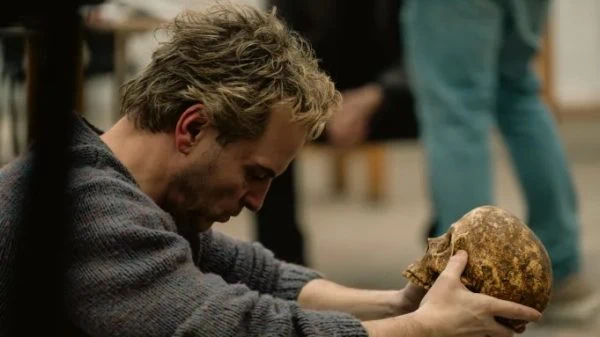
Director Simon Stone’s Elsinore is a mishandled film with a four-star performance (it probably helps that Andrew Scott has actually played Hamlet on stage before). It follows dissatisfied, unfulfilled Scottish actor Ian Charleson, who, yes, is understandably annoyed whenever someone starts humming the classic Chariots of Fire theme, starstruck that he had a supporting part, but also whose aspirations for the role of a lifetime and glory suddenly come within reach in 1989 after Daniel Day-Lewis is overwhelmed and walks offstage in a production of Hamlet. The one major obstacle is that he is now dying of AIDS, with the Kaposi’s sarcoma lesions becoming more prominent on his body. Naturally, the only one he cares about getting covered up is the one on his face, so he can soldier on with rehearsals and preparations for the performance at the National Theater.
To the credit of Elsinore (which itself refers to a sort of grander version of the National Theater, standing in for Hamlet’s castle), it is at least a film (coming from a screenplay by Stephen Beresford, and based on an idea by Ethan Silverman) that observes the effects of a serious illness, occasionally with a sense of humor regarding life, and is just as concerned with living. In a film with at least three montages, the final one is emotionally impactful because it is a last-ride celebration of living, intertwined with rapidly worsening illness, elevated by a score by Stefan Gregory that swells the moment and our feelings.
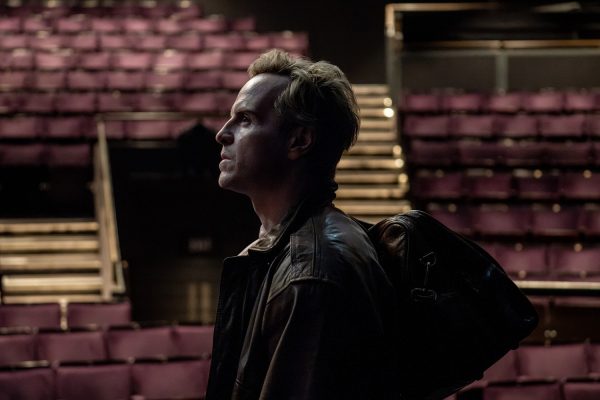
Appropriately, some of the passages Andrew Scott delivers with such intensity playing a character within a character are meant to be indicative of everything from Ian Charleson’s state of being, his battle with treatment, and the larger scope of the AIDS crisis at the tail end of the 1980s (I am by no means a William Shakespeare expert, but there is a line about thousands of deaths seemingly taking on another meaning). That’s where some of the frustrations come in, as since a good chunk of the story is told through montages, complete with Ian acting out scenes in rehearsal where only his director knows what he is going through, some of this is simply going to resonate more with those who have studied or are highly familiar with the Hamlet text rather than the general narrative beats.
There are fascinating subplots here woven in, such as a devastating scene in a hospital in which Ian reveals to his parents what is happening, a strained bond with a filmmaker heavily criticizing him for remaining closeted due to not wanting the sympathy raves for performing with AIDS, a friendship with a casting director and her daughter, a seemingly past partner also dying of AIDS, and connections inside the hospital that limited the patient’s, but also his doctor Margaret Johnson (Olivia Colman), who is highly against attending rehearsals and treatment simultaneously to the degree that she is hesitant to even help him. None of these threads fully come together. The only thread that remotely comes through movingly is Margaret opening up to the idea that Ian puts all this pain into his art as a demanding form of processing, while also seizing not only his chance at glory but leaving behind a legacy.
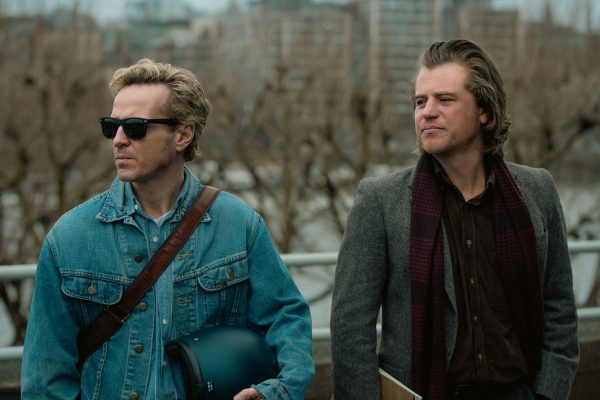
Technically, most of them coalesce in the final montage, but Elsinore also leaves a lot of compelling dynamics on the table to explore further. Beyond the astonishing Andrew Scott performance that Academy voters will surely gobble up, you can’t help but feel like a better movie is haunting Elsinore somewhere.
Flickering Myth Rating – Film: ★ ★ / Movie: ★ ★ ★
Robert Kojder