Robert Ewing chats with Once Upon a Time in the Middle East director Wen Muye…
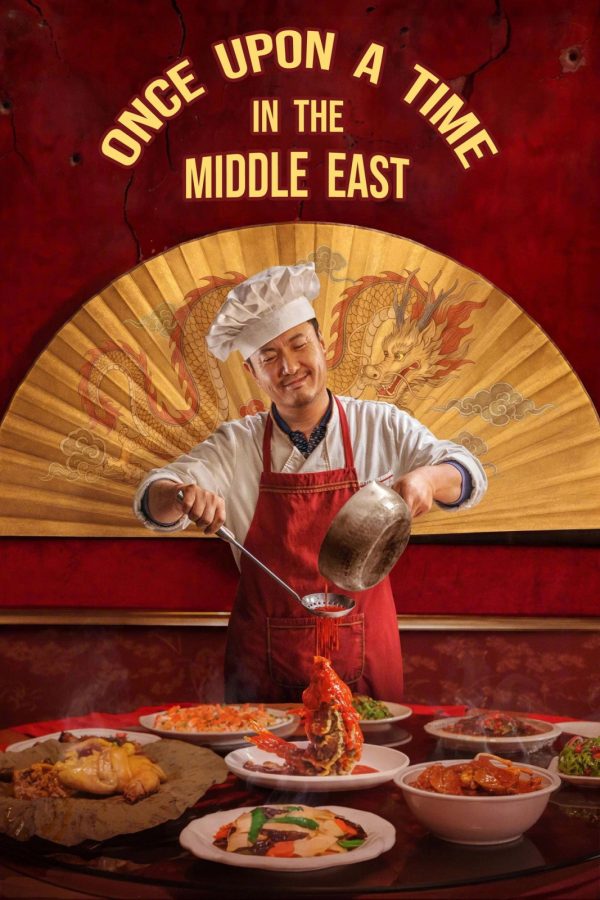
Wen Muye may not be a name that many people recognise when it comes to Chinese directors. However, after his latest film, he is certainly one to keep an eye on. His previous directorial work includes a segment in My People, My Country, as well as the feature films Dying to Survive and Nice View. His latest film, Once Upon a Time in the Middle East, is an utter masterpiece and easily one of the strongest films of 2026.
Once Upon a Time in the Middle East follows Xu Fu (Shen Teng) as he travels to the Middle East in search of work to pay off his debts. There, he meets a fellow Chinese man, Ma Junsheng (Jiang Qiming), who works at a Chinese restaurant that is desperately in need of a chef. After securing the job, Xu Fu brings prosperity to the restaurant. However, everything changes when America attacks the country.
In this exclusive interview, I had the opportunity to speak with Once Upon a Time in the Middle East co-writer and director Wen Muye about his latest masterpiece. From discussing the moral complexities of Middle East conflict, collaborating with actor Shen Teng, working with child actors, and much more.

Once Upon a Time in the Middle East takes place during conflict that affected the region from the early 2000s. The film does a fantastic job of showing that the conflict was far more complicated than a simple black-and-white struggle. During the writing and directing process, how challenging was it to maintain that nuance so that audiences never feel it’s a one-sided critique of the conflict?
We still wanted to focus more on people. What concerns us more is the conflict within people themselves. Of course, there is also external conflict, but more importantly, it brings about inner conflict in people. For example, why does someone who appears to be kind commit evil? Why does someone who seems gentle and refined kill? Why might someone who appears to have violent tendencies also be a boy who loves his family and his cat? What we wanted to portray was the inner, emotional conflict in people that is brought about by external conflict.
My first introduction to Shen Teng was through Pegasus 3, which was released earlier this year. While that performance was much more comedy-driven, this film provides the perfect contrast, showcasing a far more vulnerable and dramatic side of his talent. What was it like working with such a versatile and dynamic actor, and what did he bring to the role that was never captured on the page?
Working with him made me very happy. Shen Teng is among the very best in China, whether in terms of his overall ability as an actor or his gift for comedy. His command of dialogue, his understanding of character, his understanding of the world, and his understanding of the film’s theme all fit the film itself extremely well.
The character he created brought a sense of ease to the role. He had a deeper and more vivid understanding of Xu Fu. After all, as the director and screenwriter, when it comes to fully shaping a character, we creators behind the scenes may only be able to reach seventy or eighty per cent. A character ultimately depends on what the actor brings to the screen through their performance.
Shen Teng could take that seventy or eighty per cent and bring it almost to one hundred per cent. Very often, he delivered performances that were genuinely surprising—whether in comedy, straight drama, or emotionally charged scenes. He constantly brought unexpected surprises.

In addition, Omar Sharif and the rest of the child cast deliver immaculate performances. Given the film’s heavy and mature subject matter, how did your approach to directing the child actors differ from your approach to directing the adults, while still allowing you to capture the same level of quality and emotional authenticity in their performances?
With them, I think you need more patience, more non-technical guidance, more attention, and above all, a sufficient sense of safety.
First, you need rehearsals, so that they can understand their characters better. I do not think young actors or child actors are any less capable than adults. They have less dust clouding the way they perceive the world. Personally, I think that adults can sometimes be less sensitive and less natural than children in the way we experience the world.
Children have this sensitivity and natural way of perceiving things. More often, what we need is to help them concentrate. A director’s role is more about guiding them to focus, trusting them, giving them a greater sense of security, and then waiting for them to reach the point you need.
Some people may ask about technical issues, such as dialogue. Fortunately, we found actors who did not have basic problems with technique, dialogue, or the formal requirements of performance. We only needed to help them gradually become more natural.
The film switches aspect ratio from the prison sequence onwards to 2.43:1, compared with the 1.85:1 ratio used throughout the rest of the film, including the action scenes. Why was this decision made, and from a narrative perspective, what do you feel it adds to the overall storytelling of the film?
There were two considerations. The first concerned the prison sequence. Psychologically, it feels as though the characters are wearing shackles; they are under control. So, we tightened the frame.
The other consideration was that, when the action scenes and scenes that truly require a sense of scale arrive, we wanted the visual impact to feel more direct. So, we opened up the frame, allowing the scenes to appear fuller and with greater force before the audience.
From a narrative point of view, I think these changes create an audiovisual space that is better suited to the emotions of each moment. Rather than using one format consistently throughout, it gives the film relatively more freedom.
Continuing with that, the cinematography throughout the film is impeccable. Can you talk about what it was like collaborating with cinematographer Wang Boxue, and whose idea it was to shoot many of the action scenes in what appear to be continuous long takes, and why was this decided as the best approach?
We have been working together for nearly ten years. From my first film until now, he has been the cinematographer on every one of my films. Working together, we do not need to say much. Our aesthetics, our execution, our worldview, and our values are basically aligned. So, our communication is very much in sync, and it is a very happy collaboration
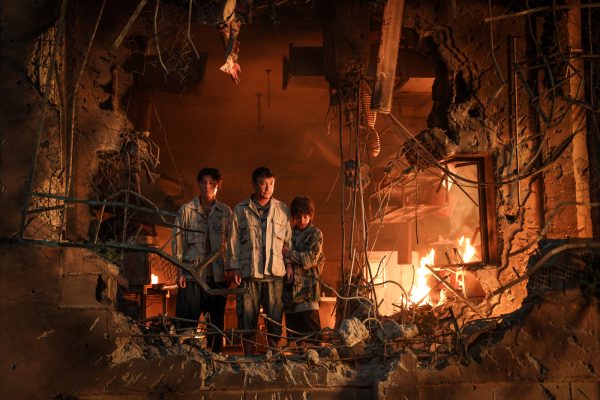
It was my idea, because it relates to the kind of film we wanted to make. On the surface, it is a war film, but we deliberately wanted to portray it more like a disaster film. After all, Xu Fu is a third party in the film; he does not belong to either side in the war. So when the war is seen through his eyes, it often becomes a disaster.
Following his point of view, running through the chaos of war, seeing these scenes unfold, avoiding danger, and protecting the children led to this particular visual style.
The food throughout the film looks incredible and, to be honest, had me feeling hungry the entire time. What was the process of capturing the beauty and artistry of preparing these meals on screen? Given that many scenes would have required multiple takes. What techniques were used to ensure the food looked fantastic and consistent in every shot?
We had to study the dishes and ask chefs to prepare them for us. We would look at both the process and the final result, and decide whether they suited the character of Xu Fu and the period in which the story is set, and whether they worked on screen. Through this process, we would more or less know which steps needed to be filmed and how we should film them.
There is one point you made that is exactly right: our main concern was whether the film could truly make audiences feel that the food was delicious. That was quite important, because this is ultimately a film about war and peace. Food represents peace, and we wanted to make peace seem more desirable.
We used multiple cameras. We wanted to shoot with multiple cameras while keeping food waste to a minimum. We also prepared the shot lists very early. While observing the test dishes, we had already worked out most of the shots. So we tried to use multiple cameras to capture every moment quickly in each take, without wasting food.

Zaid is one of the most nuanced and emotionally complex characters I have seen in a long time. We first meet him as a caring father who, in the wake of an immense tragedy, finds himself travelling down a dark path. How did you approach creating a character who, despite ultimately becoming involved in terrorism and committing horrific acts, remains deeply human and recognisably the same man we sympathised with earlier in the film?
I think it comes from the fact that, through our research, interviews, and observations, we encountered many real people like this. In war, many people are changed by hatred and become people they would never otherwise have become. To me, that is not something merely dramatic; on the contrary, it is more real. Of course, real life can sometimes be even more dramatic, and that is especially evident in Zaid.
Most importantly, at the final moment, we see the person he originally was—for example, in the moment when he lets Xu Fu go. That is very important. When he finally tells Xu Fu to open his mouth, he is, in effect, saving Xu Fu’s life. It allows us to see that Zaid still has his conscience.
To end on a lighter note, I think the film beautifully shows how food can bring different cultures and people together, and that even in the darkest of times, we can still find connection and love over a good meal. If you could cook one meal to bring people together, what would it be and why?
Xu Fu’s hui fan. First of all, Xu Fu hui fan is a meal made from the simplest ingredients. Also, the Chinese character hui (烩) in the dish’s name has the sound of hui (汇), meaning “to gather together.” We wanted to bring everyone together, and that is why we chose Xu Fu’s hui fan at the end.
Hui fan originated in China and is found throughout the country. In China, there is also a term for it, zheluo fan, which refers to a meal made by putting leftover dishes and rice together. When people talk about food, they often speak of its colour, aroma, and flavour. Hui fan does not really have much colour; perhaps it only has aroma and flavour, and sometimes it may not even have much of those. But it can fill your stomach. It fulfils food’s most basic function. That is why we chose Xu Fu’s hui fan.
SEE ALSO: Read our ★★★★★ review of Once Upon a Time in the Middle East here
Many thanks to Wen Muye for taking the time for this interview.
Robert Ewing