Klara and the Sun, 2026.
Directed by Taika Waititi.
Starring Jenna Ortega, Mia Tharia, Amy Adams, Natasha Lyonne, Aran Murphy, Rachel House, Steve Buscemi, Davida McKenzie, and Harry Greenwood.

SYNOPSIS:
A robot girl designed to prevent loneliness tries to save a heartbroken family of humans.
While watching Klara and the Sun, one recurring thought is why co-writer/director Taika Waititi felt his eccentric brand of comedy would add to an adaptation of Kazuo Ishiguro’s popular novel. The humor and quirky jokes are also so distinct that there is no doubt that they are a signature feature of the filmmaker (adapting the screenplay alongside Dahvi Waller), undercutting what could have been a profound narrative about a technological bubble bursting in the future, robot companions, AI insidiously taking advantage of grief, friendship, the meaning of love, familial drama, the sun, and biologically altered and enhanced humans, which one would have to assume is what readers enjoyed about the book. Even at just shy of two hours, the film severely fails to flesh out much of this grounded futuristic world.
In Taika Waititi’s defense, one supporting character is consistently funny in a robot scarecrow programmed (or instructed, however you want to put it) to do what the name implies. It also undeniably fits the filmmaker’s comedic DNA, and works. What this says is that the problem isn’t the filmmaker’s sense of humor himself (Jojo Rabbit and other earlier works alongside at least one of his Marvel outputs are still hugely successful for different reasons, great, and worth defending from those who find everything about his tone and comedic instincts abrasive), but that it simply doesn’t fit material that should take itself a bit more seriously. It’s one thing to have comedic relief, and another to take a weepy, thought-provoking drama and turn almost every character into a vessel for it. At that point, it’s not even relief, but more so overwhelming abundance. The fact that this doesn’t have a comedy tag on IMDb is outrageous.
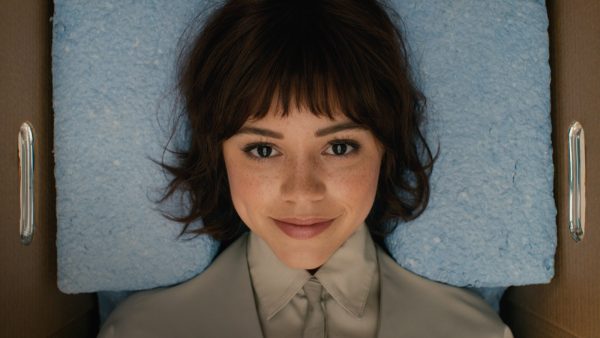
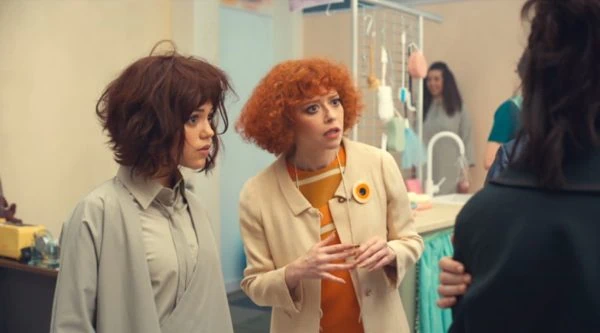
There is nothing necessarily wrong about taking Klara (Jenna Ortega), an “Artificial Friend” so hopelessly quirky that she may never find a buyer (she can’t help herself from standing on one leg during conversation, talking to herself and the sun, which she sees as some sort of divine entity through which she makes sense of the world, making overly expressive smiles, and just generally being weird), as the character is most likely also like that in the novel. However, everything here, especially the other robots up for sale in a world that has moved on to a newer, more sexualized model, alongside the unnamed store manager (Natasha Lyonne), has that same quirkiness, but blown up, which undermines the premise laid out above in that everyone else is supposed to be somewhat normal.
The same issues persist once Klara’s disapproving mother, Chrissy (Amy Adams), relents and buys her dying daughter (which is treated as an insulting first-act twist kept from viewers, Klara, and the teenage girl herself), Josie (Mia Tharia), where the longtime maid’s (regular Taika Waititi collaborator Rachel House) concerns about being replaced by a robot are brushed aside before also being tweaked into off-putting humor. Designed to alleviate loneliness, Klara is also part of an inferior model which apparently went a little haywire, killing people, something that is also a throwaway piece of information never brought up again. Some of this is also uncomfortably pro-AI and never explores or takes a stance on whether these companions are beneficial to teenagers (all we get is that loneliness has spiked since World War III permanently took out the Internet).
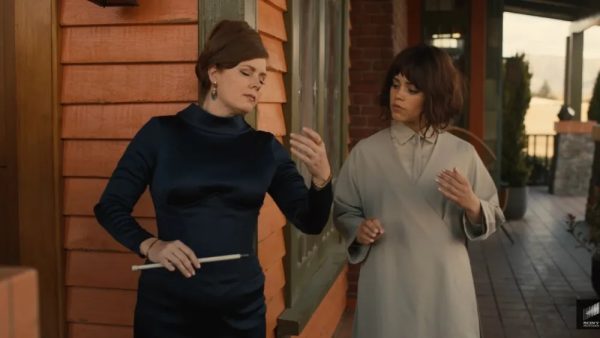
Mostly alone on a farm despite seeing Josie’s technologically-curious (which is nowhere the same as an AI advocate or user) boyfriend Rick (Aran Murphy), there also isn’t much time for the friendship to develop between her and Klara, with constant interruptions from the family, the illness, the reveal that the girl has actually had her DNA altered at the request of her mom to be supremely gifted at all hobbies and set to go to a special college of similar students she is eager to meet, and the robot’s unwaveringly optimistic insistence that the sun can do something about the sickness (which, to reiterate, the mother is keeping to herself is fatal). Jenna Ortega’s (who really goes for it, not just in eccentricity, but in a lively, spiritedness) and Mia Tharia’s individual performances are solid, but the film is too busy to give them time to develop proper chemistry. There are also dopey moments, such as Josie having Klara imitate her mom’s voice to activate the car, despite no one seemingly knowing how to drive it, and then wrecking it in what turns out to be consequence-free.
Visual touches such as Klara’s first-person perspective, which shows her eyesight resembling a video game’s, where surrounding environments temporarily appear pixelated, as if they haven’t fully rendered yet, are welcome but reiterated far more often than necessary. Nonetheless, it is the most original element of the fish-out-of-water aspect, in which these companions are meant to learn about the world through their owner, which is then imprinted onto their personalities. That said, there is also a whole lot of questioning the logic of this business venture and these robots, alongside certain character decisions, while also finding others supremely annoying (we do eventually meet the other genetically altered kids, who couldn’t be more over-the-top irritating).
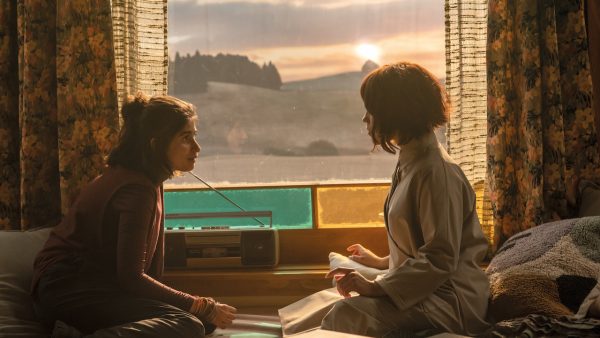
What makes this all frustrating is that whenever Taika Waititi does take the material seriously (as so in the third act) or feels invested in the emotional and philosophical stakes or understanding what love is, Klara and the Sun is decently intriguing and even allows one to feel for each character and their perspectives on where this story goes. As for the rest, well, no amount of prayers to the sun could fix it, leaving one wishing almost any other filmmaker was at the helm of this adaptation.
Flickering Myth Rating – Film: ★ ★ / Movie: ★ ★ ★
Robert Kojder