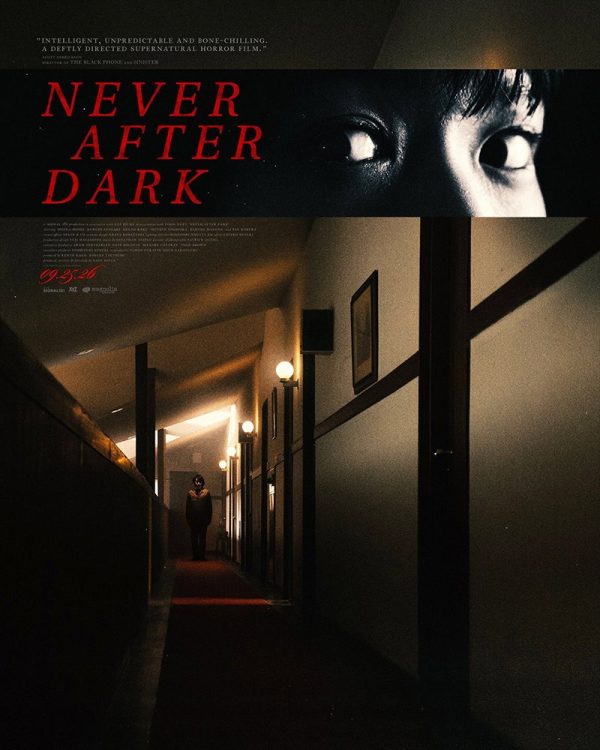
Never After Dark, 2026.
Written and Directed by Dave Boyle.
Starring Moeka Hoshi, Kurumi Inagaki, Kento Kaku, Tae Kimura, and Mutsuo Yoshioka.
SYNOPSIS:
A traveling psychic who helps lost souls cross over encounters a powerful entity at a remote house. While investigating its origins, she uncovers dark secrets and faces a deadly threat from an unexpected source.
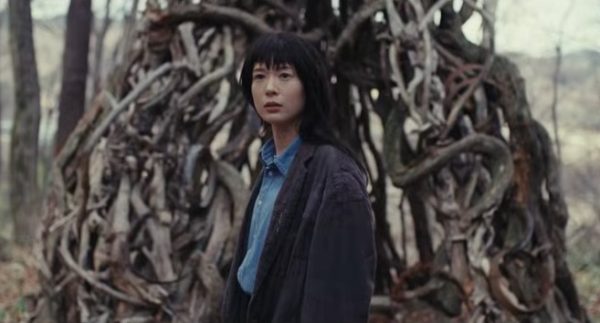
Lonely ghostbuster Airi (Moeka Hoshi) succinctly expresses her casual and calm approach to her unusual profession by telling her latest clients that the dead don’t scare her, as it’s relatively easy to piece together what they are looking for and help guide them elsewhere. It’s people who are unpredictable and challenging to pinpoint what exactly they want. With writer/director Dave Boyle’s Never After Dark, it is a state of relaxed mind in line with the film’s pacing before all hell breaks loose, wickedly cuckoo to the umpteenth degree.
Setting up shop in a hotel run by Teiko (Tae Kimura) and her son Gunji (Kento Kaku), psychic medium Airi shuffles them off to a remote location so she can work alone in peace while handling the apparition the former claims to see at night. Teiko has also painted his dismembered face as she sees it, shrouded in darkness (played by Mutsuo Yoshioka in fittingly disgusting practical makeup, it looks as if someone or something forcibly removed the man’s entire jaw, leaving the mouth a gaping, wide-open hole). As for Gunji, he isn’t only skeptical but mildly annoyed, going along with the requests of the mysterious Airi to appease his mother.
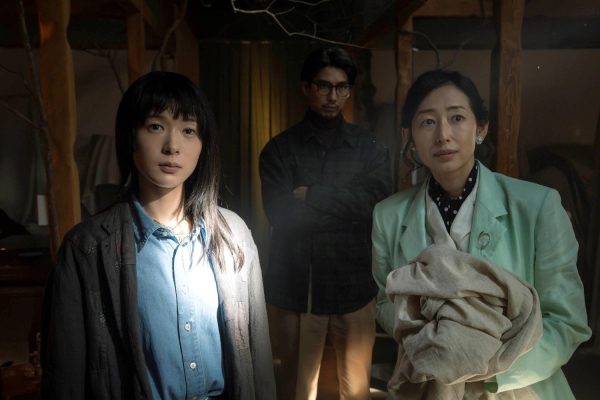
From the jump, it is confirmed that Airi can indeed communicate with the other side, as her only source of interaction involves talking to her deceased older sister, Miku (Kurumi Inagaki), who has been dead for quite some time now, as evidenced by the fact that she has maintained the appearance of a child and never aged. With long, long red-sheened hallways and intricate production design that sometimes comes across as an homage to The Shining, this is an exquisitely photographed film by cinematographer Patrick Ouziel, carefully setting up each shot with impeccable blocking, stylish angles, or slick usage of reflections (Airi is often seen communicating with Miku seen through a mirror).
It’s the kind of remarkable, accomplished set design and decoration that perfectly gels with its lead character treating the home as her own, lounging around and dancing to music or conversing and informing viewers of the dark, traumatic sibling history. That’s without even getting into the unique depiction of crossing over to the other side, which seems steeped in Japanese culture and mythology, involving a dial device with a mirror attached, alongside lit candles and sacrificial strands of hair.
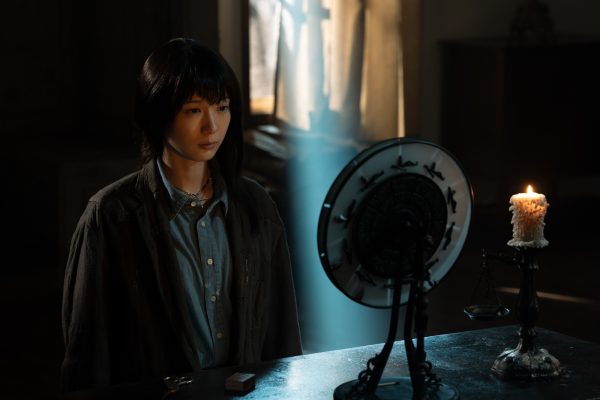
That direction, production oversight from Yûji Hayashida and costume design by Arata Kobayashi take what could easily sound like a generic riff on something as already forgettable as Insidious (excluding the latest, surprisingly decent entry) and inject it with cultural specificity. Naturally, the performances from Moeka Hoshi and Kurumi Inagaki are convincing whether it’s the bonding or isolation from an unorthodox lifestyle, cut off entirely from society yet loosely connected to a loved one.
Then there’s the investigative element of who this man is, why he is here, and the unhinged, bonkers horror alongside the brilliant revelations it leads to. Even mentioning that a tin box of extracted teeth plays a key part in what the aberration wants doesn’t spoil a damn thing. Nevertheless, the journey into the veil and back into the real world, and so on and so forth, tests Airi’s philosophy on the living and the dead, especially when a nearby local further complicates the mystery. The suspense and tension don’t merely crank up; the originality and display also expand tenfold, making for a showstopping third act that further elevates and rewards the more nuanced, dramatic buildup. It will work best alone at night, although Never After Dark is an inventive, zany, and character-focused horror gift that should be sought after at any time.
Flickering Myth Rating – Film: ★ ★ ★ ★ / Movie: ★ ★ ★ ★
Robert Kojder