On the 50th anniversary of its world premiere, Hasitha Fernando looks at the story behind 1976’s Rocky…
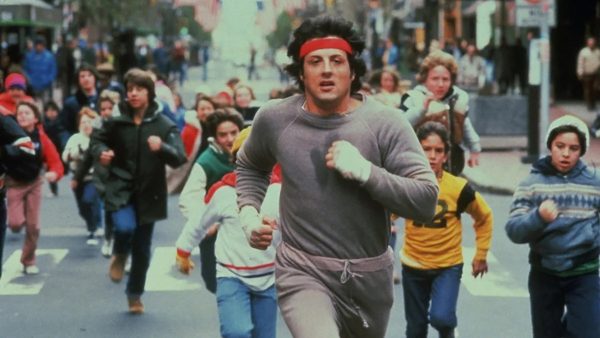
Half a century after it captured the hearts of moviegoers, Rocky continues to stand as one of cinema’s most inspiring underdog stories. The combined talents of lead actor/writer Sylvester Stallone and director John G. Avildsen transformed a modestly budgeted production into a global cinematic phenomenon. As the iconic film celebrates its 50th anniversary, we revisit the remarkable story of its creation…
Sylvester Stallone was inspired by a real-life boxing match to write the screenplay
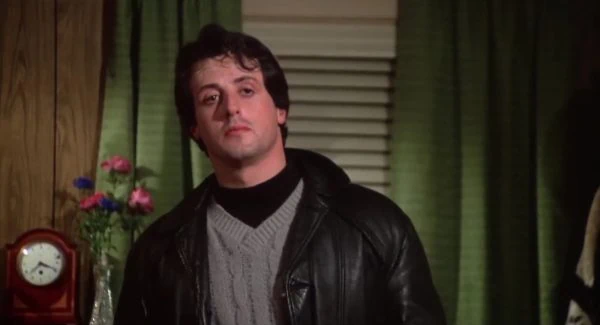
Sylvester Stallone’s journey towards creating Rocky started with his job as an usher earning $34 a week, at a local movie theater in New York. Instead of a formal classroom education in filmmaking Stallone took the opportunity to repeatedly watch films and observe people’s emotional reactions to them. He also took this time period to brush up on his screenwriting skills as well. The inspiration for Rocky came to him after he witnessed an unforgettable boxing match between the legendary Muhammad Ali and underdog Chuck Wepner at Ohio’s Richfield Coliseum on March 24, 1975. Although only a precious few expected Wepner to last more than a few rounds against the reigning champion, the ever-determined boxer stunned spectators by enduring Ali’s relentless bout of attacks until the final round, even briefly knocking him down in the ninth. Wepner was eventually defeated by a technical knockout with just 19 seconds remaining in the 15th round, but his extraordinary resilience left a lasting impression on a young Stallone. Inspired by the incident, Stallone reportedly wrote the screenplay for Rocky in just three-and-a-half days, drawing on the spirit of the underdog story, alongside other influences from boxing legends such as Rocky Marciano, Joe Frazier and Rocky Graziano’s autobiography “Somebody Up There Likes Me”. Despite the fact that the Ali-Wepner match inspired him Stallone always maintained that Wepner as a sportsman served no inspiration for him when he crafted his screenplay.
Stallone nearly lost the rights to his screenplay very early on
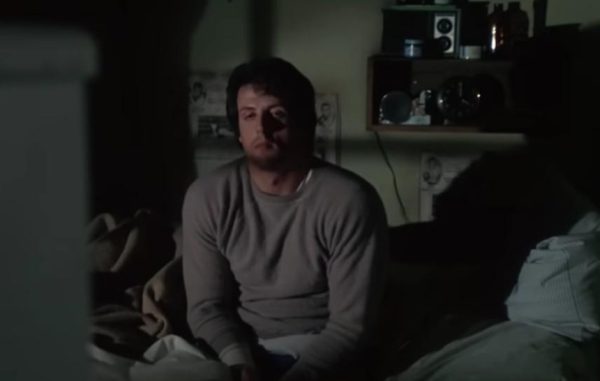
Even though Stallone had a screenplay he was a complete unknown in the industry, so he turned to his buddy Henry Winkler, with whom he co-starred in The Lords of Flatbush in 1974, to get his script across to potentially interested parties. Being something of a major TV star at the time playing “Fonz” on Happy Days, Winkler took the Stallone’s script to executives over at ABC, who expressed interest in developing it as a made-for-TV movie. The network purchased Stallone’s script with the intention of bringing in another writer to revise it. This didn’t sit well with Stallone and determined to preserve his original vision, he pleaded with Winkler to prevent the screenplay from being rewritten by another party. Winkler subsequently returned to the network and offered to repay the purchase price in exchange for the rights. ABC initially resisted, but Winkler eventually used his considerable influence to persuade executives to relinquish the script, allowing Stallone to retain control of his ambitious project.
Ralph Bakshi was initially offered the opportunity to direct Rocky
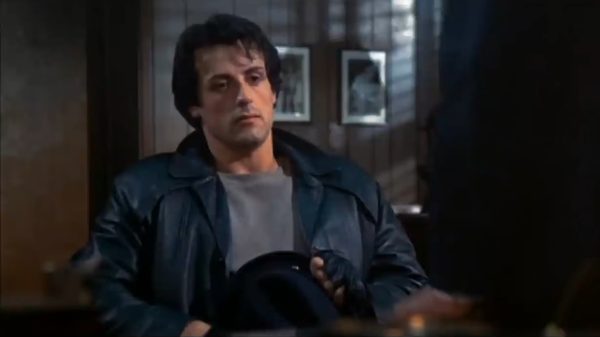
After the unfortunate incident with ABC executives Stallone submitted his script through his talent agents Craig T. Rumar and Larry Kubik of Film Management Enterprises (FAME). Recognizing the screenplay’s cinematic potential, the pair began shopping it around to various Hollywood producers and studios. However, their efforts repeatedly hit a stumbling block, as Stallone remained adamant that he should play the lead character himself rather than have another perform it. Their hard efforts eventually paid off when they secured a meeting with Irvin Winkler (not to be confused with Henry Winkler) and Robert Chartoff of Winkler-Chartoff Production. Following several rounds of negotiations with Rumar and Kubik, the production company agreed to a deal that allowed Stallone to retain both writing credit and the lead starring role in the movie. Quite surprisingly, Stallone initially approached animator and filmmaker Ralph Bakshi to direct, having been impressed by his 1973 film Heavy Traffic. Bakshi, however, declined the offer because he preferred to remain in animation. The directing reins ultimately went to John G. Avildsen, who helped bring Stallone’s underdog boxing story to life on the big screen.
United Artists were skeptical of casting Stallone in the lead role
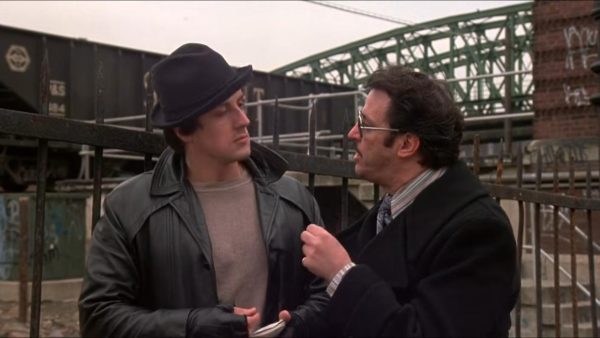
Although the deal that Winkler and Chartoff offered Stallone for the rights was an unprecedented $350, 000, the actor had to waive off his writer’s fee and work minimum wage in order to play the lead role of Rocky Balboa in the movie. At the time, Stallone had only $106 in his bank account, no car and was so financially desperate that he’d considered selling his beloved dog because he could no longer afford to feed him. After acquiring the screenplay, Winkler and Chartoff presented it to United Artists, who envisioned a big budget production with established Hollywood leading men such as Robert Redford, Burt Reynolds, Nick Nolte or James Caan attached to play the lead role. Naturally, the studio was very skeptical about casting Stallone, viewing the project as a risky undertaking but the producers remained steadfast in their opinion. United Artists eventually agreed, provided the production budget was kept to approximately $1 million and the producers accepted personal financial liability for any overruns. The final production cost reached roughly $1.1 million, forcing Winkler and Chartoff to mortgage their homes to cover the additional $100,000.
Many scenes in the movie were shot using unconventional methods
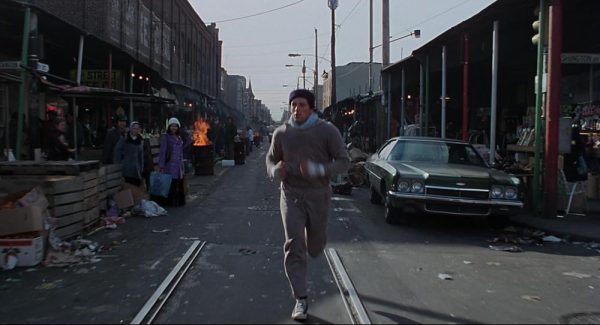
Due to its literal shoestring budget there were many scenes in Rocky that were filmed using an unconventional guerrilla-style approach. Many of Rocky’s memorable jogging sequences through Philadelphia were filmed in this manner – without permits, elaborate equipment or hired extras. Director John G. Avildsen frequently seized fresh opportunities as they arose, capturing authentic street scenes with minimal preparation. In one instance, the crew happened to be passing a moored boat while driving along the docks and Avildsen recognizing its visual potential, had Stallone jump out of the van and run along the waterfront, whilst he filmed the sequence from the vehicle’s side door. Even the famous food-market sequence was shot in this way, where unsuspecting stallholders and pedestrians can be seen watching Rocky jog past in genuine bewilderment. In fact, one of the film’s most charming moments—the stallholder tossing Rocky an orange—was entirely spontaneous and unrehearsed, as the vendor had no idea he was gonna appear in a soon-to-be-famous motion picture.
The Steadicam helped pull off an iconic sequence in the movie
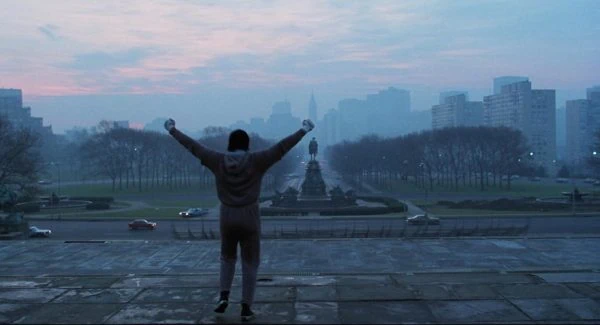
The Steadicam was invented by cameraman turned inventor Garrett Brown in 1974. Initially, the ingenious piece of equipment was called the “Brown Stabilizer” prior to it being called Steadicam and as its name implied it was a revolutionary camera stabilization system that utilizes a counterweight mechanism to let a camera operator move smoothly over rough ground, around corners and up the stairs. To prove his invention worked, Brown created a 30-shot demo reel titled “Impossible Shots” which featured his then girlfriend (and future wife) running up and down the stairs of the Philadelphia Museum of Art. Several months later Avildsen saw Brown’s demo reel and realized that the man’s invention would be perfect to shoot some of the sequences in Rocky. Subsequently the filmmaker hired Brown and utilized his creation to shoot one of the most iconic sequences in cinema history, at those very steps the cameraman shot his demo reel.
Carl Weathers’ casting as Apollo Creed was quite by accident
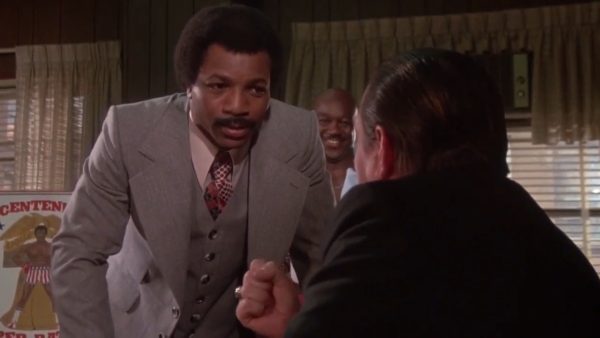
One of the most instantly recognizable movie stars from the 1980s with his action heavy roles in Predator and Action Jackson, Carl Weathers first gained international fame for his role playing the bombastic heavyweight boxing champion Apollo Creed in the Rocky franchise. The character was Rocky Balboa’s fierce rival in the first two Rocky installments but became his friend and trainer in the last two Rocky films. During his audition for the role of Apollo Creed, Weathers unintentionally struck Stallone on the chin whilst rehearsing a sparring sequence with the actor. Stallone reminded Weathers to take it easy, as it was only an audition but this somewhat ticked off Weathers who remarked that he could deliver a much better performance if he were allowed to audition opposite a “real” actor rather than a stand-in. Director John G. Avildsen then revealed that Stallone was, in fact, the film’s leading man and screenwriter much to the chagrin of Weathers. After studying Stallone for a moment, the young actor cheekily responded, “Well, maybe he’ll get better.” Rather than taking offence, Stallone was so impressed by Weathers’ confidence and attitude that he immediately offered him the role of Apollo Creed.
The intense boxing sequences were thoroughly rehearsed beforehand
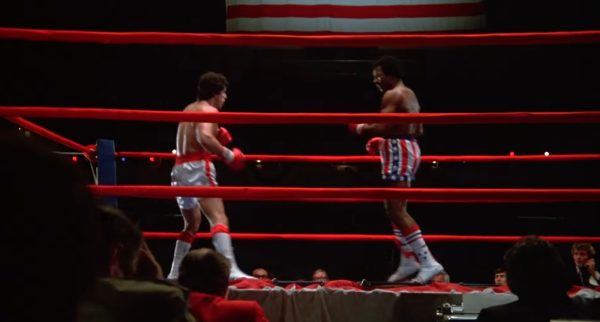
In an effort to make the boxing sequences in Rocky feel more authentic and stand apart from previous boxing films, director John G. Avildsen wanted to approach the fight choreography in a somewhat unorthodox manner. He initially worked closely with the two actors inside a boxing ring to map out their movements, but the results felt too rehearsed and lacked the intensity he was aiming for. Following the abrupt departure of stuntmen and fight choreographers Paul Stader and George P. Wilbur over creative differences, Avildsen challenged Stallone to develop the fight sequences himself. Taking the assignment to heart, Stallone returned the following day with a jaw-dropping 32-page-breakdown that detailed every punch, dodge and movement between Rocky Balboa and Apollo Creed. He and Weathers then spent several weeks rehearsing and memorizing the choreography, treating the entire bout almost like a carefully synchronized dance routine. Their insane dedication paid off, with the two actors accumulating more than 35 hours of rehearsal prior to commencement of filming. Stallone also made a personal lifestyle change during production, giving up cigarettes after realizing that smoking was leaving him breathless during the physically demanding scenes.
Talia Shire was fresh off the success of The Godfather Part II when she auditioned for Rocky
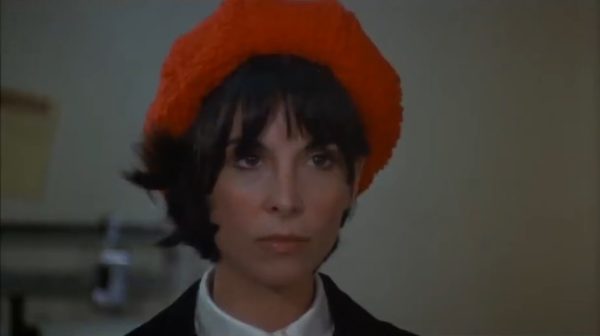
In a career spanning more than five decades actress Talia Shire has earned critical acclaim for portraying deeply resilient characters who succeed and thrive, amidst immense adversity. Despite being the sister of filmmaking legend Francis Ford Coppola, Shire intentionally built her own career path through sheer hard work, opting to independently engage in auditions to establish herself in the industry. Apart from her prominent role in The Godfather trilogy playing Connie Corleone, the troubled daughter of the Corleone crime family, Shire’s other memorable role came with the Rocky series where she played the titular boxer’s love interest Adrian Balboa. Across four movies in the franchise Shire reprised this role, transforming from introverted pet store clerk to the strong willed, emotional anchor to Rocky Balboa. Even though she was fresh off the success of Academy Award nomination for The Godfather Part II, Shire took her chance auditioning for Rocky because she wanted to step out from under the shadow of her famous brother and it certainly brought its own share of dividends.
Box-office success, rave reviews, awards success and the birth of an enduring franchise
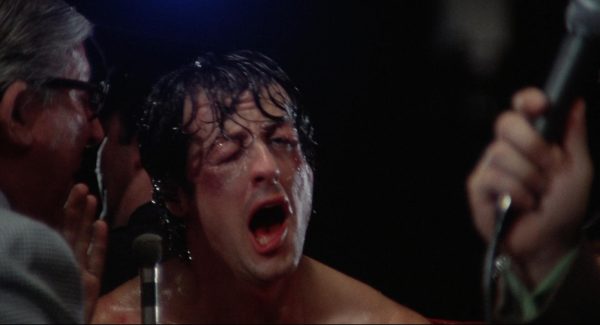
Made on a modest budget of $1.1 million Rocky went on to gross an astounding $255 million at the worldwide box-office by the conclusion of its theatrical run and went on to become the highest-grossing film of 1976 and the second-highest grossing film of 1977, behind Star Wars. As of writing, the film holds an approval rating of 93% on review aggregator website Rotten Tomatoes, based on 74 reviews and boasting an average rating of 8.4/10. The site’s critical consensus sums up the film in the following manner: “This story of a down-on-his-luck boxer is thoroughly predictable, but Sylvester Stallone’s script and stunning performance in the title role brush aside complaints.” At the time of its release the effort received glowing reviews with legendary film critic Roger Ebert of the Chicago Sun-Times giving it 4 out of 4 stars and describing Stallone as a “young Marlon Brando”. Come awards seasons the film received much success, going on to nab nine Academy Award nominations and winning three for, Best Picture, Best Director and Best Film Editing. The film’s lead star and writer Sylvester Stallone also went on to receive multiple Academy Award nominations in the categories of Best Actor and Best Original Screenplay. Apart from the Academy Awards, the movie also won the Best Motion Picture- Drama at that year’s Golden Globe Awards along with nominations in five other categories and won the Director Guild Award for best film of the year in 1976.
The resounding critical and commercial success of the original spawned an entire franchise centered around the titular boxing character which saw five sequels being produced from 1979 to 2006. A spin-off series featuring Michael B. Jordan, as the son of Apollo Creed, kicked-off with 2015’s Creed and have thus seen two sequels to it. Since its release the acclaimed sports drama has been recognized as one of the most influential underdog stories in cinema history. Because of this reason the effort has been featured in multiple “Top 100 Greatest Films of all time” lists compiled by the likes of American Film Institute, Total Film, Rolling Stone, The Hollywood Reporter, Empire, Esquire, Time Out, ESPN and Forbes. Sly Stallone’s inspiring portrayal of an ordinary boxer from Philly achieving greatness in the sports arena resonated with audiences worldwide, establishing a timeless narrative about the resilient nature of the human spirit. Nearly five decades later Rocky remains a cultural touchstone whose influence has never waned and continues to endure, inspiring generations of cinema goers and sports lovers alike.
What are your thoughts on Rocky? Let us know on our socials @FlickeringMyth…
Hasitha Fernando is a part-time medical practitioner and full-time cinephile. Follow him on Twitter via @DoctorCinephile for regular updates on the world of entertainment.