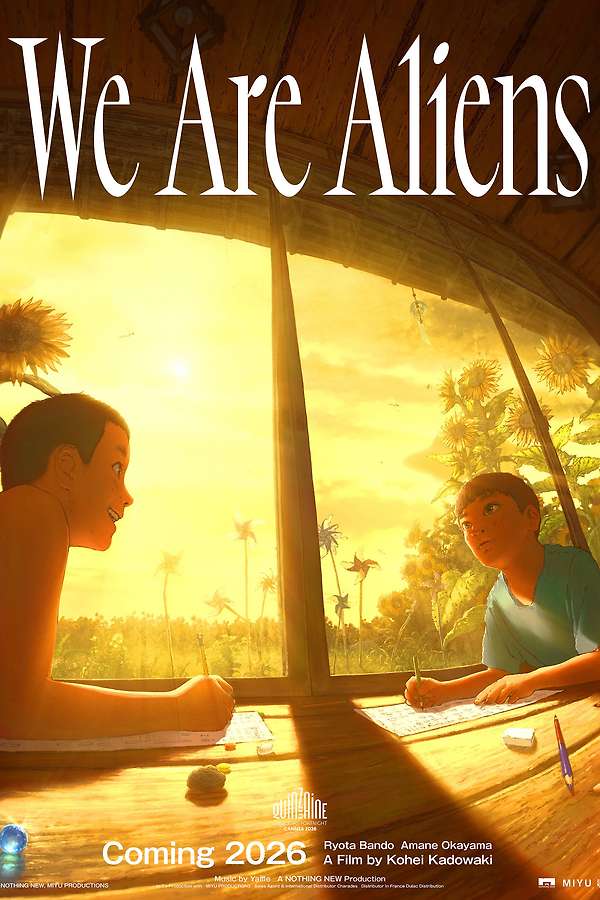
We Are Aliens, 2026.
Directed by Kohei Kadowaki.
Starring Ryôta Bandô, Harumi Edo, Yûto Maki, Kemuri Matsui, Tasuku Nakagome, Amane Okayama, Reika Oozeki, Gaku Sano, Arisa Sasaki and Ten Yamasaki.
SYNOPSIS:
Follows two boys in a small Japanese town whose friendship is altered by an act of betrayal that continues to shape their lives into adulthood.
Childhood friendships are a deeply complex and nostalgic reflection of what friendship means. The people we are when we are young, naïve, and impressionable are rarely the same people we become as adults. However, that complexity never justifies how we treat our peers while growing up, and just because we have forgotten our actions does not mean those affected by them have. We Are Aliens, the debut feature from Kohei Kadowaki, explores how a fractured childhood friendship shapes the lives of two people and leads to seismic consequences as they grow into adulthood. Beautifully animated and superbly performed, this animated feature is a masterpiece.
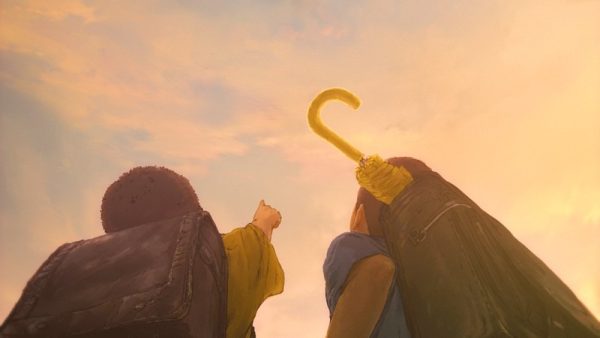
Implementing a variation of the Rashomon effect, rather than portraying events through a lens of unreliability, the film presents them from two truthful perspectives. This allows us to see how each character arrived at the same moment. Think of something like Koreeda’s Monster or Vantage Point. Utilising this approach does not make you question what is unfolding; instead, it highlights the impact of one’s actions. A seemingly small incident, in which Gyotaro breaks Tsubasa’s umbrella, leads to very different reactions from the pair. Tsubasa begins to spiral, believing the rumours that Gyotaro may be an alien. Meanwhile, Gyotaro is consumed by regret and desperately wants to apologise in a meaningful way.

The first half of the film is told solely from Tsubasa’s perspective. Showing how the friendship gradually deteriorates as he makes new friends and begins to see Gyotaro as an alien, a burden, and a reminder of a friendship he is trying to leave behind. Once the two reunite as adults, the film finally reveals its title card and transports us back to the beginning, revisiting events from Gyotaro’s perspective. Through his eyes, we see how Tsubasa’s actions contribute to his growing isolation, slowly becoming the troublesome kid who is blamed for everything that goes wrong. Even though it’s revealed that he is more likely a victim of bullying who is routinely scapegoated for the actions of the “cool” kids.
The two perspectives create a narrative that is deeply upsetting and, at times, cruel, showing the harsh reality of what a broken friendship can lead to. Yet, at the same time, the film never presents the situation as a one-sided issue. In a way, Tsubasa and Gyotaro are both aliens to reality. The former fails to realise that his actions can have severe consequences, while the latter remains trapped in the past, believing his life would have been different had his childhood not been stolen from him. It all culminates in one of the most beautiful and heartbreaking endings of the year.
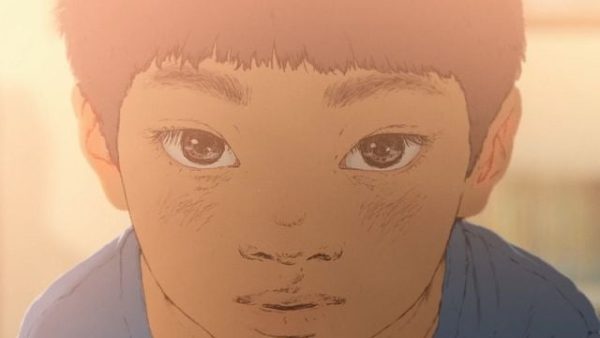
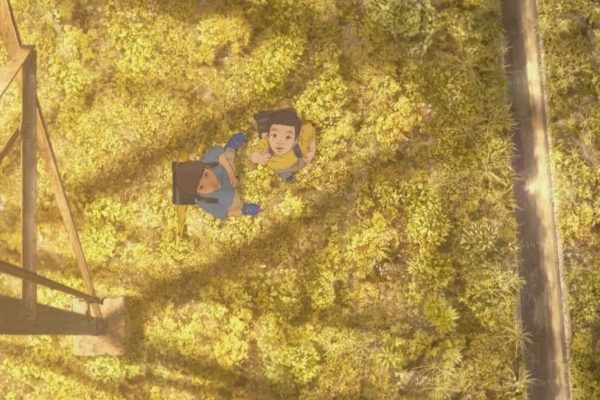
None of this would have worked as effectively without the animation. A Japanese-French co-production, We Are Aliens utilises rotoscoping, the same technique that Cherry and Virgin, another fantastic anime, also used. The film’s animation style shifts alongside its tone, initially capturing the joy and innocence of childhood before gradually embracing harsher and more defined line work as cruelty seeps into the narrative. The rough line work lends the film a raw, unsettling texture, culminating in a powerful scene where Gyotaro rides his bike and sees red. The world bends and warps around his rage, with the extremely harsh line work and crimson glow consuming the frame, resulting in a scene that is hypnotic, haunting, and beautiful.
Yet, the shot that stood out to me early on comes near the beginning, when we see a road reflected in someone’s eye as they sit behind the wheel of a car. It establishes from the outset that this is a film in which every aspect of the frame is utilised for storytelling, and that approach carries through to the very end. Every frame is gorgeous, yet not in the dreamlike, wallpaper-worthy sense that often defines visually striking animation. Instead, We Are Aliens uses its medium to convey its themes of fractured childhood, trauma and alienation with sheer perfection.
The only real issue I have with the film is that some of the line delivery could have been a bit punchier. Yet that does little to undermine how incredible the cast is. Ryôta Bandô and Yûto Maki deliver fantastic performances as the adult and younger versions of Tsubasa, drawing you deeply into the story of this fractured friendship. However, it is when the focus shifts to Gyotaro, portrayed by Amane Okayama and Tasuku Nakagome as the adult and younger versions, that the film truly comes alive. Through their performances, the film thrives as a haunting portrayal of trauma, resentment, and alienation.
We Are Aliens is a truly mesmerising and haunting masterpiece of animation, a film that left me shaken to my core as the credits rolled. No film has affected me this deeply in a very long time, and while it is far from an enjoyable watch, it is a necessary one. It captures its message with remarkable precision and emotional power, resulting in one of the year’s finest cinematic achievements and easily one of the best films of the year.
Flickering Myth Rating – Film: ★ ★ ★ ★ ★ / Movie: ★ ★ ★ ★ ★
Robert Ewing