Matthew Shepherd revisits Susanne Bier’s Serena starring Bradley Cooper and Jennifer Lawrence…
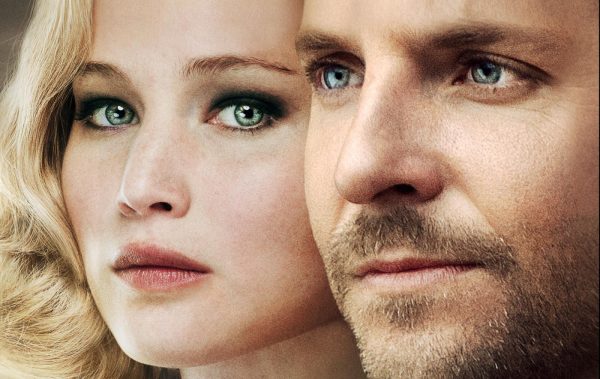
Bradley Cooper rarely talks about Serena. Jennifer Lawrence does not either. This felt odd until learning more about it, now it makes a lore more sense. In early 2012, the two of them filmed a Depression-era period drama in the Czech Republic directed by Oscar-winning Danish filmmaker Susanne Bier, based on a critically acclaimed novel by Ron Rash, for a budget of $25 to $30 million.
It was, on paper, exactly the kind of serious prestige film that serious actors make between franchise obligations to remind the industry they have range. Then Silver Linings Playbook came out. Then The Hunger Games sequel. Then American Hustle. By the time Serena finally reached audiences, Cooper and Lawrence had become two of the most bankable stars on the planet — and the film they had made together before any of that happened had been sitting in an editing suite for two years, quietly becoming one of the great film mysteries of that decade.
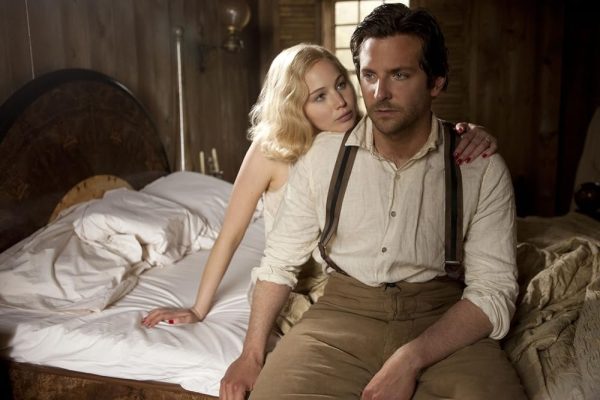
The premise is straightforward period drama. George Pemberton, played by Cooper, is an ambitious timber baron operating in the mountains of Depression-era North Carolina. He falls for and marries Serena Shaw, played by Lawrence — a fiercely independent woman with a tragic past who immediately proves herself the sharper business mind of the two. When Serena discovers she cannot have children, the marriage begins to fracture under the weight of her obsession with the business and George’s growing entanglement with a former lover who has borne him a son. It is a dark, literary story about power, ambition, and the specific violence of a marriage built on mutual ruthlessness. The source novel was well-regarded. The director had an Academy Award. The cast had chemistry that Silver Linings Playbook had already proven to audiences worldwide.
There was one thing nobody had anticipated though, and that was Silver Linings Playbook. Serena was filmed in early 2012, before either Cooper or Lawrence had broken into the first tier of Hollywood. Cooper was recognisable from The Hangover; Lawrence was known for Winter’s Bone and the first Hunger Games. Neither was yet the phenomenon they would become. By the time Bier had finished a first cut, Silver Linings Playbook had been released, Lawrence had won an Academy Award for it at twenty-two, and the film landscape around Serena had shifted entirely. The project that had been greenlit as a modest prestige drama was now carrying the weight of two of the industry’s most scrutinised careers.
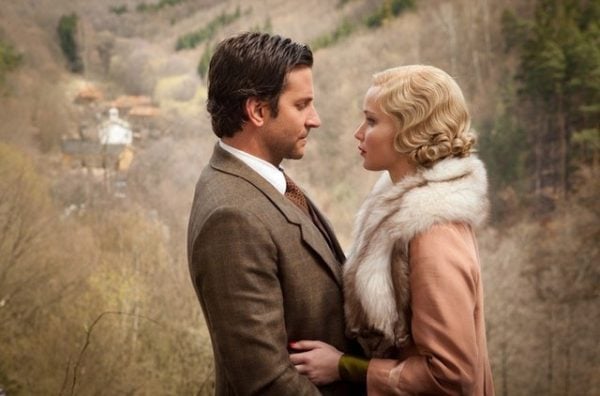
Bier had a reputation in film circles as a perfectionist, and the post-production process reflected it. She went through multiple cuts over an eighteen-month editing period, reportedly paralysed by the difficulty of arriving at a version she was satisfied with. Insiders maintained the delay was purely about Bier’s perfectionism rather than any fundamental problem with the footage, though there was also a growing sense that the film could not possibly live up to what Silver Linings Playbook had made audiences expect from a Cooper and Lawrence pairing. CAA screened the finished film for studio buyers and several made offers, but none were substantial enough to justify a wide release. No American distributor bit.
The film was eventually acquired by Magnolia Pictures for the United States and StudioCanal for the UK and Europe — modest specialty distributors rather than the studio machinery a film of this profile might reasonably have expected. It premiered at the BFI London Film Festival in October 2014, more than two years after filming had wrapped. At the premiere there was an almost eerie sense that both Lawrence and Cooper were contractually obligated to attend — that they had already moved on entirely and were returning to something they had left behind long ago.
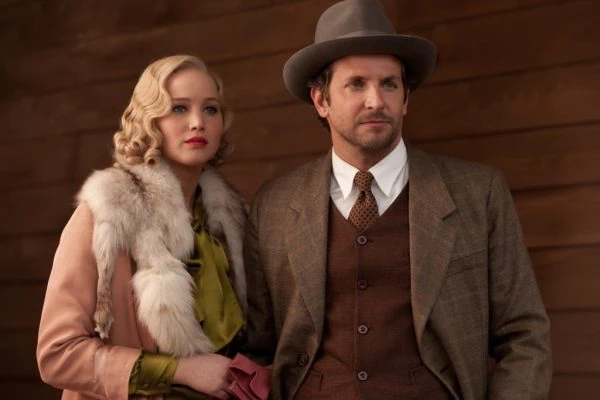
The numbers that followed were among the most brutal in recent prestige film history. In the UK, the film opened across 185 theatres to just £153,000, averaging £827 per screen, and closed its entire run with under £321,000. The American release was arguably worse. Serena opened in 59 theatres to $100,090, lost 27 of those theatres in its second weekend, declined 76% and closed with $176,391 in total. In a final indignity, it was made available on iTunes and Google Play for rental three weeks before it reached American theatres — an effective admission that the theatrical release was a formality rather than a genuine commercial play.
The critical reception did nothing to complicate this picture. Reviews described Lawrence as miscast — too young and luminous for a role that required weathered severity — and the script as too scattered to honour what made the novel work. The consensus was not that Serena was a disaster in the Collateral Beauty mould, a film that had actively deceived its audience. It was something quieter and more deflating: a competent, handsome film that had simply been overtaken by events outside anyone’s control.
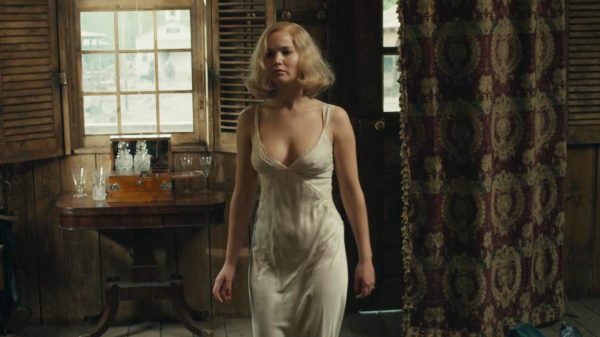
What makes Serena this series’ most melancholy entry is that nobody made a catastrophic decision. Bier was not wrong to take her time. Cooper and Lawrence were not wrong to move on to the projects that made them stars. The distributors who passed were not wrong to calculate that the audience for this film had evaporated. The tragedy, if it can be called that, is purely one of timing. A film shot six months later, or released six months earlier, might have found the window it needed. Instead it arrived two years too late, carrying the weight of careers it had helped create without receiving any of the credit.
Can you remember Serena? Let us know on our social channels @FlickeringMyth, and check out our previous articles in this series here…
Matthew Shepherd