Joseph Jenkinson on why wrestling movies provide some of cinemas most emotional drama…
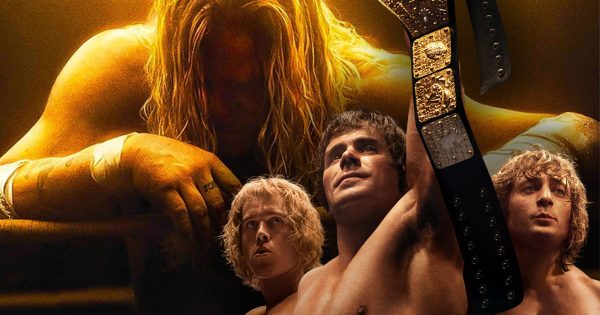
Sports dramas have long occupied a unique place in cinema. Boxing gave us Rocky, baseball produced Moneyball and Field of Dreams, while motorsport has delivered everything from Rush to Ford v Ferrari. Yet one sporting subgenre remains strangely overlooked despite producing some of the most emotionally devastating films of the last two decades: professional wrestling.
For decades, professional wrestling has battled a reputation that no other major sport has had to endure. Dismissed as ‘fake’ because its outcomes are predetermined, it has often been viewed as somehow less worthy than boxing, football or mixed martial arts. Yet that criticism misunderstands what professional wrestling actually is. Wrestling was never intended to be a competitive sport in the conventional sense. It is live theatre disguised as sport: a form of physical storytelling where athleticism, character and drama are inseparable.
From Darren Aronofsky’s The Wrestler to Sean Durkin’s The Iron Claw, the greatest wrestling films aren’t really about wrestling at all. They’re about what happens when the performance becomes impossible to leave behind.
Fake Fighting. Real Drama.
Former WWE producer TJ Wilson argues that wrestling succeeds for the same reasons as any great film or television series. “A good story in wrestling needs to have a clear beginning, middle, and end,” he explains. “It needs to have characters that the audience can invest in […] characters with their own motivations, desires, and flaws. And it needs to have a clear goal or conflict that drives the story forward.”
That fusion of sport and performance makes wrestling uniquely suited to cinema. Like actors, wrestlers inhabit carefully constructed personas, asking audiences to suspend their disbelief in pursuit of an emotional truth. Success depends not only on physical ability but on convincing millions that these larger-than-life characters matter. The applause eventually fades, new stars emerge, and performers are left confronting the uncomfortable question of who they are once the spotlight disappears.
Perhaps that is why wrestling films so often transcend the ring itself. Rather than celebrating championships or victories, they use wrestling as a lens through which to examine identity, family, sacrifice, and the human need to be remembered. The squared circle becomes a stage, and the matches become secondary to the people performing them.
The Wrestler (2008): The Man Who Couldn’t Stop Performing
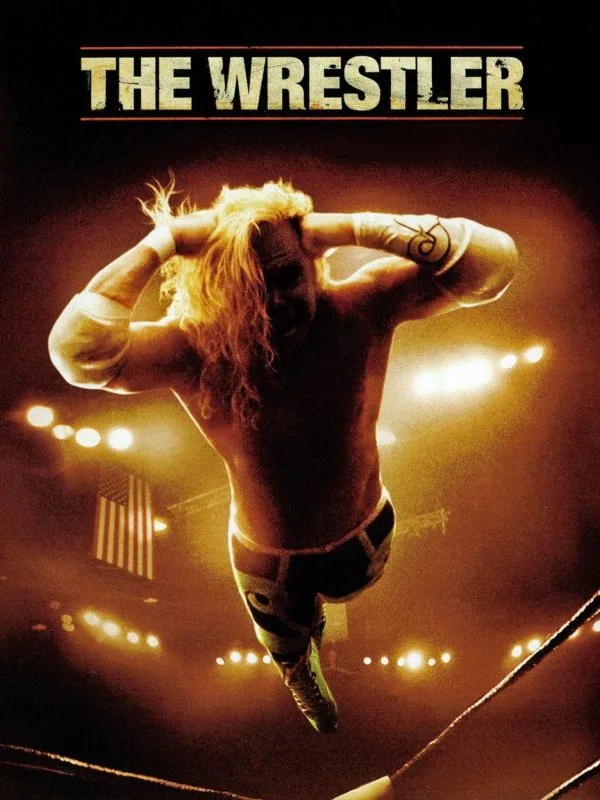
Amid his gallery of characters consumed by obsession and self-destruction, Darren Aronofsky’s portrait of fading professional wrestling icon Randy ‘The Ram’ Robinson (Mickey Rourke) is less a sports drama than a quiet tragedy about identity, purpose and the cost of living for an audience.
Abandoning the stylised surrealism of Requiem for a Dream and The Fountain, Aronofsky adopts an almost documentary-like realism. Handheld cameras shadow Randy through cramped corridors and into the ring, placing viewers uncomfortably close to every bruise and laboured breath. The result is a film that feels less performed than observed.
Although fictional, The Wrestler possesses an almost unsettling authenticity. Aronofsky spent considerable time researching the wrestling industry, capturing not only its physical demands but also its financial insecurity, addiction and fleeting fame. Long after the applause fades, many wrestlers continue paying the price. It is a reality that has touched figures from Ric Flair to Jake Roberts and, more recently, even stars such as Dave Bautista have spoken candidly about the physical toll the profession leaves behind.
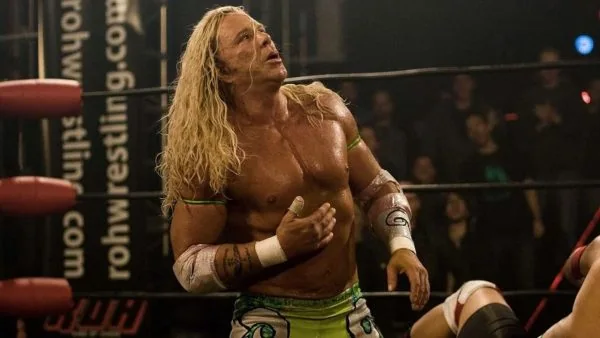
Yet The Wrestler is ultimately about far more than professional wrestling. Aronofsky treats the sport with a mixture of brutal honesty and genuine affection, presenting it as both performance and refuge. Randy is never chasing another championship belt; he is chasing the only version of himself that still feels meaningful. Wrestling becomes a metaphor for the masks people wear long after they cease to protect them.
Like the addictions explored in Requiem for a Dream, the ring offers Randy an escape from reality, but only by consuming the person beneath the persona. Robin Ramzinski gradually disappears until only ‘The Ram’ remains, a distinction crystallised in one heartbreaking moment: “Oh Robin… it’s Randy.” The performances as a superhero in the ring consume Randy, to the point where he is willing to risk his life to perform in a legacy match shown at the end.
Just before his ring walk, Cassidy shows up to give us what feels like the cliché movie moment where she drops her walls and offers to connect with him. His rejection sums up his arc perfectly: “The only place I get hurt is out there,” he says, referencing the real world.
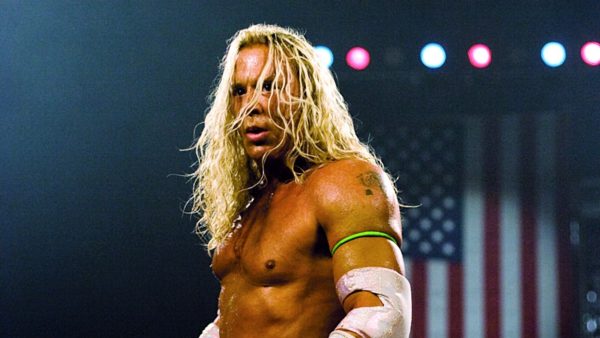
Yet even at the end, the film never glamourises Randy’s suicide mission, staying true to how painful the art of a wrestling performer and committing to that above all else can be. As the match reaches its climax, Randy seems to be having another heart attack. He sucks it up and climbs the top ropes to do his finisher move. But you know Randy is potentially about to die from a heart attack. He knows it too, but the crowd cheering for him doesn’t; once again he’s alone, even in a moment that should make him happy. His tears before his final leap are either a faint satisfaction that he is to meet his end in the comfort of the limelight or the bleak reality that even in his escapism, he has no satisfaction.
That is what makes the film’s ending so extraordinary. Most sports dramas build towards redemption. The underdog wins the title, earns respect or finds peace beyond competition. The Wrestler rejects every one of those conventions. Randy’s final leap from the top rope is not a triumphant comeback but an act of acceptance. He understands that the ring is destroying him, yet it is also the only place where he still knows who he is. Aronofsky leaves us not with victory, but with one of cinema’s most heartbreaking conclusions: sometimes the thing that gives life meaning is the very thing that ultimately destroys us.
The Iron Claw (2023): Fighting for a Father’s Approval
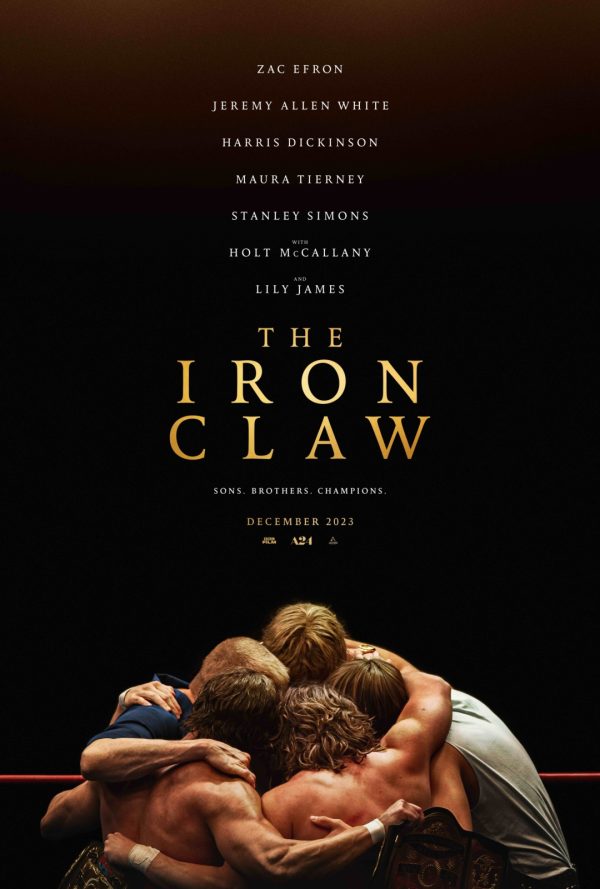
Unlike The Wrestler, which focuses on a man unable to let go of the spotlight, Sean Durkin’s The Iron Claw examines what happens when the performance begins long before anyone steps into the ring. Wrestling is no longer simply a profession; it becomes the language through which love is earned, grief is suppressed, and masculinity is measured.
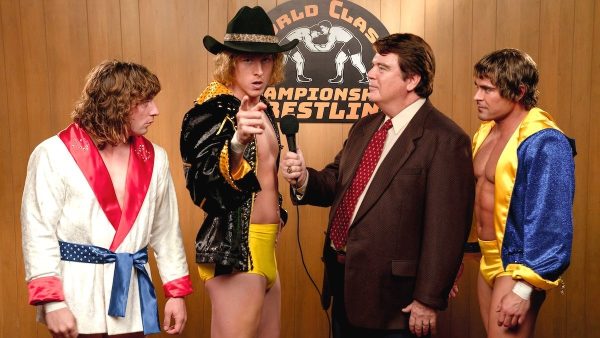
Chronicling the rise and devastating downfall of the Von Erich family through Kevin (Zac Efron), David (Harris Dickinson), Kerry (Jeremy Allen White) and Mike (Stanley Simons), the film explores one of professional wrestling’s most tragic dynasties. What initially appears to be an inspiring story of four brothers chasing greatness gradually reveals itself to be something far darker: a family trapped beneath the impossible weight of inherited expectation.
Like The Wrestler, the excitement of the matches slowly gives way to the emotional cost of constantly performing. Each victory feels increasingly hollow because the prize is truly their father’s approval over a world championship belt. Every triumph merely raises the standard for the next.
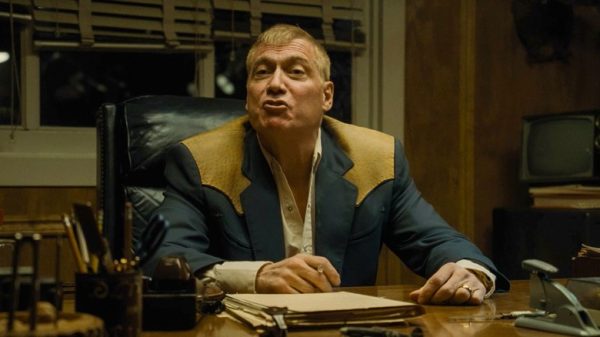
That burden originates with Fritz Von Erich (Holt McCallany), whose own failure to capture the NWA World Heavyweight Championship becomes an obsession he passes on to his sons. His wrestling career may have ended, but his ambition never did and subsequently is buried within each of his children. Their dreams cease to be their own; they become vessels through which Fritz attempts to rewrite his own history.
Durkin captures this emotional manipulation with devastating restraint. Fritz openly ranks his sons according to their performances, reminding them that affection itself is conditional. After David’s sudden death, he instructs the family to remove their sunglasses, not so they may grieve together, but so they can appear strong. Moments later, his attention turns almost immediately to who will replace David in the forthcoming title match against Ric Flair. Even family dinners revolve around business talks, future opponents and career decisions. Wrestling consumes every conversation until there is little room left for the brothers simply to exist as sons.
This is where The Iron Claw transcends the conventions of the sports drama. It is not fundamentally about wrestling any more than The Wrestler is about championship belts. Rather, it explores the devastating consequences of tying love to achievement and identity to performance. The ring merely becomes the stage upon which those emotional wounds are exposed.
Why Wrestling Creates Cinema’s Greatest Tragedies
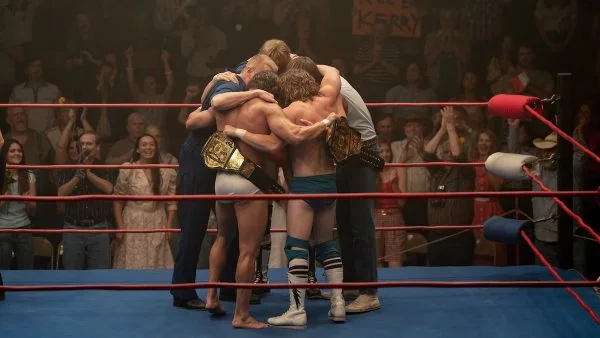
Wrestling as a sport has always asked audiences to believe in stories they know are fictional because the emotions behind them are real. Films based on the industry endure because they understand something fundamental about the profession they portray. Beneath the costumes, entrance music and scripted matches are people constantly reinventing themselves, chasing applause that inevitably fades with time.
The ring simply gives filmmakers an extraordinary setting in which to explore universal themes of identity, family, sacrifice and purpose. Thus, the reason why the greatest wrestling movies aren’t really about wrestling at all; rather, they’re about what happens when the performance becomes your entire life.
Joseph Jenkinson