With Halloween upon us, Casey Chong presents eight great horror movies based on comic books and graphic novels…
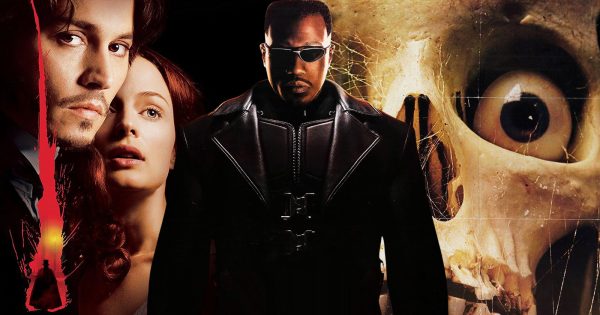
Horror-themed comic books and graphic novels have their way from pages to screens, allowing filmmakers to explore the source materials through visual storytelling. From the darkly ironic Tales from the Crypt’s five-segment anthology film, to the gothic rise-from-the-dead revenge story of The Crow, the bleak Victorian-era Jack the Ripper murder mystery From Hell, and the creepy urban legend and cosmic nightmare of The Empty Man, here are eight great horror movies based on comic books and graphic novels…
Tales from the Crypt (1972)
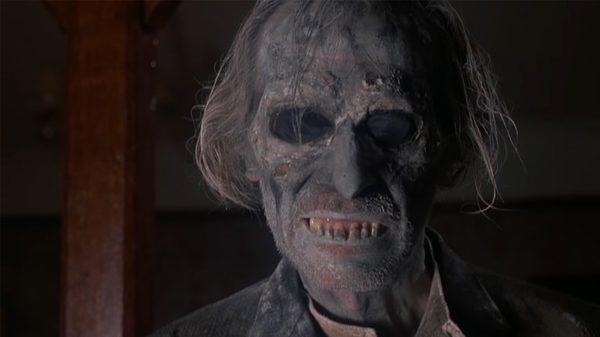
Before the HBO 1989-96 series and its cinematic spin-offs, including Demon Knight, Bordello of Blood, and the forgotten Ritual, director Freddie Francis oversaw the atmospheric Tales from the Crypt anthology film in the early ‘70s. The story interweaves five segments connecting five strangers who get lost in a catacomb and stumble upon a crypt, where a mysterious robed Crypt Keeper (Ralph Richardson) awaits them. From here, the Crypt Keeper reveals how they each die from what they have done, beginning with the …And All Through the House segment detailing Joanne’s (Joan Collins) murder of her husband for insurance money on Christmas Eve before encountering an escaped mental patient dressed as Santa.
The rest of the segments each highlight the horrors of pitch-black cynicism, from Carl’s (Ian Hendry) predominant POV-style aftermath of a car accident leading to a shocking truth in Reflection of Death, to Arthur’s (Peter Cushing) rise-from-the-grave vengeance against his snobbish neighbor in Poetic Justice, and The Monkey’s Paw-inspired Wish You Were Here about a desperate wife’s (Barbara Murray) wishes for bringing her dead husband back to life turning into a cruel twist of fate. The anthology film concludes with a penny-pinching director of a home for the blind (Nigel Patrick), whose callousness triggers the residents to stage a mean-spirited retaliation in Blind Alleys, before wrapping up with a brutally ironic reveal surrounding the five strangers.
The Crow (1994)
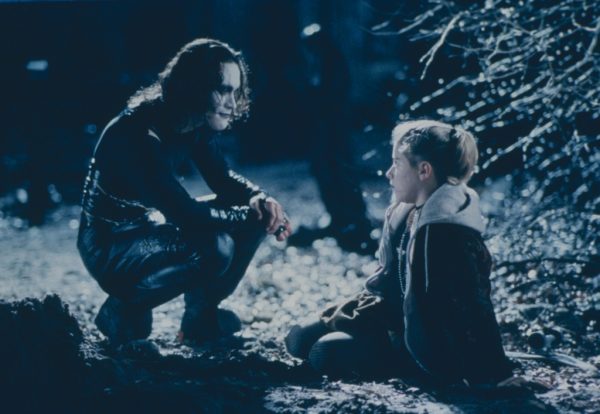
Alex Proyas’ sophomore directorial feature after his 1989 indie sci-fi Spirits of the Air, Gremlins of the Clouds, establishes a distinctly dark gothic aesthetic in The Crow and turns James O’Barr’s 1989 comic book series into an atmospheric revenge story rooted in supernatural folklore. Led by Brandon Lee in his tragically final role following an accidental prop gun mishap, the late martial arts actor displays a mix of unhinged personality and quiet melancholy as Eric Draven, a rock musician who returns from the dead after he and his beloved fiancée, Shelly (Sofia Shinas), are brutally murdered by T-Bird’s (David Patrick Kelly) street gang.
Despite its supernatural underpinning, Proyas grounds his movie with the otherwise resurrected Eric not an indestructible antihero, making his quest for vengeance feel more visceral. Even the action is less stylized than what we have grown accustomed to from Brandon Lee’s slickly choreographed earlier action movies, namely Showdown in Little Tokyo and Rapid Fire, favoring a gritty approach that fits well with his rock-musician character rather than transforming him into a martial arts expert.
Blade (1998)

After proving his directorial flair in 1994 indie sci-fi horror Death Machine, Stephen Norrington’s next feature, Blade, continues to showcase his knack for genre mash-up – part grisly vampire horror and part stylized martial arts action thriller, with Wesley Snipes’ iconic titular Daywalker anchoring his role with a mix of steely demeanor and deadpan humor. His impressive martial arts background comes in handy here, demonstrating his agility in hand-to-hand combat and sword-fighting skills as we see his character dispatch his enemies in blood-soaked, R-rated mayhem based on Marvel Comics by Marv Wolfman and Gene Colan.
Norrington doesn’t shy away from visceral gore and violence, despite the movie’s inconsistent CGI, most notably in the third-act showdown between Blade and Stephen Dorff’s Deacon Frost. The first movie went on to become a surprise hit, spawning two sequels (Blade II and Blade: Trinity), and famously revitalized the once-erratic superhero genre to a whole new level.
Hellboy (2004)
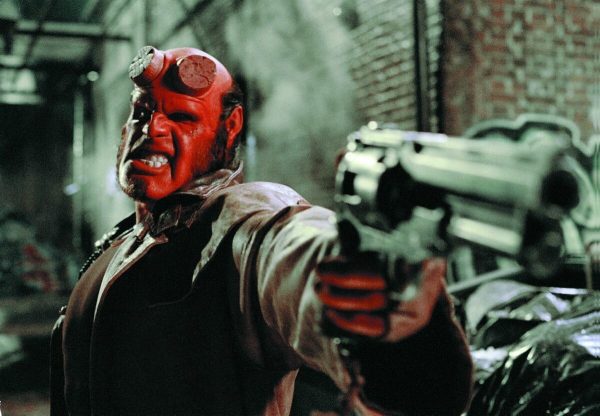
Hellboy has been rebooted twice, first with Neil Marshall’s underwhelming 2019 version starring David Harbour, and later Brian Taylor’s low-budget 2024 take, featuring Jake Kesy in the title role. But none of the reboots can hold a candle to Guillermo del Toro’s 2004 original, still the gold standard of a Hellboy movie despite being far from a faithful adaptation of Mike Mignola’s comic book series. Still, del Toro’s version carries significant weight by embracing a pulpy blend of Lovecraftian and gothic horror and prioritizing practical effects over heavy CGI.
This includes Ron Perlman’s signature portrayal of the wisecracking and angst-ridden Hellboy, whose red-skinned, demon-like humanoid appearance is an incredible result of full-body makeup and extensive prosthetics. Del Toro doesn’t dumb down the plot in favor of a sanitized Hollywood spectacle, evident in his rich storytelling nuance, blending an emotionally resonant coming-of-age story surrounding Hellboy’s arc in search of identity with a gritty procedural and end-of-the-world stakes. The success of Hellboy led to a higher-budget but surprisingly underperformed 2008 sequel, which again showcases del Toro’s unique moviemaking magic in blending practical-heavy creature effects, empathetic characters, and offbeat humor.
Constantine (2005)
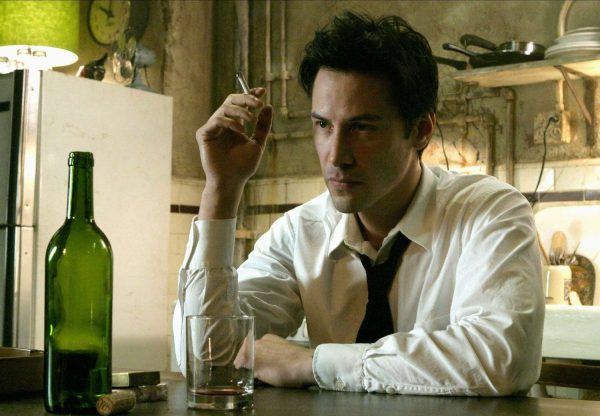
Years before Francis Lawrence dedicated most of his filmography to leading The Hunger Games franchise, he already proved his impressive directorial flair in Constantine, which also marked his feature-length debut. Given his extensive music video background, Lawrence and cinematographer Philippe Rousselot framed a distinct detective noir-style visual and atmosphere, even vividly capturing the hellish vision of the post-apocalyptic Los Angeles wasteland at one point in the movie. At the heart of Constantine is Keanu Reeves, who may lack the DC/Vertigo’s Hellblazer comic-accurate appearance of a spiky platinum-blonde hairstyle, a beige trench coat, and even a British accent, trading for a dark-haired look with a matching black-and-white suit and tie.
And yet, his iteration of the iconic occult detective stands on its own – a brooding and cynical chain-smoking antihero with a mix of deadpan wit and grounded vulnerability. Initially dismissed by fans, his performance has since been reassessed as a cult-classic antihero archetype. Nearly a decade after the movie’s release, NBC released a more faithful version of Constantine starring Matt Ryan in the form of a television series, despite lasting only a single season; the Welsh actor’s eponymous character continues to live on in the Arrowverse franchise.
30 Days of Night (2007)

Transitioning from the award-winning indie psychological thriller Hard Candy to a gritty survival horror made on a bigger budget, David Slade’s adaptation of Steve Niles and Ben Templesmith’s 30 Days of Night comic book miniseries boasts a high-concept premise: A group of vampires, led by Marlow (Danny Huston), turns a remote Alaskan town into a bloody flesh-hunting ground during a titular polar night. With no outside communication or backup, the human survivors – among them are Sheriff Eben (Josh Hartnett) and his wife Stella (Melissa George) – are desperately looking for a way to survive the treacherous month of darkness.
The vampires in 30 Days of Night are frighteningly animalistic, and Slade reflects the nature of their vicious threat with uncompromisingly gritty violence that leans hard on the R-rating. His music video background is equally put to good use, evidently in the movie’s bleak visual aesthetic that contrasts well with the vividly graphic display of blood and its snowbound setting. 30 Days of Night did well at the box office, which went on to spawn a pair of TV miniseries and a direct 2010 sequel despite the latter’s secondary protagonist, Stella, from the first movie being recast with Kiele Sanchez.
From Hell (2001)
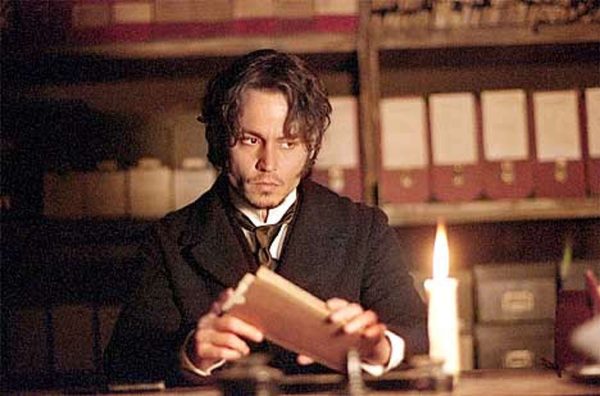
The Hughes Brothers – Albert and Allen – took a lot of creative liberties by transforming Alan Moore and Eddie Campbell’s titular graphic novel’s psychogeography into a darkly atmospheric whodunit mystery surrounding the identity of Jack the Ripper. From Hell also shifted the graphic novel’s middle-aged Inspector Frederick Abberline to a young, opium-addicted, psychic-like big-screen iteration, played by Johnny Depp.
Still, The Hughes Brothers manage to compensate for the lack of faithfulness to the source material with their grim, stylized visual aesthetic, turning 1888 Victorian-era Whitechapel into a ghetto-style inner-city slum. This includes everything from the muddy streets to pitch-black alleyways and shadowy corners soaked in an omnipresent, dread-inducing atmosphere throughout the movie. Given the co-directors’ prior work in the 1990s on Menace II Society and Dead Presidents, they embrace the R-rating for its matter-of-fact, clinical violence seen in Jack the Ripper’s surgical approach to mutilating women on the streets.
The Empty Man (2020)
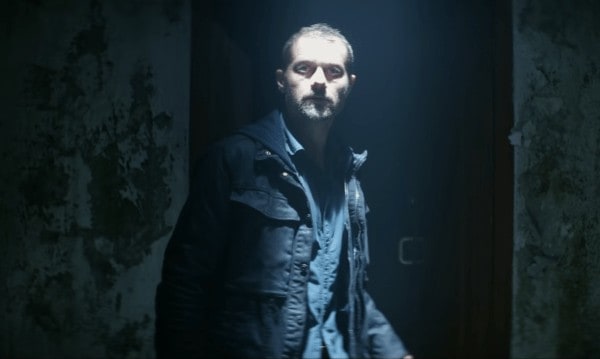
Based on Cullen Bunn’s comic book series of the same name, David Prior’s feature-length directorial debut showcases his flair for slow-burn atmospheric horror, beginning with the elaborate cold-open prologue: Four friends on a mountain hiking trip at Ura Valley in Bhutan, which ends with one of them plunging into a crevice following an attempt to trace the echo of a mysterious whistling sound. What follows is a gradual build-up of oppressive dread, from the discovery of a humanoid skeleton to deep paranoia in an abandoned wooden house during a raging blizzard, and a brief encounter with a formidable robe-wearing creature, before wrapping up in a disturbingly morbid end.
The prologue itself sets the tone for the rest of The Empty Man, focusing on James Badge Dale’s subtle turn as a grieving ex-detective investigating his widowed neighbor’s missing daughter. Prior structures the first half as a procedural-style psychological mystery, then shifts into a stark cosmic-horror tone to reflect the protagonist’s increasingly warped sense of reality, culminating in a mind-bending twist that catches you off guard.
What are your favourite horror movies based on comics and graphic novels? Let us know on our socials @FlickeringMyth…
Casey Chong