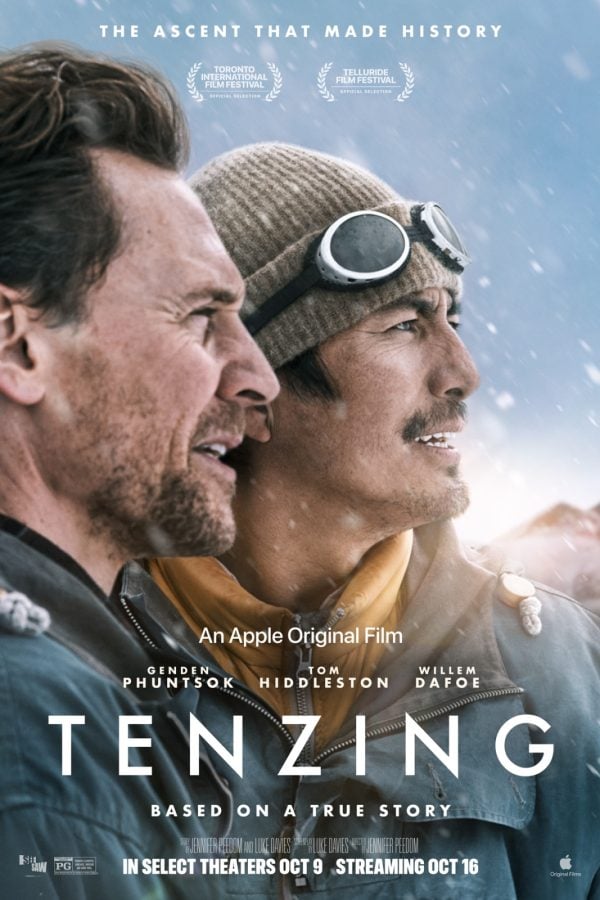
Tenzing, 2026.
Directed by Jennifer Peedom.
Starring Genden Phuntsok, Tom Hiddleston, Willem Dafoe, Caitríona Balfe, Thinley Lhamo, Johnny Flynn, Tenzin Dalha, Tenzin Jigmey, Lobsang Tenzin Meindrukbhuk, and Dhondup Tsering.
SYNOPSIS:
The untold and inspiring tale of one of the most important mountain climbers in history who, with Edmund Hillary, became the first person to reach the summit of Mount Everest.
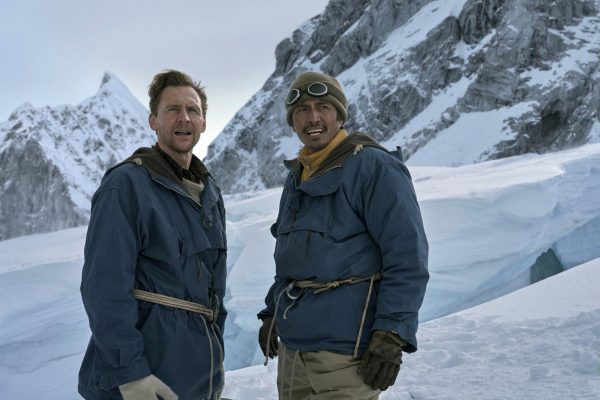
While reliably fascinating and often filled with breathtaking shots or documentary footage, material involving climbing Mount Everest or other life-risking ascents often carries an emotional barrier because it can feel like a reckless, unnecessary, adrenaline-driven choice. Directed by Jennifer Peedom, Tenzing (from a screenplay by Luke Davies and based in part on Ed Douglas’ nonfiction book Tenzing: Hero of Everest, a Biography of Tenzing Norgay), which follows the titular Indian-Nepalese Sherpa’s first successful climb to the summit of that mountain alongside a crew of glorified travel-guide locals essentially getting paid to assist various nations attempting this perilous adventure yearly, overcomes this by not only being about the nationalistic competition to be first (presented as something comparable to the space race) but also the varying perspectives and motives behind doing so. These dynamics are effective and refreshing, if not always deep.
For Tenzing Norgay, an outsider to Nepal, orphaned during a plague in the 1920s, Mount Everest (Chomolungma in Tibetan) has always elicited a spiritual reaction, as if climbers are poking and stabbing a divine sentient being with pickaxes as they ascend. Filled with wonder as a young boy (played here by Tenzin Dalha) by well-known British mountaineer George Mallory (Johnny Flynn) and his fancy westernized climbing gear, Tenzing decides then and there that, once he is big enough, he will ascend Mount Everest to the summit, although not with a colonial conquering mindset.

Flashing forward 30 or so years, Tenzing (now played as soft-spoken, soulful, and virtuous by Genden Phuntsok) is somewhat jaded about working with the British on the next attempt, but nevertheless encouraged by close friend and expedition organizer Jill Henderson (Caitríona Balfe) to stick it out and fight for the spot in the 1953 climb as head Sherpa, and also to be recognized as an actual member of the mountaineering team. Leading his own team of Sherpas under British expeditioner Colonel John Hunt (Willem Dafoe) and his men, they set out to once again learn from past failures (whether it be forced to descend due to running out of oxygen, monsoon season, or some other catastrophes that may or may not have included tragic death) and reach the summit.
It is also made clear that, at some point during those 30 years, Tenzing married and is now a widower with two young daughters, meaning that his quest to reach the summit goes beyond perceiving Mount Everest as a divine entity that he feels a kindred spirit to, and also one in the realm of Damien Chazelle’s First Man, perhaps either hoping to escape the reality of her death while also fulfilling a promise to her. Throughout the climb, aspects of Tenzing’s life story, such as his initial wooing of Dawa (Thinley Lhamo) despite her father being strictly against such a relationship, protesting his social status and class (apparently he hails from a different tribe and was born in Tibet, which also calls his legitimacy as a Sherpa into question at times), his attempts to learn English and prove himself worthy of the guiding position, and other tidbits that, again, come across as minor footnotes of interesting information rather than substance to chew on.
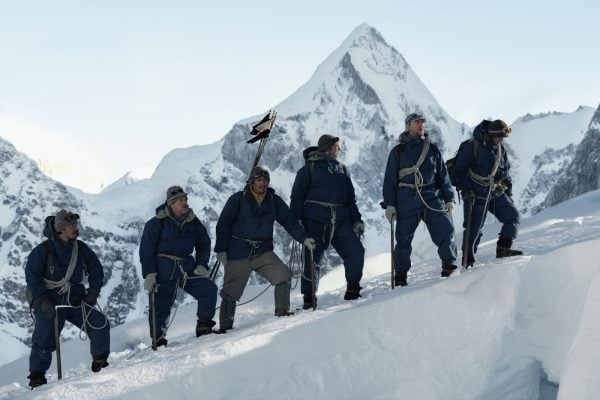
While those flashback interruptions are certainly appreciated and don’t detract from the momentum of the ascent, Tenzing, as a film, is at its best when nuanced about that motivating divide between Western and Eastern mindsets, with the former fixated on landmarks such as Mount Everest as a place to conquer and claim as their own, versus something unexplainable and almost religiously divine. The latter perspective has been explored time and time again; it’s much fresher and more engaging to see a story like this told from Tenzing’s eyes, or even his men, who are blunt about being here for the paycheck and actually worried that such financial opportunities will dry up once one of these Western nations successfully reaches the summit. Tenzing himself is somewhere in the middle, determined to be one of the esteemed mountaineers, although not for the same reasons, and not without turning his back on fellow Sherpas who are sometimes disrespected and treated as subhuman (such as being told to sleep in a barn before the expedition begins).
Along the way, Tenzing develops a bond with Kiwi mountaineer Edmund Hillary (Tom Hiddleston), also occasionally othered by his peers, as they warm up to one another (no pun intended) over George Mallory, whom the latter idolized as a young boy. It’s an element of this narrative to appreciate, but it also feels surface-level, and like climbing Mount Everest itself, another aspect here that could fall apart the more one contemplates it and looks for something deeper.
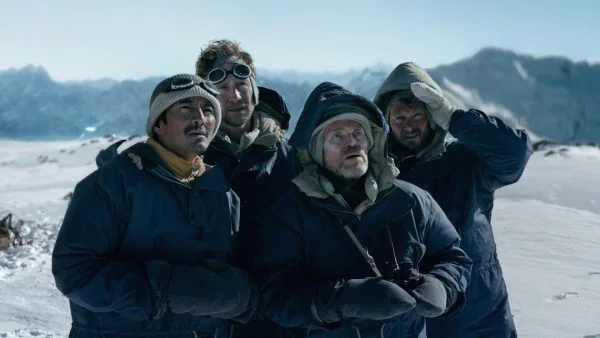
As for the climb, it certainly looks dangerous and is shot well, although one never truly senses or feels the sheer brutality of the elements. Given the PG rating and more focus on Western and Eastern philosophies, this could be a conscious creative choice. Visually, one can’t help feeling mildly disappointed that it takes until near the climax for a sweeping, chest-tightening sight. At least it also puts the altitude and the antlike size of its climbers into stomach-dropping perspective. If nothing else, it always looks convincing compared to the usual fare streaming services put out (this one also looks to have a respectable degree of practical filmmaking). Tenzing offers both thrill-seeking highs and history, told from a unique perspective and driven by similarly fascinating, clashing forces, even if its narrative simplicity ultimately keeps it from reaching its peak.
Flickering Myth Rating – Film: ★ ★ ★ / Movie: ★ ★ ★
Robert Kojder