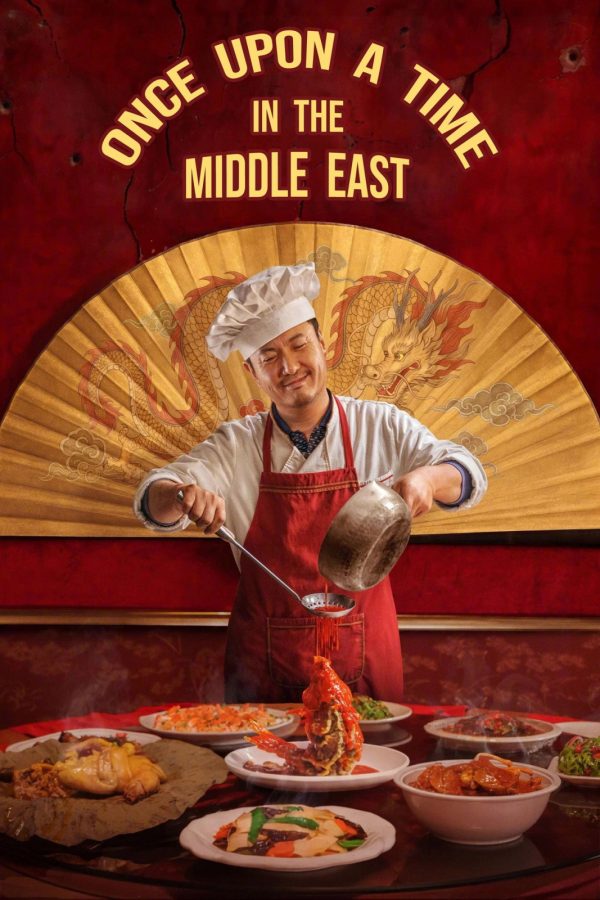
Once Upon a Time in the Middle East, 2026.
Directed by Wen Muye.
Starring Shen Teng, Jiang Qiming, Omar Sherif, Aarif Rahman, Sherif Sabry, Ahmed Salim, Faruk Muhammad, Russell Shealy, Naira Al-Qasim.
SYNOPSIS:
A chef who transforms a struggling restaurant into a refuge risks everything to protect his community when war engulfs the city.
The War on Terror is one of the defining conflicts of the 21st century and serves as a prime example of US dominance on the world stage. Seeking justice for the horrific attacks of September 11, 2001, George W. Bush launched a global campaign against terrorism, aiming to destroy al-Qaeda. This conflict engulfed vast parts of the Middle East and Central Asia, leaving destruction in its wake. The Chinese film Once Upon a Time in the Middle East, while never explicitly naming its setting, explores the War on Terror through the eyes of a Chinese chef.
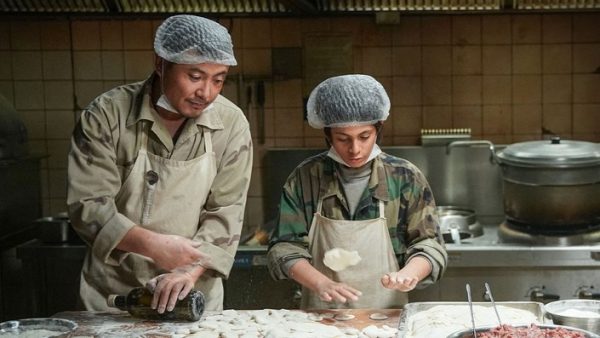
Xu Fu (Shen Teng) travels to the Middle East to find work and pay off his debts. There, he meets a fellow Chinese man, Ma Junsheng (Jiang Qiming), who works at a Chinese restaurant that is in desperate need of a chef. After impressing the restaurant’s owner, Zaid (Sherif Sabby), Xu is hired and helps bring the business renewed prosperity. However, against the backdrop of his success, tensions of a post-9/11 world continue to rise. News reports show the country’s government denying any involvement in the attacks. They also show US officials threatening military action against the country.
It may seem obvious that the film is building towards the conflict, given that it is based on real historical events and that the war forms a key part of the film’s marketing. Still, the way the conflict is portrayed is genuinely powerful. When the conflict begins, warm bursts of light shine through a window in Xu and Ma’s apartment while the rumbling steadily increases in intensity. Eventually, a bomb explodes, thrusting Xu and Ma fully into the chaos. The result is one of the most thrilling and tense sequences of the year.
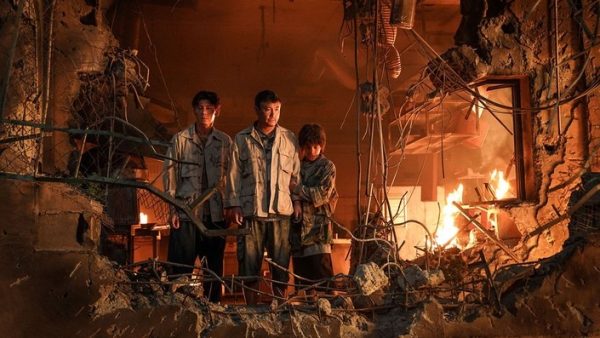
Shot primarily through long takes, many of the film’s war scenes are nothing short of jaw-dropping, finding the right balance between being shockingly violent and purposeful. It would be easy for the violence to feel needless, becoming an onslaught of suffering designed solely to depress the audience. War is horrific, and it takes real skill to portray that horror through a mature and realistic lens. The film does not rely on limbs flying left, right, and centre or other graphic displays of gore to convey the suffering experienced by both the people and the country itself.
This results in a film where the moments of violence enhance both the themes and the storytelling, which is crucial given the film’s perspective on the War on Terror. The film avoids taking a one-sided approach, never portraying either the United States or the unnamed country in which the story takes place as the sole enemy. Throughout the film, Xu argues with US soldiers that the children of this country are not born as terrorists, showing that actually, militia groups exploited vulnerable children for their own gain during the conflict.
The United States is not presented as innocent either. The bombing campaigns and deaths of countless civilians drove people down the dark path of extremism. The film suggests that this creates a perpetual cycle: forces arrive to combat terrorism, yet their actions contribute to the conditions that foster the very extremism they sought to eliminate.
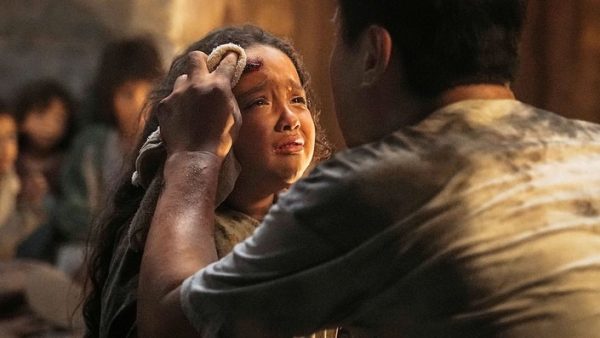
Seif (Omar Sharif) serves as the film’s primary vehicle for exploring these ideas. A young orphan living in the Middle East, he develops a close bond with Xu, becoming first his apprentice and eventually the sous chef. Various figures attempt to draw him towards extremism, insisting that he was born to be a warrior and should take up arms to fight for his country. Xu and Ma keep him on the right path, seeing the good in him and his potential as a great chef.
Ultimately, the film argues that people are not born terrorists; rather, it is their upbringing and circumstances that shape who they become. Even now we see this with the manosphere radicalising young men by convincing them that women are responsible for their loneliness and personal struggles. Extremist manipulation, no matter the subject, utilises a similar process of manipulation: convincing vulnerable individuals that their pain is the fault of a particular group and that violence and rage are the answer.
Food is a core aspect of the film. From the very beginning, when Xu cooks a feast before leaving, to the scenes where he, Ma, and Saif are forced to cook for the US military while imprisoned, food remains a constant presence throughout the story. What I love most about its utilisation is that, even in the darkest of times, the film shows that we can come together over a good meal. How food, no matter the borders, can be a place where love and kindness can bloom. Food can also bring different cultures together. This is highlighted during a wedding the trio cater, where Middle Eastern and Chinese dishes are blended into a single feast. It serves as a small beacon of hope for these characters despite the death and destruction occurring all around them.
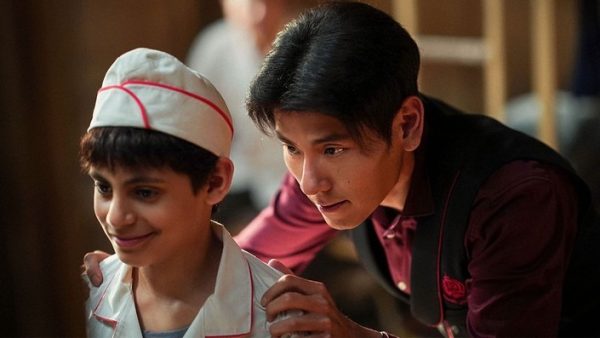
Writer and Director Wen Muye, along with fellow screenwriters Zhong Wei and Lang Qunli, have delivered a film that is truly nuanced and emotionally resonant. You will experience joy, horror and utter depression all in the span of a well-paced and thrilling 2-hour-and-20-minute runtime. I was in tears due to how powerful the scenes of violence were, and I was in tears because of how beautiful the film’s ending is. A rare achievement for a film.
None of this would have worked, though, if it were not for the core trio of Teng, Qiming, and Sharif. Teng delivers one of the finest performances of the year, a stark contrast to his more comedic leading role in the immaculate Pegasus 3. He shows tremendous range, effortlessly balancing humour with raw and powerful humanity. His character is a man trying to survive, but also one determined to protect the children, even if it puts his own life in danger. Qiming is equally incredible, especially during the film’s closing moments, but it is young Sharif who leaves the strongest impression. Particularly for a child actor, he delivers a remarkably layered and powerful performance that allows the film’s themes to resonate all the more deeply.
Once Upon a Time in the Middle East is an absolute masterpiece and an emotional odyssey through the complexities of the War on Terror, exploring the moral grey areas of a conflict that became a perpetual cycle of pain and suffering. The film also highlights the power of food and how it can set people on the right path and bring people together even in the darkest of times. It is an utterly incredible achievement and one of the very best films of the year.
Flickering Myth Rating – Film: ★ ★ ★ ★ ★ / Movie: ★ ★ ★ ★ ★
Robert Ewing
Originally published October 7, 2026. Updated October 8, 2026.