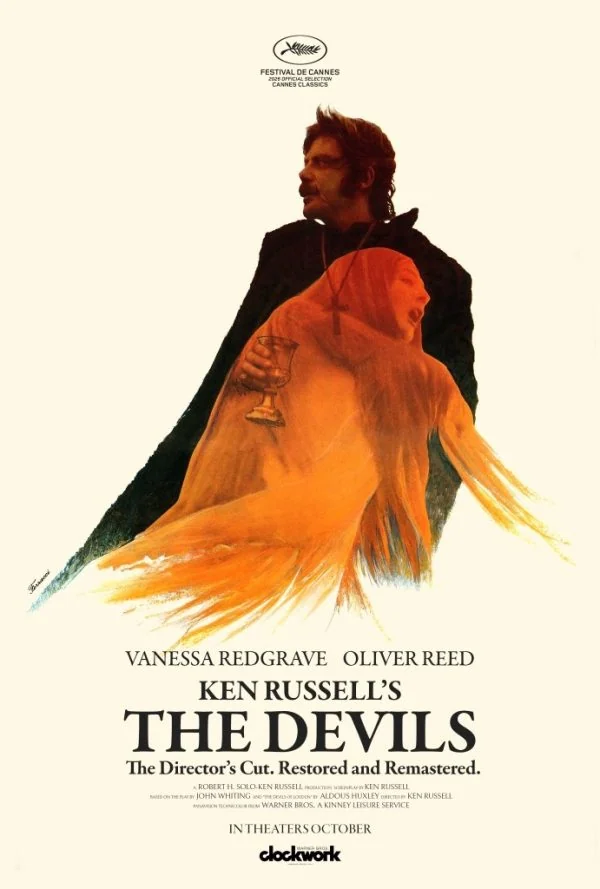
The Devils: The Director’s Cut, 1971.
Directed by Ken Russell
Starring Vanessa Redgrave, Oliver Reed, Dudley Sutton, Max Adrian, Gemma Jones, Murray Melvin, Michael Gothard, Georgina Hale, Christopher Logue, and Graham Armitage.
SYNOPSIS:
In 17th-century France, Father Urbain Grandier is a charismatic priest whose unorthodox views on sex and religion inspire a passionate following of nuns, including the sexually obsessed Sister Jeanne des Anges.
Exhumed from the Warner Bros. vaults by a group of passionate worshippers led by film-critic Mark Kermode, Ken Russell’s The Devils, with all its debauchery and tabloid-baiting blasphemous baggage, is resurrected in glorious 4K for a new congregation to experience.
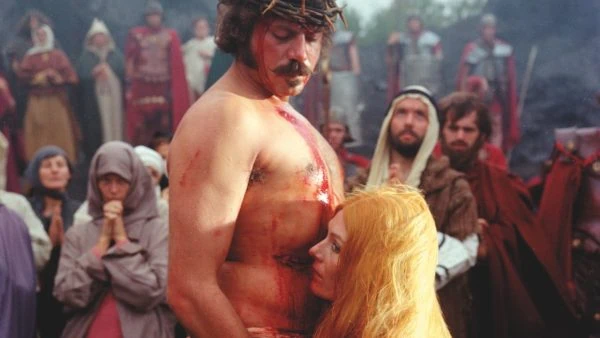
In 1971 The Devils fell foul to the British Board of Film Classification, who slapped an X-rating on the historical horror, removing key sequences, including the infamous “rape of Christ” scene, in which an order of hysterical nuns tear down a statute of Jesus and nakedley flail around on him. It flopped in America, critics tore it a new one, and the film vanished into obscurity, until now.
Born again into 2026, Russell’s film is due a contemporary reappraisal, all while acknowledging the tumultuous journey back to its true form, a process which grants it a kind of cinematic reverence. But is is worthy of your adoration and praise?
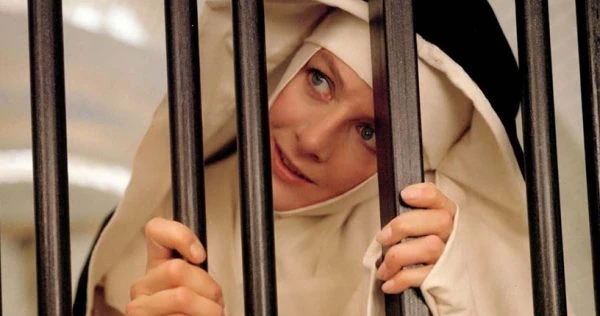
The first thing to note about The Devils is the contribution of Derek Jarman. It’s staggering to believe that this was the 28-year olds very first feature film job, because his set-design is incredible. Whether it’s the fortified walls of the town of Loudun, or the claustrophobic prison of Vanessa Redgrave’s puritanical nun, the production design is so prominent and overbearing that it almost feels like a character itself, closing in around this increasingly frenzied community in a suffocating fashion.
The players in this piece, inspired by Aldous Huxley’s 1952 non-fiction book, are all fascinating vessels, fully embodied by the committed cast. Top billing is given to Redgrave as the twisted mother superior. Defrocked only in a feverish vision, her performance can be found in her crooked visage. She is repression manifest, with a devilish smile occasionally flickering across her face. It’s a complex performance that initially elicits pity, and is at the dark heart of the films themes of truths, blind devotion, and the power of your testimony.
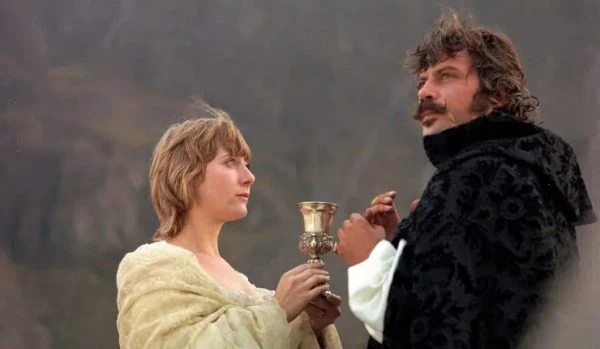
Her equal is Reed, who strides into the film as a firebrand on his journey to becoming the literal meaning of that word. As Father Urbain Grandier he is a towering presence in the fight against a corrupt Church and oppressive state. A barrel-chested monolith of sexuality whose mere presence throws the nunnery into a orgiastic fit. Reed’s heightened characteristics that are present when he’s introduced soon soften as he imbues his Priest with a level of normalcy amongst the heresy that makes his plight and the way it unfolds that much more cruel.
What of the much-ballyhooed exorcised sequences? Well, beyond the curiosity of finally seeing them in all their glory, they’re tame in comparison to what modern audiences have been exposed to in the intervening years. Their omission had left jarring jump cuts in the original theatrical version, but now the film flows more evenly towards its unsettling conclusion.
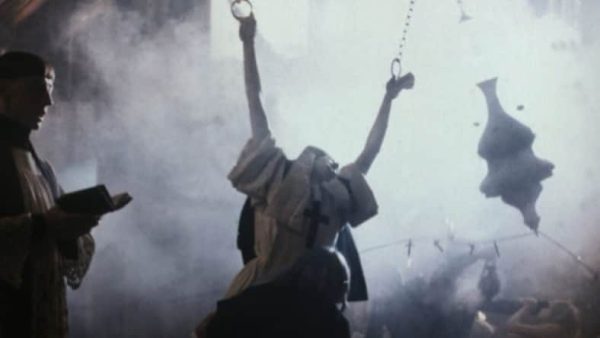
As for Russell, who left this Earthly realm in 2011, The Devils: The Director’s Cut is a posthumous triumph of an artistic vision fulfilled, one which features imagery that scars like stigmata, with religious and political themes layered upon one-another like writhing nuns. You might not enjoy it, but you’ll be left in little doubt that you’re bearing witness to a wholly unique chapter of cinema history that might have been lost forever.
Flickering Myth Rating – Film ★ ★ ★ ★ ★ / Movie ★ ★ ★ ★
Matt Rodgers – Follow me on Twitter