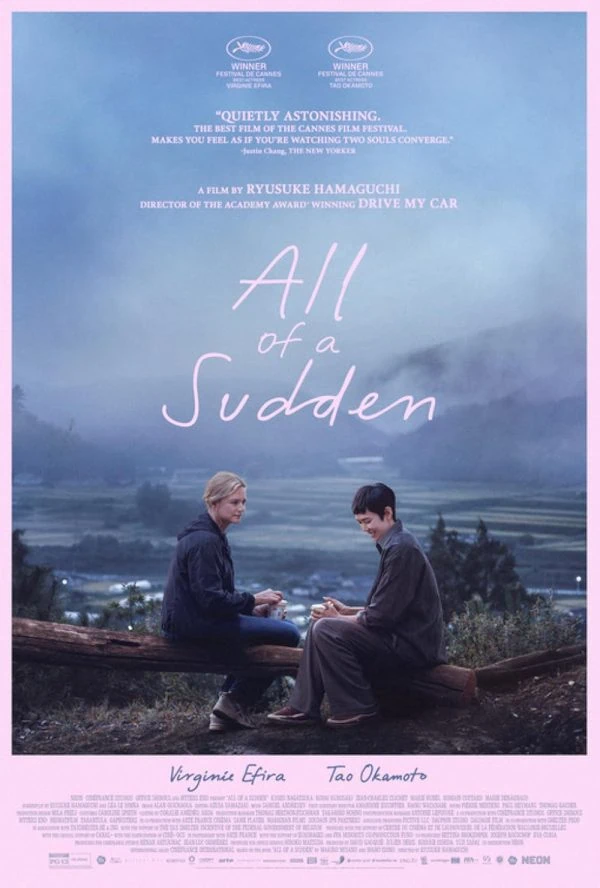
All of a Sudden, 2026.
Directed by Ryusuke Hamaguchi.
Starring Virginie Efira, Tao Okamoto, Kyōzō Nagatsuka, Kodai Kurosaki, Jean-Charles Clichet, Marie Bunel, Romain Cottard, Marie Denarnaud, Gabriel Dahmani, Sephora Pondi, Heidi Becker-Babel, Lazare Gousseau, Rose Bourdon, Jérôme Chappatte, Geneviève Emanuelli, Evelyne Istria, Sonia Faïdi, Héloïse Janjaud, Samia-Sabrine Bitta, Elsa Bouchain, Prescilia Follin, Jean-Louis Garçon, Mamadou Sidibé, Elizabeth Tamaris, Margot Maricot, and Radostina Rogliano.
SYNOPSIS:
Marie-Lou runs a nursing home near Paris and strives for more humane elder care. Her friendship with Mari, a Japanese theatre director facing terminal cancer, deepens her commitment to residents’ dignity.
Masterful humanist Ryusuke Hamaguchi again explores social and systemic issues tied to capitalism with All of a Sudden (co-written by Léa Le Dimna and, in some form, based on the book You and I – The Illness Suddenly Get Worse by Makiko Miyano and Maho Isono), a 3+ hour nursing home drama that also serves as an extensive bonding experience between new friends from different fields on similar paths.
Even their names are likely intentionally similar, with Virginie Efira’s Marie-Lou, Garden of Freedom’s caregiving director, overseeing everyone from nurses to assistants to volunteers, instilling the same humanity in their work as the filmmaker, operating under the science that, when dealing with dementia stricken elderly patients, at least two of the four senses (touch, eye contact, voice, and verticality) should be in play when slowly and gently performing an act of care (whether it be bathing, a change of clothes, and so on and so forth, without ever feeling exploitative). She is also looking to expand this Humanitude Method where the staff would be encouraging mobility (standing and walking), as it helps the patient to reconnect with some of their own senses and memories (they don’t see time as linear, but more of a dotted trajectory, rationalizing why someone might get up in the spur of the moment to head to a job that they haven’t clocked in at for years).
This meets some resistance, most notably from Sophie (Marie Bunel), who comes from a place of concern and burnout. Considering that Marie-Lou occasionally dozes off when outside looking after a wheelchair user, she is also exhausted, except she believes that the work-life balance should be blended together and become one and the same, even going as far as implementing a new idea where workers can rent one of four available rooms to stay in alone. It will help with some of the financial problems she is running into, with a board knotted up over what to do while prioritizing profit. Another nurse quits entirely, determined to build her own caretaking home with her own resources, a fascinating concept and thread one wishes weren’t abandoned entirely.
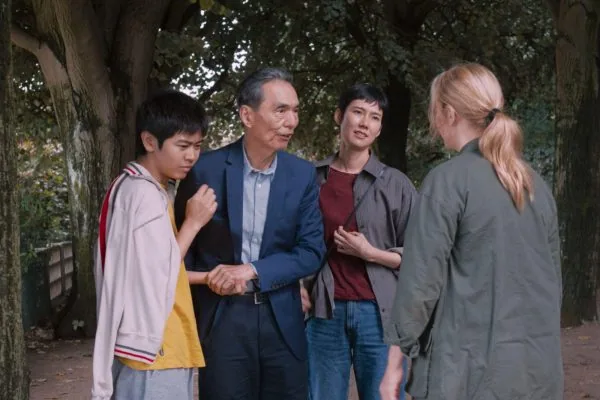
Even when Marie-Lou attempts to go off duty and home, she finds herself drawn into inserting herself in similar situations, such as exiting a bus to see what’s up with a severely autistic young man named Tomoki (Kodai Kurosaki) running around in the park, but also with some heavy rain beginning to pour down. It turns out he behaved unusually and wandered away from his grandfather, Goro (Kyōzō Nagatsuka), walking and talking with his friend and theatre director, Mari (Tao Okamoto), who, as this review noted earlier, has a similar name. They are both immensely grateful for her stepping in and watching over Tomoki, although they don’t have much to offer but a free pass to see the play, a one-man acting routine with Goro provocatively titled “Up Close, No One is Normal”, performed with spirited passion from both actor and star.
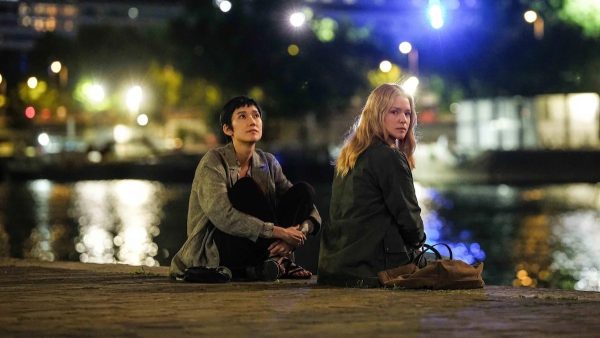
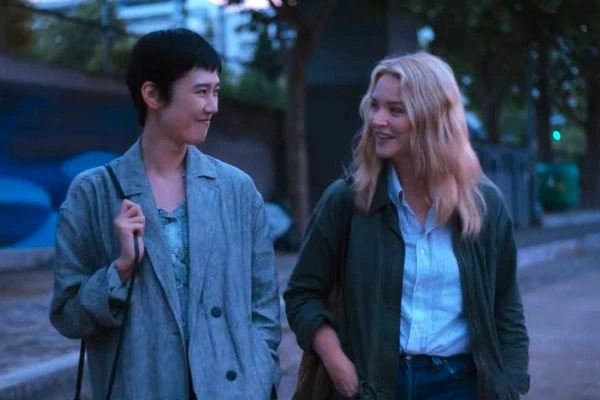
Marie-Lou attends the play, breathtakingly shot as you would expect from the brilliant director of Drive My Car (who, yes, is weaving familiar techniques into a narrative that feels fresh and vital in its plea for dignified empathy and humanity), where she unexpectedly gets a personal response to a remark (horrifyingly to film critics everywhere watching, it is indeed more of a statement than a question) in the Q&A portion, which leads to a night talking about maneuvering through a bustling city (exquisitely photographed by Alan Guichaoua and presented as its own kind of sensory experience while listening to such thoughtful dialogue and two people getting to know one another).
Without getting too much into detail, a conversation arises coming from Mari’s background in philosophy, as she eventually joins Marie-Lout back at the nursing home, dissecting the benefits and obstacles of capitalism (she admits that she has found solace in it through art, which will also be relatable for many watching this), while elaborating on her condition and a quiet rallying cry that the impossible can be made possible.
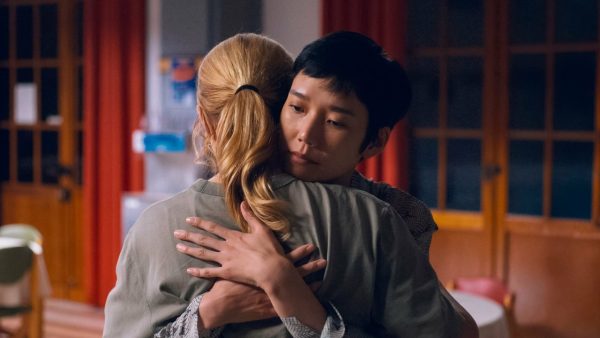
A specific and technically proficient writer, Ryusuke Hamaguchi also keeps it engaging, hanging on every line of dialogue and the inner workings and ongoing roadblocks of the caregiving home. Equally captivating are the performances from Virginie Efiri and Tao Okamoto, selling their characters as practically destined to become friends; it feels organic, lived-in, and wholly moving whether one of them is explaining capitalism and its effects on society from a whiteboard, or talking with leftover memento puppets from deceased patients on their fingers, with the camera zoomed in on the hands. Also beautiful are nighttime scenes composed of striking silhouettes.
Essentially, the filmmaker knows even a great screenplay can only carry the material so far, directing it without ever detracting from its rich substance. No one brings themes home for a multilayered ending as well as Ryusuke Hamaguchi, and he does so again here with All of a Sudden, a quietly powerful film about what it means to be alive and the dignity those losing their mental faculties deserve.
Flickering Myth Rating – Film: ★ ★ ★ ★ / Movie: ★ ★ ★ ★
Robert Kojder