Klara and the Sun, 2026.
Directed by Taika Waititi.
Starring Jenna Ortega, Amy Adams, Mia Tharia, Aran Murphy, Steve Buscemi, and Natasha Lyonne.

SYNOPSIS:
A robot girl designed to prevent loneliness tries to save a heartbroken family of humans.
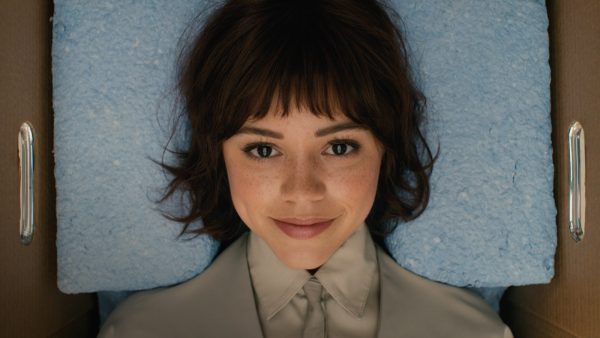
Taika Waititi excels when directing an ensemble in an off-kilter tale full of eccentricity and heart, so choosing to adapt Kazuo Ishiguro’s Klara and the Sun feels like the perfect opportunity for a return to form for the writer-director of The Hunt for the Wilderpeople and JoJo Rabbit. A future-fable which deals with theological issues, age-old questions on the dangers of advanced technology, and possibly the most complicated subject of all, love.
Given her final opportunity to sell herself in the window of an antiquated ‘Artificial Friend’ store by the shopkeeper (Natasha Lyonne), Klara (Jenna Ortega) prays to the sun, her source of power, to finally be chosen or be sold for parts. Across the street there is a store selling newer models, all Abercrombie & Fitched up and Bluetooth compatible. For the people of this world, in which the internet is outlawed due to misuse, it’s a little like choosing between a Nintendo Gameboy and PS5.
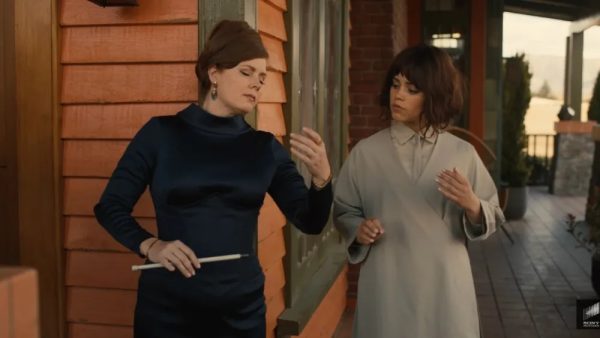
Thankfully for Klara she captures the attention of Josie (Mia Tharia), who drags her reluctant mother (Amy Adams) into the robot shop so that her new AF can be boxed up and shipped to their picturesque house in order to keep her company, and more importantly fill the void in the family left by the death of her younger sister. There Klara is the subject of scrutiny from Melania (Waititi fave and all-round film-stealer Rachel House), Josie’s retro-tech loving friend and builder of robo-birds Rick (Aran Murphy), and her mother Chrissie, who’s keen to remind Klara about her warranty and the fact they’ve kept the packaging she arrived in.
From there Klara must calibrate to this new world that she’ll be a part of until she has served her purpose. She watches over an enthusiastic Josie as she sleeps, runs through fields in a petrified fashion because she can’t understand the concept of wheat, and uses her Terminator-style voice-mimicry to start the futuristic family-car. They’re the kind of recognisable tropes you’d see in similar kid and their robot/alien-pal films, such as E.T. or Big Hero 6, and it establishes a cute friendship between Klara and Josie, just not one deep enough to carry the intended weighty themes of the film’s second half.
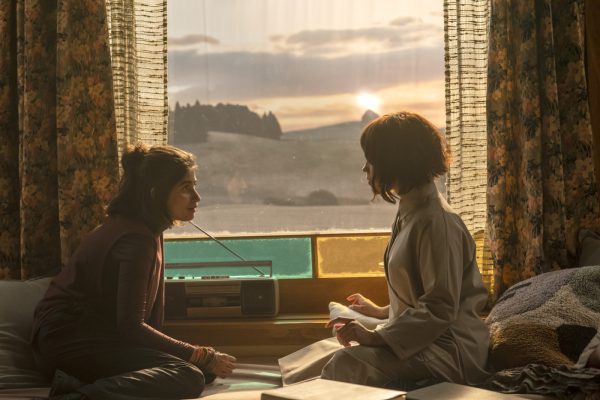
As with all texts relating to human synthetics, death is a prominent part of this story, so when Klara discovers that Josie is sick, she turns to the only thing that has provided her strength since the day she was turned on, and that’s the sun. Her childlike belief that this huge ball of fire is a living thing, a deity with the power to influence her world, and that she’ll do absolutely anything to save her sick friend, draws obvious on-the-nose parallels with certain faiths. She even visits its home on the hill, where she naively thinks it goes to sleep as it dips behind the film’s beautiful horizons. You can choose to view Klara and the Sun as a religious text, or you can interpret it simply as part of the evolution of Klara. That she has chosen to put all of her hopes into something that a machine would compute as illogical is an intrinsically human trait.
Selling all this is Jenna Ortega, who is the beaming light of the film. Hers is an inquisitive living-doll performance that immediately earns your empathy, even if what’s going on around her can often leave you unmoved. Her wide-eyed optimism and likeability as a character is matched only by her physical performance. A little like Pinocchio without the strings, it’s used to slapstick effect as she’s attempting to climb a set of stairs, but then her finger-twitching in the final reel is subtly heart-breaking. Amy Adams is also very good, but then when isn’t she? As the vessel of grief her relationship with Klara carries more weight than the central one between Klara and Josie. Their arc together is the most affecting and rewarding aspect of the film.
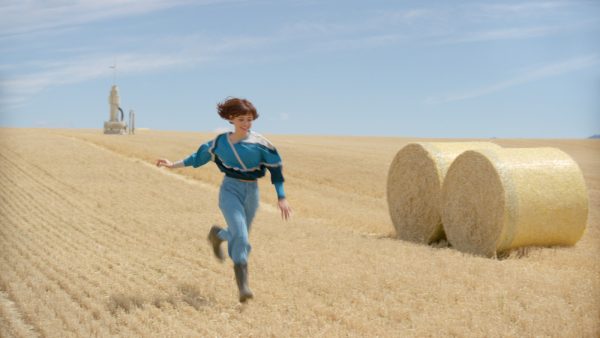
As for Taika Waititi, his direction is relatively restrained. Klara and the Sun looks stunning, with its farmstead setting and the time we spend in a retro-future city, it comes across like The Wizard of Oz. Yet here he puts his own faith in the story rather than having to embellish it with any showy filmmaking or over-the-top characters. The script does get unnecessarily messy towards the end with a plot-thread that already seems to have been covered earlier in the film, but it does tie up a couple of loose ends that you’d probably lost interest in.
Klara and the Sun is simply a lovely little fable of hope about what it means to be human, anchored by a delightful performance from Jenna Ortega that makes it just about worthy of your time. It’s not going to change the world, but its upbeat message might make you feel slightly better about being in it for a couple of hours.
Flickering Myth Rating – Film ★ ★ ★ / Movie ★ ★ ★
Matt Rodgers – Follow me on Twitter