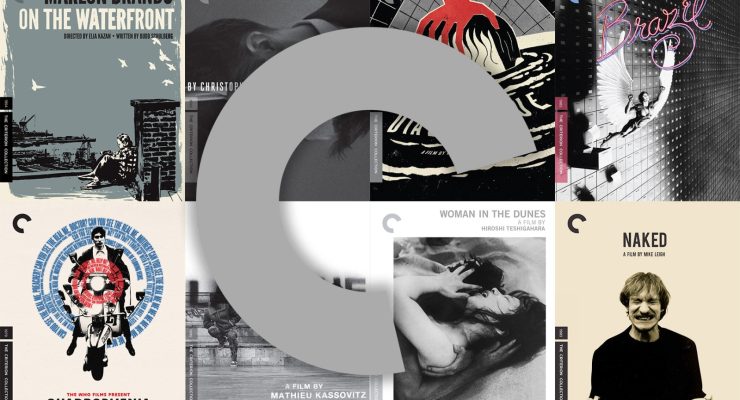
Adam Page on movies that find their audience decades on…

Let me tell you about a smell, and see if it brings back memories. Carpet that has absorbed fifteen years of rain off strangers’ coats. Warm plastic. The slight chemical sweetness of a popcorn machine that nobody’s cleaned since the Falklands. A teenage clerk with a face like a shut pub, ringing up somebody’s copy of Look Who’s Talking Too. That was the smell of the place where movies went to die. And, it turned out, the place where some of them came back from the dead, shambling, half-rotten, wearing their bad reviews like a toe-tag, and hungrier than ever.
I spent a criminal proportion of my youth in rooms like that. Not the bright New Release wall at the front, with its forty identical copies of whatever Tom Cruise had done that summer. The back. The horror section, the “Cult” section if the owner was pretentious, the shelf where the boxes had bleached in the window and the cases rattled because somebody had nicked the tape and put back a Jane Fonda workout. That’s where you found the movies that had been taken out behind the multiplex and shot. Movies the critics had pissed on. Movies the studios had buried in January or dumped on the same weekend as something with an adorable alien in it. Movies that were, in the parlance of suit-wearing accountants, failures.
And the thing is, something that took me far too long to understand, a lot of these movies weren’t failures at all. They were just early. They showed up to the party before the party had started, said something deeply weird, spilled red wine on the carpet and left. Twenty years later everyone’s still talking about them and nobody remembers who else was there. This is about those movies. About how a reputation (which we like to think of as a verdict handed down from a bench) is actually more like a stock. Something that ferments, curdles, turns into something else completely given time and the right bacteria. Kimchi, not concrete.
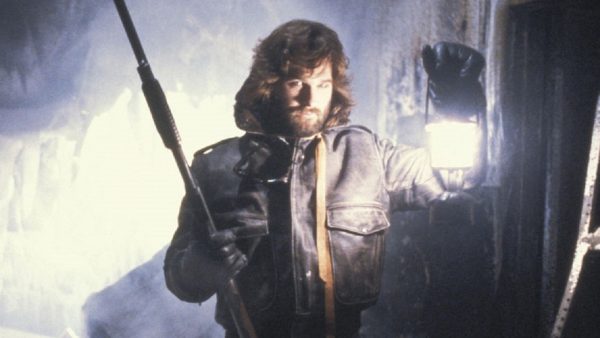
Let’s start in the cold. The Thing. June 1982. John Carpenter, fresh off Halloween and Escape from New York, a man on what should have been a lifelong hot streak, delivers to Universal a movie set in an Antarctic research station where twelve men slowly realise that any one of them might no longer be human. It’s a movie about paranoia so total it infects the audience. Nobody’s safe, nobody’s trustworthy, there are no women or love interests, no hope, and the monster is a shapeshifting nightmare of tendons and teeth and dog heads splitting open like overripe fruit, courtesy of a barely-out-of-his-teens-feeling Rob Bottin, who worked himself so hard on it he ended up in hospital.
It opened two weeks after E.T. Two weeks. Spielberg had just told the world that the thing from outer space wants to be your friend, wants to phone home, and will cure your loneliness and your divorced mum’s sadness with a glowing fingertip. And here comes Carpenter, a fortnight later, saying no, actually, the thing from outer space wants to wear your face while it digests you. Read the room, John.
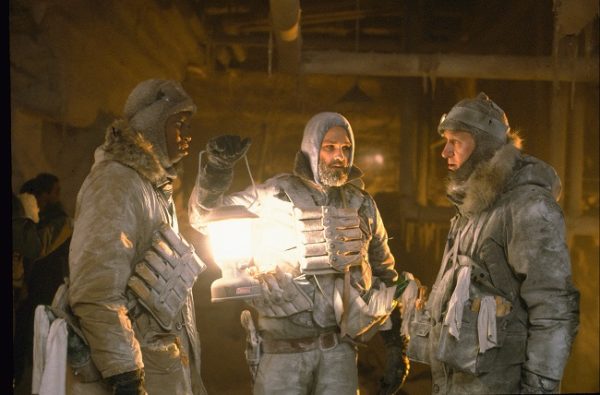
Nobody did. Critics hated it; not mildly or “mixed reviews,” but with the kind of disgust reserved for a bad oyster. It was too cold, too gory, too nihilistic; characters you couldn’t tell apart under the beards; effects that were impressive in the same way a motorway pile-up is impressive. It limped out of cinemas with a fraction of what Universal had hoped for. Carpenter has talked ruefully, for decades now, about how hard it hit him; the next big studio job he’d lined up evaporated. A man doesn’t forget something like that. It sits in the gut like a bad night’s drinking.
And then came the video store shelf. Then came cable at two in the morning. Then came a generation of kids, oh yes, me among them, who met The Thing not as an event, not with a crowd who had just wept at a Reese’s-Pieces-eating rubber homunculus, but alone, in the blue light of a TV in a dark front room, at exactly the age when you begin to suspect that the adults around you are not who they say they are. That’s the right way to see The Thing. Alone and suspicious. With your family asleep upstairs and you not completely sure they’re still your family.
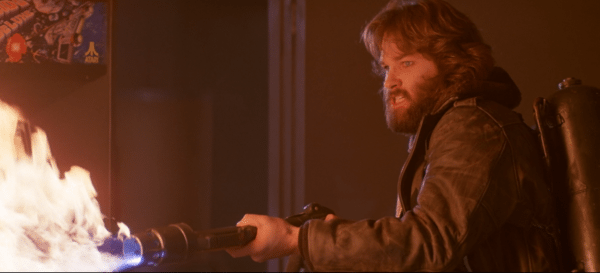
The blood-test scene, copper wire and petri dishes, Kurt Russell with a flamethrower and a beard you could lose a sandwich in and men tied to a sofa sweating through their long johns, is now taught almost as scripture. And the ending: two men sat in the burning wreckage, each waiting to see whether the other is the monster, passing a bottle back and forth as the cold comes for them both. A perfect last course. Bitter and smoky with no dessert. I’ve had meals that ended like that. Relationships too.
So what changed? Not the movie. Every frame is exactly as it was in 1982. What changed was us. The Cold War suspicion that made it unbearable became, a few decades on, the general weather of our lives. We stopped needing our monsters to be friendly. The Thing matured into a classic the way cheese dies in a cave: it just needed to be left in the dark long enough.
If The Thing was killed by bad timing, then Brazil was nearly killed by its own studio, which is a more intimate kind of murder, the kind committed by people who are supposed to love you.
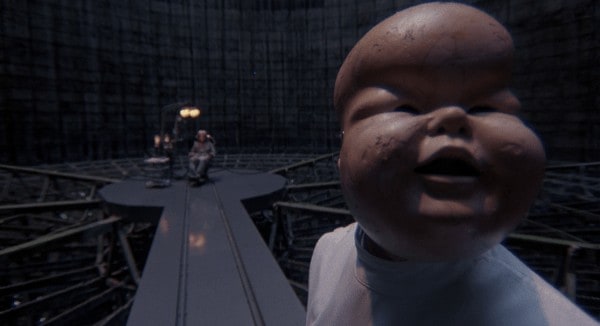
Terry Gilliam’s 1985 movie is, and I say this with huge affection, a migraine with a production budget. A bureaucratic dystopia where a dead fly drops into a typewriter, a typo sends the wrong man to be tortured to death, and Jonathan Pryce’s Sam Lowry, a timid little clerk, dreams of flying through the clouds in silver armour to rescue a woman he’s never actually met. Ducts everywhere. Ducts like intestines. Robert De Niro as a guerrilla heating engineer, which has to be the most British idea ever committed to celluloid; a revolutionary whose great act of insurrection is fixing your boiler without filling in the paperwork. Michael Palin as the friendliest torturer in the history of cinema, a family man in a baby mask.
And the ending. Oh boy, the ending. Sam escapes. Drives off with the girl to the green countryside. And then the camera pulls back and he’s still strapped in the chair, humming with glassy eyes, gone somewhere they can never follow. That’s the whole point of the movie: that the only escape this world allows is madness.
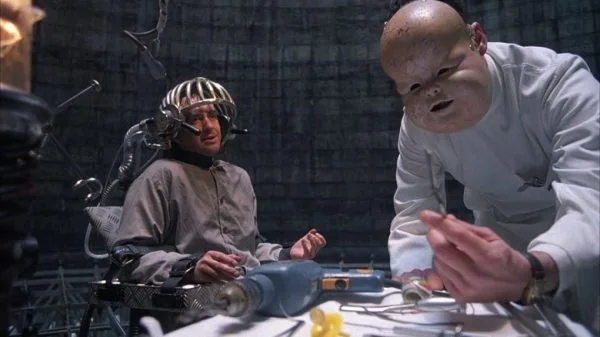
Universal’s boss Sid Sheinberg didn’t want to serve that up to an audience. He wanted a happy ending. There were recuts, a version that would later carry a nickname so horribly on the nose you couldn’t make it up, the “Love Conquers All” cut, in which the dream becomes real and everybody goes home with a nice warm feeling in their tummy. Gilliam, being Gilliam, went to war. He took out a full-page ad in Variety, one deadpan line asking Sheinberg when exactly he planned to release the movie. He screened his cut for critics on the quiet. The Los Angeles Film Critics Association went and named it the best movie of the year; a movie that had not, technically, come out in America. Shamed into it, the studio released Gilliam’s version, and it did lousy business anyway.
That’s the part people forget about cult rehabilitation. Sometimes you win the fight and still lose the night. The audience just wasn’t there in 1985. Almost two and a half hours of Kafka with ductwork, in the age of Rambo and Back to the Future? You can sod off with that.
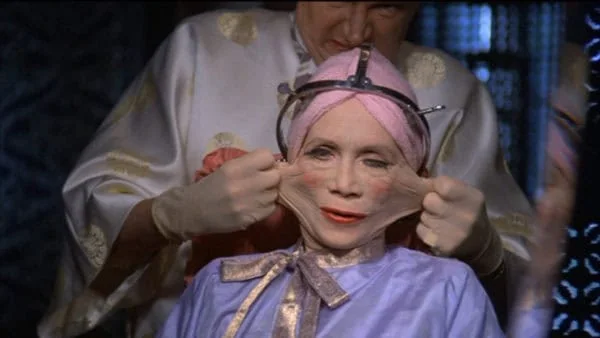
But then: laserdisc. And then the Criterion box set, multiple discs with both cuts side by side, directors and the studios, like the before-and-after photos in a crime file. That set did something sly. It made the battle itself part of the movie. You watched Brazil and you watched the system try to do to Brazil what the Ministry of Information does to Sam Lowry, and the meta-joke landed with a clang you could hear from orbit.
Then, of course, history caught up. Every one of us who has spent forty minutes on hold with an energy company, been told by an automated voice that our call is very important, or tried to appeal a parking fine to an algorithm, has lived inside Brazil. Gilliam wasn’t predicting anything, he was just describing the smell before the rest of us noticed it. I could end up writing twenty thousand words if I’m not careful, so just a quick aside to check out some of the others that went through the same fate:
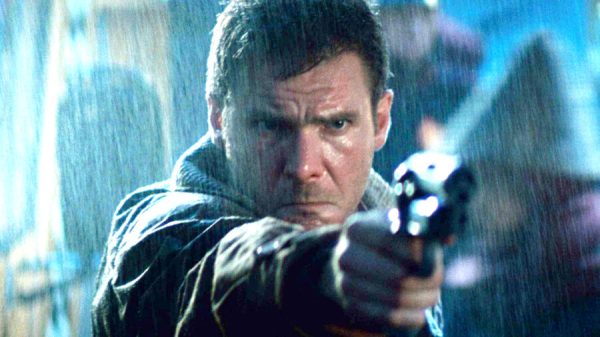
Blade Runner opened the same day as The Thing, 25th June 1982, a date that should be marked by marketing departments with a minute’s silence. Harrison Ford reading a voiceover like he’s being held at gunpoint, a studio-mandated happy ending thrown together from leftover aerial footage from The Shining, critics calling it slow and pretty and empty. It took a directors cut, then a Final Cut, then about three decades of people staring at the rain on their own sad windows to become the most influential science fiction movie of its era.
The Wicker Man, 1973, was hacked up and sent out as the bottom half of a double bill with Don’t Look Now, which is a hell of a night out if you want your audience to never sleep again. Legend has it that the trimmed footage ended up in the foundations of a motorway, which is a story so perfect it’s probably at least partly bollocks, but that’s the thing about cult movies: they build myths the way an old cast-iron pan builds seasoning.
Peeping Tom, 1960, pretty much finished Michael Powell’s career in Britain. The critics practically formed a torch-wielding mob. Now it sits on the top shelf next to Psycho, which came out the same year and got away with it because Hitchcock had better PR and a TV show.
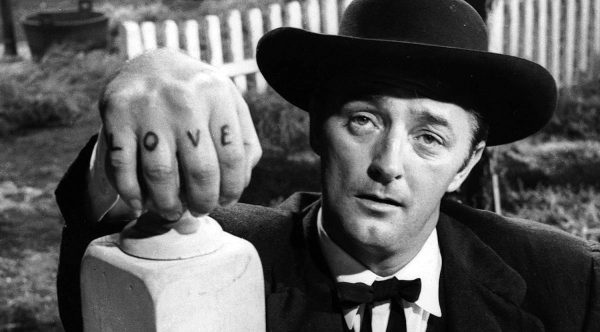
Night of the Hunter, 1955. Charles Laughtoin’s only movie as director. This flopped so hard he never got behind the camera again. Robert Mitchum with LOVE and HATE tattooed across his knuckles, a river at night that looks like it was painted by a child having a nightmare. One of the greatest movies ever made, and the man who made it died believing nobody had wanted it. Sit with that a minute. I’ll wait.
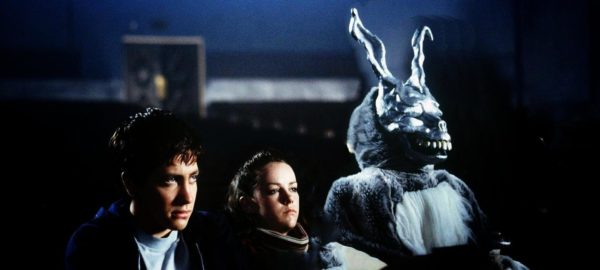
Donnie Darko, 2001, a movie whose plot hinges on a jet engine falling out of the sky onto a family home, was released roughly six weeks after September 11th. Dead on arrival. Then a small cinema in Manhattan started running it at midnight, and the DVD crowd found it, and a generation of moody kids in eyeliner found it (hi, me again!) and suddenly there was a directors cut and a demonic rabbit called Frank on every third T-shirt in every third sixth-form common room.
Office Space found its people on cable. Fight Club was a box-office disappointment and found its people on DVD, which is to say it found exactly the men it was satirising, a joke the movie itself would probably appreciate. The Big Lebowski underperformed and then spawned an actual festival, with bowling and something like a religion, practised by grown men in dressing gowns who abide.
And Halloween III: Season of the Witch, God bless it, the one without Michael Myers, the one about killer novelty masks and a jingle that lodges in your skull like shrapnel. Fans in 1982 felt cheated. Now, fans put it on every October and sing along. Same movie. Different eaters.
Then there’s Jennifer’s Body. Now, this is the one that really makes me want to throw a pan across the kitchen.

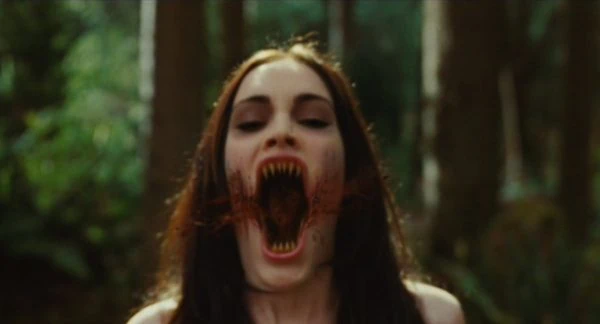
The year is 2009. Karyn Kusama directing; Diablo Cody, fresh from an Oscar win for Juno, writing. Megan Fox as Jennifer, small-town high-school royalty, who gets sacrificed to Satan by a third-rate indie band desperate for a hit (they need a virgin; she isn’t one, this goes very badly for everybody) and comes back as something that eats boys. Amanda Seyfried as Needy, the glasses-wearing best friend, whose complicated and desperate, not-entirely-platonic love for Jennifer is the movie’s actual beating, bleeding heart.
This is a movie about the predatory economy that surrounds teenage girls: the men who will quite literally kill you to get ahead, the way girls get fed into the machine and then turned on each other. It’s about female friendships as war zone and sanctuary in the same breath. It’s funny and sad, and its slang is so specifically 2009 that it’s carbon-dated itself into charm.
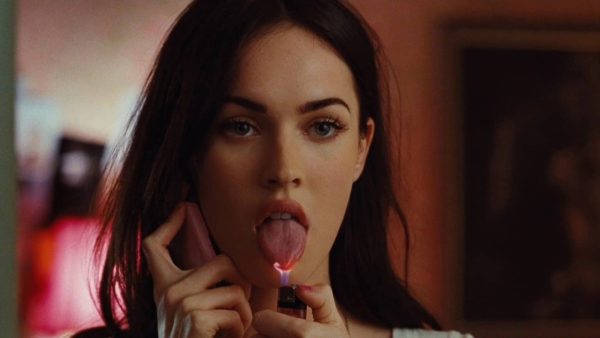
And the studio sold it to fourteen-year-old boys. The posters, the trailers, the entire campaign: Megan Fox, smouldering and licking things, lit like a car advert. The boys who’d spent the previous summer drooling over her bent across a Camaro in Transformers turned up expecting soft-core with a bit of gore and got a movie that was looking straight at them and laughing. The young women it was actually made for stayed home, because the marketing had told them in letters ten feet high, this isn’t for you!
Reviews were sniffy and it barely cleared its budget. And then for years it was a punchline, mostly at Fox’s expense, because that’s what we did back then: built young women up as fantasies and then kicked them for not being taken seriously.
Here’s what happened next, and it’s the most instructive case in this whole sorry, glorious history. The culture shifted underneath the movie. Around 2017 and 2018, the conversation about how the industry treated its young actresses cracked wide open, and Fox’s own account of how she’d been handled; things she had said years earlier when nobody was listening, got re-read in a very different light. Suddenly there were think-pieces arguing, more or less, that she’d been right all along. And a lot of people went back to Jennifer’s Body and realised that it had been telling that story the whole time. A band that sacrifices a girl to land a hit single was more than a gag, it was a documentary with fangs.
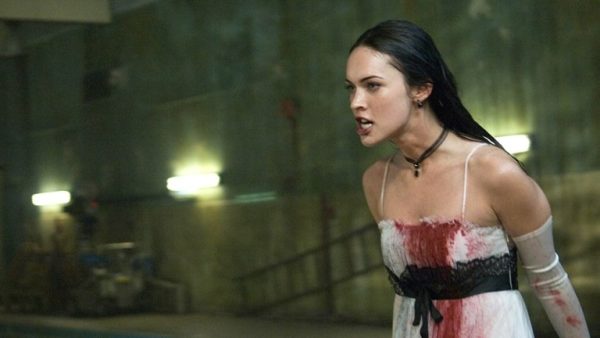
Then queer audiences claimed it; the Needy-and-Jennifer bond, the kiss, the longing, and the movie found a home among people who know a thing or two about being misread by the mainstream. The internet did the rest, with memes, gigs, Halloween costumes, a bloodied prom dress as a badge of honour. A decade on, Cody and Kusama were doing anniversary interviews for rooms full of people who loved the thing with the fervour usually reserved for religion or football.
What saved Jennifer’s Body wasn’t home video, not really. It had been on DVD the whole time, sulking in bargain bins. What saved it was that the right audience finally came of age and grabbed the microphone. Fan communities do more than just discover movies. They overturn verdicts, demand retrials, and they win.
So what’s the mechanism, really?
Some of it is just timing, plain and stupid. The wrong fortnight, the wrong mood, the wrong decade. A movie is released into a certain weather system, and if it’s chucking it down, nobody’s buying ice cream, no matter how good the ice cream is.
Some of it’s marketing, a movie sold to the wrong people, or not sold at all, dumped by executives who didn’t understand it and had already moved on to next quarter. Studios really do not seem to be institutions with a refined palate. They know what sold last year. They’re that guy at the end of the bar who’s ordered the same lager for thirty years and will tell you, unprompted, that it’s the best beer in the world.
Some of it’s the critics who, and yes I’m aware of the irony of saying this in a piece of criticism, are often just as trapped in their moment as anybody else. A critic reviews a movie once, on deadline, quite possibly hungover, in the context of everything else that came out that week. That’s a first impression and not a verdict: a dish tasted straight off the stove, before the flavours have had a chance to settle. Some stews need a night in the fridge.
But mostly it’s the second life. The formats: VHS, cable, laserdisc, DVD, the directors cut and commentary track and the Blu-ray with the fifty-minute making-of where you watch an entire crew slowly lose their minds in a freezing soundstage. Home video took movies off the clock. A cinema release is a Friday night; a cassette is a lifetime. You can rewind, you can pause on the dog-things face. You can make your mate watch it, and his mate, and on and on; a slow, hand-to-hand contagion that worked, appropriately enough, exactly the way the Thing itself spreads.
And then the communities. The midnight crowds at Rocky Horror, throwing toast at the screen. The fanzines, photocopied and stapled and mailed in brown envelopes. The message boards and blogs, the podcasts and the long, slightly unhinged Letterboxd reviews. These are the people who keep a movie breathing between the first death and resurrection. They’re the line cooks of movie culture: nobody notices them, they’re up all night, they smell slightly odd and without them the whole restaurant closes.
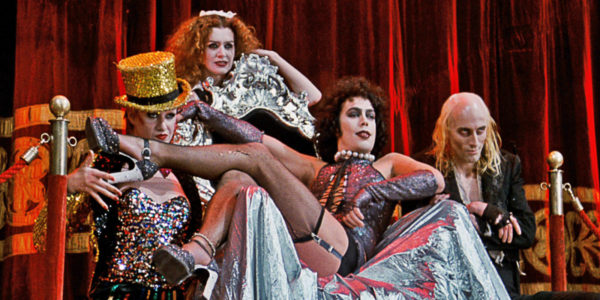
There’s something about the cult movie that is fundamentally about belonging. To love a thing the world rejected is to say: I, too, have been misunderstood. That’s why the outcasts adopt these movies first. The teenagers, the queer kids. The ones at the back of the shop in the horror aisle among the faded boxes. A cult movie isn’t just a movie that got a second chance, it’s a password. You say “Man is the warmest place to hide” or “Hell is a teenage girl” to the right person and their face lights up, and you know you’re among your own.
Writing this, I keep thinking about Charles Laughton. A man who made something so strange and beautiful the world didn’t know where to put it, and who never lived to see the world catch up. And I think about all the movies sitting in the dark right now, on the back shelf of some streaming service, algorithmically buried, a thumbnail nobody clicks, that are going to be on somebody’s forearm as a tattoo in 2050. There’s a terrible humility in that. It means we’re almost certainly wrong about something this year. Sneering at something that’s simply ahead of us.
The verdict is never in. That’s the good news, but it’s also the bad. A movie can wait forty years for its people. The people who made it might not get to.
So a modest proposal, from someone who has been wrong about more movies than he’d care to admit and has eaten every one of those words with a glass of something cheap: go to the back of the shop. Whatever the back of the shop looks like now. The bargain bin, the bottom of the scroll, the thing your mate with the bad haircut won’t shut up about. Watch the movie everybody hated. Watch it alone, late, lights off and suspicions up.
Some of them really are just bad. Fine. You’ll have lost ninety minutes, and I’ve lost far more on far worse. But every so often, in the blue light at two in the morning, you’ll feel something shift. A dog’s head will split open like a flower, or a man will hum to himself in a torture chair, or a girl will walk into her best friend’s kitchen soaked in blood and retch up something black and you’ll think: Oh, there you are. Where the hell have you been?
And the movie, if it could talk, would say: right here, mate. Waiting for you to get hungry.
Adam Page