Robert Kojder chats with Mouse writer-directors Kelly O’Sullivan and Alex Thompson…
Chicago filmmaking duo and life partners Kelly O’Sullivan and Alex Thompson have, thus far, had a hand in everything from acting to writing to producing and directing shorts and features. With Mouse (and their previous effort, Ghostlight, which IFC also distributed), there is a palpable sense that the filmmakers are on the verge of blowing up outside Chicago. As the publicist who pushed for me to get this opportunity to talk to them told me, their schedule is crazy busy, which no one should be surprised by, but is also telling that they are further breaking out.
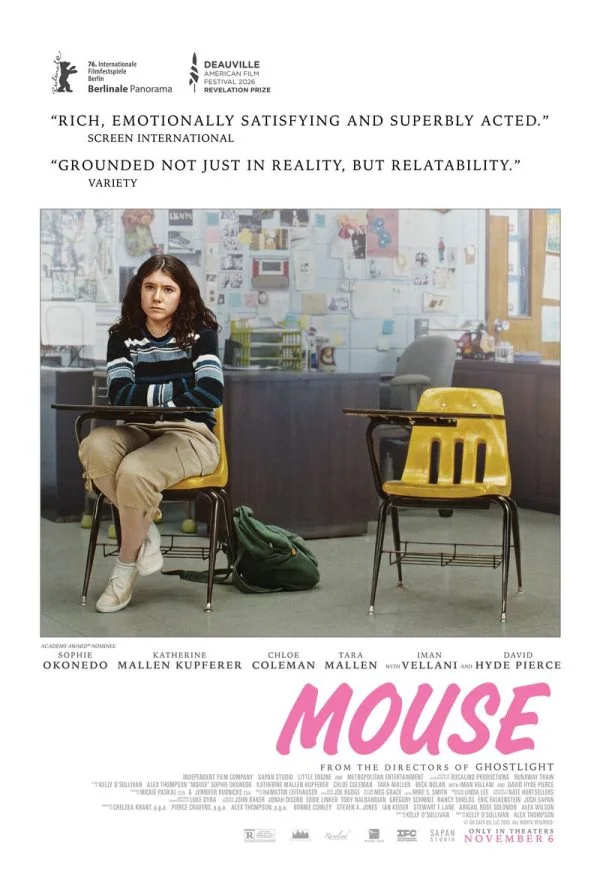
While their respective duties seem to slightly shift from feature to feature (the one constant seems to be Kelly O’Sullivan always writes the screenplays for projects they collaborate on), Mouse is another emotionally leveling story in the same vein as Ghostlight, marking a continued interest in profound studies of grieving, a stark comparison to the more comedic Saint Frances, which was about a young woman getting her life together while babysitting. Kelly O’Sullivan actually starred in that first feature.
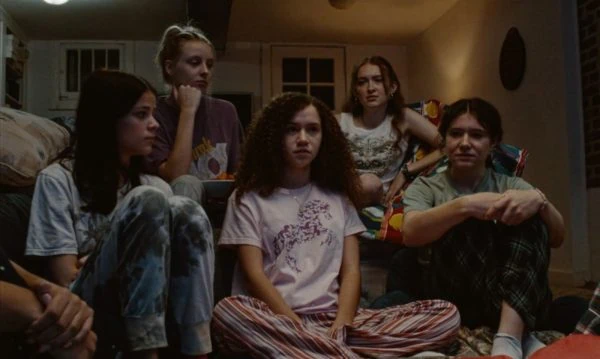
Here, they return to the well with the best actors for the job with the Mallen-Kupferer family, previously seen in Ghostlight, once again with Katherine and Tara playing mother and daughter. This time, however, the former is center stage, portraying the introverted Minnie, whose longest and best friendship with Chloe Coleman’s Callie is upended, sparking everything from grief to familial drama to coming-of-age plotting as she tries to step out of that shadow. Throughout this, she bonds with her friend’s mom, Helen (Sophie Okonedo), who is also grieving. Like most every dynamic here, it takes on several complicated and thoughtful layers about the grieving process.
It was a privilege to speak with Kelly O’Sullivan and Alex Thompson about such a richly considered, emotional powerhouse of a film. With this, they have cemented themselves as masterful storytellers about grief, although that statement doesn’t do justice to how much more this film is about. Making matters more personal for Kelly is that her mother died while shooting the film, which we discuss. We also get into recreating the early 2000s setting, working with younger actors to play it authentically, musically curating one of the most emotionally moving scenes, and more. Enjoy the interview below:
It’s lovely to meet you both; the movie is incredible. It’s one of my favorites of the year.
Kelly O’Sullivan & Alex Thompson: Thank you!
Before asking about the movie, I want to quickly mention… did you hear Carrie Coon at the Music Box accepting an award during CIFF? She mentioned her favorite things about Chicago, and she mentioned you guys. I just wanted to get your reaction.
KO: That was so cool! It’s not very articulate, but I was like, “That’s so cool.” She’s so nice. She’s so lovely. And we’re big fans personally, professionally, and spiritually. We got sent several text messages going “Whoa.”
AT: There’s almost no one cooler, I would say. I’m standing next to someone cooler, but at least equally cool.
This first question might be a little heavy, so there’s no pressure to answer, but Kelly, I heard your mom died while making this film. While you were grieving, did that change anything about the film, or how you saw the story or approached making it?
KO: It didn’t change my approach to making it. I do feel like it is baked into the movie, though, because it happened in the middle of filming. It completely changed my experience making it, of course, because now it’s inextricable. When I watch the movie, I’m like, “Oh, that was two days before my mom died, or this scene was two, or the thing that we shot right after my mom died.” I wasn’t expecting any of it. She died very suddenly. But I really wasn’t expecting to have so many lines feel so true that I was writing some lines from a theoretical place, and now I’ve experienced a really close death to me. Like the line “Your mom’s been dead over a year.” And Kat says, “That’s fresh, you’ll see.” I had just hit the two-year mark of my mom dying, and it’s really fresh. Lines like “Nobody wants to talk to you more than your mom.” Just being like, “That sucks.”
For sure. Why did you choose Arkansas for this film?
KO: That’s where I was born and raised. And when I was thinking about it, I’d never seen Arkansas on film other than Sling Blade and Mud. Neither of those really represented the Arkansas that I knew and grew up in. I also like it whenever I see a movie set in a writer and director’s hometown because it feels like a very complicated relationship. It just feels like it’s so specific. It feels like there’s a real push and pull to the place. And I just knew that I could write with a tremendous amount of specificity in a way that Arkansas hadn’t been seen that way yet on screen.
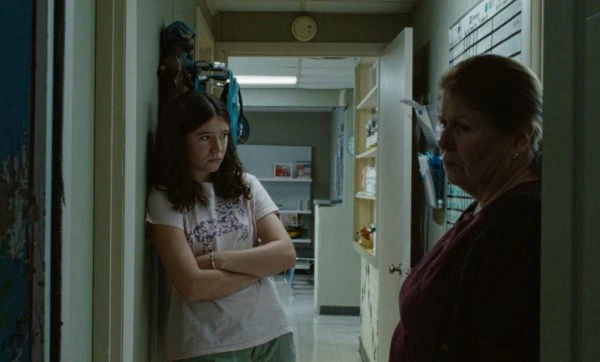
Talk to me about bringing back not only Katherine, but her mom, Tara. What did you wanna preserve from that dynamic in Ghostlight and bring over to this movie?
AT: Katherine has a really deep well of emotion and a very active inner life that’s really clear on camera, complicated, and feels really true and organic in a way that’s really hard to describe and impossible to direct in anyone else. So knowing she had that, it was a no-brainer. Minnie isn’t meant to be only a mouse. She’s got a lot going on, and she’s the lead in the movie. So just from a purely filmic perspective, we have to love watching this person and be excited to watch them. It’s very exciting to watch Katherine work.
Tara, we actually were having a really hard time filling that role, and we had sort of avoided Tara because we didn’t want anyone to see it as an affectation, the repeated familial ties. But the best actor wins, and Tara was just the best person for that role; she said she understood Barbara better than she understood Sharon from Ghostlight. In some ways, it felt like a role she was born to play. And so watching her do that was like watching Muhammad Ali in the ring… doing the thing they were born to do. It was really fun and exciting to see Kelly’s script pop off the page. That, in some ways, was not something that was in Ghostlight at all: Tara’s particular sense of self. Seeing that opportunity was like, “Oh, yeah, of course.” It’s like if Daniel Day-Lewis lived down the street from you, it is what it is. He was actually part of a family of three. You’re welcome to make that the headline! But that’s really what it’s like. There’s no reason other than they’re the best actors.
Speaking of headlines, I want to call you guys the Muhammad Ali of making movies about grief now.
KO: Oh my God! [Laughter]
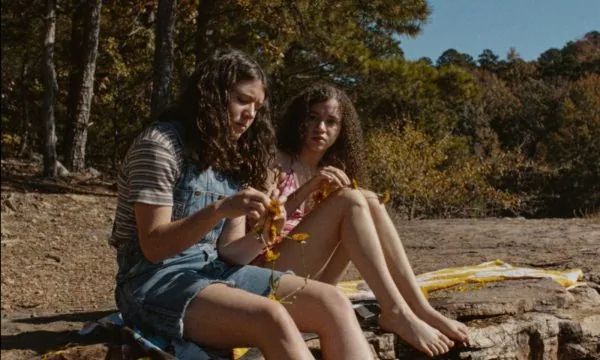
What are some of the challenges or difficulties in preparing Katherine or any of these teenagers to authentically play a character from the early 2000s? Or what kind of research did you give them?
KO: The funny thing is, when we asked them about research, they were like, “Oh, yeah, we watched Good Will Hunting together.” They had never seen it, so they watched it together. I think that was the only assignment that I gave them, where I was like, “You guys have to watch this movie.”
AT: They had to learn how to churn butter, obviously. We didn’t even think about it, honestly. They had to learn the songs.
KO: They love Michelle Branch now, which is awesome that she holds up. Chloe Coleman said this thing; we’ve repeated it a few times because it’s just brilliant, but both Callie and Katherine spoke to the idea that the teenage soul is the same, despite the generation. Both have said it didn’t feel that different from their own lives. Yes, there’s the lack of social media and phones, but they are still going through very similar things.
Expanding on that, can you talk about recreating the early 2000s? ‘I was a teenager back then, and a lot about this movie just feels real. And I don’t think you’re using shortcuts or anything to signal it. A lot of it is in the look or the setting or how people talk. So can you just talk about recreating that?
KO: For a lot, I was just pulling from my memory. It was so fun. I’m so nostalgic for that time because it was formative. And I really miss the music of that time. You know, like riding in the car with your friends, screaming, singing a song- that’s just fun to revisit. And the fashion, bizarrely, it’s back. It being called a period piece is just so crazy, like the low-rise jeans of it all. But it was a blast, and we wanted it to look like a snapshot from my photo album.
AT: Some of the things that we did to make it look like the era: the biggest things in the frame are houses. And those houses, we learned pretty quickly that a 2002 build or a 2002 remodel was actually not right for 2002. It needed to be, like, 1995. It needed to have carpets and carpeted floors, and for Barbara’s house, we really lucked out, but it was gutted. It was totally empty. So that was just filling that space with so much stuff. Linda Lee, our production designer, is an architect and a designer, and so it was really cool to let her go wild. Cars, really easy again, like, not cars from 2002, especially, unless, except for Callie’s car…
KO: And finding a school that wasn’t updated.
AT: Yeah! Then the clothes were… we didn’t want anybody who didn’t know 2002 to say, “Oh, this is a movie about another time.” We just wanted it to feel organic. We didn’t want anything to feel like a costume, or someone to be like, “Oh, you could dress as Minnie if you wanted to be a 2002 wallflower for Halloween.” We found pieces that felt really lived-in: Callie may have been more on-trend than Minnie. Minnie was looking at older catalogs. We got really specific with every department.
KO: The costume designer, Meg Grace, sent out a Facebook post to her friends asking, “Who has their prom dresses still?” So, a lot of those dresses were from that era, which is so cool.
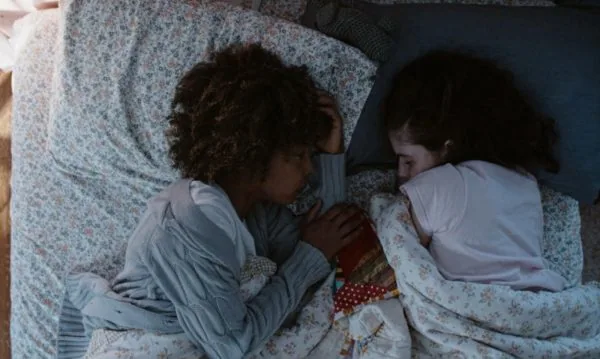
I could ask questions about all the songs in this movie because they’re all so terrifically chosen, so I’ll just pick one and ask: I was not as surprised to be as emotionally affected during the talent show scene with Cara as I was, because it’s a beautifully shot scene, but it comes right after a humorous moment with the masks, so I wasn’t expecting it to hit that hard. But I think it’s such a brilliant moment because she’s processing grief in not necessarily the best way throughout, but that scene is a reminder that she is grieving and human, and she’s not necessarily a bad person. So can you talk about shooting that scene, and of course, why you chose Time After Time?
KO: Time After Time, especially that version with Sarah McLaughlin and Cyndi Lauper, one, I just love the lyrics. It’s one of the most beautiful songs ever. The idea of “If you’re lost, you can look, and you will find me.” It felt perfect for both Helen and Minnie in that experience. And shooting it, it’s the first time that we get up on stage. We’ve seen the other performers mostly from afar, which makes it feel more comedic from an objective point of view, and then we get closer. We wanted that to be treated with a lot of dignity and genuine emotion. To say exactly what you said, these characters are also experiencing grief. They’re not perfect, but it’s real. And it was so cool because I did a dance in high school with a friend dedicated to my friend who passed away. My dance teacher choreographed that dance with us. For this movie, that same dance teacher choreographed this dance for the movie.
That’s so cool. That’s cool. Thank you so much for your time.
KO & AT: Thank you!
I’ll be prepared for you to crush my heart again in a couple of years with another movie.
[Laughter]
KO & AT: Thank you, Robert.
SEE ALSO: Read our ★ ★ ★ ★ ★ review of Mouse here
Robert Kojder