20 years on from its premiere, Hasitha Fernando revisits Daniel Craig’s first outing as 007 in Casino Royale, the film that reinvented James Bond…
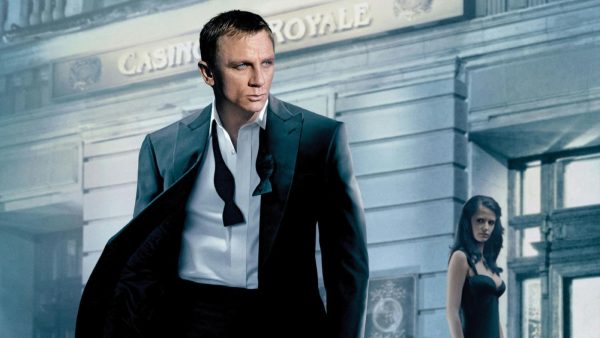
When Casino Royale arrived in cinemas in 2006, it changed the course of the James Bond franchise introducing audiences to a grittier, more vulnerable and ruthlessly effective 007. Featuring thrilling action, breathtaking stunts and a high-stakes poker game the film offered a fresh perspective on the man behind the license to kill. As Casino Royale celebrates its 20th anniversary we look back at the behind-the-scene story of the film that redefined cinema’s most famous secret agent.
There were multiple adaptations of the source material prior to this feature film
Ian Fleming’s Casino Royale published in 1953 was the first novel by the British author and the very first James Bond book, which inevitably paved the way for a further eleven novels and two collections of short stories by the author. Casino Royale was first adapted as a television episode in 1954 starring Barry Nelson as James Bond and Peter Lorre as the villainous Le Chiffre. This was followed by the second take on the property which was a satirical film featuring David Niven, Peter Sellers, and Woody Allen which was released in 1967.
In 1999, Eon Productions secured the rights to the novel through an agreement involving Sony Pictures and MGM. During this interim period, acclaimed writer-director Quentin Tarantino expressed interest in adapting the novel, envisioning a 1960s-set version featuring Pierce Brosnan as Bond. Eon, however, respectfully declined the filmmaker’s offer. In March 2004, the screenwriter duo of Neal Purvis and Robert Wade – who had previously penned the two previous James Bond outings – were brought on to develop a screenplay that harked back to Ian Fleming’s original books, as producers Barbara Broccoli and Michael G. Wilson deemed Die Another Day too fantastical and wanted the next Bond installment to be more of a grounded affair which reinvented the iconic secret agent.
An Oscar winning screenwriter was brought on to rewrite the screenplay
In February 2005, Martin Campbell, director of GoldenEye, which effectively launched Pierce Brosnan’s run of James Bond, was hired to direct Casino Royale. Prior to the filmmaker’s selection, the producers had considered Matthew Vaughan (Layer Cake) and approached Roger Michell (Notting Hill) until they finally settled on Campbell. Once he came on board, Campbell believed that the existing screenplay by Purvis and Wade needed some improvement and brought on Oscar winning screenwriter Paul Haggis, of Crash and Million Dollar Baby fame, to work his magic.
Over the course of six weeks, Haggis focused on primarily rewriting the climax of the film, making Vesper Lynd’s fate more emotionally intense and giving Bond a more personal stake in the tragic finale that transpires. Haggis also delivered the grittier iteration of Bond that producers envisioned through his rewrites. While most of the story elements in Fleming’s original novel were retained in the screenplay some like Le Chifre’s character and the Cold War-era antagonists SMERSH were reimagined in to something more contemporarily appropriate.
Over two hundred actors were considered for the new iteration of James Bond

The search for Pierce Brosnan’s successor was a painstakingly exhaustive process, with more than two hundred actors being considered before the list was invariably whittled down to ten finalists. Casting director Debbie McWilliams felt that the candidates for Bond, who were in their 20s lacked the maturity, charisma and sophistication needed for the character. Naturally, this prompted the producers to conduct a series of elaborate auditions replete with professional sets, music and cinematography. Several prominent actors were approached or considered during this period including, Hugh Jackman, Christian Bale, Clive Owen, Ewan McGregor, Karl Urban, Sam Worthington, Michael Fassbender and Henry Cavill. Bale and Jackman declined the role, while Cavill, who delivered a promising audition was considered too young for the part and rejected.
After seeing his strong performance in Mathew Vaughn’s Layer Cake, Daniel Craig became the frontrunner in producer Barbara Broccoli’s eyes. Craig had previously expressed his reservations for the role as he felt the Bond franchise had become too formulaic, but he reconsidered once he learned that the producers were planning to go with a darker direction, reinventing the character. Because of this, the filmmakers waited until Paul Haggis had revamped the script completely before sending it to Craig in September 2005. Following the official casting, Craig prepared for the role by reading all of Ian Fleming’s James Bond novels and drew heavy inspiration from the behavior he observed of Mossad and British Secret Service agents who served as advisors on the set of Stephen Spielberg’s Munich a few years prior.
Casino Royale’s screenplay was originally written with Pierce Brosnan in mind
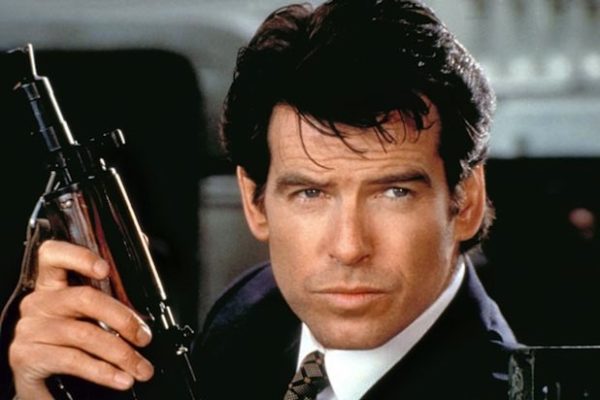
Pierce Brosnan’s tenure as James Bond came to a close following 2002’s Die Another Day, which completed his original four-film contract. Since Brosnan’s involvement was up in the air during script development, screenwriters Neal Purvis and Robert Wade crafted the early draft of Casino Royale with Brosnan in mind. However, the producers ultimately decided to take the franchise in a totally new direction by adapting Ian Fleming’s novel as an origin story and depicting Bond as a newly promoted 00 agent. This creative shift necessitated the casting of a younger actor in the title role and after a time consuming casting process the 38-year-old Daniel Craig was chosen as Brosnan’s successor. Apart from the aforementioned creative shift, Brosnan’s higher price tag also no doubt factored heavily when casting a new face for the franchise.
Angelina Jolie, Charlize Theron & Rachel McAdams were considered for Vesper Lynd
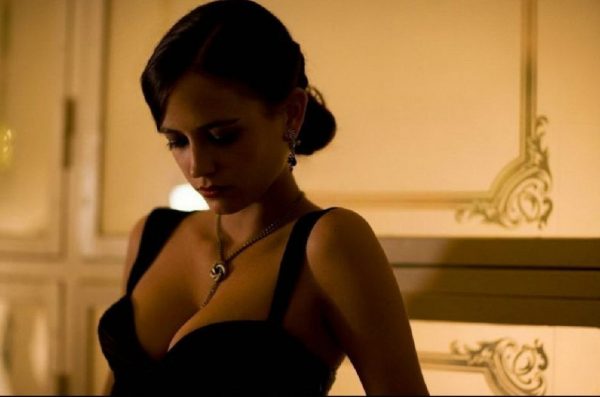
French actress and model Eva Green started her career in theatre before making her transition to feature film with a breakout role in Bernardo Bertolucci’s The Dreamers in 2003. Subsequently, she gained wider recognition for playing Sybilla, the Queen of Jerusalem, in Ridley Scott’s 2005 historical epic Kingdom of Heaven. The actress has since achieved a broader degree of fame with films such as Dark Shadows, 300: Rise of an Empire and Sin City: A Dame to Kill For. The performer was even successful in the small screen, even nabbing a Golden Globe Award nomination for her lead role as Vanessa Ives in the gothic horror TV show Penny Dreadful.
Casting Vesper Lynd, the pivotal female lead in Casino Royale, proved to be another significant decision for the filmmakers. Several high-profile actresses, including Angelina Jolie and Charlize Theron, were considered while Belgian actress Cécile de France was deemed unsuitable as her English accent wasn’t up to the mark. Other actresses considered for the part are Rachel McAdams who declined due to personal reasons and Audrey Tautou who passed over due to her involvement with The Da Vinci Code. The competition eventually narrowed down to Eva Green and Olivia Wilde, with the former being announced officially for the role in February 16, 2006. Casino Royale proved to be Green’s biggest break as it exposed her to a greater international audience through an iconic franchise.
Mads Mikkelsen’s casting was a fairly straightforward affair for the actor

Danish actor Mads Mikkelsen has carved out an impressive place in Hollywood, become part of some of the most lucrative film franchises in cinematic history, including Harry Potter, Star Wars and Indiana Jones. Prior to his ascent in the international stage, Mikkelsen had established himself as a talented character-actor in his native country of Denmark with the gritty Pusher trilogy and efforts such as Bleeder and Adam’s Apples. The actor’s remarkable versatility as a performer was further exemplified by his deeply unsettling performance as Dr. Hannibal Lecter in NBC’s psychological thriller series Hannibal. Casting director Debbie McWilliams declared that Mikkelsen’s casting was due to her habit of choosing “a lot of people from the theatre and people from slightly more obscure stuff.” During an interview Mikkelsen reflected on the relative ease with which he won the part and how co-star Daniel Craig even joked if he had slept with someone be cast so easily, “They’d done their homework, seen my stuff, so it was fine, just a bit of anti-climax, because I was so ready to do more for them, but it was … shrugs… you’re in.”
Dame Judy Dench was surprised she was asked to reprise M’s role
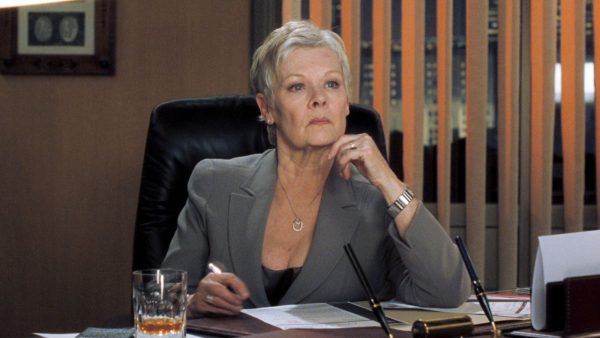
In a career spanning over seven decades in film, television and stage, Dame Judi Dench has crafted herself a reputation as one of the most celebrated actresses in the industry. Winning an Oscar for Best Supporting Actress in 1998’s Shakespeare in Love and earning wider praise for later efforts such as Mrs. Brown, Iris and Notes on a Scandal, it was with 1995’s GoldenEye that Dench became a household name for playing the indefatigable head of MI6 – “M”. Following the conclusion of Pierce Brosnan’s run of James Bond, Judi Dench naturally assumed that her role too would be recast but was pleasantly surprised when she was approached to reprise her much beloved character. Casino Royale director Martin Campbell, who also directed the actress in GoldenEye, always maintained that Dench was still the best performer to play M, especially because James Bond films do not adhere to a recognizable chronological continuity. Craig too was “thrilled” to work with Dench, as their complex relationship dynamics added another layer of intrigue to the unfolding story.
The film’s dramatic crash sequence made a new Guinness World Record
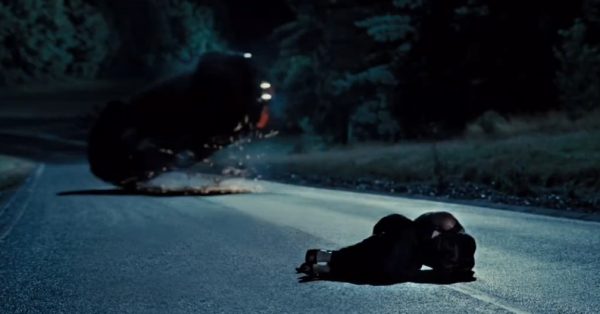
One of the most jaw-droppingly spectacular stunts featured in Casino Royale involved the Aston Martin DBS V12 driven at high speed by Bond performing a record-breaking barrel roll during the film’s dramatic crash sequence. Driven by stunt performer Adam Kirley, the car’s aerodynamic design and racing specifications made it too stable to flip using a conventional ramp. Therefore, to overcome this challenge, the special effects team fitted a nitrogen-powered air cannon behind the driver’s seat which would propel the vehicle into the air, enabling it to complete an astonishing seven full barrel rolls. The remarkable feat earned an official place in the Guinness World Records on November 5, 2006, setting a record for the most barrel rolls performed by a car with the assistance of a cannon. In one instance during an afternoon worth of shooting, a total of three Aston Martin DB9’s were wrecked for the car roll sequence! These cars that were totaled, however, were actually engineering prototypes fitted with a DBS bodywork.
The chase sequence in the movie’s beginning took weeks of preparation
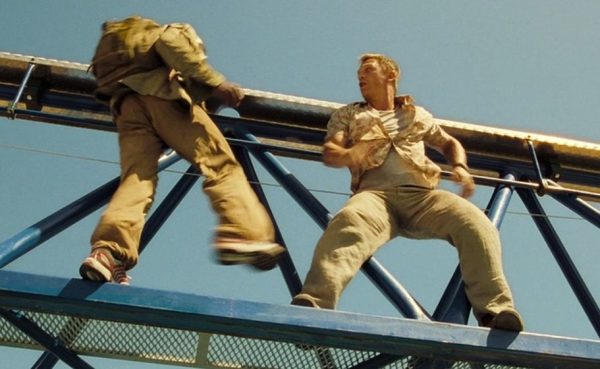
The exhilarating free-running chase in Casino Royale was inspired by a documentary featuring Sébastien Foucan, a pioneer of the discipline. Foucan was subsequently cast as Mollaka, the notorious bomb-maker pursued relentlessly by Craig’s James Bond in the movie. To bring the pulse pounding sequence to life, stunt coordinator Gary Powell and second-unit director Alexander Witt spent approximately two months planning, followed by six weeks of intense physical rehearsals and preparation to get it right. Although the elaborate action set piece is set in Madagascar in the story, it was actually shot in Nassau, the Bahamas, the production team transformed an abandoned hotel—previously featured in The Spy Who Loved Me—and constructed an elaborate, multi-level building site. Although being in peak physical shape was nothing new to the new Bond star, being a semi-professional rugby player, Craig claimed to have been in a constant state of pain for most of the shoot because of the vigorous stunts he was required to perform.
Box-Office success, rave reviews and the launch of Daniel Craig’s James Bond era
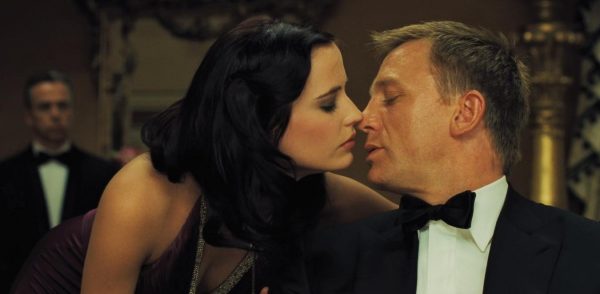
Made on a budget of $150 million Casino Royale went on to make an astounding $600 million at the worldwide box-office by the conclusion of its theatrical run. On review aggregator website Rotten Tomatoes, the movie boasts an approval rating of 94%, as of writing, with an average rating of 7.9/10. The site’s critical consensus sums up the film in the following manner: “Casino Royale disposes of the silliness and gadgetry that plagued recent James Bond outings, and Daniel Craig delivers what fans and critics have been waiting for: a caustic, haunted, intense reinvention of 007.”
During production, Craig was the subject of much debate as he didn’t fit Ian Fleming’s original depiction of James Bond but following its release, all naysayers were silenced and Craig’s take on the iconic character was showered with high praise. The Times compared Craig’s portrayal of James Bond to that of Timothy Dalton’s whilst describing the action in Casino Royale as “edgy”. Another action set piece that received plenty praise was the elaborate chase sequence set in Madagascar featuring free-running extraordinaire Sébastien Foucan. Multiple media outlets Empire, BBC Films and Variety described Craig as the first actor to truly capture Ian Fleming’s James Bond in terms of sheer coldness and brutality. Eva Green was also singled out for the terrific performance she dished out as the tragic anti-heroine Vesper Lynd. At the following year’s BAFTAs the movie received nine nominations with Craig even nabbing a nomination in the Best Actor category. This made Craig the first actor to be nominated in that category for playing James Bond, which was certainly quite an achievement.
The critical and commercial success of Casino Royale ushered in the Daniel Craig era of James Bond which saw multiple acclaimed filmmakers such as Sam Mendes, Marc Forster and Cary Joji Fukunaga take the helm and deliver back-to-back box-office hits such as Skyfall and No Time To Die in a generational run spanning 15 years. In a lot of ways, Casino Royale revitalized the long-running series and injected new life with a darker, grittier and more grounded approach, eschewing extravagant gadgetry and other fantastical elements featured heavily in previous installments. It introduced us to a different James Bond – one that was brutally effective as a secret agent but also emotionally vulnerable as a human being. The decision to explore Bond’s origins coupled with Craig’s powerful debut also helped redefine the iconic character for a new generation.
What are your thoughts on Casino Royale? Let us know on our socials @FlickeringMyth…
Hasitha Fernando is a part-time medical practitioner and full-time cinephile. Follow him on Twitter via @DoctorCinephile for regular updates on the world of entertainment.